RAF Coningsby begins £28m upgrade to support Eurofighter Typhoon QRA mission

February 20, 2026
Work has begun on a £28m project to upgrade and refurbish vital airfield infrastructure at RAF Coningsby in Lincolnshire as part of the UK Ministry of Defence’s (MOD’s) latest effort to strengthen one of the Royal Air Force’s (RAF’s) most strategically important bases.
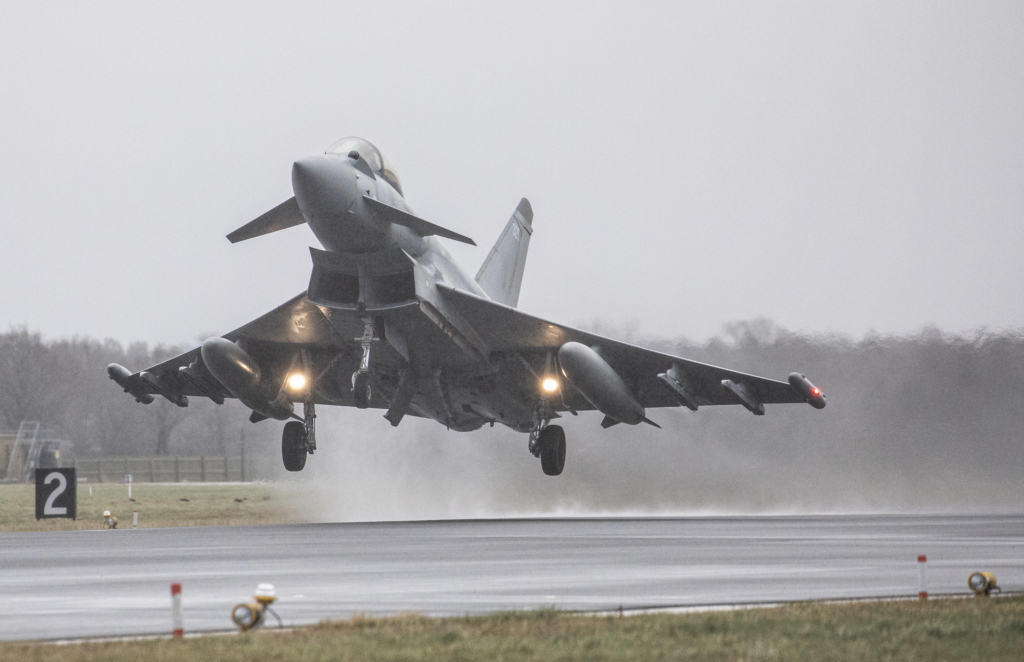
Home to several Eurofighter Typhoon FGR4 squadrons, Coningsby is one of the RAF’s two Quick Reaction Alert (QRA) bases and is responsible for the rapid deployment of fighters to intercept and defend the UK’s sovereign airspace from potential airborne threats, with jets, pilots and support crews maintaining a 24-hour air defence alert commitment at all times.
Responsibility for this tasking is shared with other Typhoon FGR4 units based at RAF Lossiemouth in Moray, Scotland.
What does the £28m RAF Coningsby airfield upgrade include?
On 12 February, the UK MOD’s Defence Infrastructure Organisation (DIO) announced that work to deliver improvements to the air operating surfaces at the Lincolnshire base had begun.
The DIO has contracted VolkerFitzpatrick – a UK-based firm that specialises in engineering and construction – to refurbish and upgrade these surfaces, with AECOM (a US-based infrastructure consulting firm) serving as a technical services provider on the project.
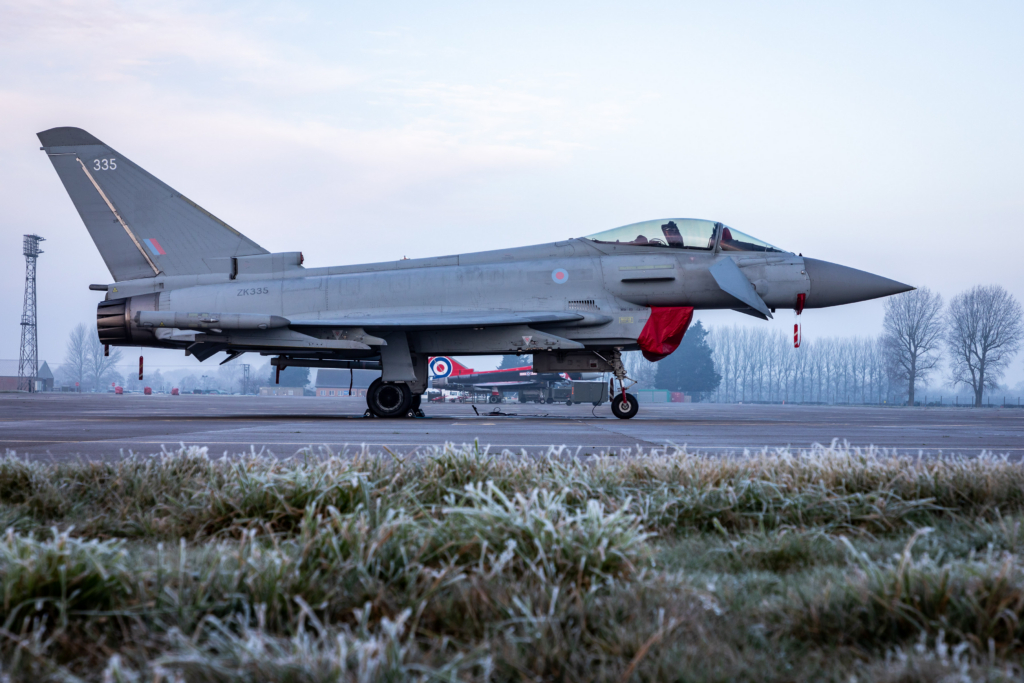
As part of this new £28m airfield infrastructure upgrade, contractors from VolkerFitzpatrick will improve and refurbish the air operating surfaces, with work namely focusing on the Lincolnshire base’s taxiways and apron areas.
Work under this now-ongoing effort is due to be completed in October 2026. This latest upgrade reflects the UK MOD’s broader efforts to invest in upgrading and refurbishing airfield infrastructure that supports fast-jet operations.
Surfaces like runways, taxiways and apron spaces must be periodically renewed to remain safe for use by high-performance aircraft operations – such as those carried out by fighters – to avoid the increased risk of jets being affected by foreign object damage (FOD) and a reduction in a base’s overall sortie-generation rates.
Commenting on the ongoing project, Keith Maplethorpe – operations director at VolkerFitzpatrick – said: “We are proud to play a key role in delivering these vital upgrades at RAF Coningsby. This investment strengthens one of the UK’s most strategically important air stations, ensuring that its teams can continue to protect our airspace around the clock.”
Upgrading RAF Coningsby while maintaining 24/7 Quick Reaction Alert (QRA)
Completing this work poses a unique challenge for VolkerFitzpatrick and its contractors, as Coningsby’s strategically vital role as one of the RAF’s two operational QRA bases means that its Typhoon FGR4s must be ready to scramble at any time.
This means that all of the ongoing construction work must be carefully phased, planned and scheduled around the station’s 24/7 QRA commitment.
Commenting on this and outlining the importance of Coningsby’s strategic role in protecting the UK’s domestic airspace, Dan Wilmott – the DIO project manager – said: “This is an important investment in one of the UK’s most operationally significant air stations…
“RAF Coningsby’s role in defending UK airspace never stops, so delivering these improvements while maintaining the constant readiness of the [QRA] has required careful planning,” he added.
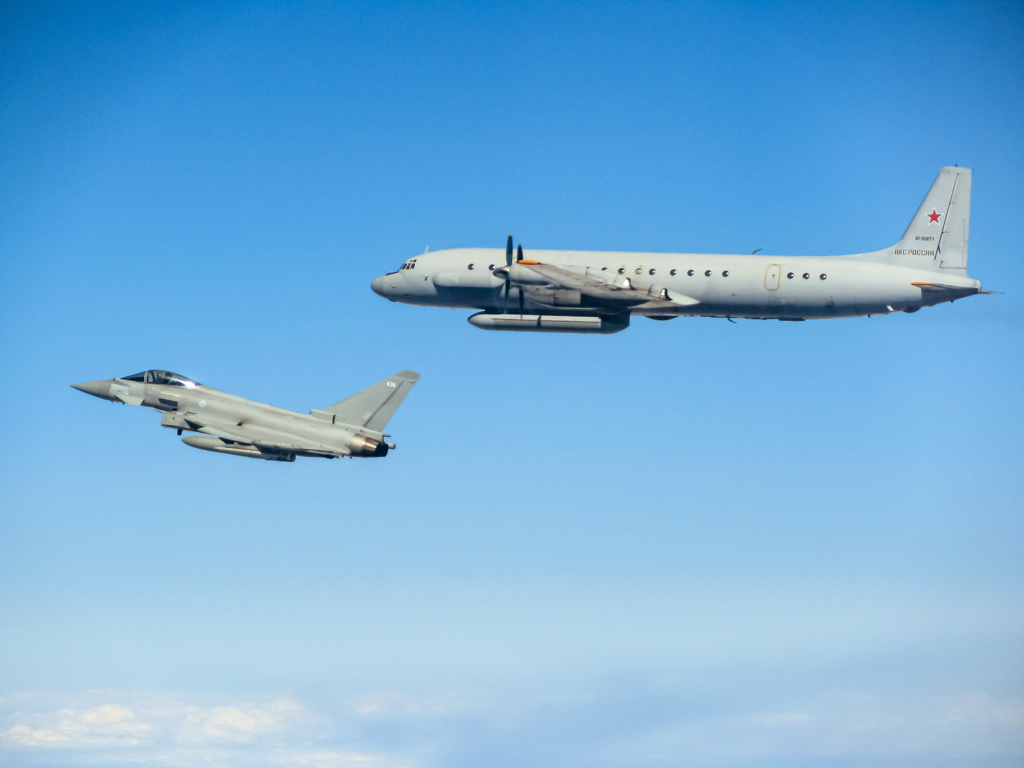
This sentiment was reaffirmed by Gp Capt Andy Hampshire, the Station Commander at RAF Coningsby. “Defence of the nation is the RAF’s highest priority, QRA is at the very forefront of that task, so it’s vitally important that there is no hindrance caused by this refurbishment.”
Which Typhoon FGR4 squadrons are based at RAF Coningsby?
RAF Coningsby has served as one of the UK’s most strategically vital air bases since it was initially opened in November 1940. Over the years, the Lincolnshire base has been responsible for a number of mission sets, hosting a variety of aircraft types that range from bombers to strike aircraft and fighter jets.
This list notably includes the Avro Lancaster and Avro Vulcan, English Electric Canberra, McDonnell Douglas F-4 Phantom II, SEPECAT Jaguar and Panavia Tornado (among others).
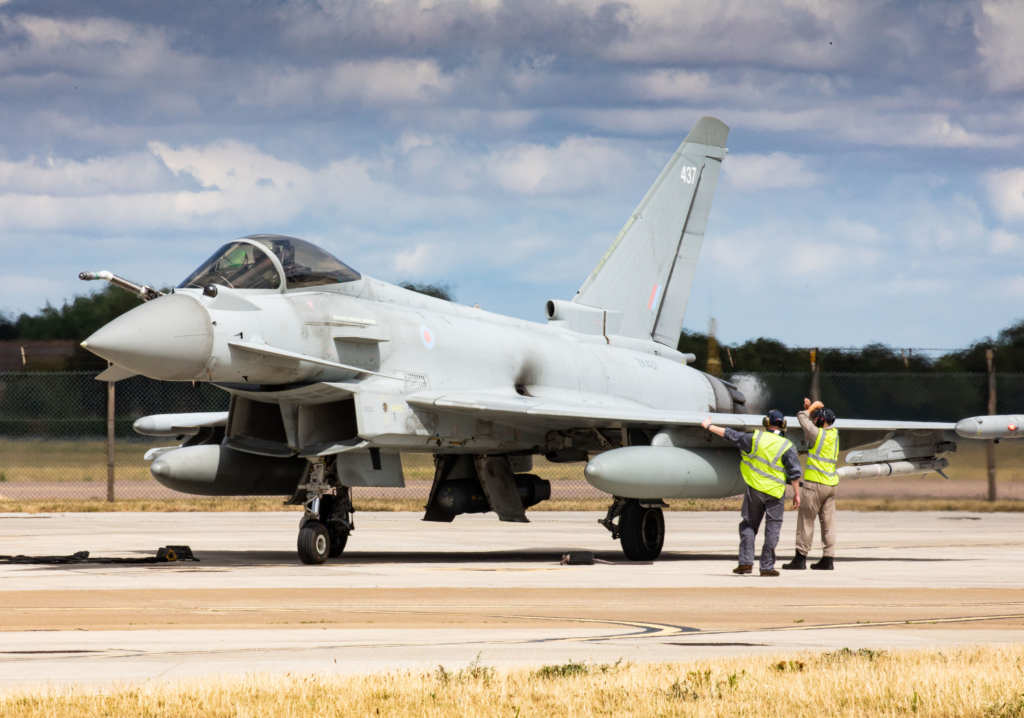
In May 2005, Coningsby became the first RAF base to welcome the Typhoon, with the type joining No 17 Squadron for evaluation purposes. While the unit eventually relocated to Edwards Air Force Base (AFB) in California to support test and evaluation efforts with the Lockheed Martin F-35B Lightning II, the Typhoon remained at Coningsby in both an operational and training capacity.
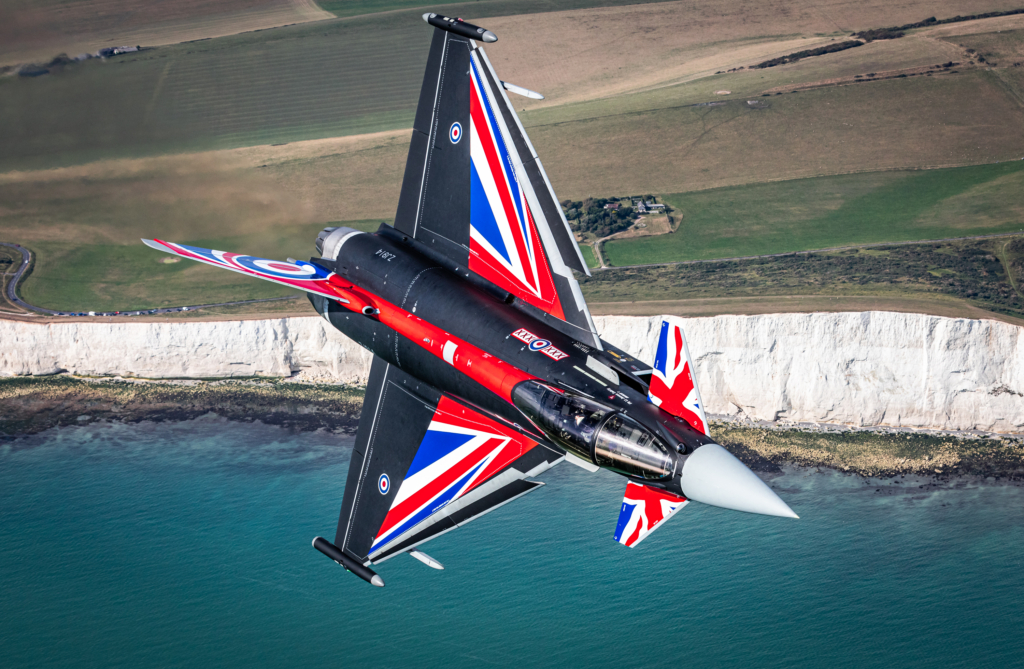
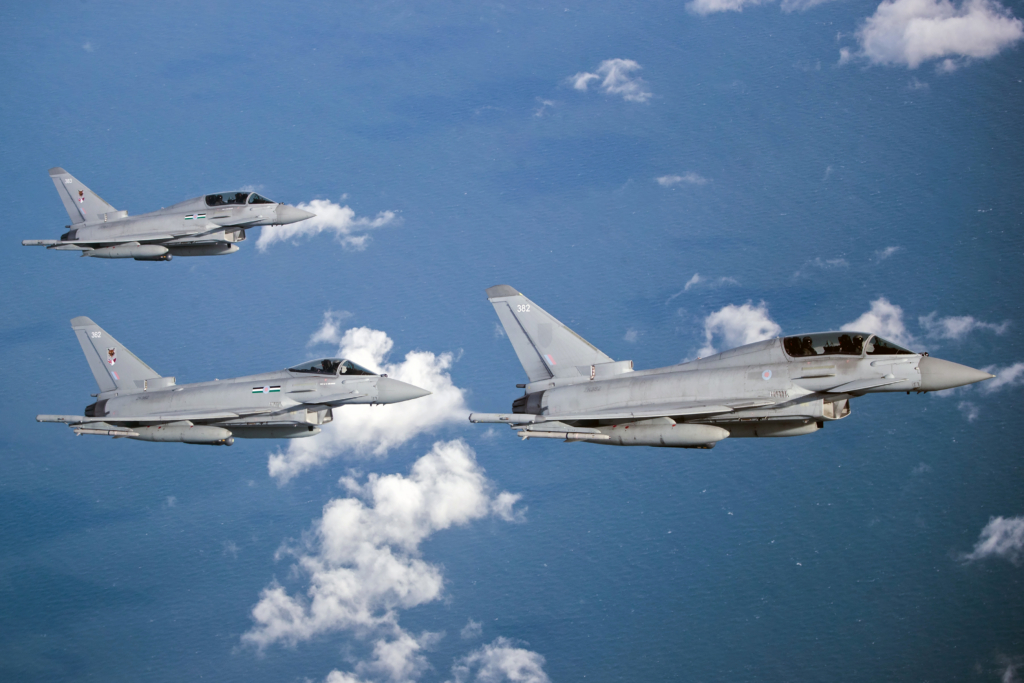
Coningsby is now home to five Eurofighter squadrons. Two of these – namely No 3 (Fighter) Squadron and No XI (Fighter) Squadron – constitute the base’s combat-ready frontline Typhoon units, while No 41 Test and Evaluation Squadron (TES) serves as the type’s operational test and evaluation unit in RAF service.
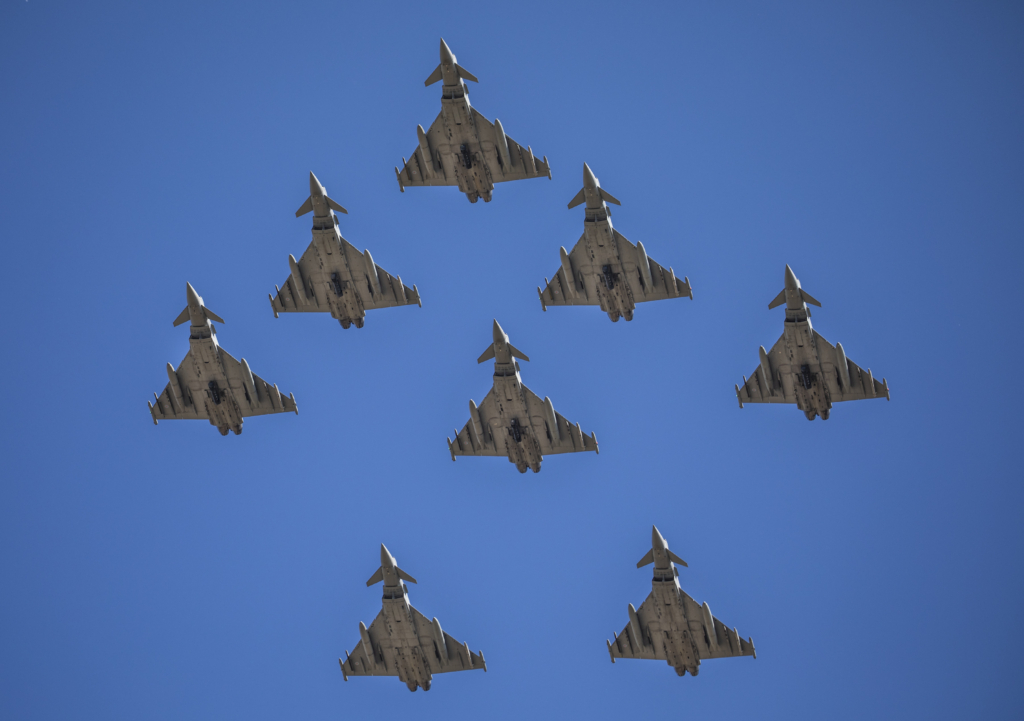
While the two frontline units only employ a mix of Tranche 2/3-configured single-seat Typhoon FGR4s, No 41 TES is also equipped with dual-seat Typhoon T3s.
In addition, Coningsby is home to two Typhoon training units. The first, No 29 Squadron, serves as the type’s Operational Conversion Unit (OCU) in RAF service and is responsible for training the next-generation of British Eurofighter pilots.
The base is also home to No 12(B) Squadron, which was reformed as a joint British-Qatari squadron in July 2018 and is responsible for training Qatar Emiri Air Force (QEAF) air/ground crews to operate the Typhoon in support of Doha’s acquisition of 24 Eurofighters from the UK.
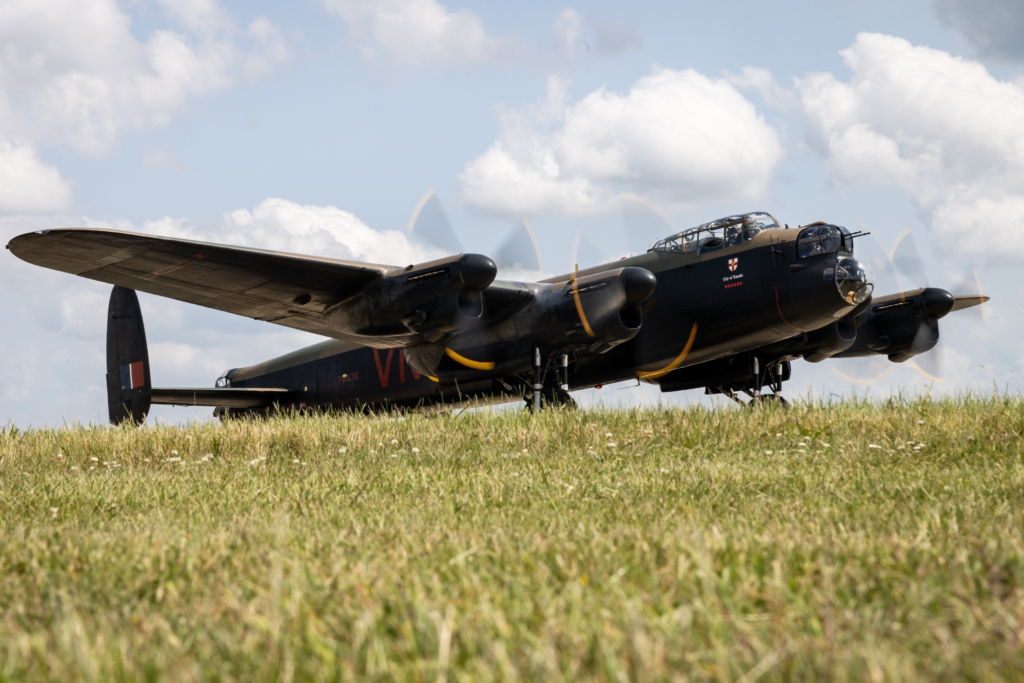
Coningsby is also home to several World War Two-era aircraft veterans that make up the RAF’s Battle of Britain Memorial Flight (BBMF). This fleet includes an Avro Lancaster, a Douglas Dakota, two de Havilland DHC-1 Chipmunks and several Hawker Hurricane and Supermarine Spitfire fighters.
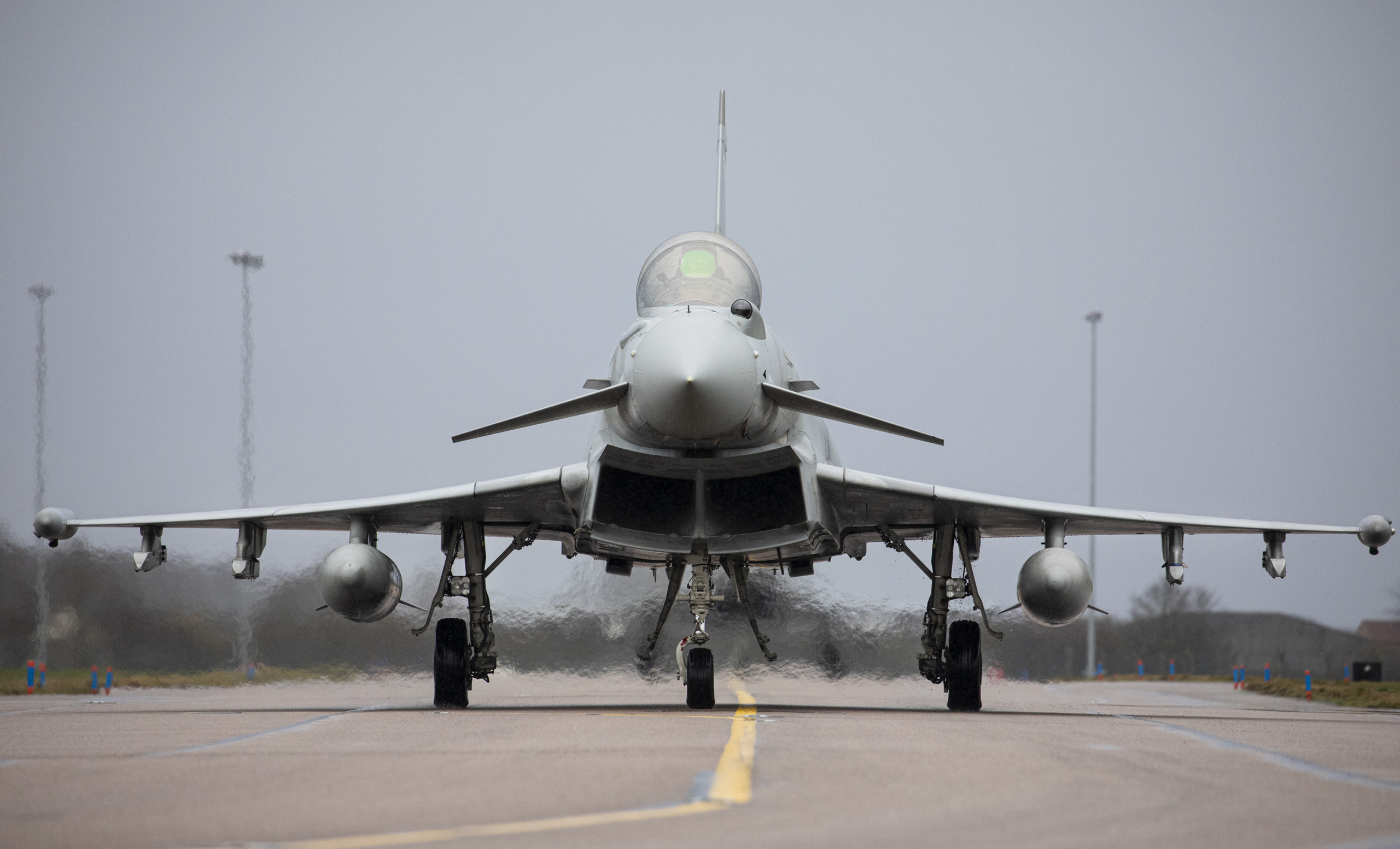
Featured Image: A Typhoon FGR4 from the RAF’s No 3(F) Squadron taxis to depart RAF Coningsby in Lincolnshire on 14 February 2022. Image: MOD Crown Copyright/Sgt Paul Oldfield