


What is a hardened aircraft shelter, and why is the RAF using them at night?
4 min read
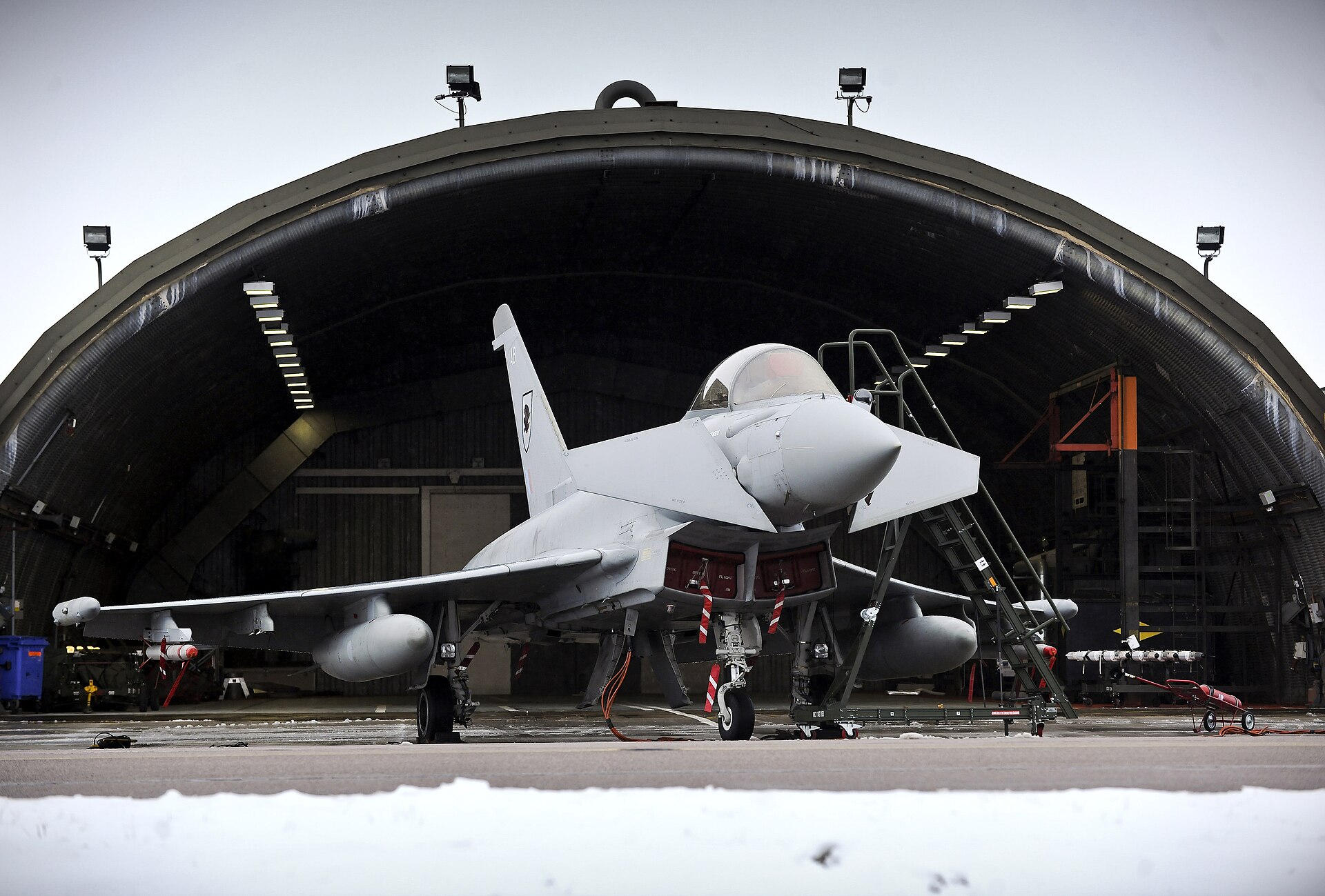

The UK’s Royal Air Force is moving aircraft undercover at night to protect them against possible drone threats, according to reports published by Sky News and The Times on 25 November.
The Ministry of Defence told ADS Advance it was strengthening security at military sites but did not confirm the reported aircraft movements.
Sky also reported that anti-drone netting was under consideration for aircraft that remain outside. Nets have been used by Russia to protect oil refineries from drone strikes, with mixed success.
In the Russia-Ukraine conflict, the vast majority of Russian aircraft losses have been on the ground. The US Air Force’s loss of a rare E-3 Sentry to Iran while parked offers further warning about the fragility of air assets when not in flight.
Why do RAF aircraft park outside?
Normally, most of the RAF fleet will be out in the open air. This is simply a question of practicality: Refuelling, light maintenance and general readiness are all improved by having an aircraft easily accessible.
The RAF owns some huge hangars, but these are not intended for mass parking of planes. The A400M Atlas maintenance hangar, opened in 2018, covers 24,000 square metres and is 28 metres tall. Despite its size, it’s only intended to house three Atlas aircraft at a time, to leave space for engineers to work around the plane.
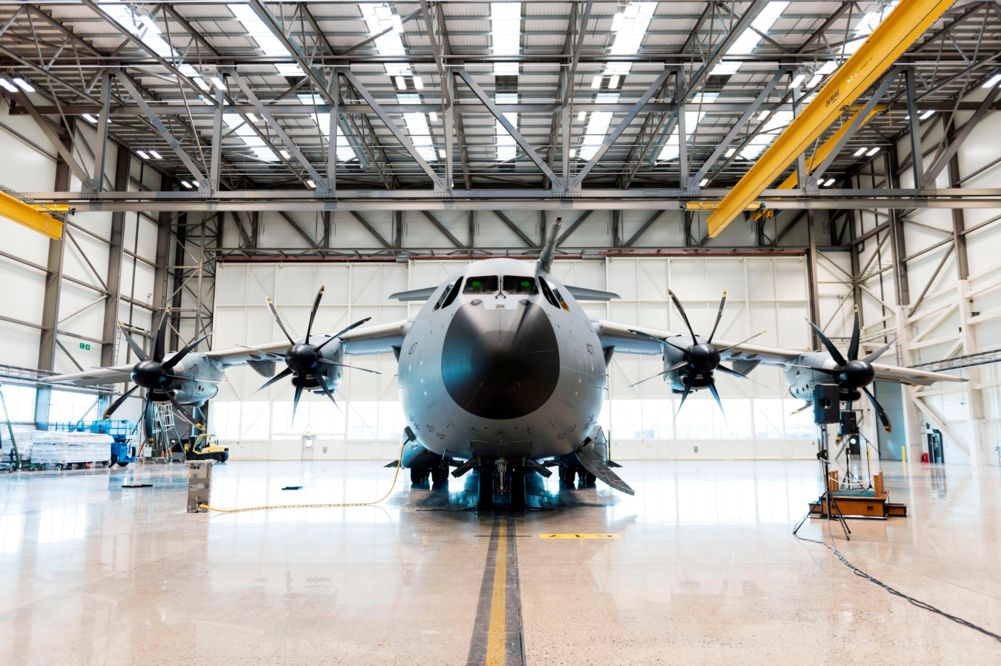
The RAF’s large hangars are in high demand for maintenance, and aircraft requiring service will be prioritised for occupation. Added to this, these facilities are not designed to provide protection against attack.
Both the Times and Sky News said aircraft were being moved into ‘hangars and hardened shelters’ at night. A hardened shelter is quite different to a hangar, and an ideal place to store aircraft if a drone attack is suspected.
What is a hardened aircraft shelter?
A hardened shelter (HAS), or protective aircraft shelter, is a heavily reinforced hangar built to protect aircraft on the ground from attacks.
They are typically constructed from thick, reinforced concrete with heavy blast doors, and may be covered with plants or soil for camouflage. Each shelter will usually house either one or two fighter jets.
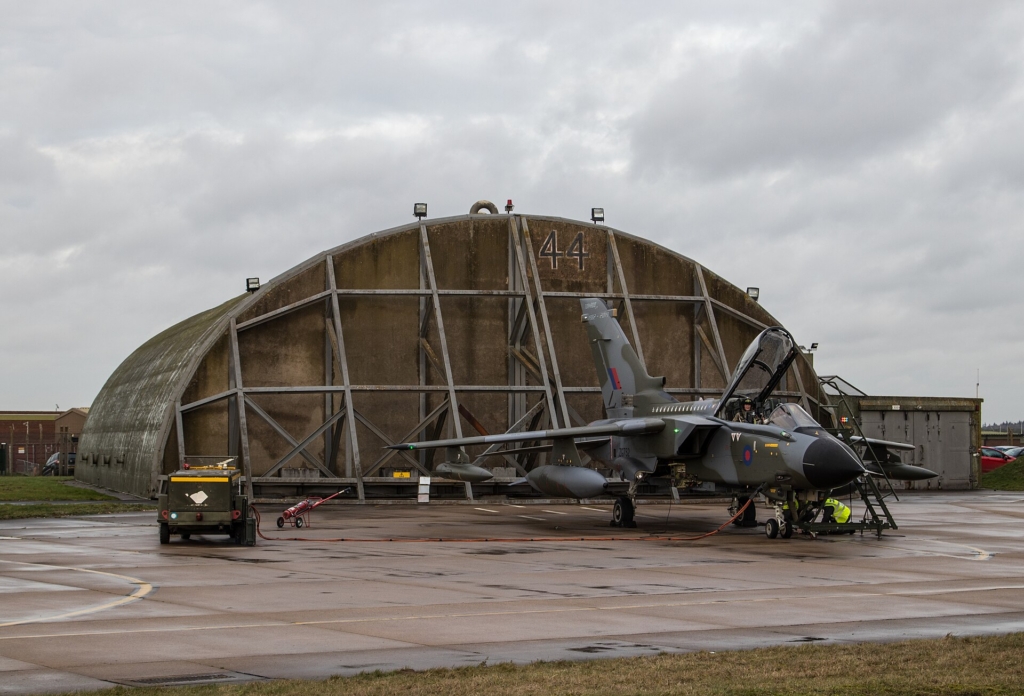
The idea of a hardened shelter is that it will provide protection against a range of potential threats:
- Reduce blast damage. Reinforced walls, roofs and heavy doors help shield the aircraft from the pressure wave of a nearby explosion
- Stop flying fragments. The shelter can intercept shrapnel and debris that could puncture the aircraft’s skin, canopy or fuel tanks
- Conceal the aircraft. With the doors closed, an observer overhead cannot see which aircraft is inside or whether the shelter is occupied
- Separate the aircraft: Housing jets in individual shelters puts a reinforced barrier between them, reducing the chance that one blast damages several aircraft.
The UK’s air force has a long history with hardened shelters. At the former RAF Upper Heyford in Oxfordshire, Cold War aircraft shelters were built with reinforced concrete and heavy sliding doors. Some now form part of a scheduled monument.
During the Cold War, hardened shelters proliferated in the UK and in other NATO nations. Although some of these are now decommissioned, the MOD has maintained a range of hardened facilities to protect and store its assets.
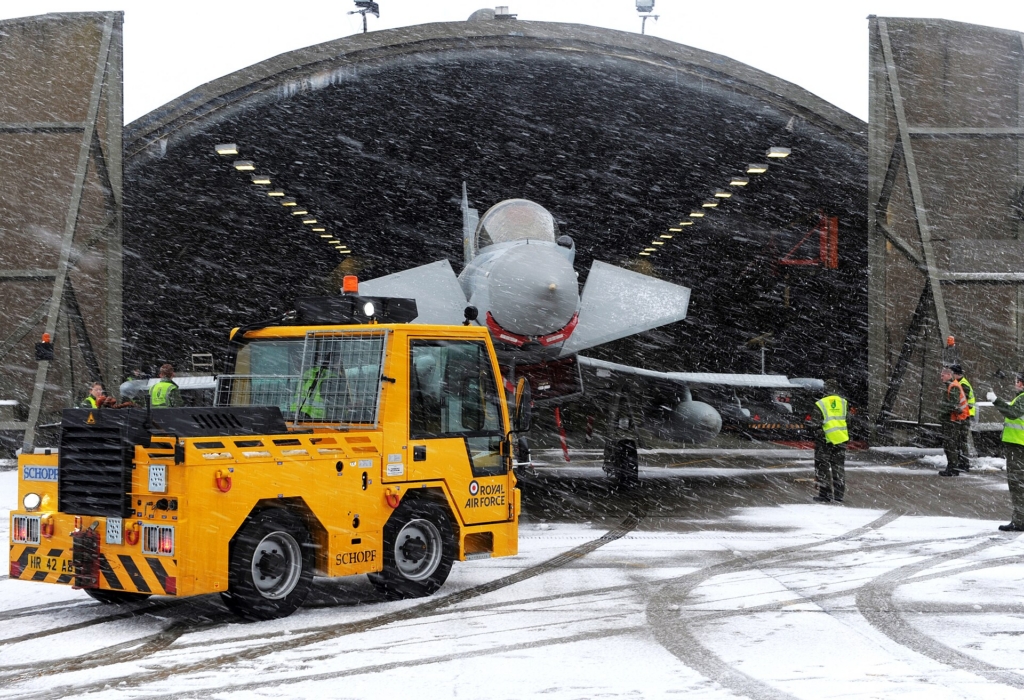
The RAF regularly moves fighter-sized aircraft to hardened shelters if they’re not going to be required immediately, as they give the jets protection against the elements. What remains unknown is whether a mass movement is occurring as a result of a threat; if so, it will be the larger aircraft that prove more challenging to find storage for.
What has the Ministry of Defence confirmed?
“We take the security of our bases, equipment and personnel very seriously and are always adapting to counter any potential threats,” an MoD spokesperson told ADS Advance.
The spokesperson said the ministry was investing an additional £470 million in military site security, including physical protection, surveillance and counter-drone capabilities. It has also introduced restricted airspace over 44 critical defence sites.
The reports appeared a day after the ministry and the National Protective Security Authority, part of MI5, warned UK companies supplying Ukraine’s armed forces of a growing Russian sabotage threat. That alert was addressed to businesses.
Officials have drawn no public link between it and the reported decision about where RAF aircraft spend the night.
Sign up for our newsletter and get our latest content in your inbox.