


Everything you need to know about the Talon Blue

4 min read
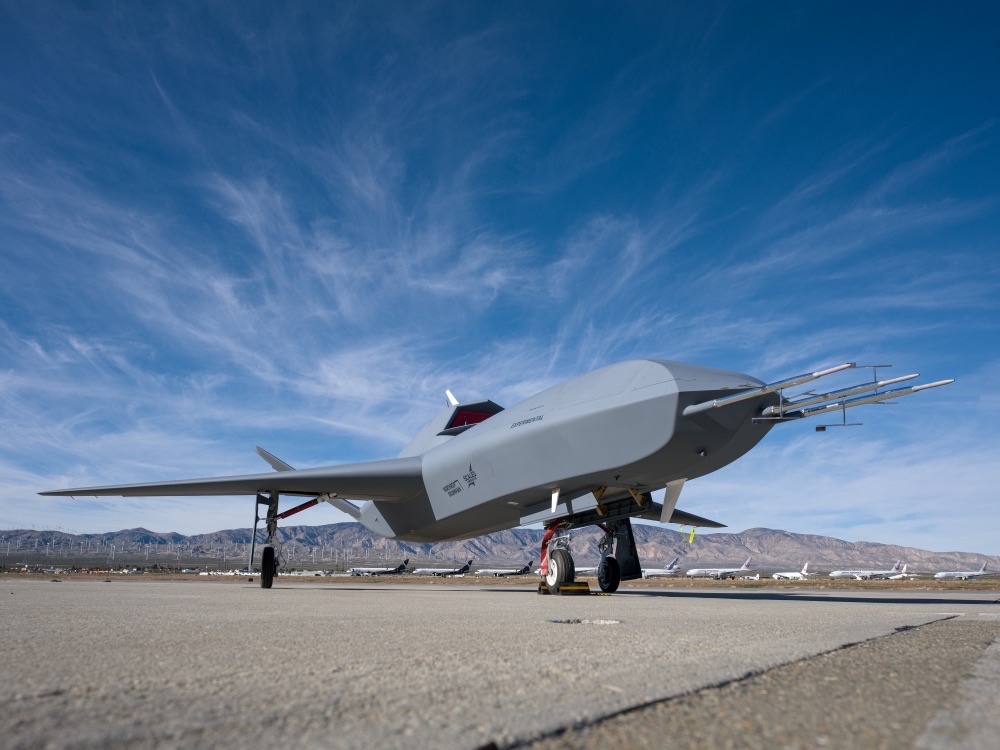
With the US Air Force (USAF) pressing ahead with the FQ-42A and FQ-44A, attention is increasingly turning to what comes next.
Northrop Grumman’s YFQ-48 Talon Blue, which is expected to make its first flight this year, is considered a strong contender for the USAF’s Increment 2 programme. And it could offer an early glimpse of the capabilities the Air Force is seeking beyond its first autonomous wingmen.
Why Northrop Grumman lost the Increment 1 bid
Northrop Grumman, along with Lockheed Martin and Boeing, was passed over in their bids for the US Air Force’s Increment 1 Collaborative Combat Aircraft (CCA) programme in 2024.
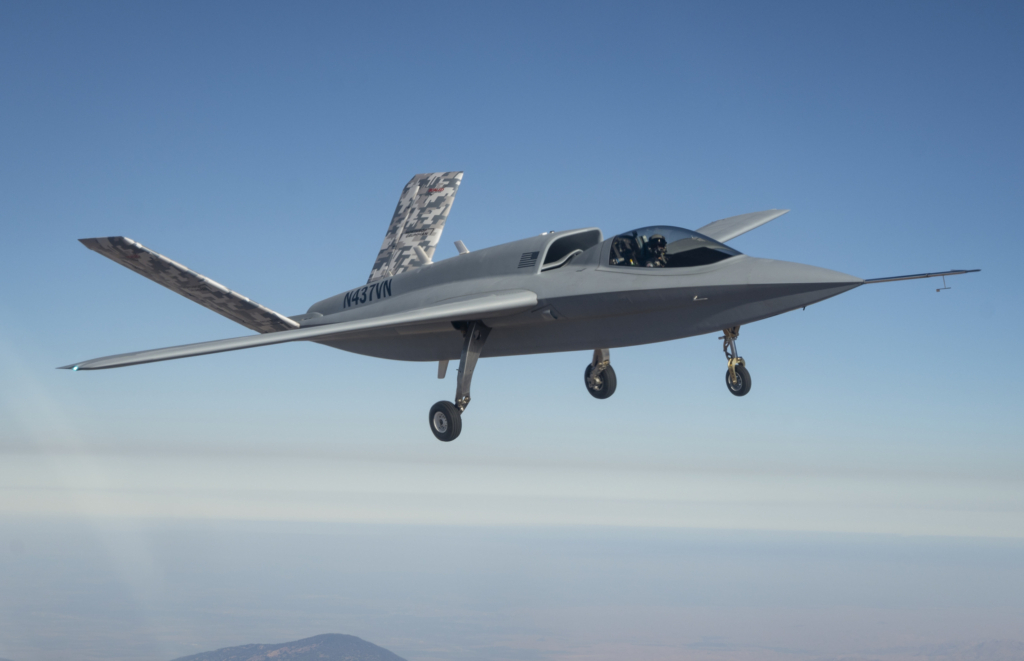
Both Northrop and Lockheed’s bids were considered overly expensive and complex for Increment 1, while Kratos’ solution was not capable enough. Instead, the Air Force went with General Atomics’ FQ-42 and Anduril’s FQ-44 solutions.
These are considered “good enough” to rapidly field and develop a CCA capability. The goal is to rapidly field the capability by around 2029 and then develop on it.
However, Increment 2 is expected to differ significantly from Increment 1. These aircraft are expected to be much more capable, with reported operational requirements exceeding 700 nautical miles.
Northrop Grumman’s YFQ-48 Talon Blue is widely viewed as a strong contender for Increment 2, while Boeing and Lockheed Martin are also expected to compete. A range of established defence and autonomy companies are expected to bid for Increment 2.
CCAs are semi-autonomous aircraft intended to pair with manned fighter jets (e.g., F-35s, F-22s, F-47s) as a sort of ‘loyal wingman drone.’ The concept remains in development and is still taking shape.
Higher confidence suggested by its designation
What is notable about YFQ-48 is that it is currently the only CCA programme to have received an official designation, except for the contracted Anduril FQ-44 and General Atomics FQ-42. Boeing’s MQ-28 is a Royal Australian Air Force designation, not a US one.
Northrop writes, “YFQ-48A Talon Blue’s designation within the Air Force’s Collaborative Combat Aircraft program underscores the strategic alignment between Northrop Grumman’s manufacturing agility and the Air Force’s acquisition goals for low-cost, cutting-edge technology.”
Northrop first unveiled the YFQ-48 in December 2025, with the Air Force then designating it the YFQ-48A in the same month before naming it Talon Blue in February 2026. The USAF has referred to it as a “strong contender” for the future CCA fleet.
The War Zone has gone so far as to suggest, “Northrop Grumman may now be under contract for the program’s Increment 2, but this remains unconfirmed.”
What is known about the YFQ-48A Talon Blue
Northrop has previously said the first flight for the Talon Blue is scheduled for August 2026. As of the time of writing (19 August), there is no press release that it has flown.
Engine on. YFQ-48A Talon Blue continues on its path to first flight in partnership with the @USAirForce. pic.twitter.com/Z0FMQ1fksd
— Northrop Grumman (@northropgrumman) April 17, 2026
Most of the specifics of the YFQ-48 are not publicly available. Northrop has described it as “cheaper and better” while also being “significantly different” from what it offered for Increment 1.
This includes making it 1,000 lbs lighter, reducing its total parts by around 50%, and making it 30% faster to build. The design comes with a V-tail, a lambda wing, and a dorsal trapezoid-shaped inlet.
It is clear from its design that it is optimised for low-observable characteristics, especially forward.
Northrop writes, “Talon Blue is a part of Project Talon: a portfolio of modular, cost-effective and rapidly deployable aircraft that meet the customers’ autonomy needs. The company is also focusing on software as part of the portfolio… ”
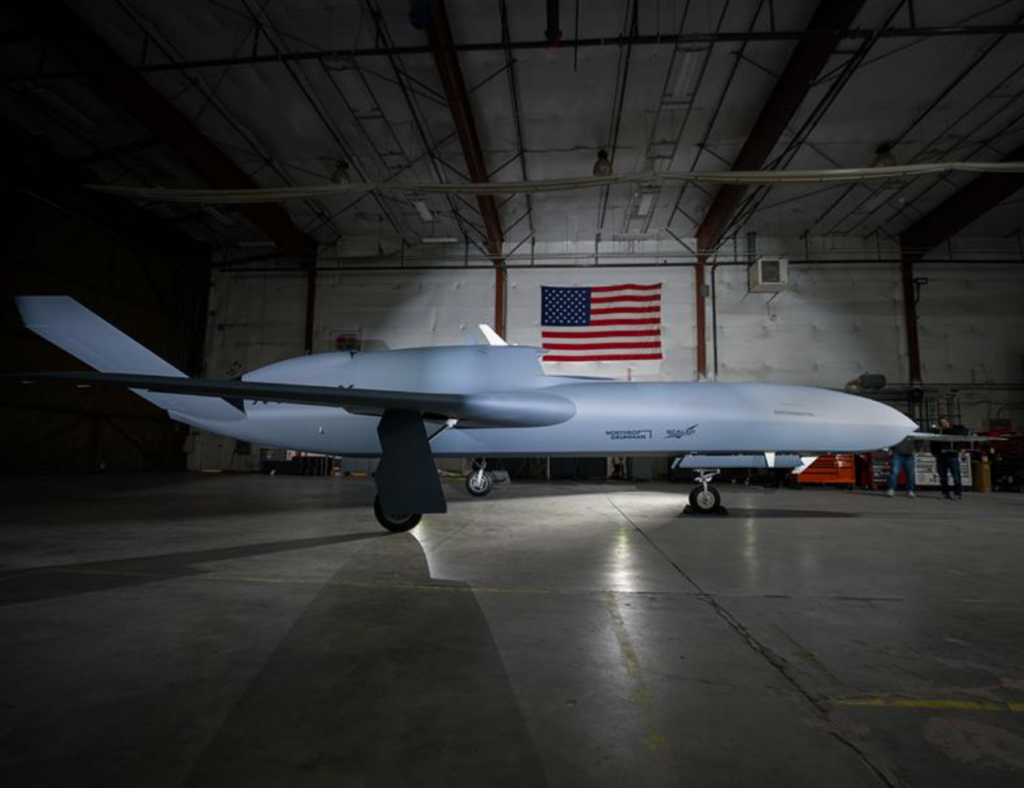
Its length is estimated to be between 10 and 12.5 metres (33 to 41 feet), while its wingspan is similar. The prototype is set to be powered by a Pratt & Whitney PW500-family turbofan providing 2,900-4,500 lbf, although it’s unclear what its series production engine will be.
Otherwise, Northrop has not released many details about it. It can be reasonably assumed to have a combat radius of 700+ nautical miles (per Air Force requirements), a payload in the ballpark of 2,000 lbs, a transonic speed, and a ceiling of around 45,000-50,000 feet.
However, these are guesstimates based on requirements and renders, not on official statements.


