Forget the drone, Northrop’s Talon is building the brains of future airpower

5 min read
Northrop Grumman is positioning its Talon programme as a blueprint for the next generation of autonomous airpower, one that separates the aircraft from the intelligence that controls it.
Speaking on “The Angle” podcast from T. Rowe Price, chair, CEO, and president Kathy Warden described the effort in deliberately simple terms:
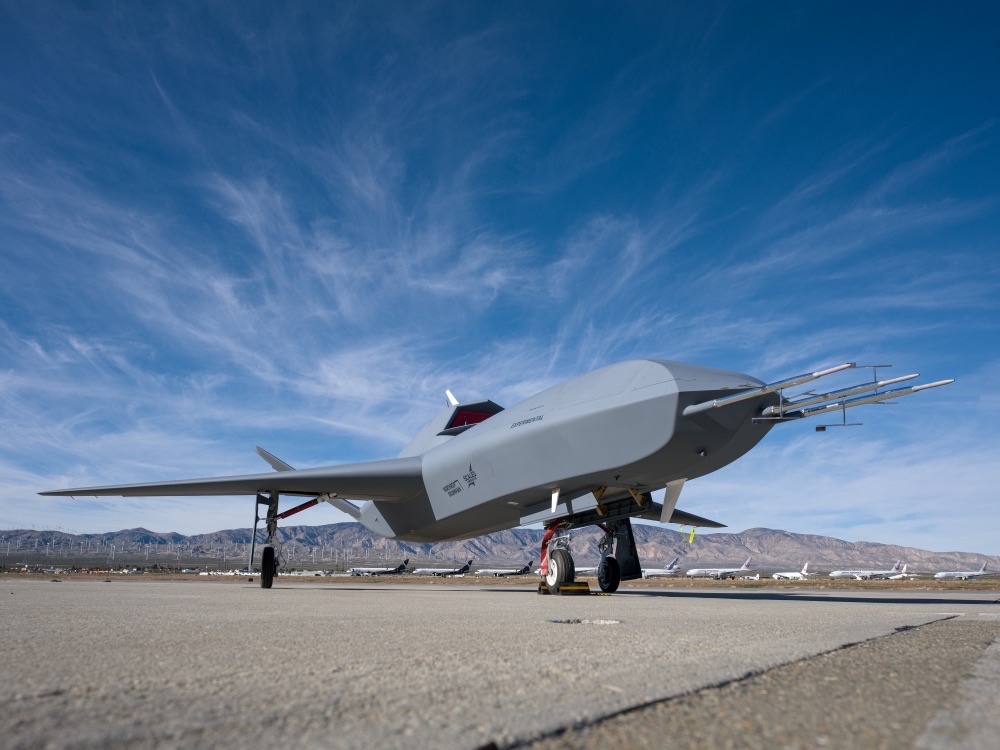
“Talon is two components. Talon Blue is the platform… that is an unmanned aircraft that allows us to show we can build these faster and more affordably,” she said. “The second key piece we call Talon IQ. And Talon IQ is about the brains of the system.”

That distinction, between platform and “brains”, is central to how Northrop sees the future of autonomy evolving.
Northrop targets affordable mass with faster-built military drones
For Talon Blue, also known as the YFQ-48, the focus is not on pushing the limits of performance, but on fundamentally changing how unmanned aircraft are produced.
Warden made clear that the programme is as much about industrial process as it is about the aircraft itself.
“It was about our manufacturing processes, our design processes, and a supply chain that could do that.”
The goal is to demonstrate that autonomous systems can be built quickly and at scale, a requirement increasingly driven by operational lessons from recent conflicts.
In Warden’s framing, achieving that scale is not optional; it is essential to delivering the “affordable mass” now shaping defence planning.
Talon IQ opens autonomy development to third-party defence AI companies
If Talon Blue is focused on how quickly and cheaply drones can be built, Talon IQ is designed to solve a different problem: how autonomy software is developed, tested and integrated.
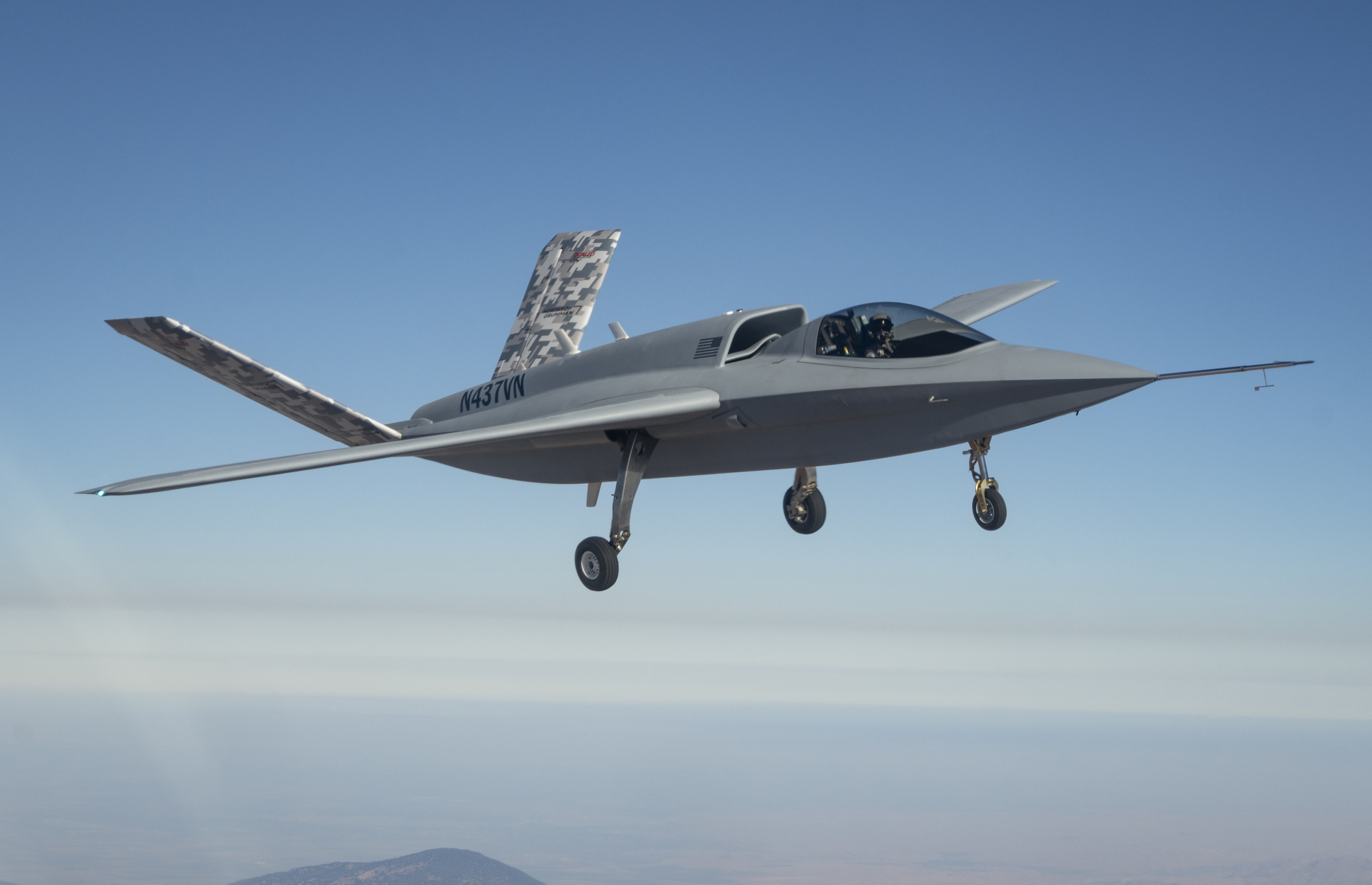
Talon IQ is an optionally manned airborne test platform paired with a development environment that allows autonomy systems to be trialled in realistic conditions. Rather than relying purely on simulation or tightly controlled trials, it enables software to be validated in-flight, on a real aircraft.
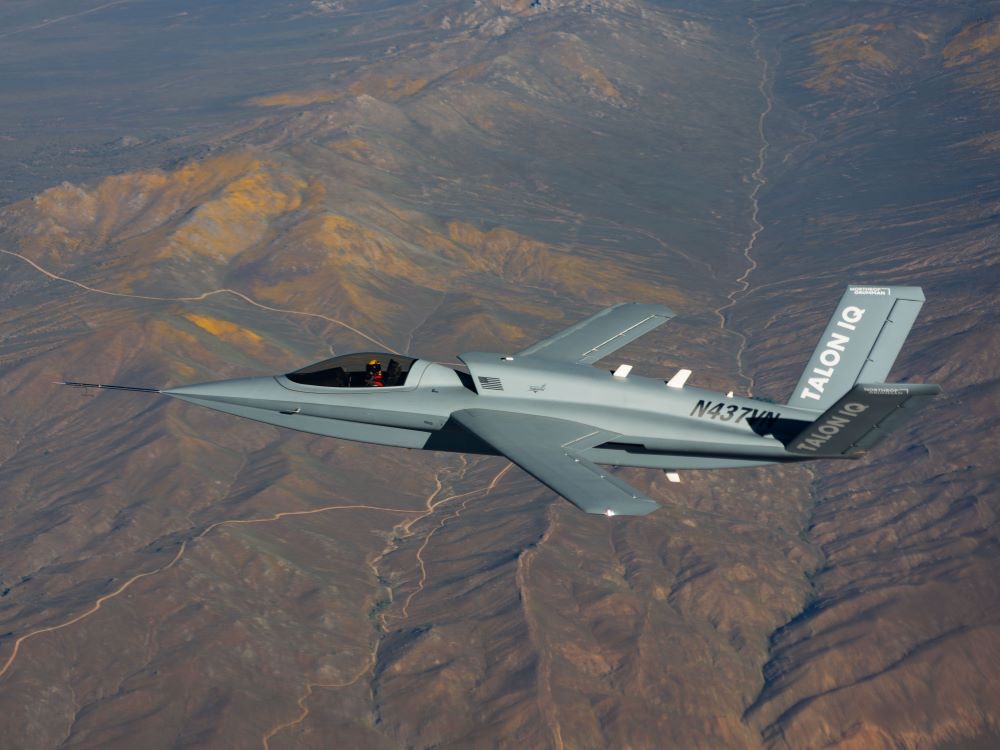
Warden framed it as a way of opening up Northrop’s autonomy expertise to a wider pool of developers. “Talon IQ is about the brains of the system,” she explained. “We have created a testbed… and allowed others who are working on autonomy to use that testbed to test their systems.”
In practical terms, that means third-party autonomy providers, including smaller defence tech firms, can plug their software into a common platform, assess performance, and refine algorithms without needing to build their own aircraft or integration stack.
The platform is also designed to support rapid iteration. Different autonomy systems can be evaluated, compared and updated far more quickly than in traditional development cycles, where hardware and software are often tightly coupled.
Switching drone autonomy mid-flight marks major step for modular systems
The most notable demonstration of that approach came in recent testing, where Talon IQ was used to integrate third-party software in real time.
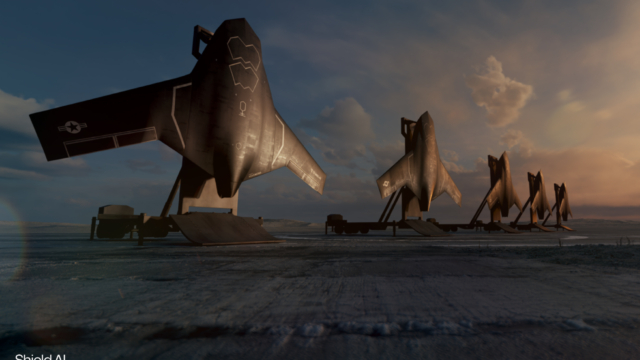
“In this first quarter, we just used that to test with Shield AI and showed that we could move from one autonomy system to another while in flight,” Warden noted.
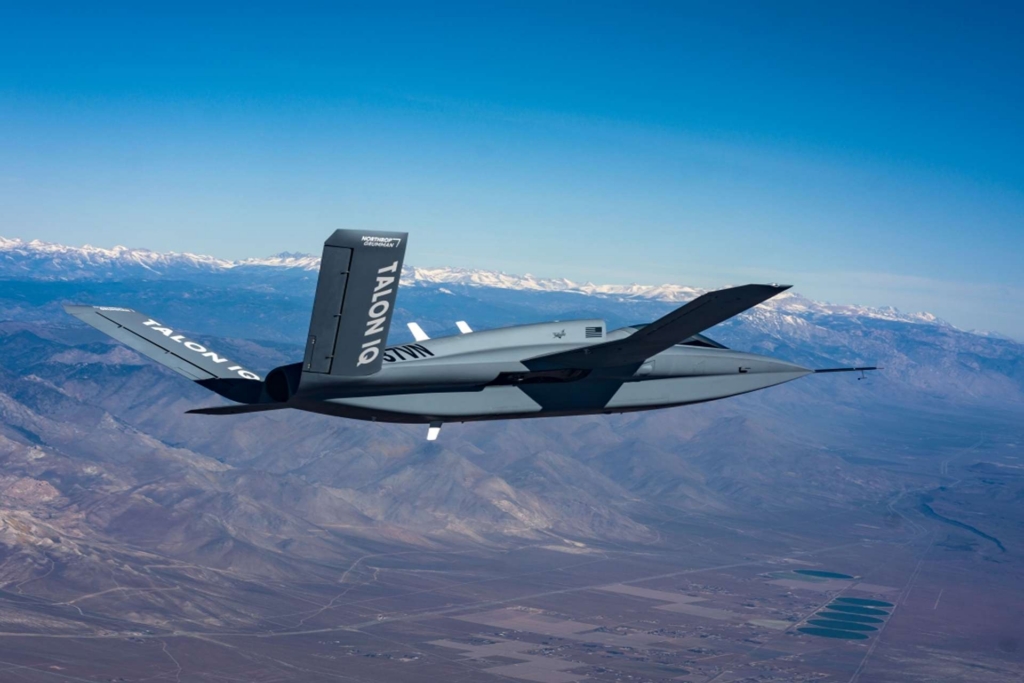
In practical terms, that means the “brain” controlling the aircraft can be changed without altering the platform itself, a separation of software and hardware that has long been a goal in defence autonomy.
Such flexibility means systems can be updated far more quickly, new capabilities can be introduced without redesigning the aircraft, and operators are no longer locked into a single supplier’s software ecosystem. Instead, different autonomy providers can be integrated, tested and deployed as requirements evolve.
Perhaps most importantly, it creates a pathway for much faster adaptation in operational environments. As threats change, whether through new tactics, electronic warfare, or emerging technologies, autonomy can be refined or replaced without waiting for a new airframe or a lengthy integration cycle.
What Talon IQ demonstrates is not just a technical milestone, but a shift in how autonomous systems are conceived, from fixed platforms with embedded software to flexible architectures where capability can be updated at the speed of code.
The Talon project: From military drone platform to autonomy ecosystem
Warden was clear that Talon is not just a technical shift, but a reflection of how the defence industry already operates, even if that reality is often hidden from view.
“Defense tech is an area where we have played and companies big and small team together,” she said. “One day we’re competing with a company and the next day they’re on our team for something else.”
By opening Talon IQ to external partners, Northrop Grumman is leaning into that model, positioning itself at the centre of an autonomy ecosystem rather than attempting to control every layer within it.
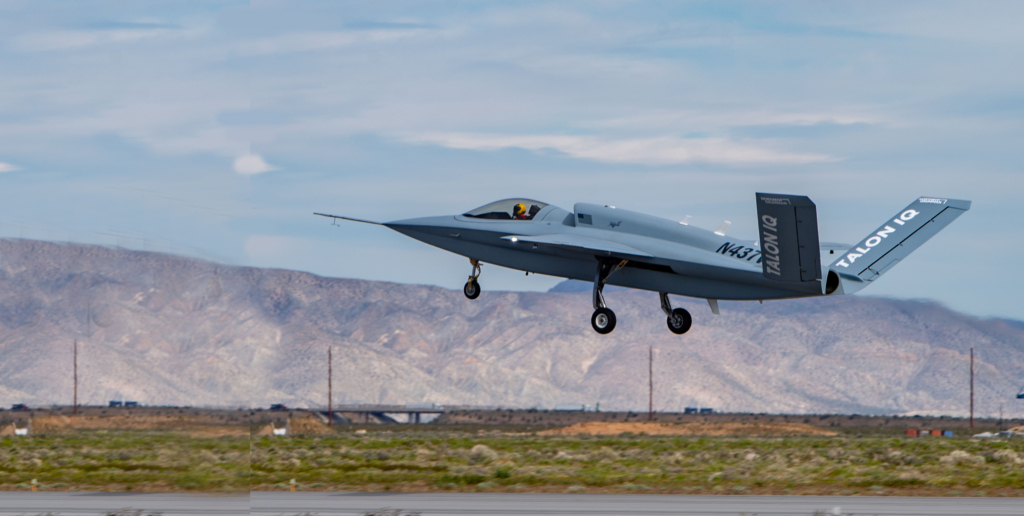
That shift is underpinned by experience. As Warden emphasised, Talon builds on a long-established foundation in autonomous systems:
“We have a rich legacy in autonomous systems, over 500,000 flight hours in systems that are completely autonomous.”
She also drew a clear line between true autonomy and more familiar remotely piloted systems:
“These are not remotely piloted drones. These are drones that have the vehicle management system to fly themselves.”
Talon Blue and Talon IQ are not simply a new drone programme. It is an attempt to reshape how autonomous airpower is built and deployed, positioning Northrop at the centre of a model where capability can evolve at the speed of software, rather than the pace of hardware development.
Featured image: Northrop Grumman