


Canada’s Snowbirds retire Tutor jets after 55 years as long grounding begins

9 min read
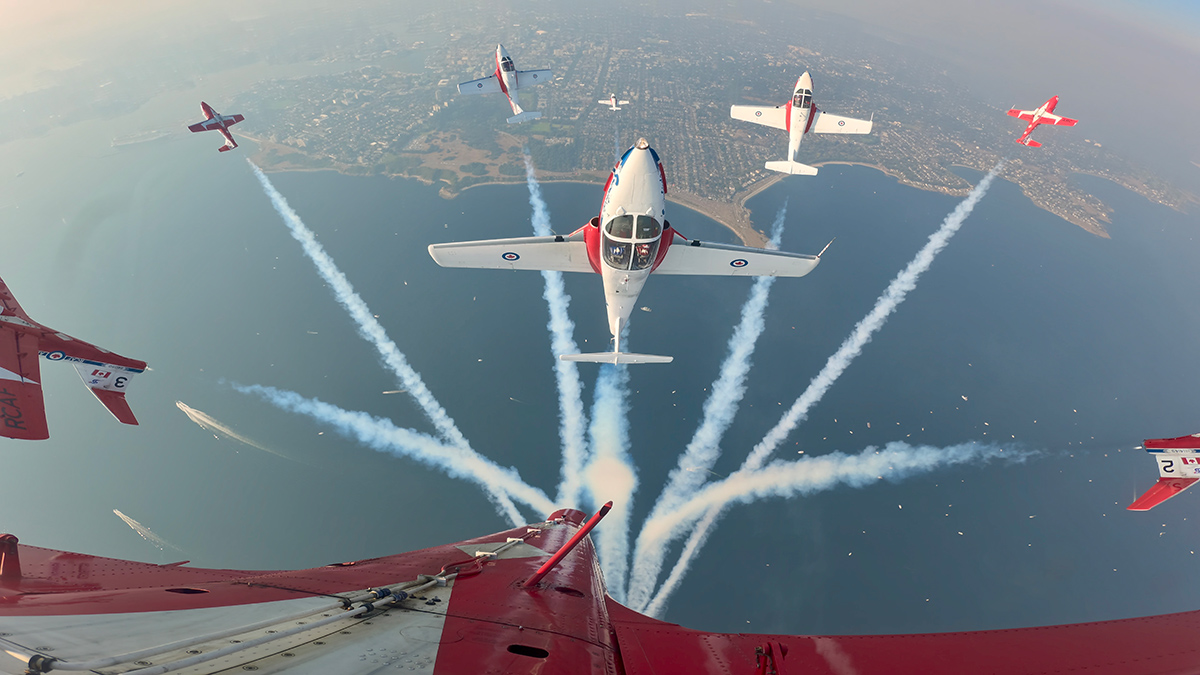
Canada’s Snowbirds have brought 55 years of flying the CT-114 Tutor to a close, returning to Moose Jaw for a farewell flypast before their familiar red-and-white jets enter retirement.
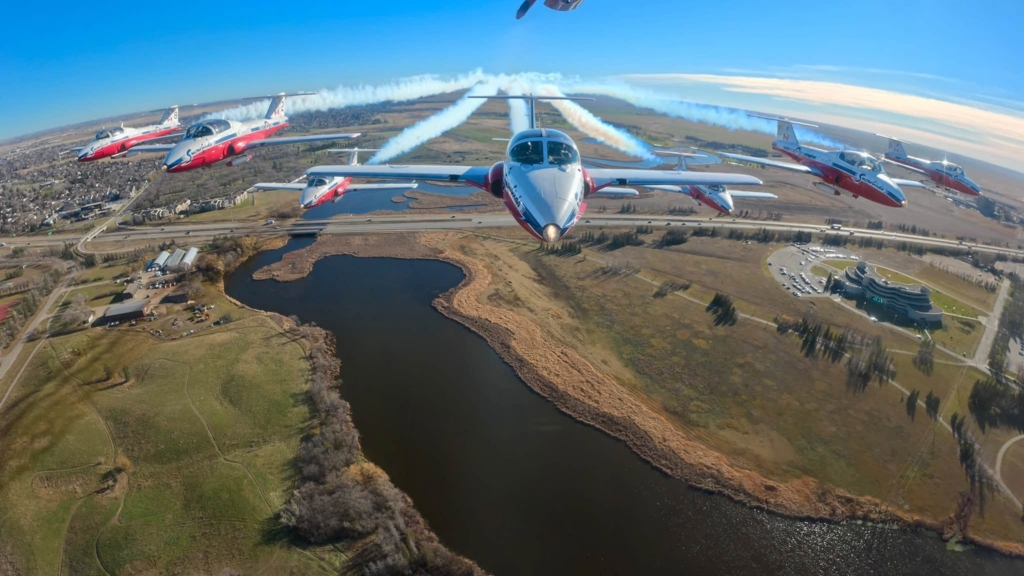
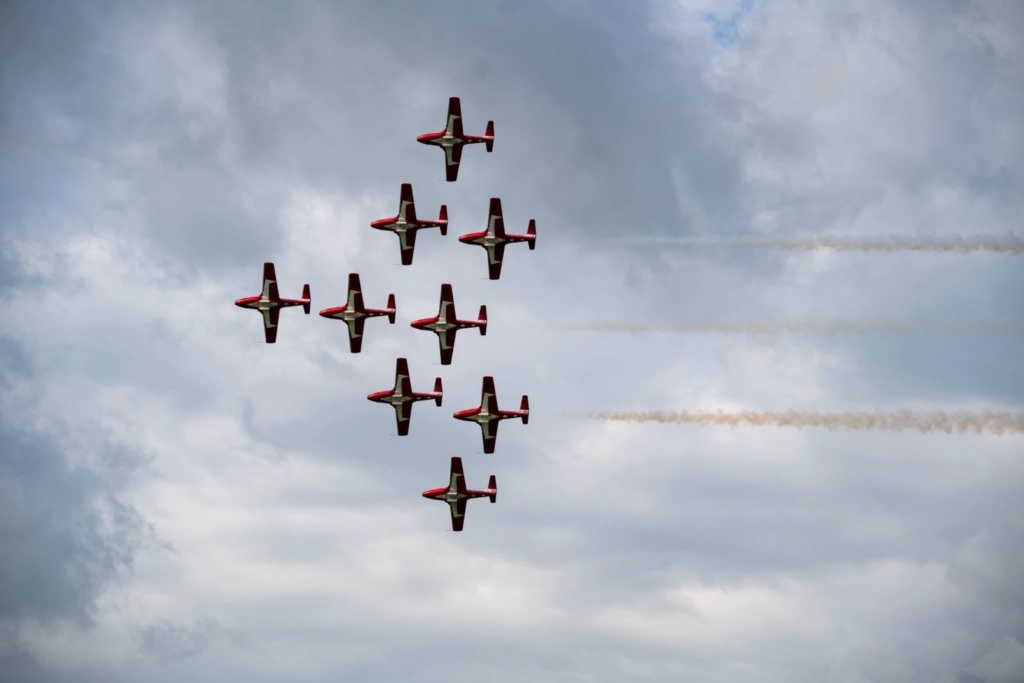
The team’s final scheduled public appearance came on November 15, when nine Tutors flew over Calgary’s McMahon Stadium ahead of the 113th Grey Cup, Canadian football’s championship game. Their homecoming flypast on November 16 provided one last farewell to the Saskatchewan community that has supported generations of Snowbirds personnel.
“Every pilot, technician and team member who has worn the Snowbirds patch has called Moose Jaw home,” the team shared.
“You’ve welcomed every new team, cheered us on through every season and stood by us in the hardest moments. It has been an honour to represent Moose Jaw to North America, and to carry your name with us everywhere we flew … Thank you, Moose Jaw, for 55 incredible years. “
The retirement ends more than six decades of Canadian military service for the homegrown jet. It also begins a prolonged absence for the Snowbirds, whose eventual return will involve a different aircraft — and a switch from jet power to propellers.
Snowbirds return to Moose Jaw for final Tutor flypast
On November 15, nine Snowbirds Tutors flew over Calgary’s McMahon Stadium ahead of the 113th Grey Cup, as the Edmonton Elks and Montreal Alouettes prepared to contest Canadian football’s championship.
The CFL proudly welcomes the final flight of the iconic Canadian Forces Snowbirds to Canada’s biggest championship celebration – the 113th Grey Cup in Calgary, AB https://t.co/dI40Kt99w3
— CFL (@CFL) September 3, 2026
The flypast marked the team’s final scheduled public appearance with the aircraft, giving the jets a national sporting send-off before their journey home to Moose Jaw.
In a video message shared by the CFL, team leader Major Maciej Hatta thanked the nation for its support of the Snowbirds: “Thank you Canada, for 55 years of support. It’s been an honour serving our great nation.”
Following the final public appearance of the Snowbirds, today the team headed home.
Flying in from Calgary, the team headed straight to Moose Jaw, but took a wide approach from the north, turning due south to fly down the length of Main Street at around 2,500 feet. The Tutors took a wide circuit around the city before heading south to the base.
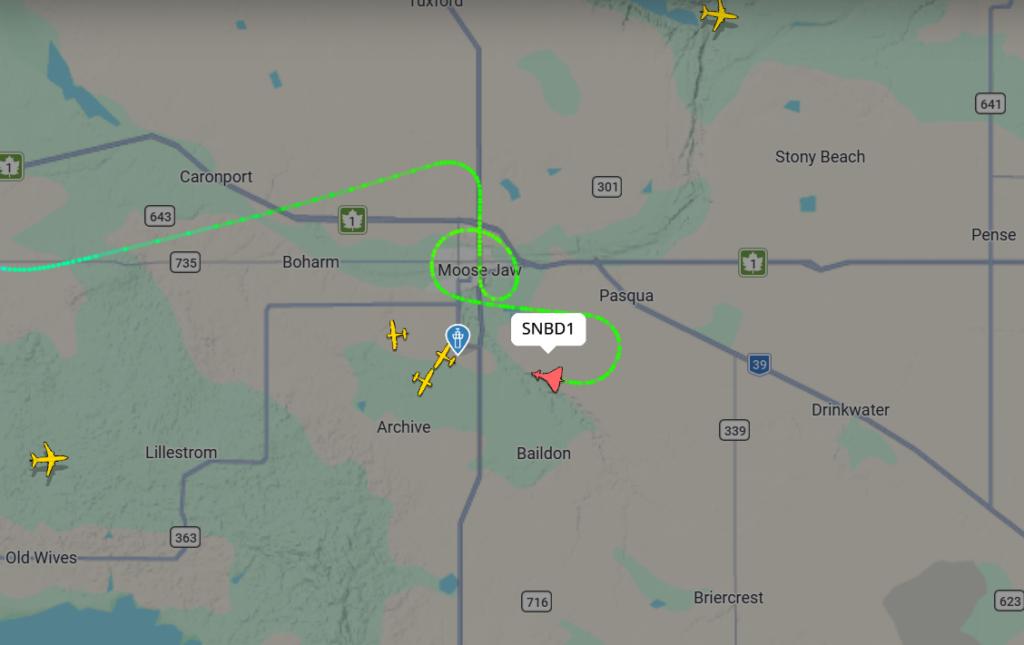
On approach to the 15 Wing base at Bushell Park, the jets were joined by a pair of PC-21 turboprop trainers, known in Canada as the CT-157 Siskin II, painting a remarkable picture of the past and the future together.
The Snowbirds celebrated the aircraft, saying, “To the CT-114 Tutor: thank you. You’re a Canadian-built jet that has done more than anyone ever asked of you. You carried generations of pilots through thousands of shows, in every kind of weather, from coast to coast to coast. You were reliable, graceful and unmistakably ours. Few aircraft have ever been so loved.”
As the RCAF closes the door on a five and a half decade history with the Tutor, the Snowbirds face an uncertain future, with the team unlikely to return to flying displays before the 2030s.
The Canadian-built jet trainer that became a national symbol
The Tutor began as Canadair’s CL-41, a privately developed jet trainer intended to win an order from the Royal Canadian Air Force. Designed and manufactured in Montreal, it was the company’s first aircraft developed from scratch rather than adapted from an existing design.
Test pilot Ian MacTavish took the prototype into the air on January 13, 1960. Canada ordered 190 production aircraft in September 1961, with deliveries beginning in 1963. In Canadian military service, the aircraft became the CT-114 Tutor.
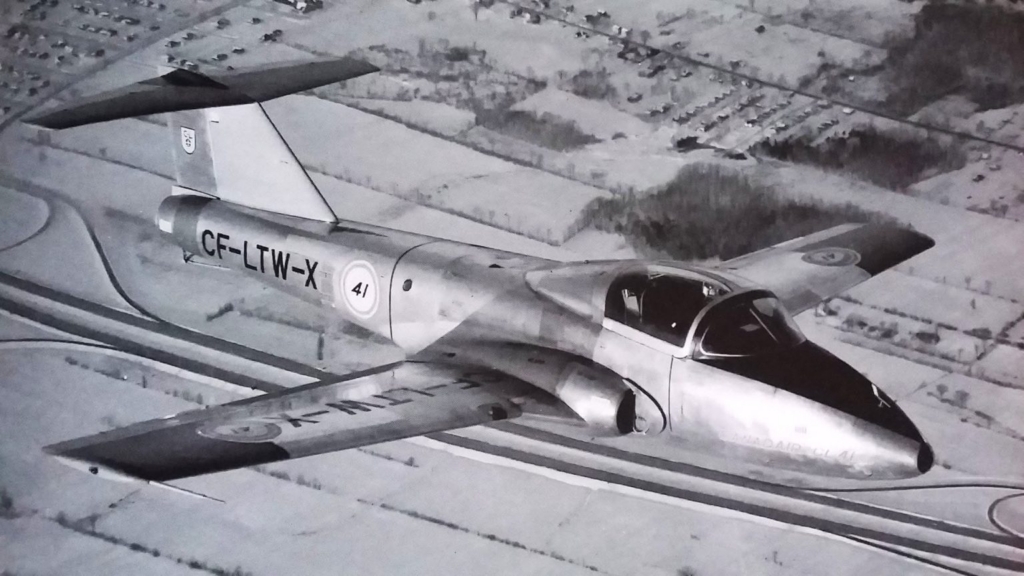
Its side-by-side cockpit placed instructor and student alongside each other, with matching controls allowing the instructor to demonstrate techniques or intervene. The small, single-engine jet would become a crucial pillar of Canadian pilot training, serving in that role until 2000.
Its public profile grew through aerobatics. Tutors equipped the Golden Centennaires display team during Canada’s centennial celebrations in 1967, before becoming the aircraft of the Snowbirds in 1971. The team has never flown another aircraft type.
One last time. 🇨🇦 After 55 years, nine CT-114 Tutors made their final scheduled public appearance with the Snowbirds over Calgary. To all who made this legacy possible: thank you. Canada is proud of you. #RCAF #Snowbirds55 https://t.co/SXu5pNgXgz
— Royal Canadian Air Force (@RCAF_ARC) November 16, 2026
Canada was not the Tutor’s only military customer. Malaysia bought 20 examples of the armed CL-41G variant, known locally as the Tebuan, or “wasp.” These served from 1967 to 1986, undertaking training and ground-attack duties. Malaysian parliamentary records also describe low-level and photographic reconnaissance missions in support of ground forces.
A handful also reached civilian hands. One notable private owner was actor and pilot John Travolta, whose CL-41 was donated to Embry-Riddle Aeronautical University in 2001 for its aircraft maintenance technology program. That gave the aircraft another educational role after its military career.
Why the RCAF Snowbirds are giving up on the Canadair CT-114 Tutor
Keeping the Snowbirds’ six-decade-old Tutors flying has become an increasingly demanding engineering task. Obsolete components, dwindling spares and problems affecting the aircraft’s engines, airframes and escape systems have progressively narrowed the options for extending their service.
National Defence says retired J85 engines have been cannibalised to supply spare parts, while returning stored aircraft to flying condition would require extensive work. Efforts to improve the escape system also encountered significant technical difficulties: one project was cancelled in 2023, and a separate assessment concluded that replacing the ejection seats could not be achieved within the aircraft’s remaining service life.
Canada had nevertheless been investing in keeping the fleet operational until 2030. A modernisation project approved in 2021 introduced glass cockpit displays, cockpit voice and flight data recorders, new transponders, and updated navigation and communications equipment.
In May, National Defence confirmed to CBC News that C$29.3 million had been spent through the upgrade contract. Eleven modernised Tutors were already in service, while two more were awaiting acceptance test flights — even as the government announced that 2026 would be their final display season.
That timing prompted questions about whether public money had been wasted upgrading aircraft so close to retirement. Moose Jaw MP Fraser Tolmie challenged the logic of the expenditure, while earlier engineering assessments cited by CBC had judged the airframes and engines viable until 2030.
The department’s explanation was that continued monitoring had revealed further engineering challenges requiring work that was no longer technically feasible or practical. New cockpit equipment could meet modern operating requirements, but it could not resolve the ageing fleet’s wider mechanical and safety-system limitations.
The spending was not necessarily without benefit. That investment, which enabled further displays and public engagement, still had value, particularly to those who caught one of the final season’s performances.
The decision to stop flying the Tutors after the 2026 season is more about declining confidence in sustaining future operations than flying safely today. National Defence told CBC that the aircraft were certified for this season, but officials were less confident about subsequent years. With airshow bookings made one or two years ahead, the RCAF said it needed to give organisers notice.
Seven of the 20 aircraft originally earmarked for upgrades will not receive them, and approximately C$1.2 million of the implementation budget is being redirected.
Snowbirds face a long grounding and a jet-less future
The Snowbirds’ next aircraft will be the CT-157 Siskin II, Canada’s designation for the Swiss-built Pilatus PC-21.
Announced in May, the transition is expected to restore the team’s demonstration capability in the early 2030s. The Snowbirds will remain based at Moose Jaw, with the government planning an eventual return to their distinctive nine-aircraft formation.
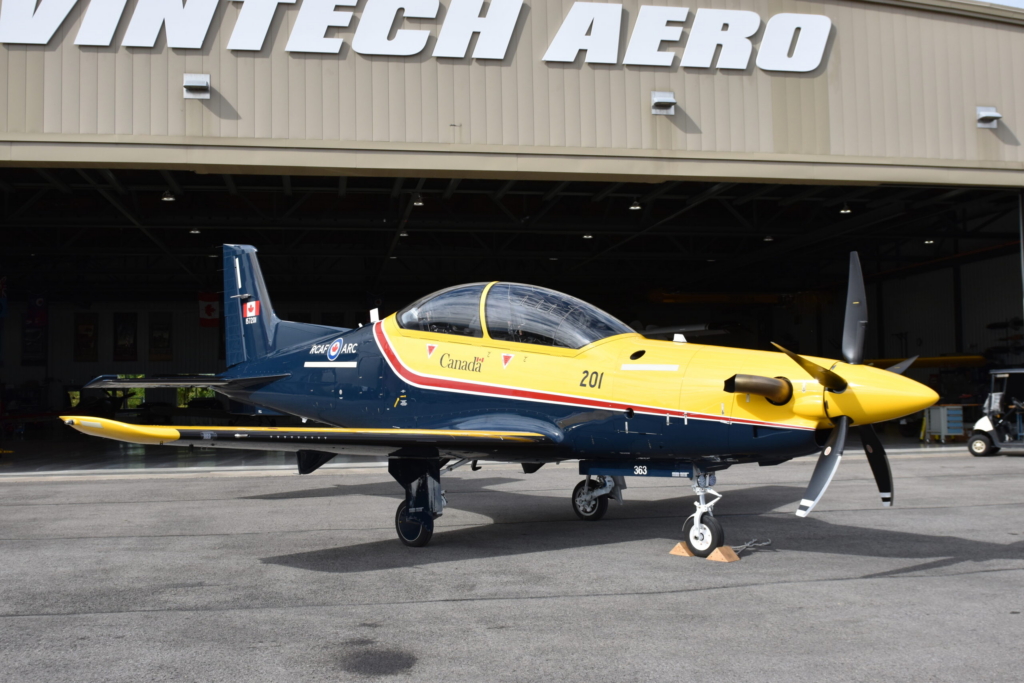
The choice reconnects the display team with the RCAF’s training fleet. Canada has ordered 19 PC-21s under its Future Aircrew Training program, operated in partnership with SkyAlyne, for advanced fixed-wing training and preparation for the jet stream. The Snowbirds’ aircraft will be a separate acquisition using the same type.
But this new steed will fundamentally change the look and sound of a Snowbirds display. The Tutor’s turbojet produces thrust directly; the PC-21’s turbine drives a propeller. The new aircraft also places its occupants in tandem, rather than side by side.
Propeller power does not preclude demanding aerobatics. The Siskin II has a 1,600-horsepower Pratt & Whitney Canada engine, a published maximum speed of 685 km/h and manoeuvring limits of positive 8G and negative 4G. Australia’s Roulettes have performed with PC-21s since 2019.
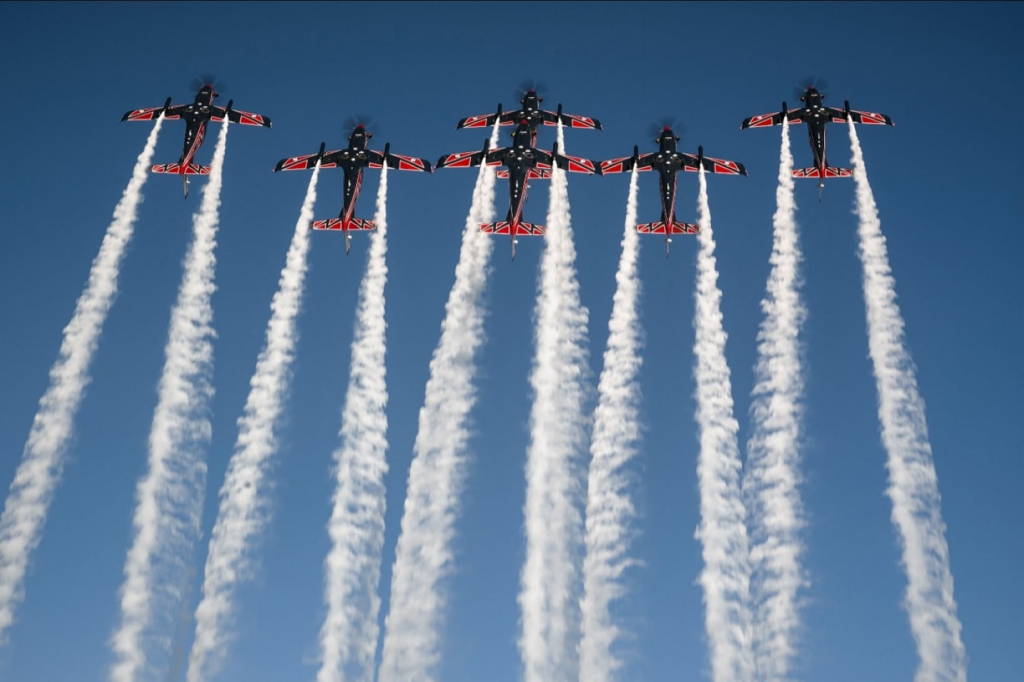
For Canada, the eventual routine will have to be developed around the new aircraft’s handling and performance. The government’s commitment is to rebuild the nine-aircraft team; precisely how its future display will compare with the Tutor show remains to be seen.
The PC-21 also should not be confused with a complete replacement for Canada’s former jet-training system. The RCAF retired its CT-155 Hawks in March 2024 and now relies on allied arrangements, principally in the United States and Italy, for fighter lead-in training. A separate Future Fighter Lead-In Training program is intended to restore that domestic capability.
Closing a chapter in Canadian aviation history
The Tutor belongs to an era when Canadian manufacturers were developing military aircraft to meet national requirements. Avro Canada produced the CF-100 interceptor and pursued the supersonic CF-105 Arrow, cancelled in 1959. Canadair’s smaller, less glamorous trainer would prove extraordinarily enduring.
Its retirement should not be mistaken for the disappearance of Canadian aerospace. The industry contributed C$33.1 billion to the economy and supported 218,700 jobs in 2025, according to the Aerospace Industries Association of Canada and the federal industry department. Canada remains among the leading countries in civil aircraft, engines and flight simulators.
Aircraft manufacturing continues through programs including Airbus’s A220 in Mirabel and De Havilland Canada’s Twin Otter and DHC-515 firefighting aircraft. Bombardier, which acquired Canadair in 1986, carries forward another part of that industrial heritage through its business aircraft.
Even the Snowbirds’ Swiss-designed replacement retains a Canadian connection through its Pratt & Whitney Canada engine.
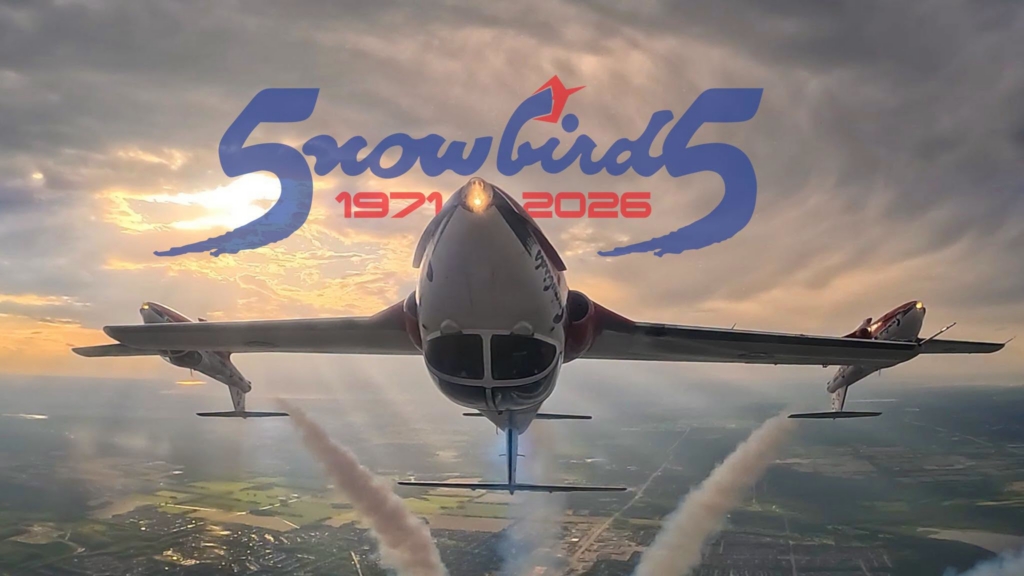
What disappears with the Tutor is something more specific: a flying link between Canada’s military aviation industry, the pilots it trained, and the crowds that watched those skills translate into formation aerobatics.
For 55 years, Canadians looking up at the Snowbirds saw their national team flying an aircraft designed and built at home. When the team returns, its identity and precision will endure — but that particular connection will belong to history.


