Why NASA is flying a Canberra into the path of the solar eclipse

8 min read
As the Moon’s shadow races across Greenland, Iceland, and Spain on August 12, one of the aircraft chasing it will be a design whose origins stretch back more than 75 years.
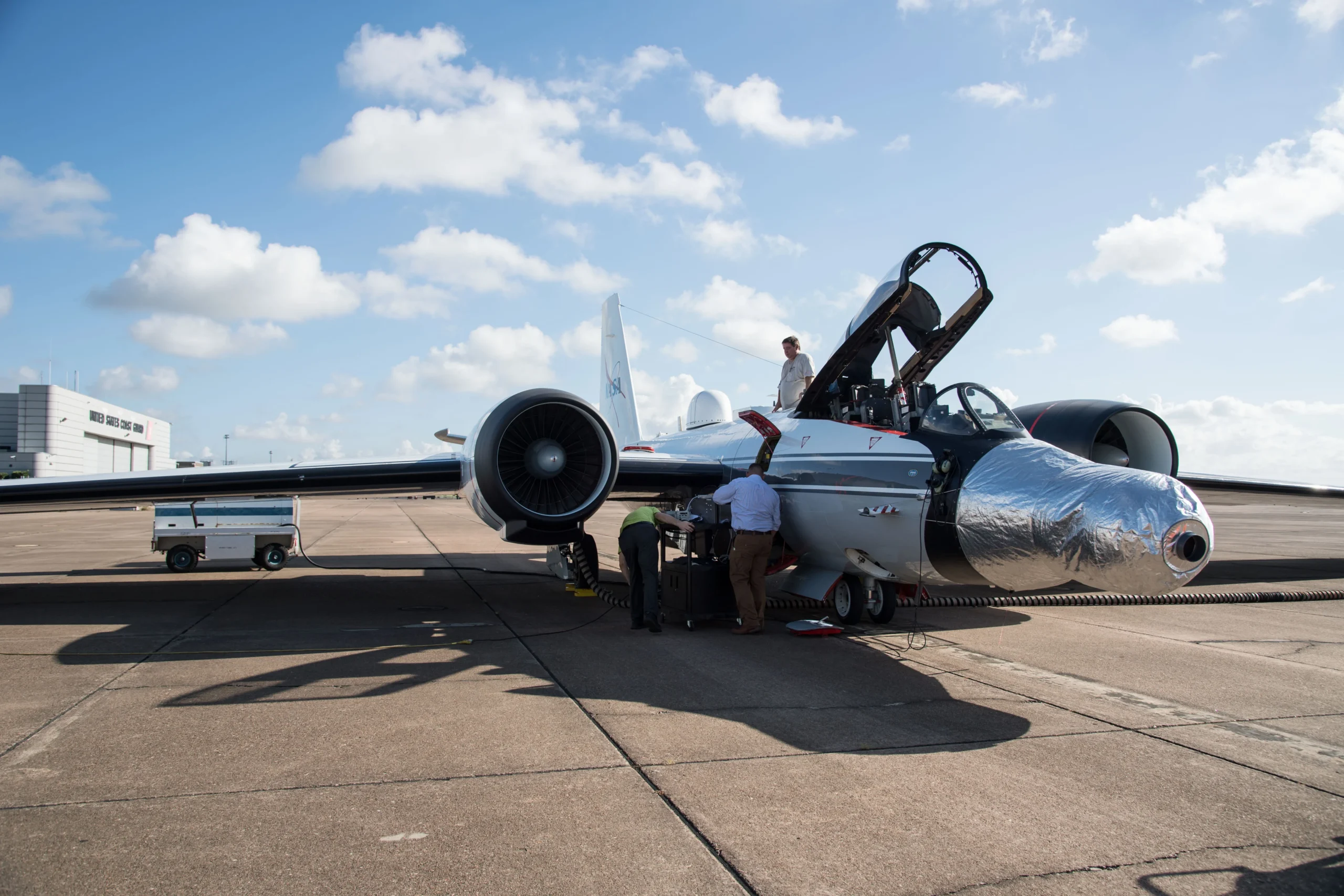
NASA is sending one of its distinctive WB-57 high-altitude research aircraft into the path of the total solar eclipse. The aircraft, a variant of the Cold War-era English Electric Canberra, will carry cameras to capture views of the Sun that scientists cannot obtain either from the ground or from space.
At the same time, NASA-funded teams will launch dozens of scientific balloons from Iceland and Spain to investigate how Earth’s atmosphere responds when daylight suddenly disappears.
Together, the experiments will turn a few minutes of darkness into a laboratory for studying both the Sun and Earth’s atmosphere.
Why NASA is chasing the eclipse with a WB-57
NASA plans to fly its WB-57 at around 50,000 ft during the August 12 eclipse.
Mounted in the aircraft’s nose will be the SCIFLI Multispectral Airborne Imager, or SAMI, developed by NASA’s Scientifically Calibrated In-Flight Imagery team at Langley Research Centre.
The instrument combines four cameras that can take high-resolution images in several wavelengths of visible and infrared light.
According to NASA’s eclipse science preview, the cameras will record at least 20 images every second during totality, capturing structures, outflows and rapid changes in the Sun’s corona.
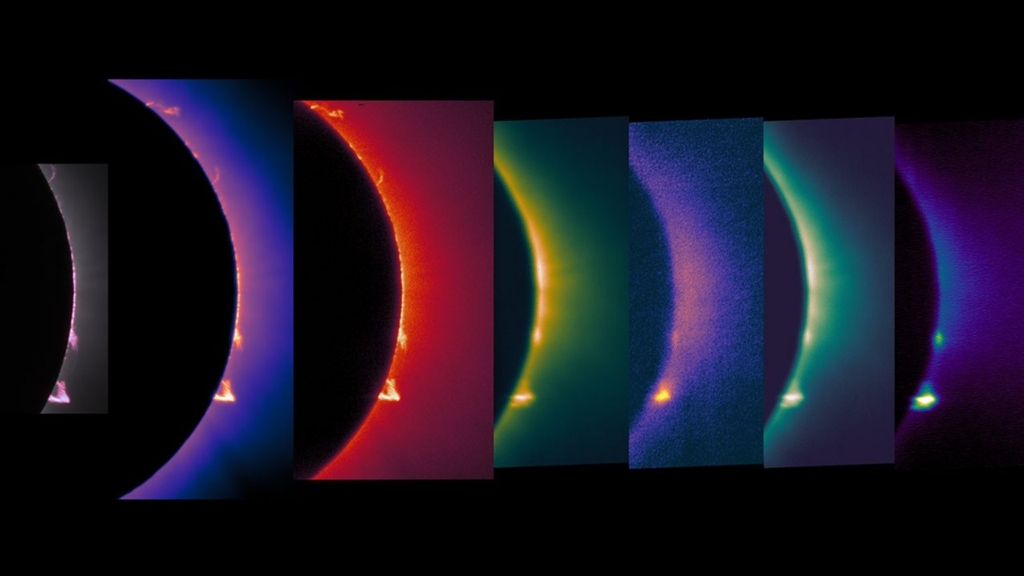
The corona is the Sun’s outer atmosphere. Normally, it is overwhelmed by the brightness of the solar surface, but during a total eclipse, the Moon blocks the Sun’s visible disk and exposes the much fainter corona.
“From our unique perspective on Earth during a total solar eclipse, scientists can study the Sun’s corona in a way we can’t from anywhere else in the solar system,” NASA quotes Kelly Korreck, eclipse programme manager at NASA Headquarters in Washington, as saying. “The Sun impacts our daily life, satellites, and astronauts in space, and we can take advantage of this moment to advance our understanding of that influence.”
Why fly instead of watching from the ground?
There are several advantages to putting the cameras aboard an aircraft.
The first is weather. At 50,000 ft, the WB-57 will be above virtually all clouds that could spoil observations from the ground.
More importantly for science, the aircraft is above a substantial portion of Earth’s atmosphere. Some infrared wavelengths that scientists want to examine are absorbed by the lower atmosphere and therefore cannot be easily observed with ground-based telescopes.
NASA says the solar corona has been observed in only some of these wavelengths, a handful of times.
The WB-57 can also chase the eclipse.
The maximum duration of totality from the ground during the August 12 eclipse will be two minutes and 18 seconds. Flying along the path of the Moon’s shadow at around 460mph will allow NASA’s aircraft to keep its instruments in totality for nearly three minutes.
A few dozen extra seconds might not sound significant, but for cameras capturing at least 20 frames per second, it amounts to hundreds of additional observations.
What NASA hopes to discover
Scientists will use the images to investigate several outstanding questions about the Sun.
One is the formation of solar prominences — huge structures of solar material suspended above the Sun’s surface by magnetic fields.
Another is one of the enduring mysteries of solar physics: why the corona is so extraordinarily hot.
Temperatures at the Sun’s visible surface are around 5,500ºC, yet parts of the corona reach temperatures of around a million degrees. Scientists still do not completely understand the processes transferring enough energy into the corona to produce those temperatures.
NASA also wants to investigate the relationship between material in the corona and the solar wind, the stream of charged particles continually flowing outward from the Sun through the solar system.
Understanding these processes has practical consequences. Solar activity can affect satellites, communications, navigation systems, astronauts, and electrical infrastructure on Earth.
NASA has done this before
This week’s flight builds on observations made during the total solar eclipse that occurred across North America on April 8, 2024.
During that eclipse, SAMI captured visible and infrared images of the corona aboard a NASA WB-57.
NASA reported later that airborne cameras and spectrometers observed the corona in detail. There were, however, some images that were blurred due to unexpected vibrations induced by the aircraft’s wings. Spectrometers mounted on the nose were not affected.
For the 2026 mission, principal investigator Amir Caspi of the Southwest Research Institute and his team have modified the experiment using lessons from the earlier flight.
Among the changes are revised exposure times to prevent bright solar features from becoming overexposed. Improved processing software should also allow scientists to analyse the observations more quickly.
“The Sun is always changing. Every eclipse is different. So we could see things we didn’t see before,” NASA quotes Caspi as saying in its brief on the eclipse flights. “We learn from each eclipse how to better observe the next one.”
What is NASA’s WB-57?
The aircraft undertaking the mission has a long history.
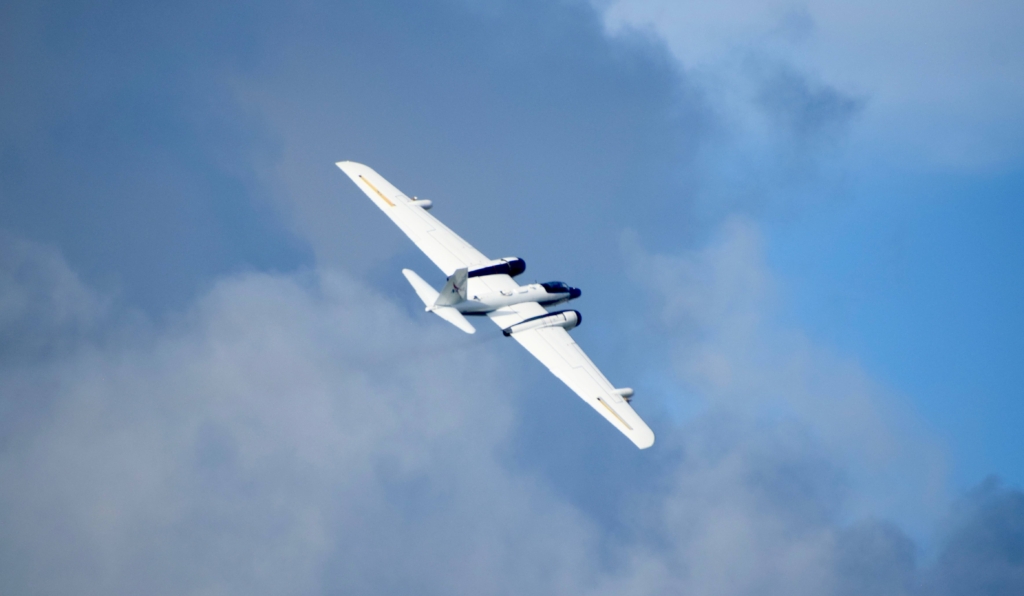
NASA’s WB-57s are heavily modified descendants of the English Electric Canberra, the British-designed jet bomber that first flew in 1949.
The US Air Force adopted an American-built version of the Canberra as the B-57. The WB-57F evolved into a specialised high-altitude reconnaissance and atmospheric research aircraft.
Today, NASA’s Johnson Space Centre operates three WB-57 aircraft from Ellington Field in Houston. NASA’s WB-57s function as flying laboratories.
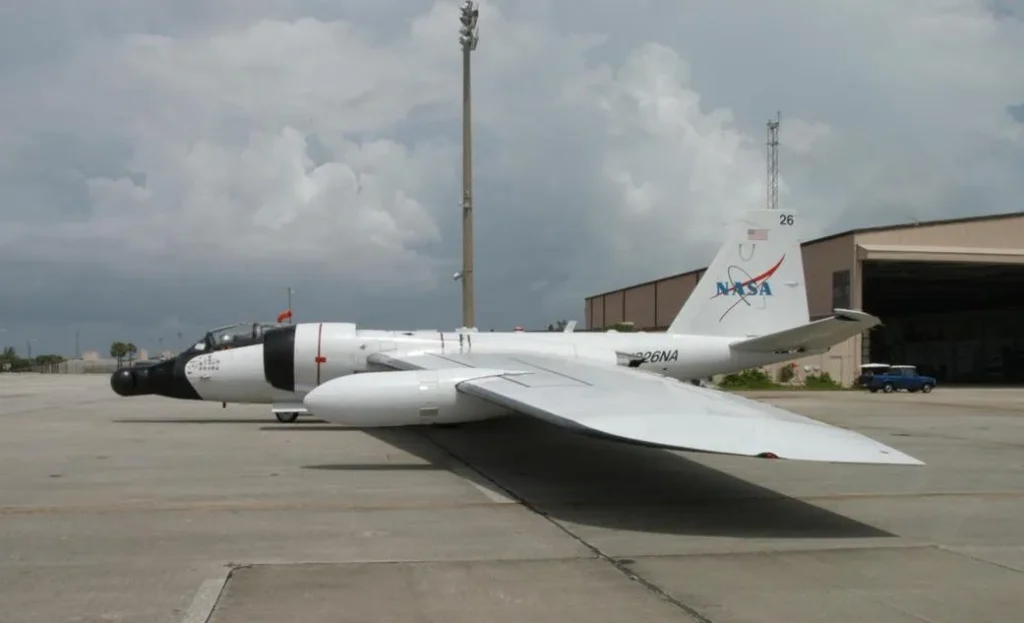
NASA says the WB-57 can operate at altitudes above 63,000 ft, remain airborne for approximately 6.5 hours, and fly around 2,500 nautical miles. It can carry up to approximately 8,800lb of scientific payload.
Its enormous wing is one of its most recognisable features. NASA’s SCIFLI programme puts the wingspan at about 122.5ft — almost twice the length of the aircraft.
There are two crew stations in tandem. The pilot flies from the forward cockpit while a sensor equipment operator controls navigation and scientific payloads from the second position.
That combination of altitude, payload capacity, and an onboard sensor operator has allowed the WB-57 to perform everything from atmospheric and Earth science to ground mapping, cosmic dust collection, and rocket launch observation, as well as testing equipment intended for future aircraft and spacecraft.
NASA has increasingly used it for heliophysics as well.
Why an aircraft from the 1950s still works for NASA
The WB-57’s unusual combination of a very large wing, high operating altitude, and substantial payload capacity makes it difficult to replace.
NASA describes the aircraft as a platform capable of carrying instruments in its nose, belly, wing pods, and wing hatches, with nearly 9,000lb available for instrumentation.

Its ability to put large experimental payloads above most of the atmosphere — while still allowing researchers to modify, recover, and fly those instruments again — gives it capabilities that satellites cannot always provide.
Tracking the eclipse takes full advantage of those characteristics.
Rather than waiting for the Moon’s shadow to pass over a fixed telescope, NASA can position the aircraft in the path of totality and then fly with the shadow, increasing observation time and escaping most atmospheric interference.
NASA is also sending up 86 balloons
While the WB-57 looks outward at the Sun, another NASA-supported experiment will investigate what happens during the eclipse closer to Earth.
The Nationwide Eclipse Ballooning Project will send teams of US university students to Iceland and Spain.
In Iceland, two teams plan to release 80 scientific balloons, beginning 18 hours before the eclipse and continuing until eight hours afterwards.
Their target is Earth’s atmospheric boundary layer — the lowest portion of the atmosphere, which interacts directly with the surface.
Normally, the boundary layer responds to the regular transition between daytime heating and nighttime cooling. An eclipse throws a temporary switch into that cycle by removing direct solar radiation in the middle of the day.
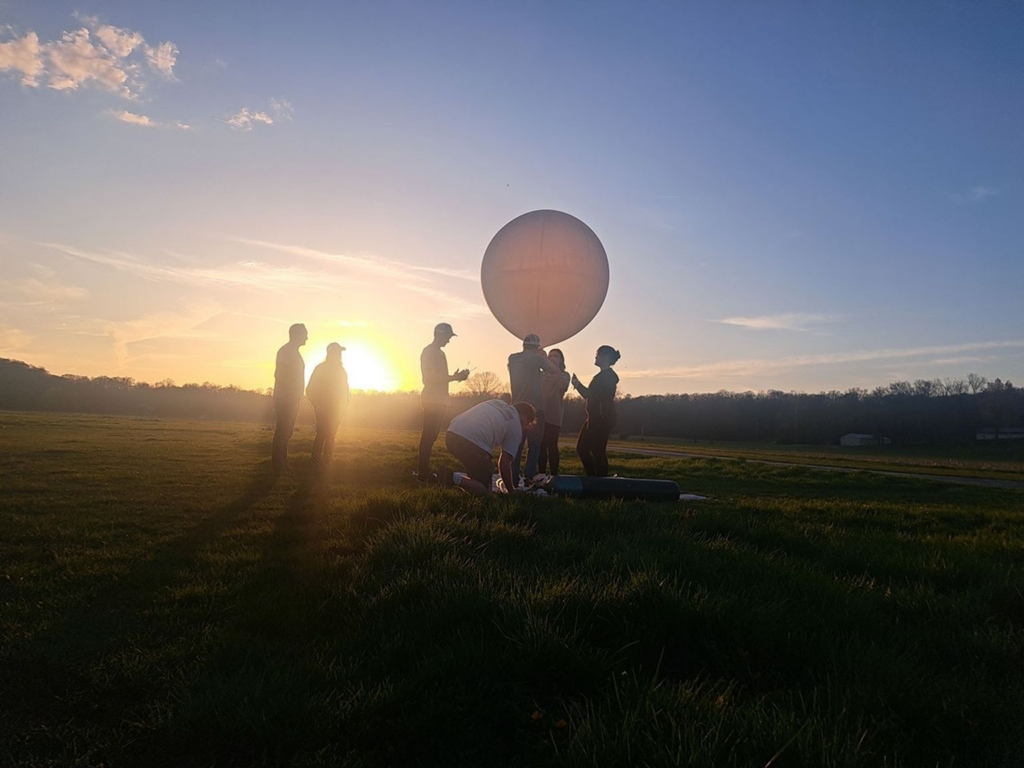
In areas with clear skies during the October 2023 and April 2024 eclipses, NASA balloon observations found that the boundary layer collapsed and thinned. That didn’t happen in areas with cloudy weather.
Iceland presents an interesting test because August brings very long days and short nights.
Researchers want to determine whether the temporary darkness produced by the eclipse will still be enough to trigger the same atmospheric response.
Six more balloons will measure ozone over Spain
A separate experiment will take place in Spain, where three teams will launch six balloons.
Those balloons will carry 360-degree cameras that can observe the Moon’s shadow from high above the surface.
They will also carry instruments measuring atmospheric ozone.
Sunlight plays an important role in ozone chemistry. Experiments conducted during the April 2024 eclipse detected a decline in ozone levels during totality.
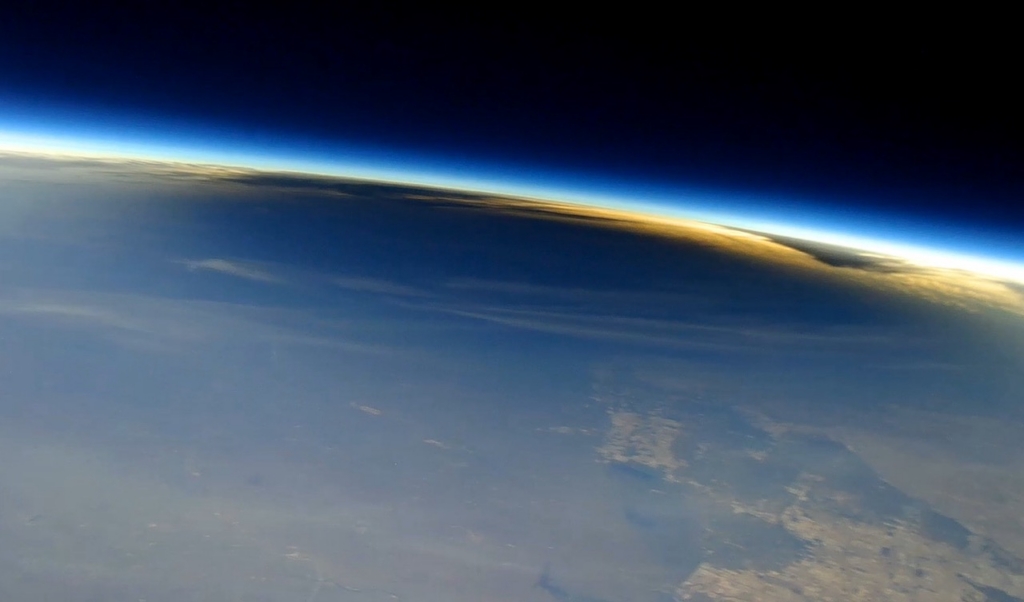
Scientists will compare those results with measurements from Spain, where the 2026 eclipse occurs at a different time of day and season.
The result is two NASA-funded eclipse laboratories operating simultaneously.
High above the clouds, a jet bomber conceived during the early years of the Cold War will chase the Moon’s shadow to study the million-degree atmosphere surrounding the Sun.
Below it, balloons will measure how Earth’s own atmosphere responds when that sunlight suddenly disappears.
Sign up for our newsletter and get our latest content in your inbox.


More from


October 11, 20263 min read