Mount Etna keeps shutting Catania Airport – now Sicily wants a new backup plan

6 min read
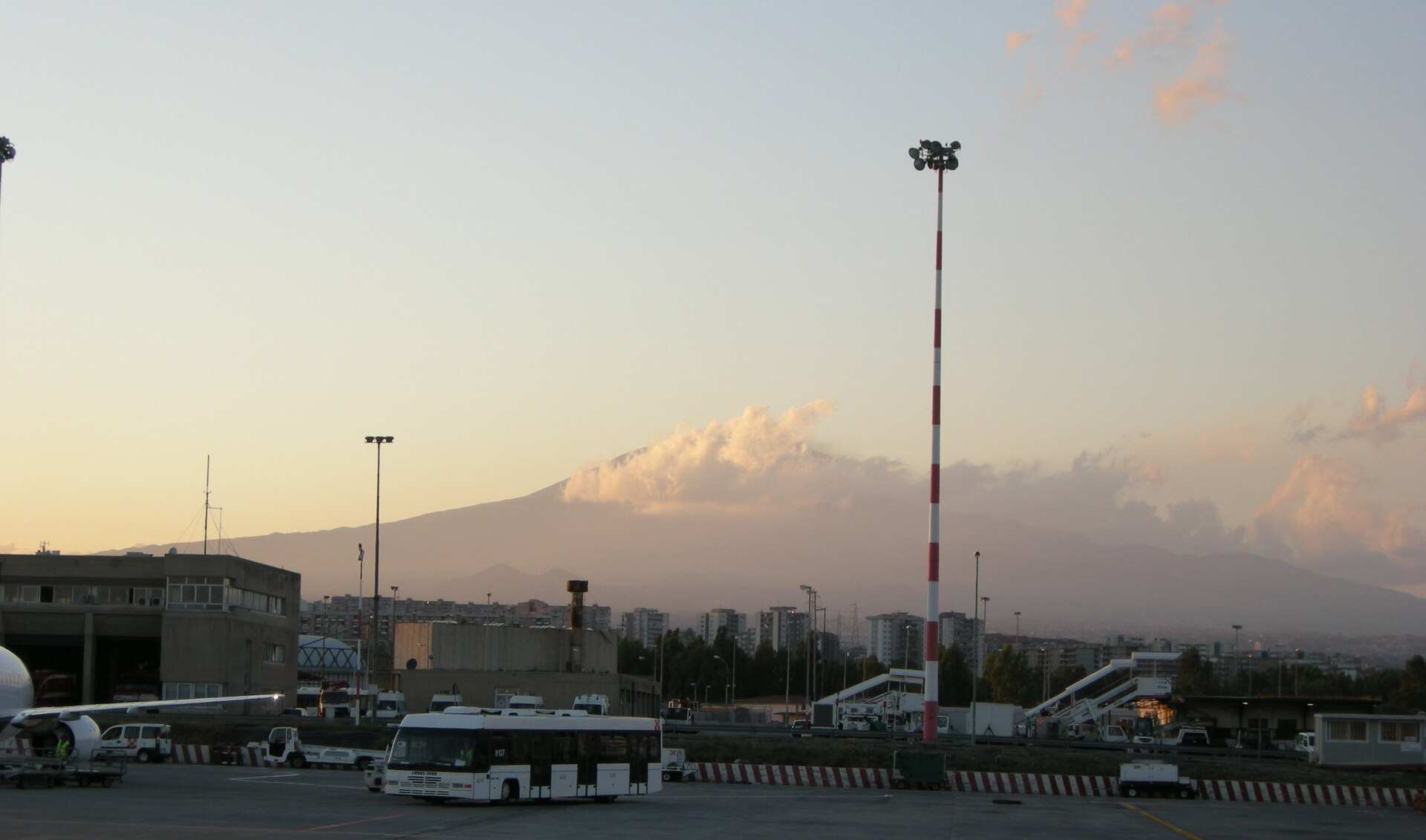
Mount Etna has again shut down flights at Catania Fontanarossa Airport, adding to a summer of repeated disruption that is changing how Sicily plans for its busiest aviation gateway.
Catania suspended flight operations on 14 September after Etna emitted another cloud of volcanic ash. Airport operator SAC initially closed sections of the surrounding airspace, then extended the restrictions as conditions deteriorated.
In its 14 September operational update, Catania Airport said volcanic activity had once again forced the closure of airspace sectors around the airport. It recommended passengers “check the status of their flights with their airlines before travelling to the airport.”
Italy’s National Institute of Geophysics and Volcanology (INGV) had earlier raised Etna’s aviation colour code to red. Its Volcano Observatory Notice for Aviation (VONA), issued at 04:43 UTC, reported an ongoing ash emission.
Repeated Etna disruptions in 2026 have led Italian authorities to conclude they no longer face an exceptional emergency event, but a recurring operational constraint.
Catania has faced repeated Etna disruption
Etna’s eruptive activity intensified on 6 August, beginning a prolonged period of ash emissions that repeatedly restricted Catania’s airspace.
Italy’s civil aviation authority, ENAC, said the eruption affected operations at Catania, Comiso and Palermo. In an official statement on the Etna emergency, the regulator said volcanic ash, combined with predominantly southerly winds, had caused significant operational restrictions, including a complete closure of the airspace affecting Catania.
By 12 August, the disruption had affected around 700 flights at Catania, including cancellations and flights rescheduled through other airports, according to the Sicilian regional government.
The problem did not end with August. INGV’s archive of aviation notices shows Etna repeatedly moving between orange and red aviation alerts this month, with red alerts issued on 4, 6, 7, 9, 10 and 14 September.
Catania does not close every time INGV issues a red VONA. The alert only describes volcanic activity and the potential ash hazard. Operational restrictions depend on where the ash travels. But the frequency suggests Etna can no longer be treated as an occasional disruption.
Why Etna is becoming an operational problem
Etna can be active without closing Catania. But a change in eruption intensity or wind direction can suddenly push ash towards the airport and its arrival and departure routes. Airlines can schedule flights while Catania is operating, only for conditions to change before those aircraft arrive.
ENAC said during the August emergency that decisions were based on both the eruption’s evolution and changing wind direction. The regulator established a crisis committee coordinating with air navigation provider ENAV, INGV, the Italian Air Force and airport operator SAC.
According to ENAC, the combination of volcanic ash and predominantly southerly winds resulted in “significant operational limitations”, including complete closure of Catania’s airspace and the cancellation or rerouting of flights, particularly to Palermo.
SAC said prevailing winds at altitude contributed to the restrictions on 14 September.
Etna has triggered repeated aviation warnings
INGV’s VONA archive records red aviation alerts for Etna on 30 July and 6, 7, 8, 9, 11, 15 and 16 August.
After a brief reduction in activity, red alerts returned repeatedly in September.
Orange alerts, indicating heightened unrest with increased likelihood of eruption or an eruption producing little or no ash, were issued between many of those red alerts.
For airport operators and airlines, Etna is not producing one isolated disruption followed by a return to normal. Catania instead faces recurring periods when volcanic activity and weather conditions can rapidly remove airport capacity.
Why volcanic ash can shut an airport
Volcanic ash contains abrasive fragments of rock, minerals and volcanic glass. Particles entering a jet engine can melt in its high-temperature sections before solidifying on cooler components. Heavy exposure can disrupt airflow through the engine and potentially cause compressor problems, power loss or flameout.

Ash can also abrade windscreens, damage aircraft surfaces and contaminate sensors.
Modern forecasting means authorities do not necessarily have to close every area where traces of ash might exist. Improved volcanic ash forecasting could reduce unnecessary flight disruption.
However, Catania presents an unusually difficult case because the ash source is immediately beside a major international airport.
Why was Catania Airport built beside an active volcano?
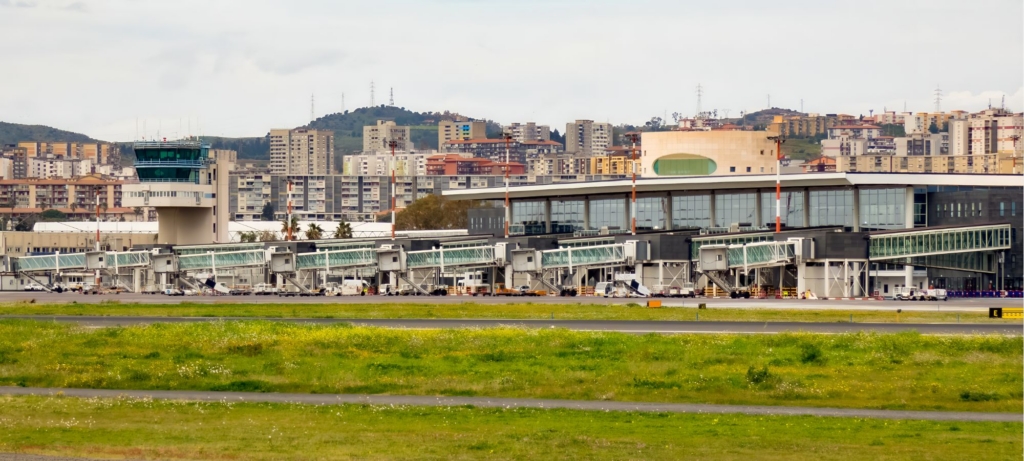
Catania’s Fontanarossa airfield opened in 1924, when commercial aviation was in its infancy, and the airport handled a fraction of today’s traffic. Its flat site south of Catania offered convenient access to the city and Sicily’s eastern coast.
Italy later expanded the airport with a new terminal opening in 1950, followed by a major expansion in the 1970s and a longer runway.
What began as a relatively small airfield has evolved into an airport handling more than 10 million passengers a year — while the volcano overlooking it has remained active.
Decades of infrastructure investment tied Catania to Fontanarossa. However, the major volcanic events that have shaped international aviation procedures came decades after Catania was built. In 1924 and even in 1950, planners did not assess the risk of Etna’s proximity the way they might today.
Sicily needs somewhere for Catania’s flights to go
Repeated closures have exposed another weakness: Sicily has no obvious substitute that can absorb all of Catania’s traffic. Flights can be diverted to Palermo, Trapani and Comiso. But passengers then need to reach eastern Sicily by road or rail.
During the August disruption, the Sicilian regional government organised more than 100 additional bus services, in addition to airline-arranged connections to and from Palermo and Trapani. It also strengthened rail services between Palermo and Catania.
ENAC subsequently praised the regional government’s use of shuttle services between Sicily’s airports as part of the response to the disruption.
But moving passengers across the island after flights are diverted is an emergency response, not a long-term solution. The regional government now wants to strengthen Sicily’s airport system, particularly Comiso.
Comiso could become a more effective backup
Comiso Airport sits roughly 70 kilometres southwest of Catania and provides the most obvious alternative when Etna affects Fontanarossa.
Its capacity is limited, however. That is why the Sicilian government is now explicitly linking investment in Comiso with the operational lessons from Etna.

“This emergency confirms the need to further strengthen the island’s airport system and, in particular, Comiso Airport, where we have decided to invest new resources to increase its capacity and operations,” Regional president Renato Schifani said in an official statement on the August disruption.
Comiso would not replace Catania. However, additional aircraft parking, ground handling capacity, passenger facilities and better surface transport could allow it to absorb more diverted traffic when ash restricts operations at Fontanarossa.
Palermo and Trapani would remain important alternatives, particularly during severe or prolonged disruption.
Etna disruption is becoming part of standard operations at Catina
Airports routinely prepare for snow, thunderstorms, strong winds and other recurring weather hazards. Catania increasingly has to treat volcanic ash similarly — as an ever-present hazard that can repeatedly remove substantial airport capacity with little notice.
INGV issued multiple red aviation warnings during August and September. ENAC activated crisis coordination between aviation authorities, the volcano observatory, the military and the airport operator. The Sicilian government organised emergency ground transport and has now explicitly called for more investment in Comiso.
Sicily’s response is extending beyond reopening Catania after each eruption. It needs enough spare airport capacity, aircraft parking, ground handling and road and rail connections to keep passengers moving when Fontanarossa cannot.
Etna cannot be controlled, and predicting exactly where its next ash cloud will travel remains difficult. But after repeated disruptions in the summer of 2026 and another shutdown in September, Sicily must plan assuming Catania Airport will lose capacity again.