Crew shortages hit JetBlue’s transatlantic network as Barcelona flights cancelled

3 min read

JetBlue has been forced to cancel two Boston-Barcelona flights within the space of a week after pilots assigned to operate the services were delayed while positioning to Boston Logan International Airport.
The cancellations are the latest sign of the operational challenges affecting JetBlue’s transatlantic network this summer, with crew shortages, scheduling pressures and weather-related disruption continuing to impact the carrier’s performance.
Deadheading delays force JetBlue to cancel Barcelona flights
Fresh scrutiny has been placed on JetBlue’s summer operation after two flights between Boston and Barcelona were cancelled at short notice because the airline was unable to staff them with qualified flight crews.
According to reports first highlighted by travel industry insider JonNYC on X, the pilots rostered to operate the flights were delayed while travelling from the airline’s main crew base at New York JFK Airport to Boston aboard domestic JetBlue services.s.
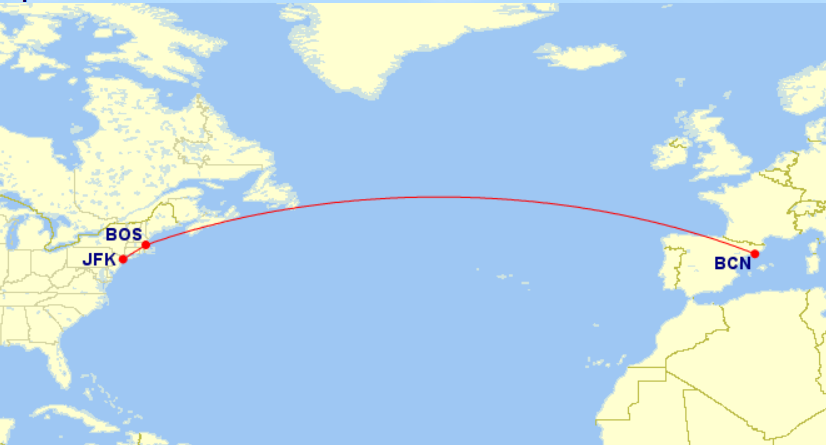
The pilots were reportedly “deadheading” on scheduled flights from JFK to Boston before operating the overnight sector to Barcelona. In airline terminology, deadheading refers to crew members travelling as passengers as part of their work duties to position for a later flight assignment.
Importantly, time spent deadheading counts towards a pilot’s duty period, even though they are not actively operating the positioning flight.
In both cases, the domestic flights from New York to Boston were reportedly delayed by congestion and disruption in the Northeast US airspace system. By the time the crews arrived in Boston, they were no longer within their legally permitted duty limits to operate the transatlantic service.

According to reports, the affected flights were JetBlue flight B6 345 from Boston Logan to Barcelona-El Prat on 6 August and again on 8 August. Passengers were subsequently rebooked onto alternative services to Spain.
Limited pool of JetBlue transatlantic pilots creates operational risk
The incidents have also highlighted a structural challenge within JetBlue’s transatlantic operation.
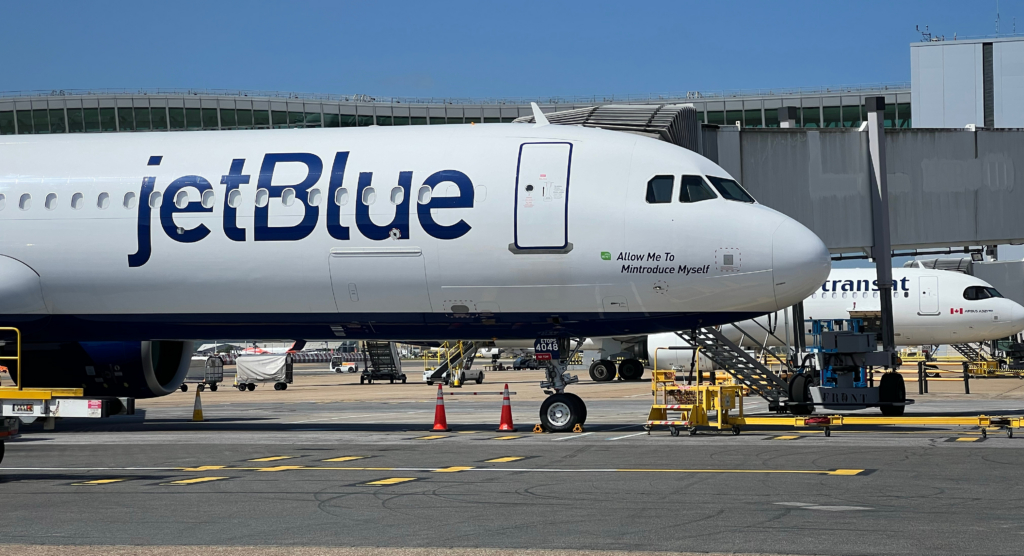
As reported by PYOK, only a subset of the airline’s Airbus A321neo pilots hold the additional qualifications required to operate JetBlue’s European routes. These qualifications cover areas such as North Atlantic procedures, long-range overwater operations and coordination within the North Atlantic air traffic management system.
Because the majority of JetBlue’s transatlantic operation is based at New York JFK, many of those qualified pilots are also based there rather than in Boston. As a result, the airline relies on positioning crew between bases when operational requirements demand it.
That dependence can leave little margin for error when domestic disruptions occur, particularly during the peak summer travel season.
The cancellations are likely to have cost JetBlue tens of thousands of dollars in passenger reaccommodation expenses and potential compensation obligations, while also drawing attention to the fragility of crew and aircraft availability across parts of its network.
Crew shortages and disruption continue to affect JetBlue operations
The Barcelona cancellations are not the only recent example of strain on JetBlue’s transatlantic operation.
According to PYOK, a Boston-Paris Charles de Gaulle service was delayed by around four hours on 10 August, eventually departing at approximately 01:00 local time. Sources cited by the publication attributed the delay to crew shortages and fatigue-related sickness absences.
Like many airlines operating in the busy summer period, JetBlue has had to contend with thunderstorms and air traffic congestion across the US Northeast. However, industry observers suggest the carrier has struggled to recover from disruption events as quickly as some of its competitors because aircraft and crew resources are already heavily utilised.
Reports have also suggested that cabin crew have been offered financial incentives to work additional shifts and give up rostered days off in an effort to maintain operations during the peak travel period.
With JetBlue continuing to expand its presence across the North Atlantic, maintaining operational resilience on premium long-haul routes will remain a key challenge as summer demand remains strong.
Sign up for our newsletter and get our latest content in your inbox.



More from


October 13, 202612 min read