


Indonesia welcomes Dassault Rafale, Airbus A400Ms and Falcon 8X in sweeping defence showcase

6 min read
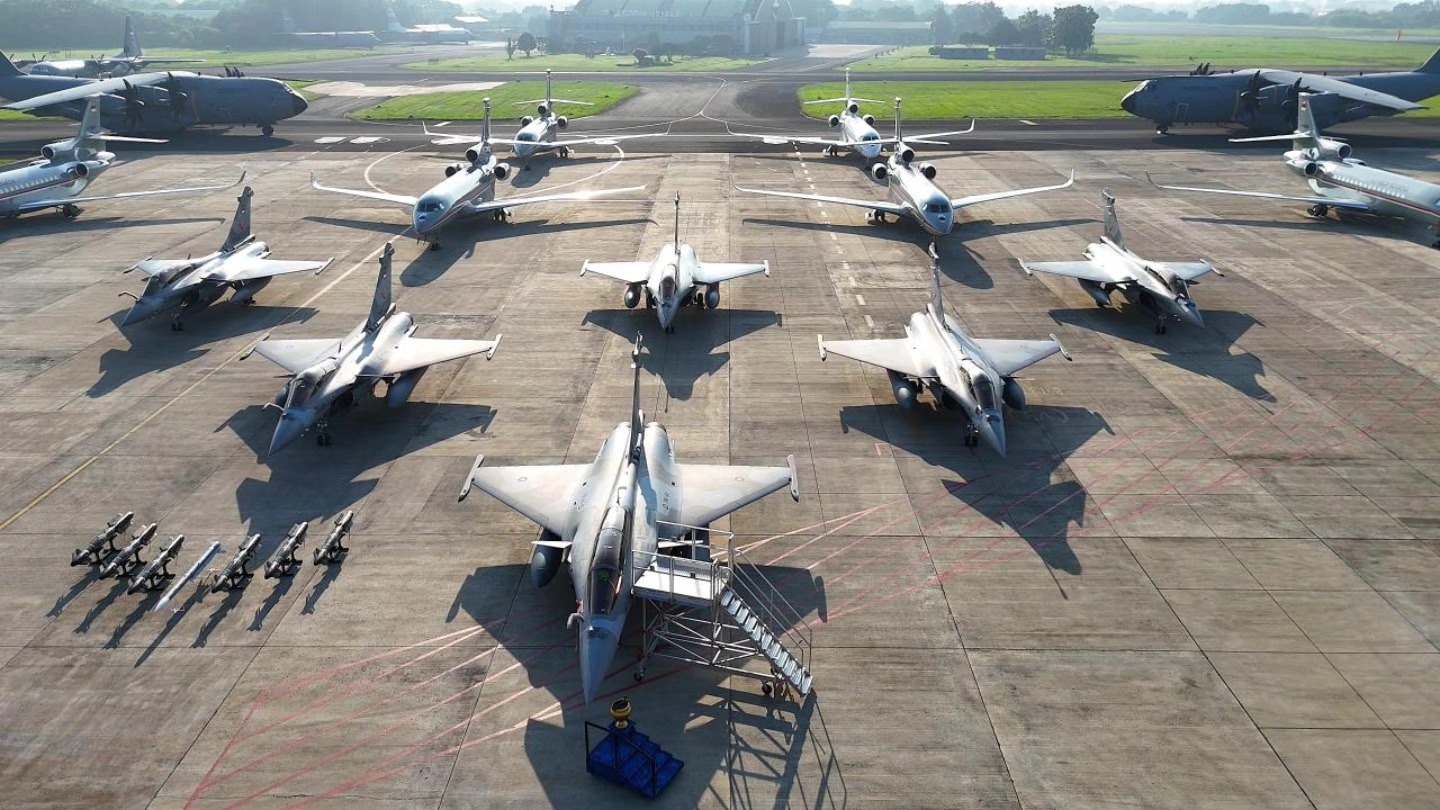
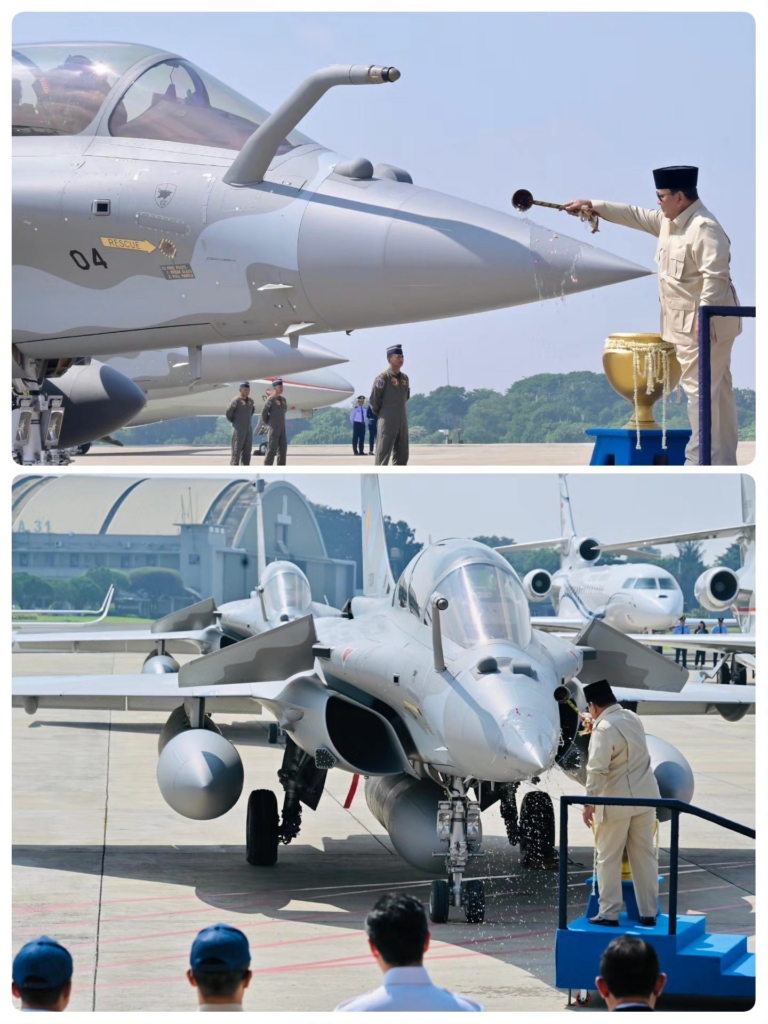
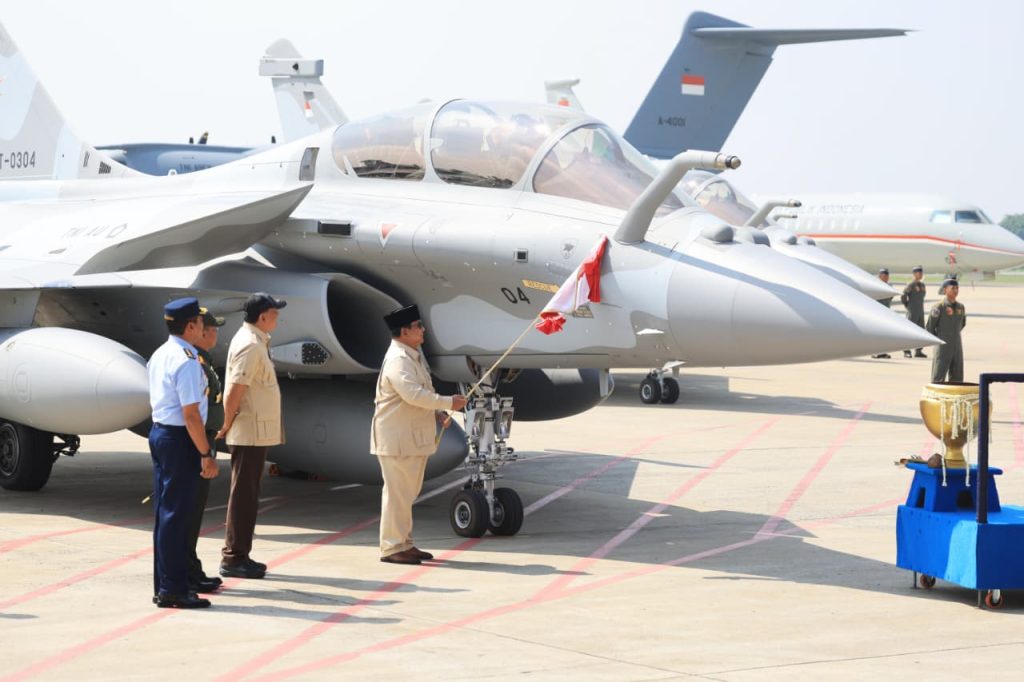
Indonesia publicly showcased its first operational Rafale fighters on 18 May as President Prabowo Subianto used a high-profile Jakarta ceremony to highlight the country’s accelerating military modernisation drive.
The event at Halim Perdanakusuma Air Base in Jakarta marked the clearest signal yet that Southeast Asia’s largest country is attempting to reshape its airpower structure around long-range deterrence, networked operations and rapid force mobility at a time of growing Indo-Pacific instability.
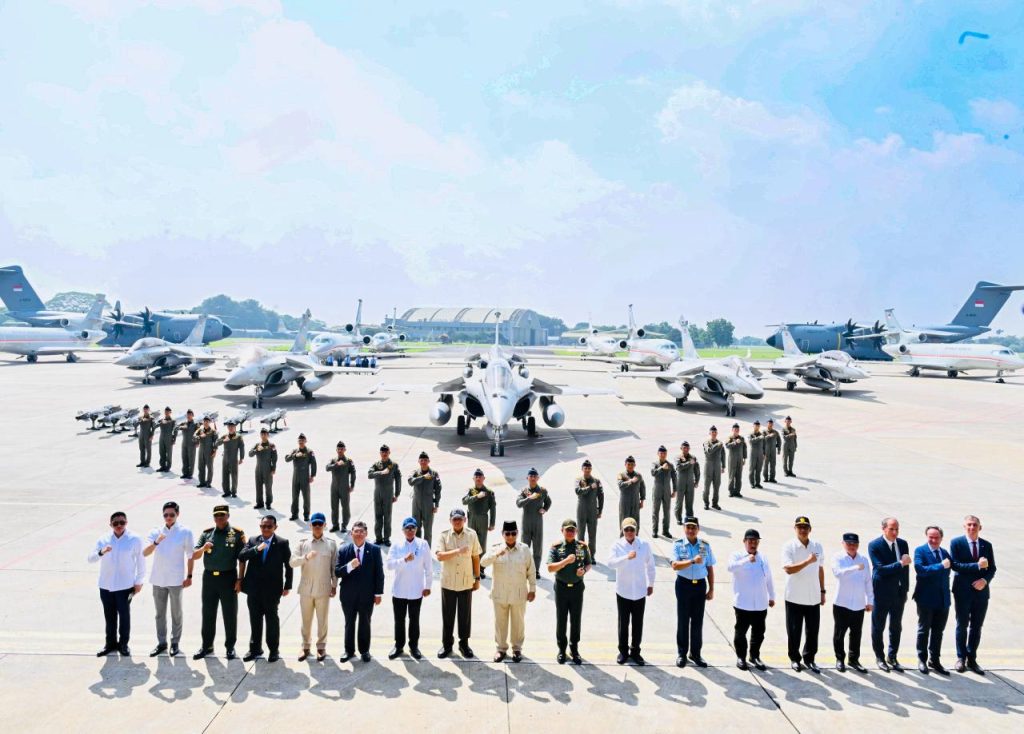
President Prabowo personally presided over the ceremony, which also featured both of the nation’s newly delivered Airbus A400M transport aircraft. Also on show were several Falcon 8X VIP jets and a Thales Ground Master radar system as part of Jakarta’s broader military modernisation effort.
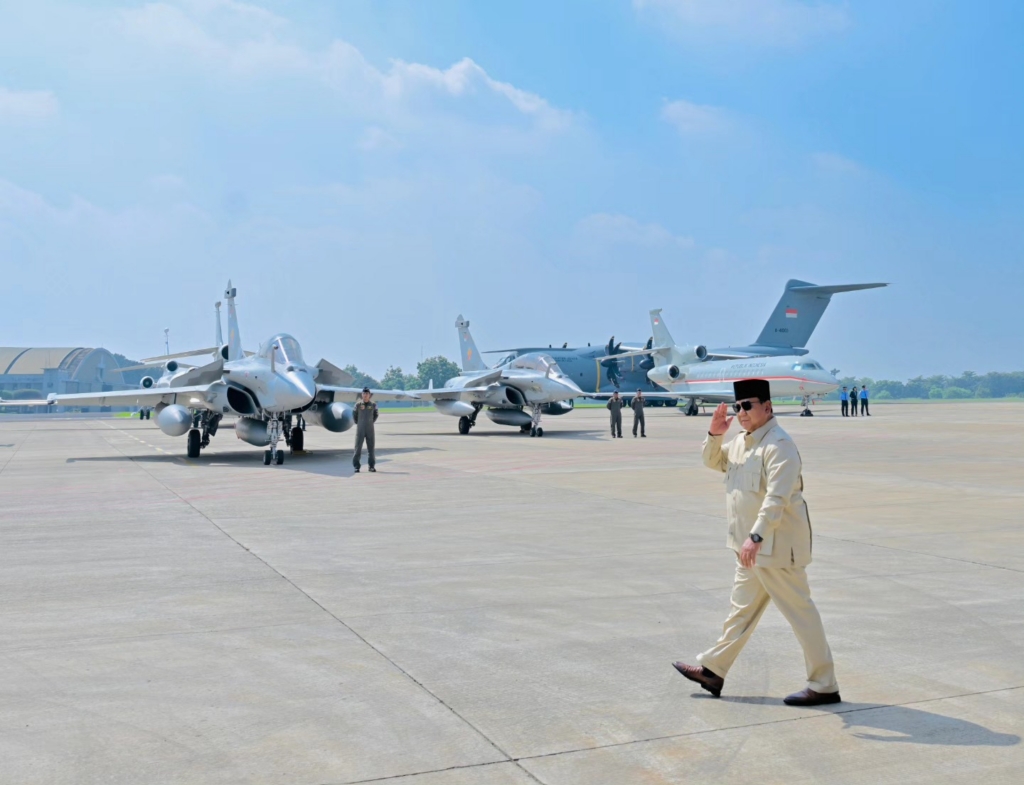
“We must continue to improve our defence capabilities to serve as a deterrent. We do not have any interests other than protecting our own territory,” Prabowo said during the ceremony.
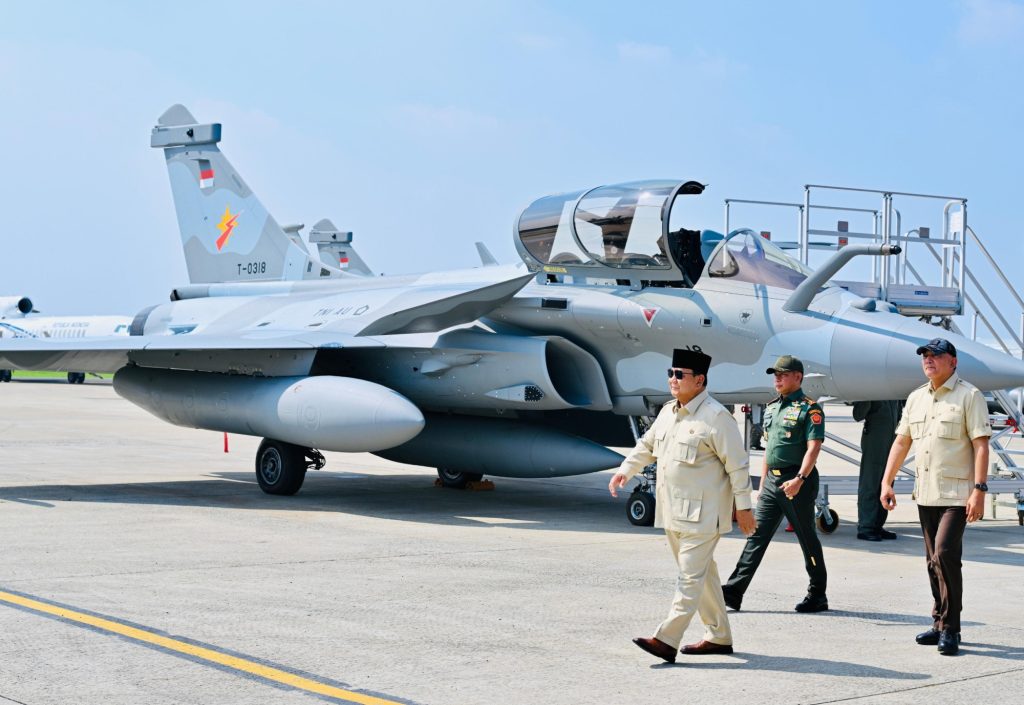
The event itself carried strong strategic messaging. Rafale fighters armed with Meteor beyond-visual-range missile mock-ups and AASM Hammer precision-guided munitions were displayed publicly alongside strategic airlift and radar systems. The visible aerial refuelling probe hints at a long-range strike role.
The presentation reflected a wider shift underway inside the Indonesian military towards a more networked and layered force structure built around sensors, mobility, strike capability and operational reach.
Indonesia modernises one of the world’s most diverse air forces
Indonesia’s air force has long struggled with one of the most complicated aircraft inventories in Southeast Asia.
According to GlobalMilitary’s 2026 inventory database, the Indonesian Air Force currently operates 469 aircraft and ranks 29th globally in overall airpower capability.
The fleet reflects decades of mixed procurement decisions spanning American, Russian, European, South Korean and domestically assembled aircraft.
Combat aviation alone includes 33 F-16 fighters, 16 Sukhoi Su-27/30 aircraft and now the first Rafales entering service.
The wider inventory also includes 20 legacy C-130 transport aircraft, five newer C-130Js, 15 CN235 and C295 transports, 18 South Korean T-50i trainers, 21 Hawk 209 aircraft and more than 220 helicopters across multiple branches.
GlobalMilitary data also shows Indonesia sourcing aircraft from an unusually broad range of countries, including the United States, France, Germany, South Korea, Spain and Russia-linked Soviet-origin systems.
That diversity created operational flexibility politically, but also introduced serious logistical and maintenance complexity.
The Rafale programme is increasingly being viewed in Jakarta as part of a broader effort to modernise and partially streamline key combat capabilities.
Rafale fighters introduce new long-range strike capabilities
Indonesia signed the $8.1 billion deal for 42 Rafales in 2022 when Prabowo was serving as defence minister.
The first three aircraft arrived earlier this year, followed by three more this month.
The aircraft are expected to operate with Skadron Udara 12 “Black Panther” at Roesmin Nurjadin Air Base in Pekanbaru.
More important than the aircraft themselves, however, is the weapons ecosystem now accompanying them. The public appearance of Meteor and Hammer munitions confirmed Indonesia’s transition towards a modern European combat architecture centred on long-range networked air warfare.
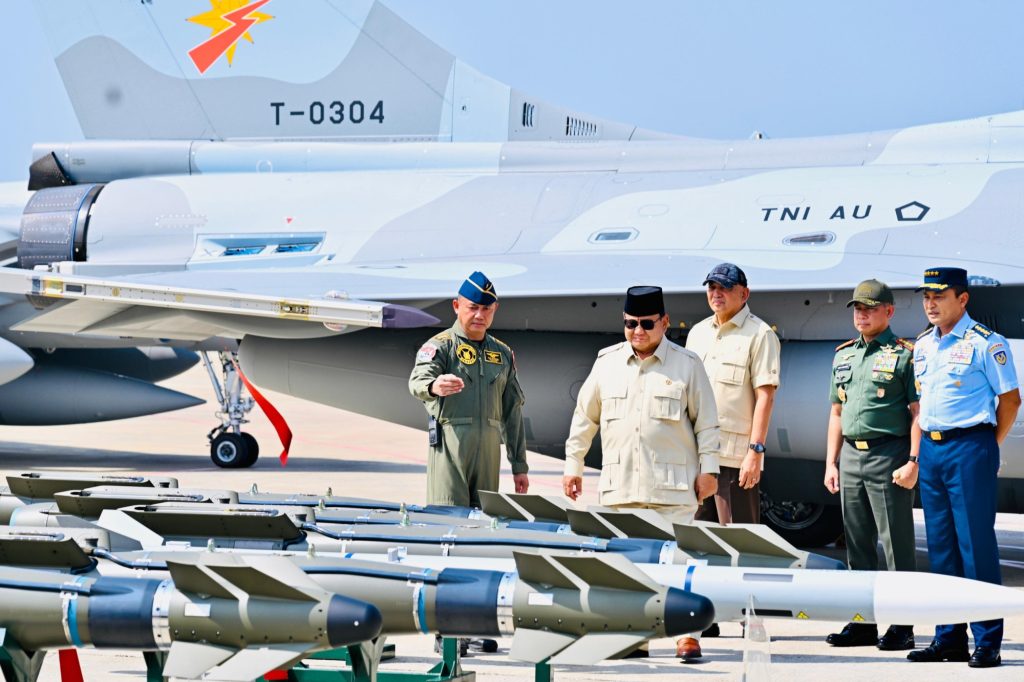
Meteor gives Indonesia one of the most advanced beyond-visual-range missile capabilities currently available on the export market. Combined with Hammer-guided strike weapons, the Rafale significantly expands Indonesia’s ability to conduct precision air-to-air and air-to-ground operations across large maritime distances.
The shift matters because Indonesia’s previous combat fleet relied heavily on ageing F-16 and Sukhoi aircraft operating across different logistics and weapons ecosystems.
The Rafale is expected to become a central pillar of Indonesia’s evolving combat air structure.
Indonesia’s A400M fleet expands strategic airlift capability
Indonesia’s geography remains one of its biggest defence challenges. The country stretches across more than 17,000 islands and spans enormous maritime distances between operational sectors. That makes strategic airlift and rapid deployment capability almost as important as combat aircraft themselves.
The appearance of the Airbus A400M transport aircraft during the Jakarta ceremony carried major significance.
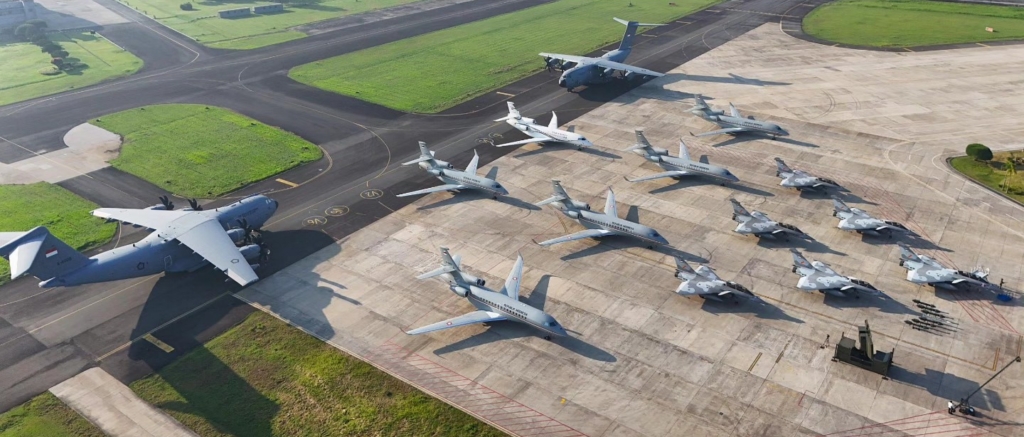
The aircraft are expected to operate with Skadron Udara 31 and will support troop transport, cargo movement, medical evacuation and potentially aerial refuelling missions.
Indonesia is also reportedly considering additional A400M acquisitions beyond the initial aircraft already delivered.
The wider logic is straightforward.
A military force spread across thousands of islands requires the ability to move quickly between operational zones if it hopes to maintain credible deterrence.
Radar and surveillance systems become central to Indonesia’s defence strategy
One of the less visible but strategically important systems displayed in Jakarta was the Ground Master radar system supplied by Thales.
Indonesia is procuring 13 radar systems as part of a wider effort to strengthen air surveillance and ground-controlled interception capability.
The radar network is expected to integrate with Indonesia’s broader command-and-control infrastructure and improve tracking coverage across large sections of national airspace.
For Indonesia, radar coverage carries particular importance because of the country’s enormous maritime territory and dispersed geography.
Historically, surveillance gaps and delayed detection created vulnerabilities in remote operational sectors.
The new radar systems are intended to tighten those gaps while supporting future integration with Rafale fighters and other air defence assets.
Indonesia is assembling one of the Indo-Pacific’s most diverse fighter fleets
The Rafale programme is only one part of Jakarta’s wider modernisation drive. Indonesia is simultaneously pursuing South Korea’s KF-21 programme while also signing a deal for 48 Turkish KAAN fighters last year.
The country also continues operating American-built F-16s and Russian Sukhoi aircraft.
According to GlobalMilitary, Indonesia currently fields 52 combat aircraft within its broader 469-aircraft inventory.
But those numbers are likely to rise significantly once Rafales, KF-21s and future KAAN deliveries enter service.
Prabowo’s government has sharply increased defence spending as part of that effort.
Indonesia allocated roughly Rp337 trillion, or around US$19 billion, for defence spending in 2026 alone.
The wider objective appears less about matching regional powers aircraft-for-aircraft and more about building a layered deterrence structure capable of protecting Indonesia’s vast maritime approaches and strategic sea lanes.
France is becoming Indonesia’s most important defence partner
The ceremony also highlighted how deeply French defence companies are becoming embedded in Indonesia’s military modernisation plans.
Dassault Aviation, Airbus, Thales and MBDA all now occupy central positions in Jakarta’s future airpower structure.
Rafale fighters, Meteor missiles, Hammer munitions and Ground Master radar systems are all part of the same broader French defence ecosystem.
That alignment reflects Indonesia’s longstanding “free and active” foreign policy strategy, which seeks to avoid overdependence on any single military supplier or geopolitical bloc.
French systems are increasingly viewed in Jakarta as offering advanced capability without the political sensitivities sometimes associated with larger powers.
Featured image: Indonesia ministry of defence
Sign up for our newsletter and get our latest content in your inbox.


More from

October 11, 20263 min read


