Hungary’s Saab Gripen gets a puma-inspired special livery for NATO Tiger Meet

5 min read
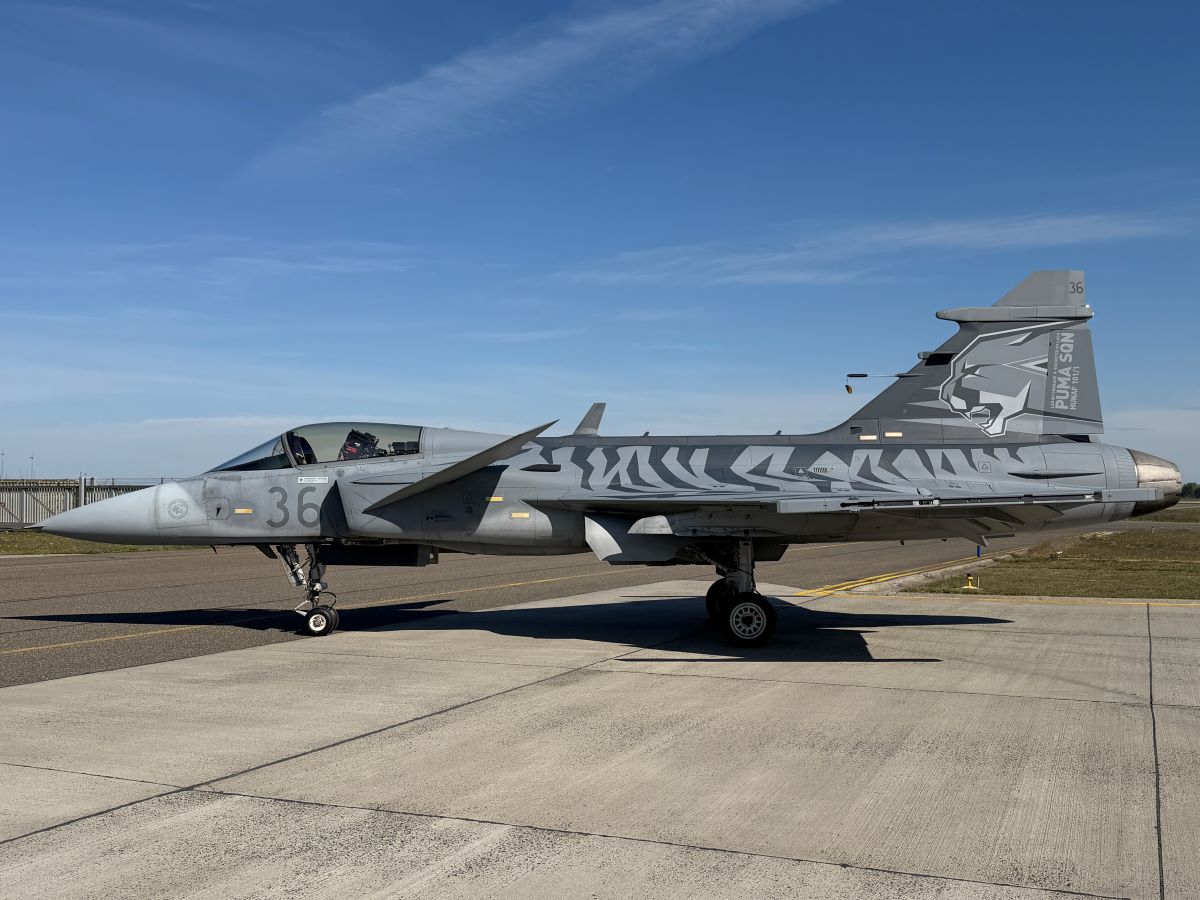
In keeping with NATO tradition, the Hungarian Air Force (HuAF) has rolled out a new special puma-themed livery on one of its single-seat JAS 39C Gripen fighters ahead of the alliance’s upcoming Tiger Meet 2026 drill, which will be held at Araxos Air Base in Greece from 4-15 May.
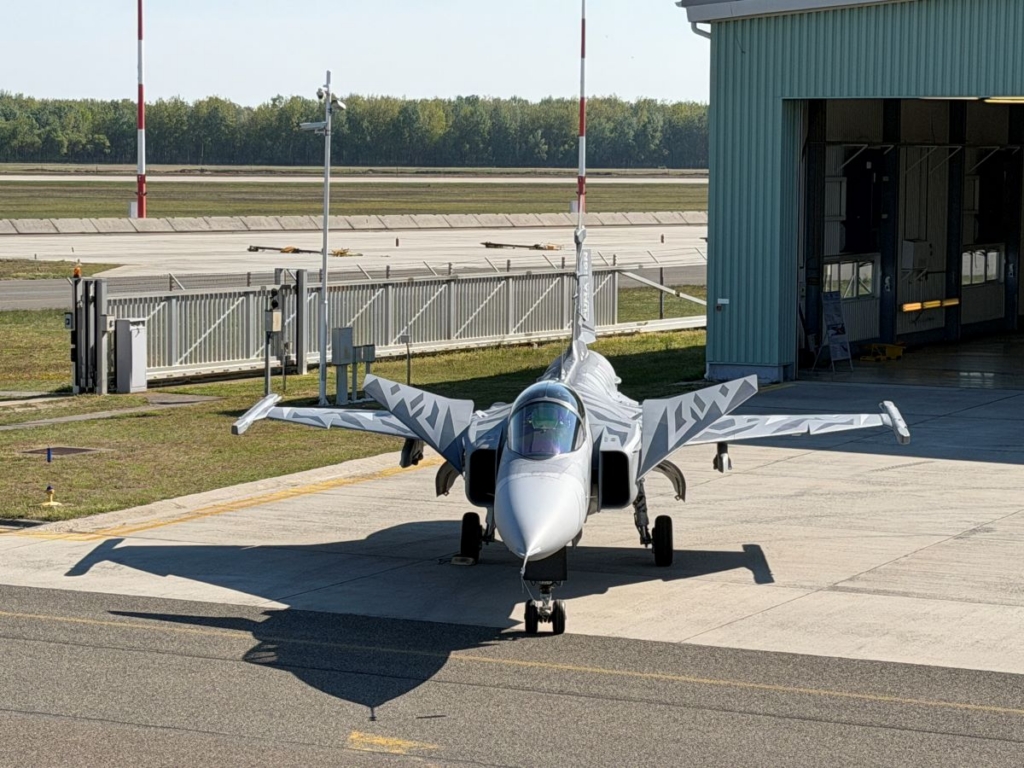
The newly painted JAS 39C (serial 36) was unveiled to the public at Kecskemét Air Base in Hungary ahead of its participation in the latest edition of NATO’s annually held Tiger Meet series in May. This jet is one of five JAS 39C/Ds that the HuAF’s 101st Tactical Aviation Squadron ‘Pumas’ will deploy to Greece for the upcoming two-week drill.
As per NATO tradition, the allied air force units that participate in an annual Tiger Meet exercise typically associate themselves with a tiger or another big cat in some form, whether it be included in their official squadron name or emblem. Participating units are drawn from across the NATO alliance, with a larger focus on frontline fighter or rotorcraft units.
Following this long tradition, units that take part in an annual Tiger Meet drill typically deploy with at least one aircraft that has been ceremonially painted with tiger- or big cat-inspired markings.
This tradition has again been honoured by Hungary, which will dispatch JAS 39C (serial 36) to the drill with newly applied dark grey tiger stripes and a roaring puma head emblazoned on its vertical stabiliser, which has been an emblem for Hungarian fighter pilots for more than 90 years.
What activities will be carried out at NATO Tiger Meet 2026?
Established in 1961, the NATO Tiger Association serves to promote interoperability and solidarity between allied air forces but does not fall under the formal structure of the alliance and its military operations.
The association comprises 23 member squadrons from the air arms of Austria (1), Belgium (1), the Czech Republic (2), France (4), Germany (3), Greece (1), Hungary (1), Italy (2), the Netherlands (1), Poland (1), Portugal (1), Spain (2), Switzerland (1), Turkey (1) and the UK (1).
Since its inception, the annual NATO Tiger Meet series of drills has evolved into a first-class multinational exercise where participants fly together in complex, joint air operations that are designed to encompass the entire spectrum of air warfare.
The primary focus of the event is to enhance alliance interoperability, solidarity and combat readiness through intensive flying and social events. More than 800 sorties are typically flown during a single Tiger Meet drill.
Tiger Meet operations typically include an intense mix of Composite Air Operation (COMAO) missions, such as offensive/defensive counter-air (OCA/DCA) and dissimilar air combat training (DACT) operations, along with air interdiction, dynamic targeting/time sensitive targeting and suppression/destruction of enemy air defence (SEAD/DEAD) activities.
The drill also focuses on other specialised flying operations, such as close air support (CAS), air-to-air refuelling (AAR), personnel recovery (PR) and combat search-and-rescue (CSAR), rotary-wing integration and electronic warfare (EW) missions. Sorties during a typical Tiger Meet exercise are carried out in all-weather scenarios in both day and night conditions.
Local sorties – otherwise known as ‘Shadow Waves’ – are flown each morning during each event, with the more complex COMAO missions being conducted in the afternoons. Some iterations of the event have differed over the years, with COMAO activities also being performed in the mornings. In all cases, each mission is carefully planned, briefed, executed and debriefed with all participants.
The upcoming NATO Tiger Meet 2026 – which will be a key event for aviation enthusiasts, spotters and defence commentators alike – will be hosted by the F-16C/D Block 52 Fighting Falcon-equipped 335 Squadron ‘Tigers’ of the Hellenic Air Force (HAF) at Araxos Air Base in the Greek region of Achaea.
A brief history of Hungary’s famed ‘Puma’ squadron
The HuAF’s 101st Tactical Aviation Squadron is a direct descendant of the Royal Hungarian Air Force’s 101st Fighter Division, which served as an elite element of the air arm during World War Two. Established in 1938, the unit initially operated Messerschmitt Bf109 fighters in support of the Axis powers’ war effort during the war.
As the world entered the Cold War, the squadron adopted the Soviet-made MiG-21 Fishbed fighters. The type, which entered service in the 1960s and was retained in operational use until 1994, was mainly employed in the air-to-air combat role, but was also employed in a secondary air-to-ground mission using free-fall bombs and rockets.
In all, the ‘Pumas’ operated a force of 21 MiG-21s, with the fleet amassing 163,735 flight hours during its time in Hungarian military service.
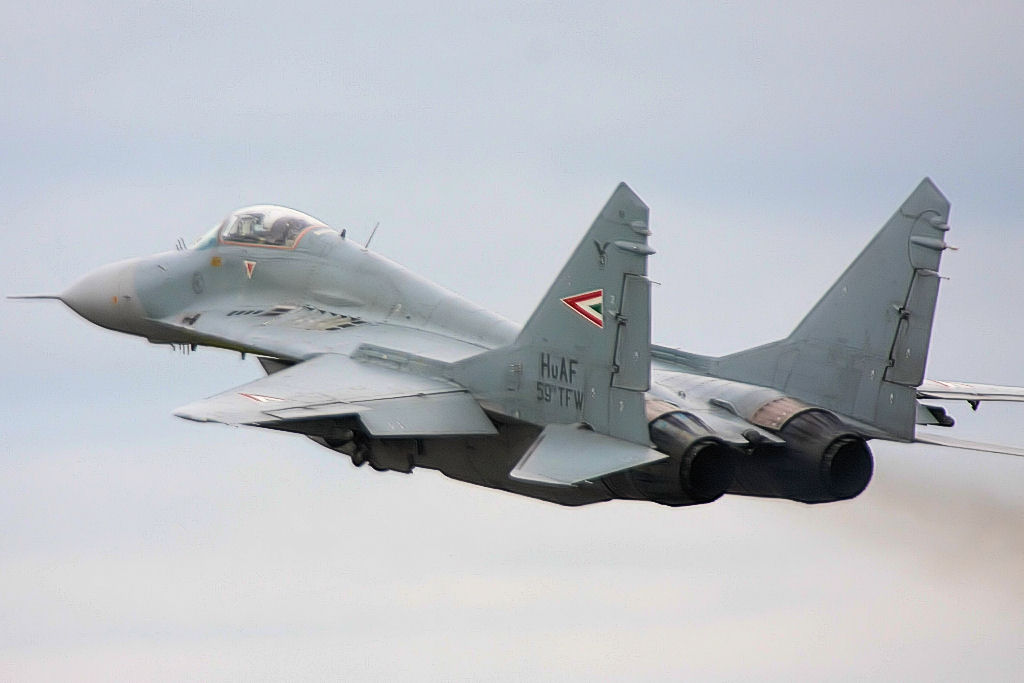
Following the retirement of the MiG-21, the unit received 14 MiG-29 Fulcrums from Russia, with the fleet comprising 11 single-seat jets and three dual-seat aircraft. After formally joining NATO in 1999, Hungary began assessing options to replace its MiG-29s with an alliance-compatible fighter force. The HuAF withdrew its Fulcrum force from use in December 2010.
Hungary formally began its transition to the Swedish-made JAS 39C/D Gripen in 2005, with the last of 14 aircraft being delivered to the HuAF in December 2007. These jets were acquired as part of a ten-year lease with Saab that was agreed in February 2003.
The initial ten-year lease was extended by a further decade in January 2012, with Hungary planning to purchase the fighters outright at the end of the agreement.
While 14 JAS 39C/Ds were delivered to the HuAF between 2005 and 2007, two Gripens were lost in two separate incidents in May and June 2015, leaving just 12 aircraft in service until two attrition replacements arrived in 2017.
In August 2021, Hungary signed a contract with Saab to upgrade the radar of its Gripen fleet to the newer PS-05/Mk4 standard, while also adding MS 20 Block 2-level software enhancements.
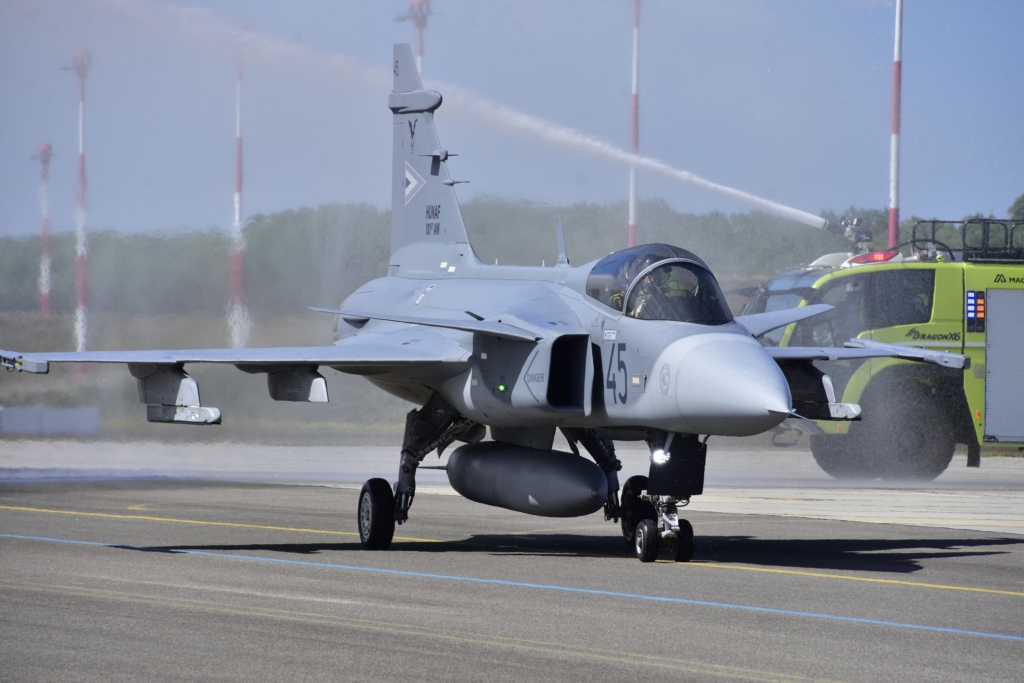
In February 2024, Hungary inked a new contract with Saab for the acquisition of four additional JAS 39Cs, growing the fleet to 18 jets. The first of these two single-seat Gripens (serials 45 and 46) arrived at Kecskemét Air Base on 29 April 2026.
These aircraft will join the 101st Tactical Aviation Squadron, which has been a member of the NATO Tiger Association since 2009.
Featured Image: The HuAF’s 101st Tactical Aviation Squadron rolled out its latest puma-inspired special scheme on JAS 39C Gripen (serial 36) at Kecskemét Air Base on 23 April 2026. Image: HuAF/101st Tactical Aviation Squadron via Facebook
Sign up for our newsletter and get our latest content in your inbox.


More from


October 17, 20264 min read