In-flight WiFi is finally set to take off in China—and not because of Starlink

5 min read
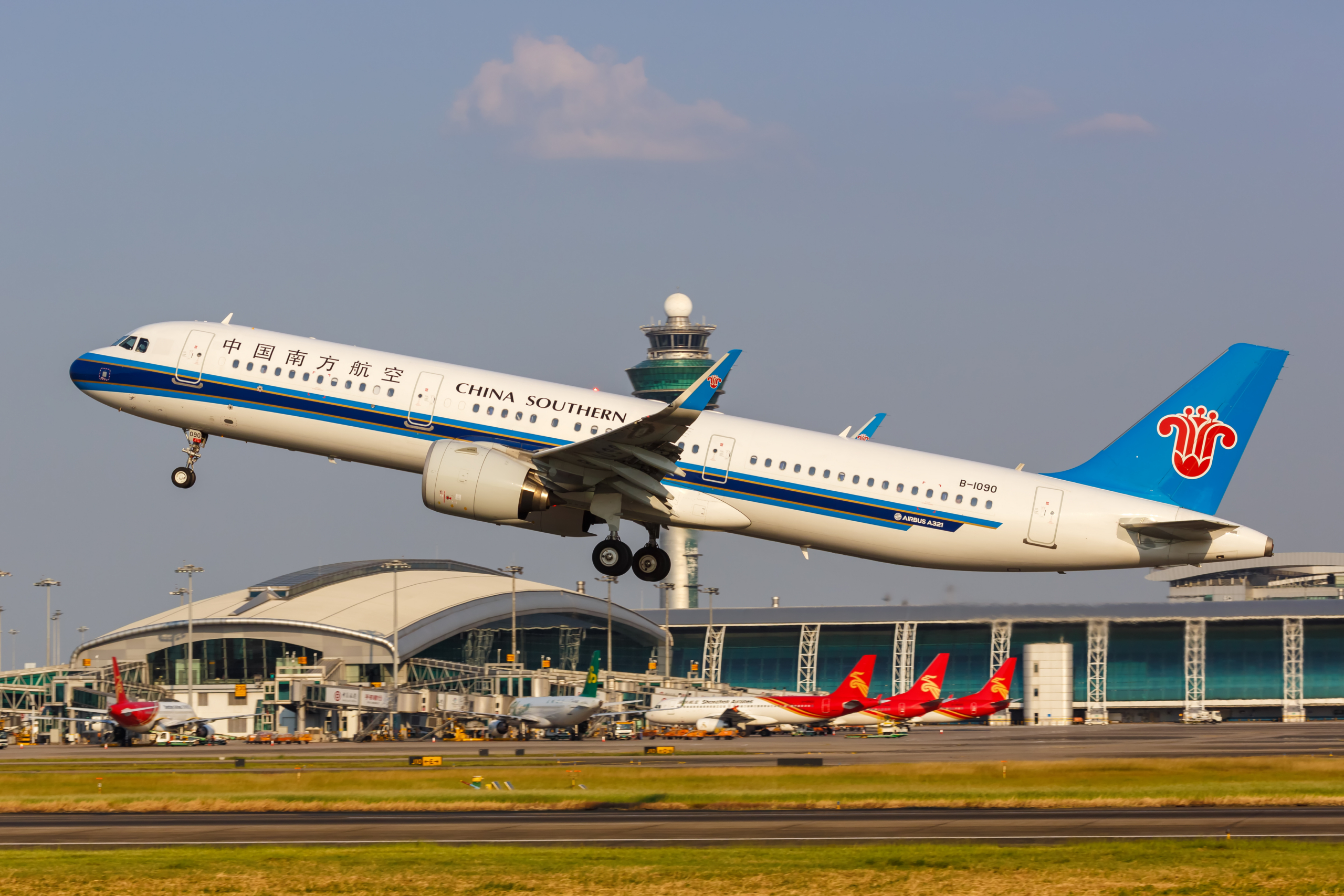
China’s in-flight connectivity market is ready for a major expansion, according to a new report from London-based Valour Consultancy, which closely tracks the aviation in-flight connectivity and entertainment (IFEC) market.
Despite the recent rush by airlines in North America and Europe toward SpaceX’s Starlink, the consultancy finds that growth in China will be driven by domestic satellite networks, regulatory changes and state-backed aviation strategies rather than by Elon Musk’s LEO satellite constellation.
Connected aircraft in China will surge from 400 to over 2,300 by 2035
According to Valour Consultancy’s report, IFC: China and India Deep Dive – 2026, despite China’s enormous aviation market, fewer than 10% of commercial aircraft had IFC installed by the end of 2025.
However, the firm predicts the number of connected commercial aircraft in China will surge from just over 400 today to more than 2,300 by 2035. That would transform China from one of aviation’s most underconnected major aviation markets into one more in line with passenger experience expectations, where in-flight connectivity (IFC) is a common service even on narrowbody fleets.
Why China’s IFC boom has been delayed for years
Unlike airlines in the United States, Europe and parts of the Middle East, Chinese carriers face a stringent regulatory environment for onboard internet access.
“China remains one of the most strategically important IFC markets globally, but also one of the most complex,” said David Whelan, senior analyst at Valour Consultancy and author of the report.
Valour Consultancy cites regulatory requirements, geopolitical concerns and airline uncertainty about the potential return on investment in IFC as contributing to the slow rollout of connectivity services.
Why Starlink will not power China’s in-flight WiFi
While many airlines elsewhere are rapidly adopting Starlink for its high speeds and low-latency performance, China’s market follows a different set of rules with a uniquely localised connectivity ecosystem.
Chinese regulations require airlines operating over Chinese airspace to use domestic satellite capacity. That means connected aircraft must rely on Chinese satellite operators such as China Satcom and APT Satellite, with emerging players like Spacesail becoming increasingly important to address passenger demand for fast, low-latency connections. Local telecommunications providers, including China Telecom and China Unicom, also support IFC deployments.
That localisation requirement also explains why established IFC providers such as Panasonic Avionics and SES have succeeded in China through partnerships with domestic providers rather than by directly disrupting the market.
IFC is mainly a premium long-haul perk in China
IFC installations in China have largely been features of premium and full-service airlines, including Air China, China Eastern Airlines, China Southern Airlines, Hainan Airlines and Cathay Pacific.
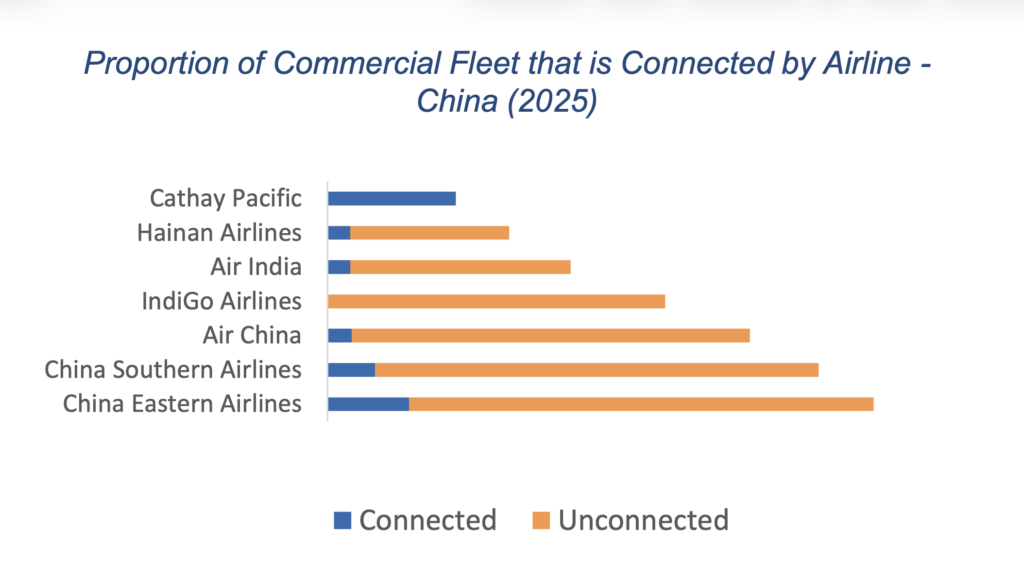
Installations have largely focused on widebody aircraft because airlines have mainly positioned in-fight WiFi as a premium long-haul offering rather than a standard passenger amenity. However, the market is changing.
“Improving passenger demand for connectivity, clearer airline business cases, and the emergence of new entrants such as Spacesail are expected to accelerate adoption from the early 2030s onward,” Valour Consultancy states in the briefing on the report.
Spacesail has partnered with Airbus for LEO connectivity
Chinese Low Earth Orbit (LEO) satellite constellation operator, Spacesail, is developing a high-bandwidth, low-latency mega LEO constellation which could meet airline demand for fast in-flight WiFi and comply with Chinese regulations governing the use of national satellite infrastructure.

In December of last year, Airbus and Spacesail announced a strategic partnership to integrate Spacesail’s future LEO connectivity into Airbus’ High Bandwidth Connectivity Plus (HBCplus) in-flight connectivity solution, simplifying fleet installation.
Airbus said the Spacesail partnership would “address the critical demand for reliable and locally-developed connectivity solutions from Chinese airlines in order to accelerate the digital transformation of the Chinese aviation industry.”
Narrowbody fleets will drive the next phase of growth
The Valour Consultancy report forecasts that the real acceleration in China’s IFC market will come between 2030 and 2035 as major state-owned airlines begin large-scale narrowbody rollouts.
China’s aviation market is heavily reliant on short- and medium-haul flying operated by aircraft such as the Airbus A320neo and Boeing 737 MAX.
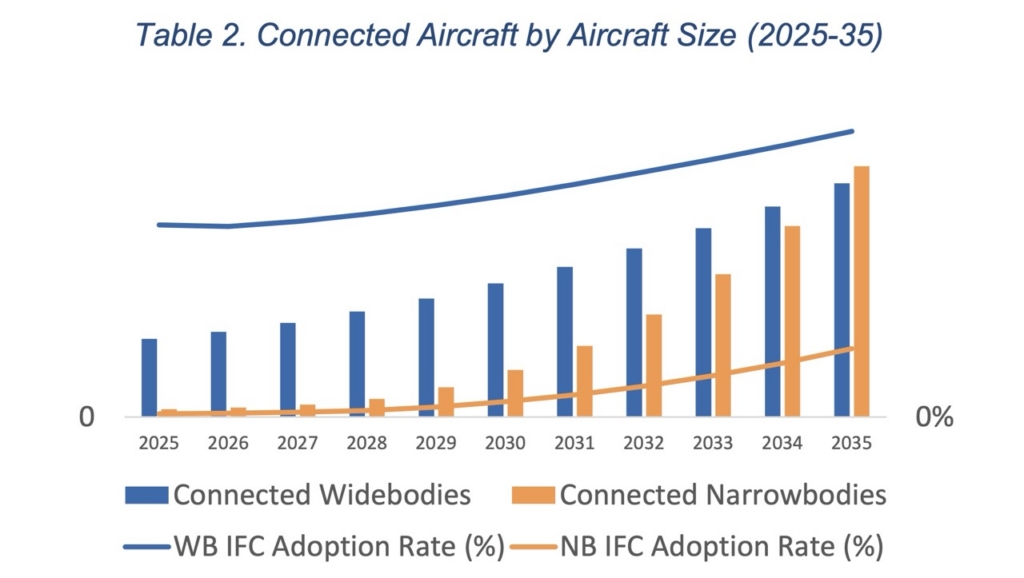
Airlines have struggled to justify the cost of installing IFC systems on narrowbody aircraft, particularly in markets where passengers were less willing to pay for onboard internet access.
However, changing passenger expectations — particularly among younger travellers accustomed to constant connectivity — are beginning to build a business case for adoption.
“Large-scale, fleetwide rollouts among China’s major state-owned airlines are expected to drive the next wave of growth, alongside increasing recognition of IFC as a passenger experience differentiator,” Whelan said.
India’s IFC market is also growing — but much more slowly
The Valour Consultancy report also examines India’s IFC market, which remains even less developed than China’s.
By the end of 2025, fewer than 30 commercial aircraft in India had connectivity systems installed, representing around 3% of the country’s commercial fleet.
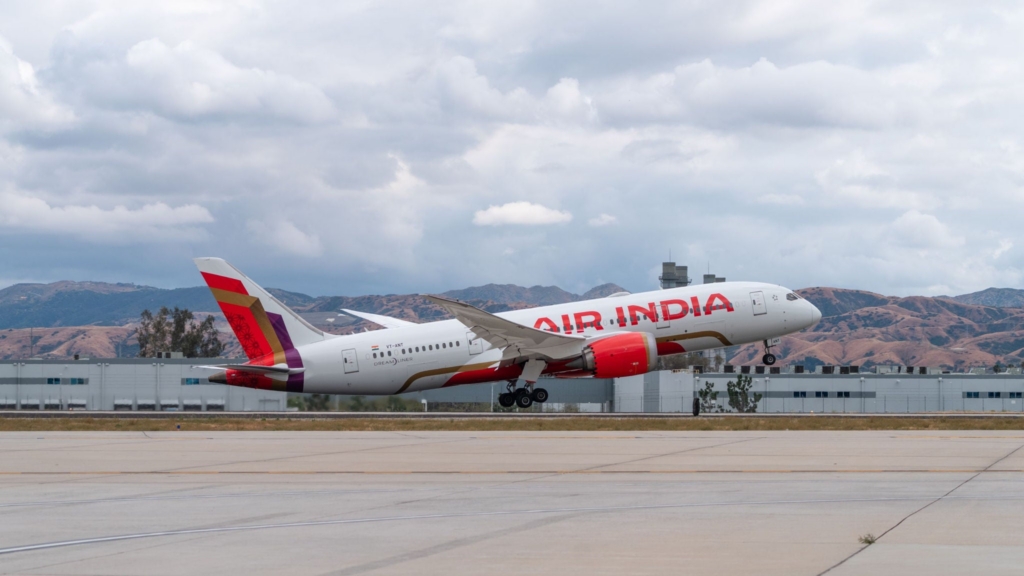
Valour Consultancy expects growth to come primarily from Air India, with potential expansion among low-cost carriers such as IndiGo if the economics of connectivity improve.
However, the consultancy cautions that India’s airline market structure — dominated by cost-sensitive low-cost carriers operating narrowbody aircraft — will likely keep IFC penetration below levels seen in more premium-focused markets.
The bigger picture for global aviation connectivity
China’s upcoming IFC expansion shows that, despite Starlink’s bold ambitions, competition in the global in-flight WiFi market is unlikely to converge around a single provider.
In North America and Europe, airlines are embracing Starlink as a fast-track way to deliver free, streaming-quality onboard internet, with Amazon and OneWeb as rivals in LEO connectivity.
However, China’s local regulation, national satellite infrastructure and domestic technology priorities will continue to shape in-flight connectivity just as much as passenger demand.
For IFC suppliers and satellite operators, China is one of the world’s largest connectivity opportunities, but it plays by different rules.
Featured Image: Markus Mainka / stock.adobe.com
Sign up for our newsletter and get our latest content in your inbox.


More from


October 17, 20264 min read