How do aircraft carriers flight decks work?

April 11, 2026
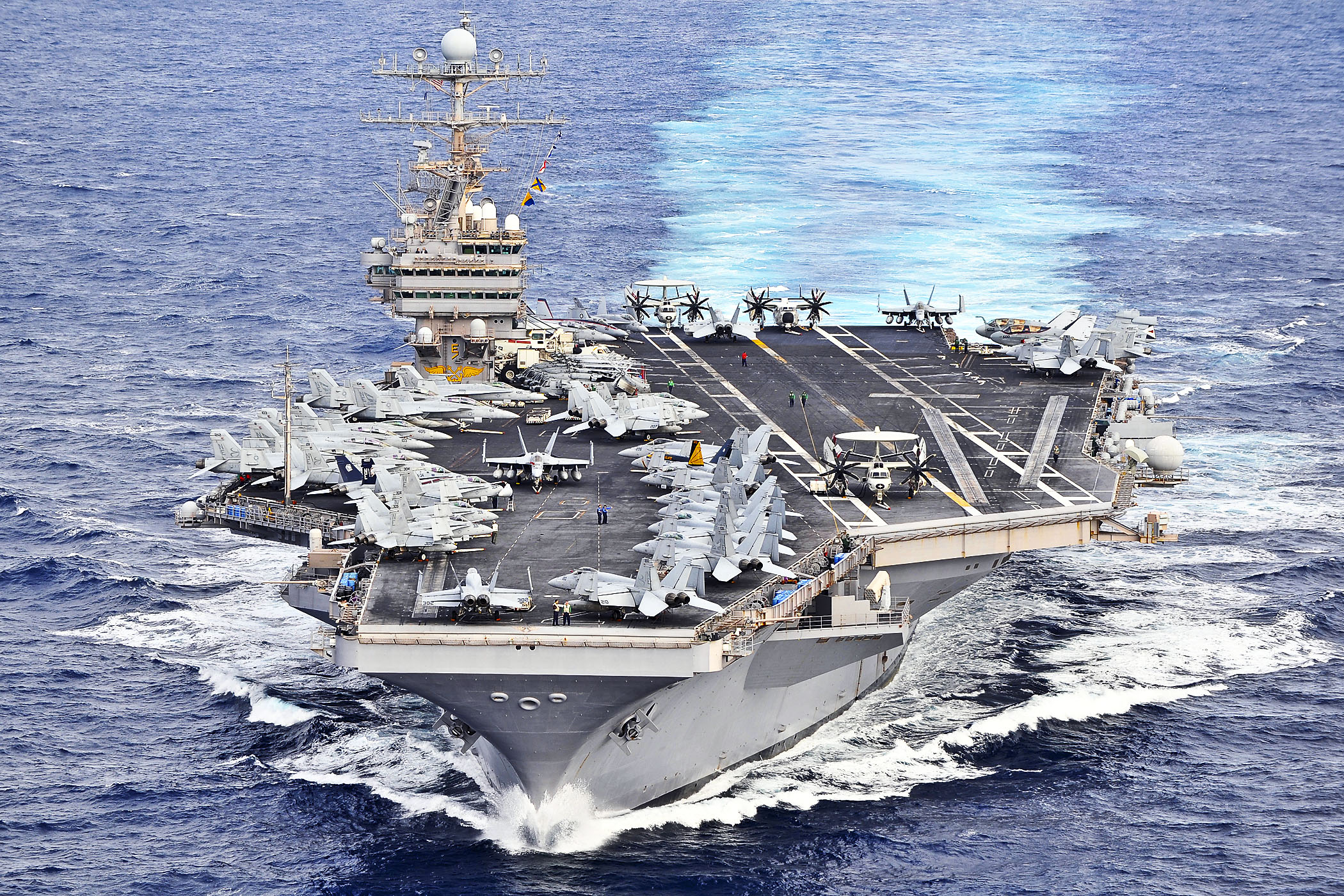
An aircraft carrier is a floating airfield that uses specialised launch and landing systems for aircraft. The integrated military eco-system on open waters uses catapults for launching jets and arresting wires for landing.
All aircraft movements are tightly coordinated to ensure safe and efficient operations. With limited space onboard the carrier, jets must achieve the required take-off and landing speeds.
The skewed flight deck design (on most large carriers) caters to aircraft with higher landing speeds. Moreover, skewed strips enable concurrent launch and recovery operations without compromising flight safety.
A landing aircraft failing to stop in time can carry out a go-around without risking parked aircraft or instruments. Smaller aircraft carriers may only feature a condensed flight deck for helicopters and other VTOL aircraft.
Flight decks are outfitted with a range of radar and communications systems, allowing safe and smooth flight operations. These systems also keep the carrier safe from surrounding threats in the sea and in the air. All aircraft activity on the flight deck and within a 5-mile radius is controlled by the primary flight controller.
The design of an aircraft carrier’s flight deck
The flight deck is designed to optimise flight operations on a relatively smaller and highly complicated airstrip. In the Primary Flight Control centre, experienced aviators control a range of communication and navigation equipment. Below that is the ship’s command centre, where the captain controls the movement of the carrier.
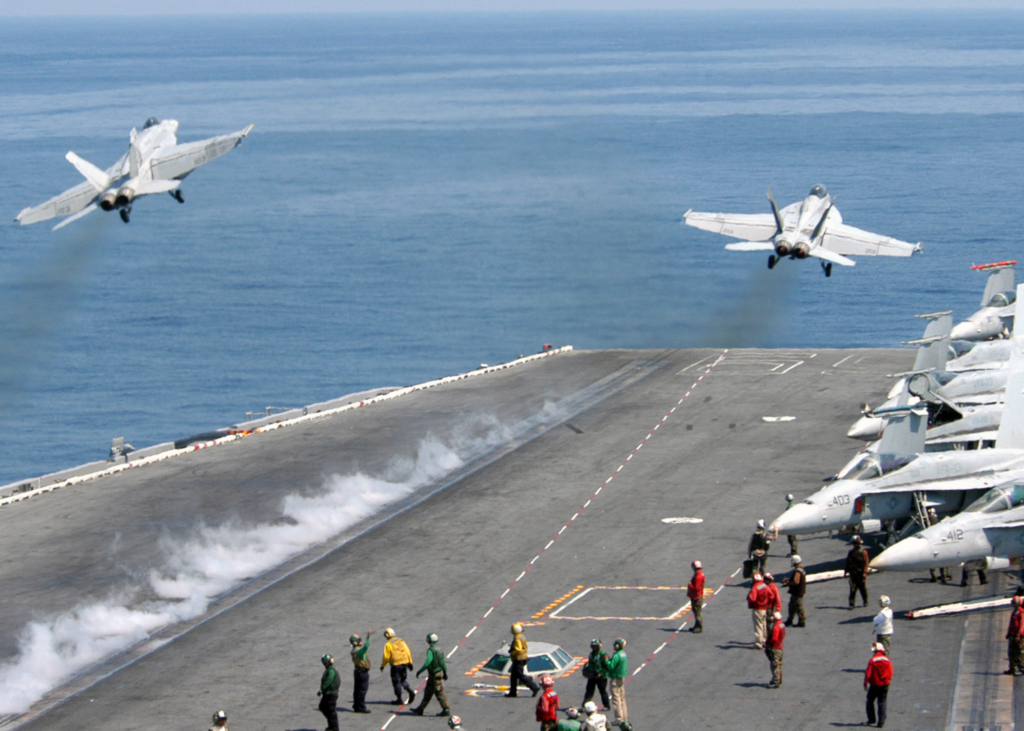
When aircraft operations are ongoing, the carrier is precisely steered, and the speed is controlled through the engine room. Intuitive displays and GPS systems in the command centre assist the captain, the helmsman, the lee helmsman, and the quartermaster of the watch. Officers also have access to the balcony area for visuals of the entire flight deck.
There are multiple operation centres in the deck below. Aircraft handling officers keep track of the actual aircraft movement with model aeroplanes in the centre. From launched status to being out of service, every movement is tracked to ensure reliability. Multiple admirals are in charge of the entire aircraft carrier group, allowing cohesive operations.
Aircraft operations in and out of the flight deck
To execute a perfect launch, the aircraft carrier is turned into the wind and sped up to achieve optimal airflow over the deck. When in position, a catapult shuttle attaches to the nose gear while a holdback bar keeps it stationary. Just before the launch, the aircraft sits with full throttle and no brakes.
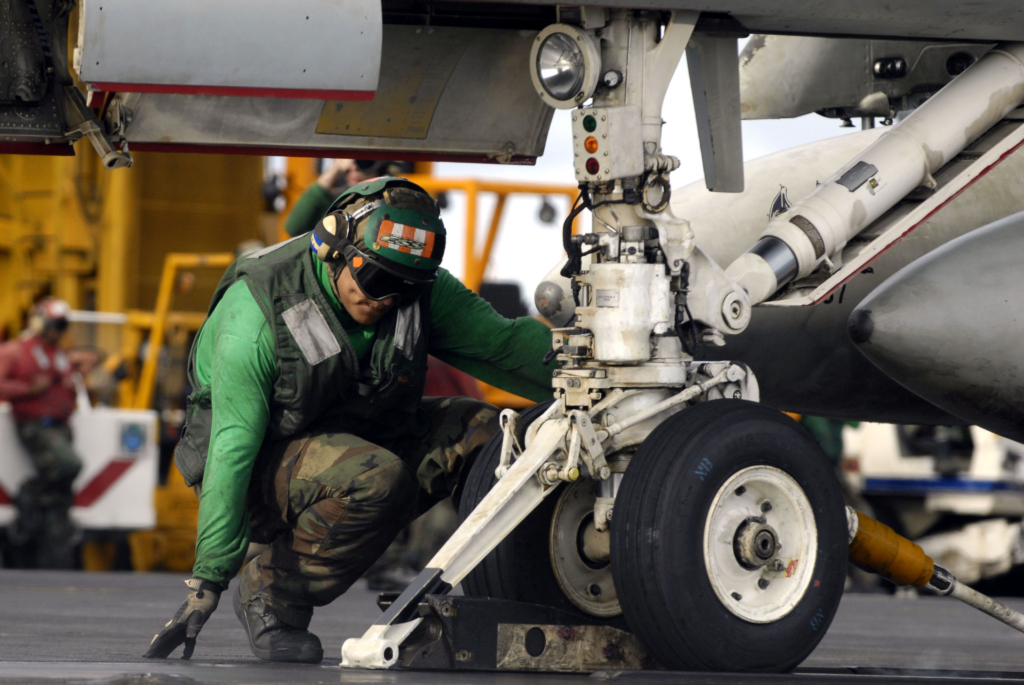
The catapult system onboard the deck accelerates the jet from zero to 150 mph (240 km/h) in less than three seconds. By the time it leaves the short surface, the aircraft generates enough power to sustain a safe climb.
Carrier-based aircraft feature a tail hook that allows them to catch the arresting wire upon landing. Landing Signals Officers (LSOs), with the help of ground equipment, guide the aircraft during approach. With an approximate landing speed of 160 mph (256 km/h), the tail hook catches one of four arresting wires placed at different lengths.
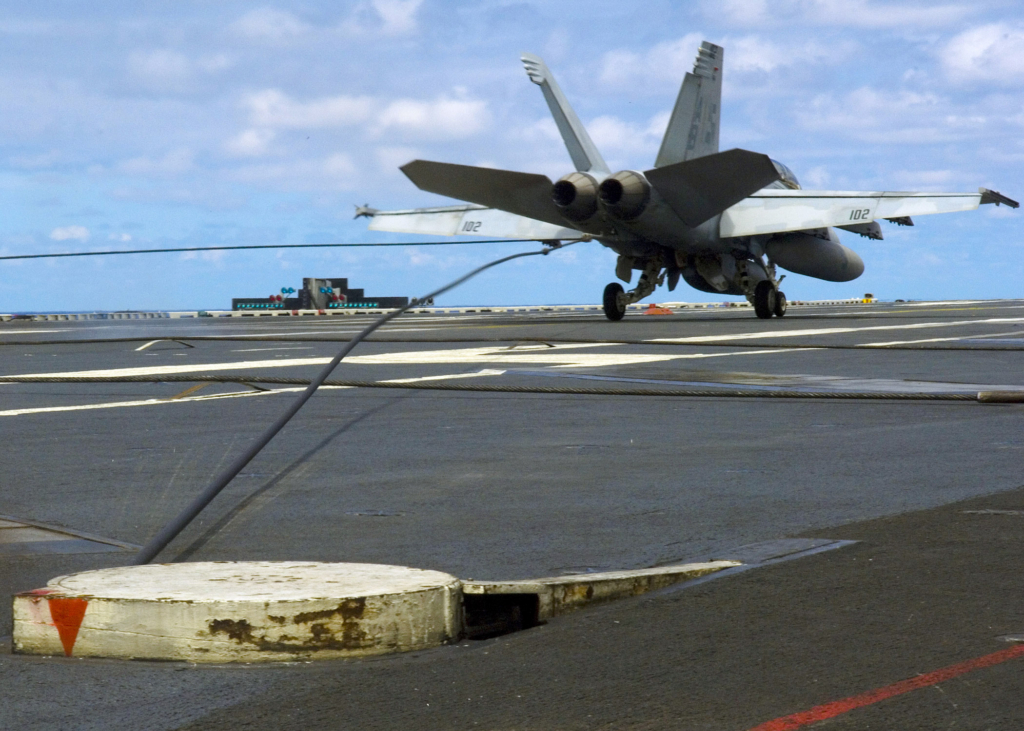
The residual aircraft energy is absorbed by hydraulic or electromagnetic braking systems, allowing the aircraft to come to a complete stop. If all four arresting wires are missed, the pilot applies full power to perform a go-around. Skewed flight deck designs offer greater operational safety, particularly for aircraft with higher landing speeds.
Featured Image: US Navy