Emirates takes on business class with new premium economy seat

6 min read
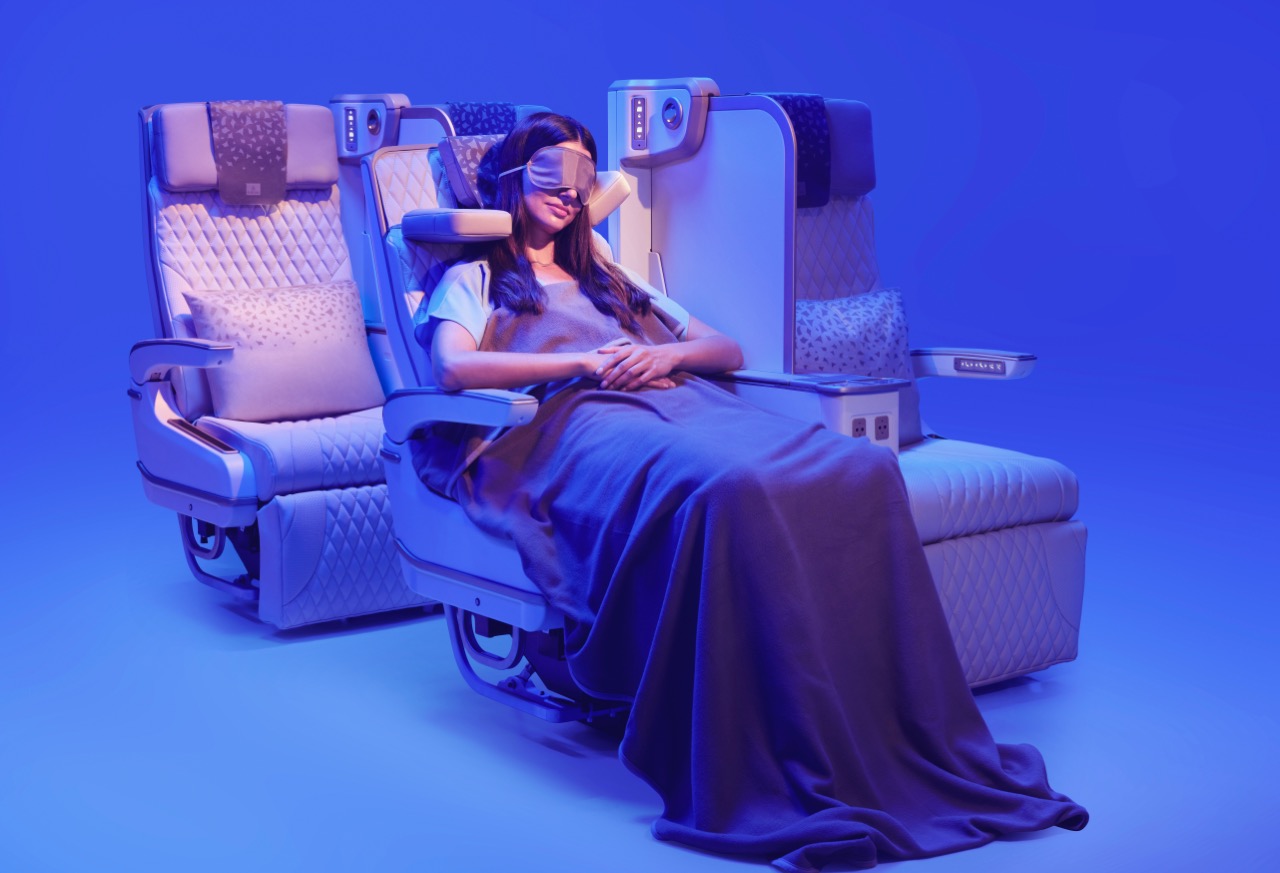
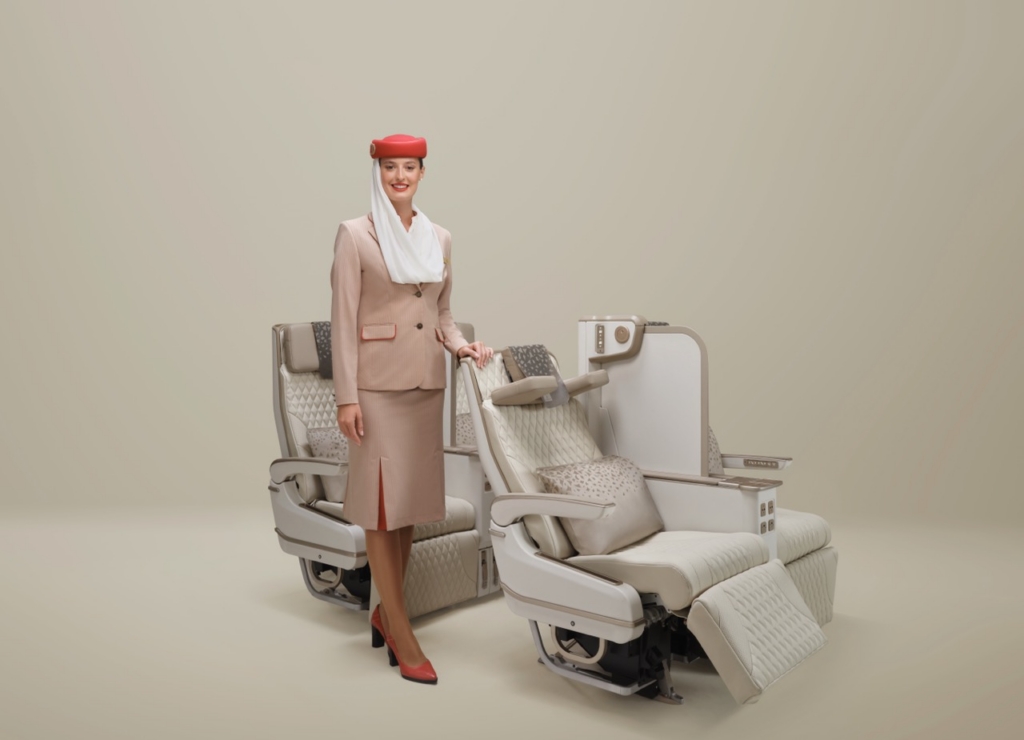
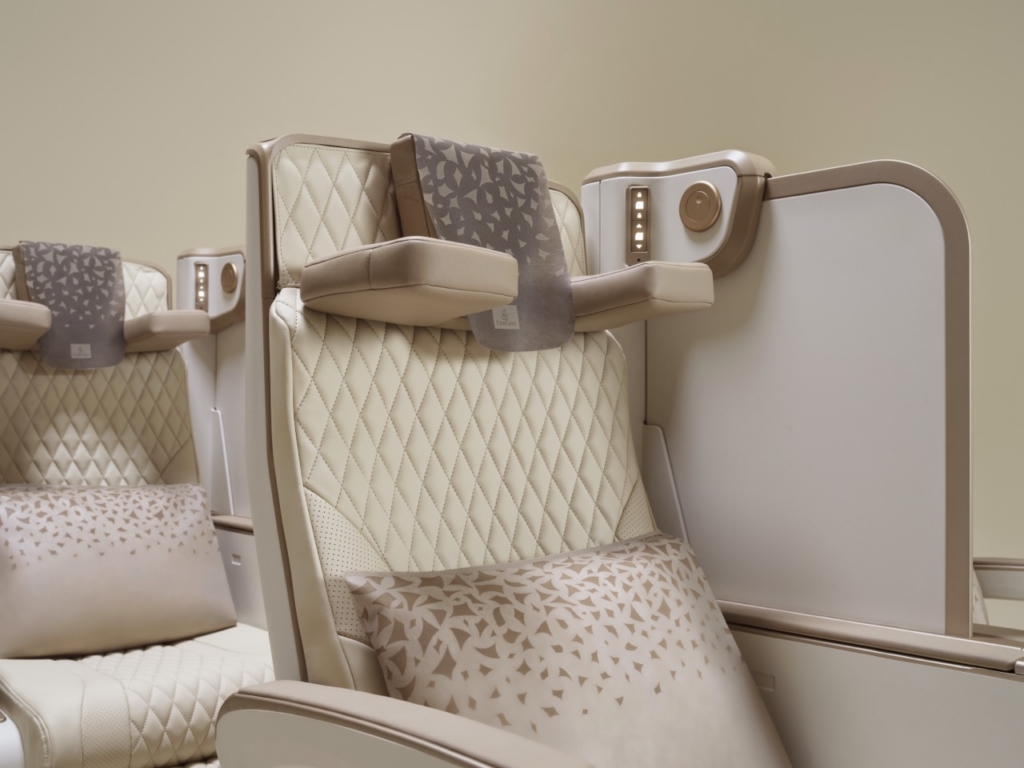
Emirates has unveiled the world’s first electrically powered premium economy seat with an enhanced U-Dream headrest that offers neck support and a full-height adjustable privacy screen between every seat.
The upgraded product will debut on newly delivered Airbus A350 aircraft, where the Emirates premium economy will be fitted with 28 seats in a 2-3-2 configuration.
According to Emirates’ announcement, the new seat is 20 inches wide with up to 39 inches of pitch. It uses a cradle-style recline mechanism that does not intrude into the space of the passenger behind.
The most striking addition, however, is privacy.
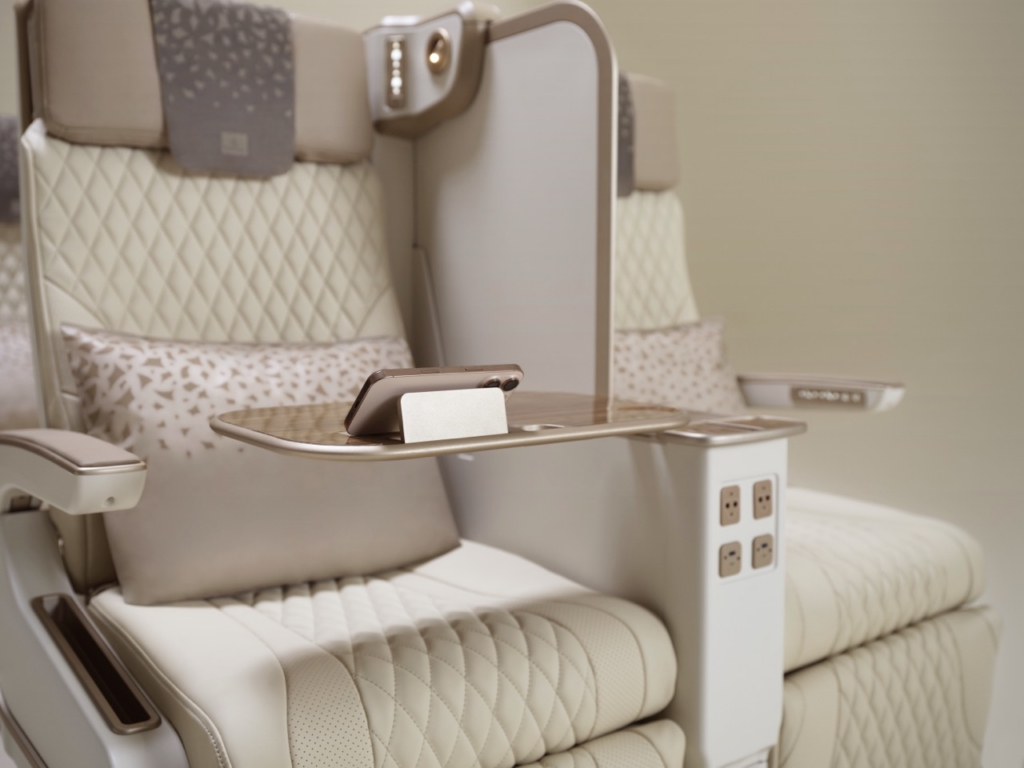
A powered divider between adjoining seats can rise to the full height of the seat and be locked in place, creating a significantly more enclosed personal space than is typically found in premium economy.
Emirates was a late adopter of the Premium Economy cabin, introducing it decades after many rivals. But the Dubai-based carrier is rapidly making up for lost time. It has invested billions of dollars in aircraft retrofits, adding premium economy as part of the redesign. It is now pushing the product closer to business class.
Emirates unveils new A350 premium economy seat
The airline’s new Safran premium economy seat is a significant improvement over the recliner-style seat fitted in this cabin by most carriers.
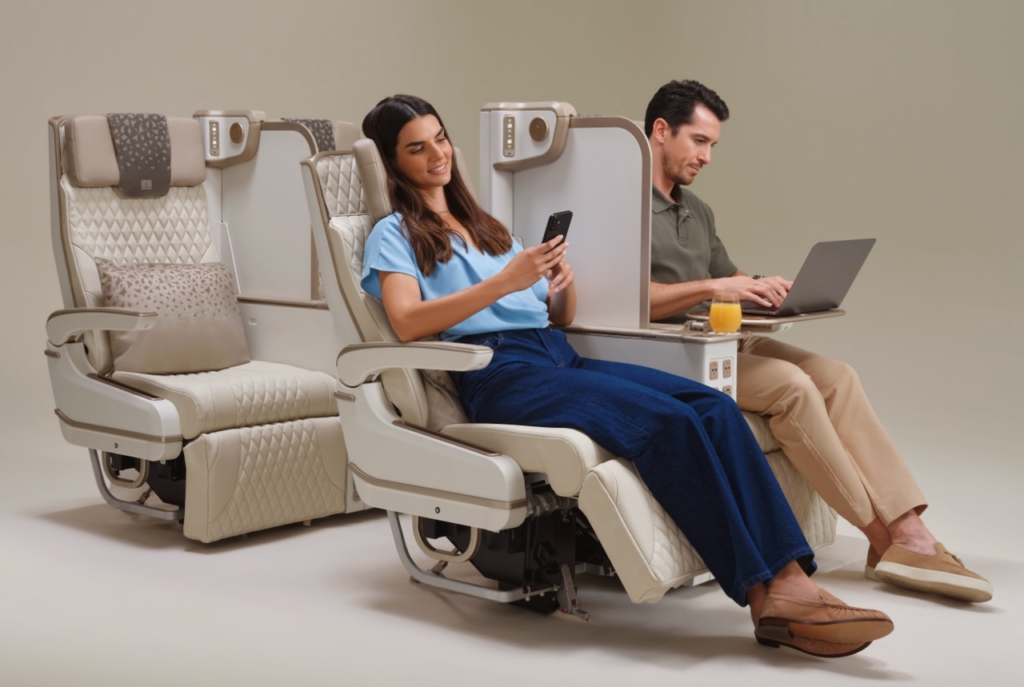
Passengers can adjust the seat electrically using an integrated control unit, with preset positions for lounge and meal modes.
Emirates has also fitted the seat with Safran Seats’ U-Dream headrest, which features adjustable wings for head and neck support. A leather footrest provides additional leg support.
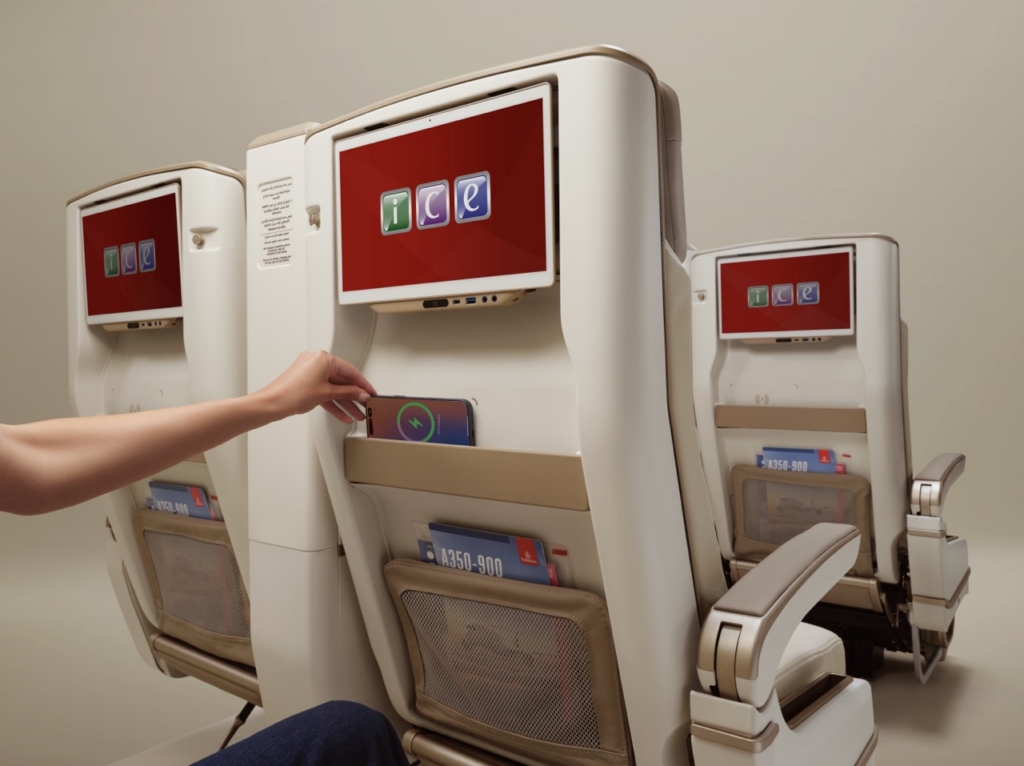
Other additions include wireless device charging, USB-C power and a tray table incorporating a phone holder. Entertainment is provided through a 13.3” 4K HDR touchscreen.
The new A350s also introduce additional external camera views, including left and right-side cameras, alongside the existing forward and downward views.
Taken together, the changes push Emirates’ product to blur the boundary between high-end premium economy and business class.
How premium economy became a priority for Emirates
The speed at which Emirates is now developing its premium economy is notable, as the airline resisted introducing the cabin for much longer than many competitors did.
Premium economy dates back over three decades. EVA Air was the first airline to introduce the concept in 1992, originally calling its product Evergreen Deluxe Class. Its Boeing 747-400s offered this cabin, positioned between economy and business.
Virgin Atlantic also launched its “Mid Class” product in 1992, which it later renamed premium economy. The concept spread slowly across the industry on long-haul aircraft. At first, many airlines hesitated to forgo limited floor space that could be used for higher-revenue premium seats or higher-density economy seating.
Still, premium economy offers an affordable option that encourages passengers who would typically book economy seats to upgrade, while not drawing customers away from business or first class.
It is ideally suited to leisure travellers who want to be more comfortable on longer journeys, business travellers whose corporate policy does not allow business-class bookings, and entrepreneurs who need to travel on a tighter budget.

Emirates did not put its first premium economy seats into service until January 2021, initially on a small number of Airbus A380s.
It launched the full commercial premium economy product in 2022, opening bookings in June for flights beginning that August. At the time, Emirates had only six A380s equipped with the cabin.
What began cautiously has since become one of the airline’s biggest cabin investments.
Emirates is spending $5 billion upgrading its fleet
Premium economy is now a central element of Emirates’ enormous aircraft refurbishment programme.
The airline is investing around $5 billion to refurbish 219 aircraft—110 Airbus A380s and 109 Boeing 777s—with premium economy installed as part of the upgrades.
The programme has grown dramatically from its original scope. Emirates initially announced plans covering 105 aircraft in 2021. That subsequently increased to 191, and eventually to 219, aircraft as demand for the upgraded cabins grew.
By July 2026, Emirates Engineering had completed its 100th aircraft retrofit: 47 A380s and 53 Boeing 777s.
The airline introduced a premium economy cabin on every aircraft, with more than 3,800 premium economy seats installed through the programme.
Emirates expects around another 20 aircraft to be completed by the end of 2026.
New-build A350s take premium economy up another level. The cabin that barely existed at Emirates five years ago has become an essential element of the airline’s long-haul product.
How does Emirates premium economy compare?
Several competitors have moved premium economy beyond the traditional formula of a wider reclining seat with additional legroom, though the new Emirates seat is unique.
Japan Airlines’ premium economy is perhaps the closest comparison.
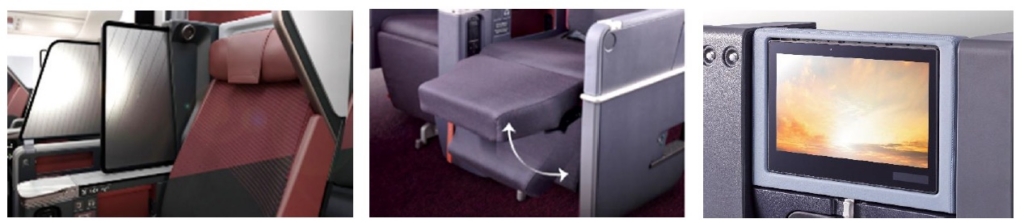
Its A350-1000 premium economy seat was introduced as the world’s first with electrically operated reclining. The Safran fixed-back seat offers approximately 42 inches of pitch, a width of up to 19 inches, sliding privacy partitions, an electrically operated legrest and a 16-inch 4K entertainment screen.
JAL beats Emirates on seat pitch and screen size, but Emirates counters with a slightly wider 20” seat and the full-height electrically operated divider.
Lufthansa’s Allegris premium economy also uses a fixed shell, allowing passengers to recline without disturbing the traveller behind them, and headrest wings for added comfort when sleeping. It offers 39 inches of pitch and a 15.6” 4K in-flight entertainment screen.

EVA Air, meanwhile, continues to develop the cabin category it pioneered. Its latest Boeing 787-9 premium economy product has 28 seats in a 2-3-2 configuration. It offers 42 inches of pitch, with cradle-motion recline, headrest wings and a 15.6” entertainment screen.
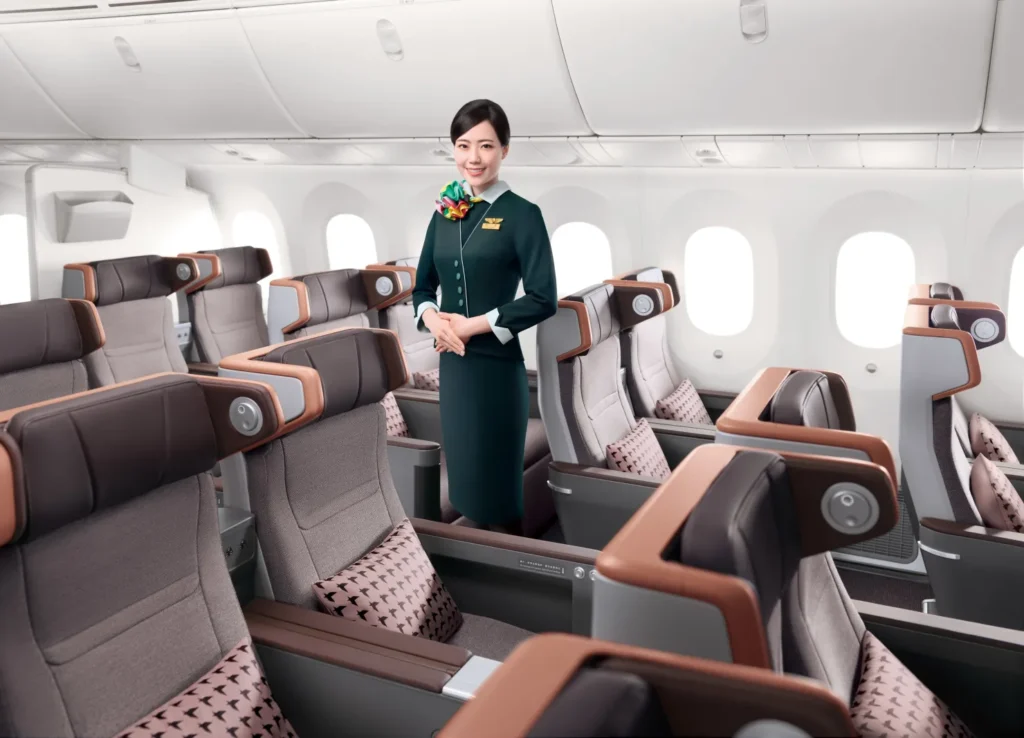
Virgin Atlantic’s latest A330neo premium economy seats are 18.5 inches wide with up to 38 inches of pitch and a 13.3” touchscreen. The airline provides wireless charging in premium economy.
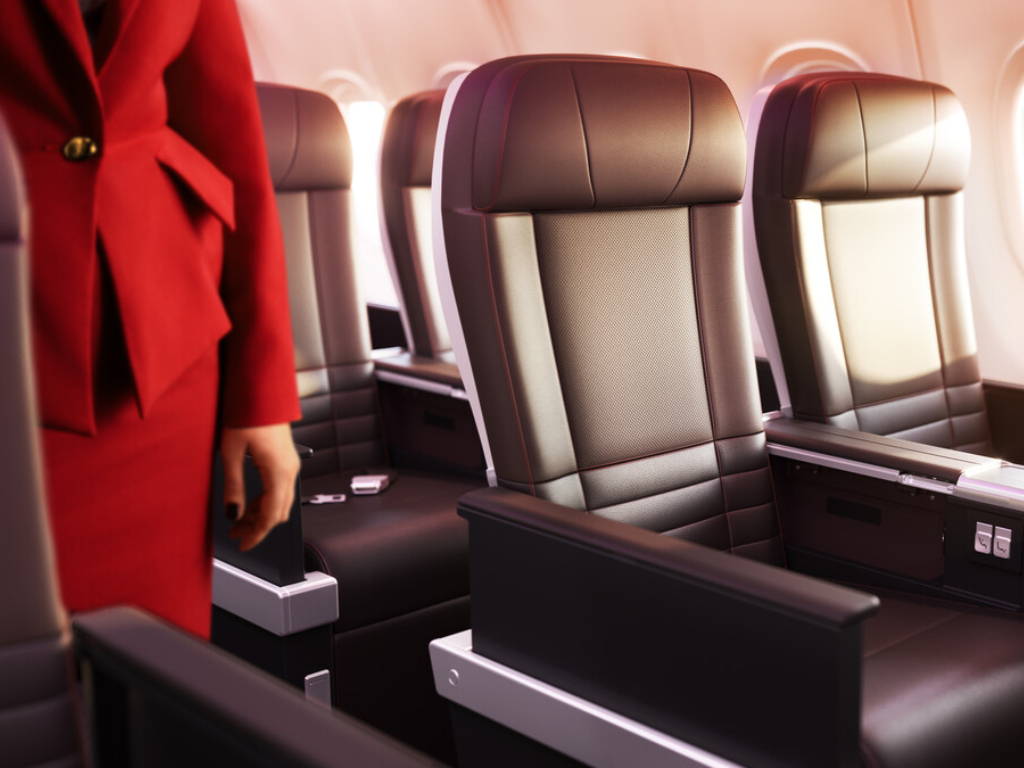
Emirates is not necessarily offering the most legroom or the biggest IFE screen. Its differentiator is the combination of width, fixed-space cradle recline, electrical adjustment and substantially greater separation from the passenger in the next seat.
Why airlines are competing to redefine premium economy
Premium Economy was originally conceived largely as a better seat with extra width and pitch and enhanced service. New-generation products borrow elements from business class seats, including fixed shells, electrically operated legrests, larger 4K screens, wireless charging and privacy partitions.
Emirates is taking that trend a step further by making the divider itself a major element of the seat. It has effectively thrown down the gauntlet as airlines invest more heavily in premium cabins to attract higher-yield premium passengers.
Airlines are adding premium capacity and upgrading cabins as travellers prove willing to pay more for extra space and comfort on long-haul flights.
For Emirates, the transformation has been rapid, supported by its in-house technical capabilities.
The airline arrived in the premium economy market roughly three decades after the cabin’s pioneers. Five years after installing its first seats, however, it is spending billions to put the product across much of its widebody fleet and to introduce features that even long-established premium economy operators do not yet offer.
The new seat shows Emirates no longer sees premium economy simply as more than a happy middle. It is now a full premium product in its own right.