Emirates installs one of the world’s largest biodigesters to cut 2,000 tonnes of CO₂

6 min read
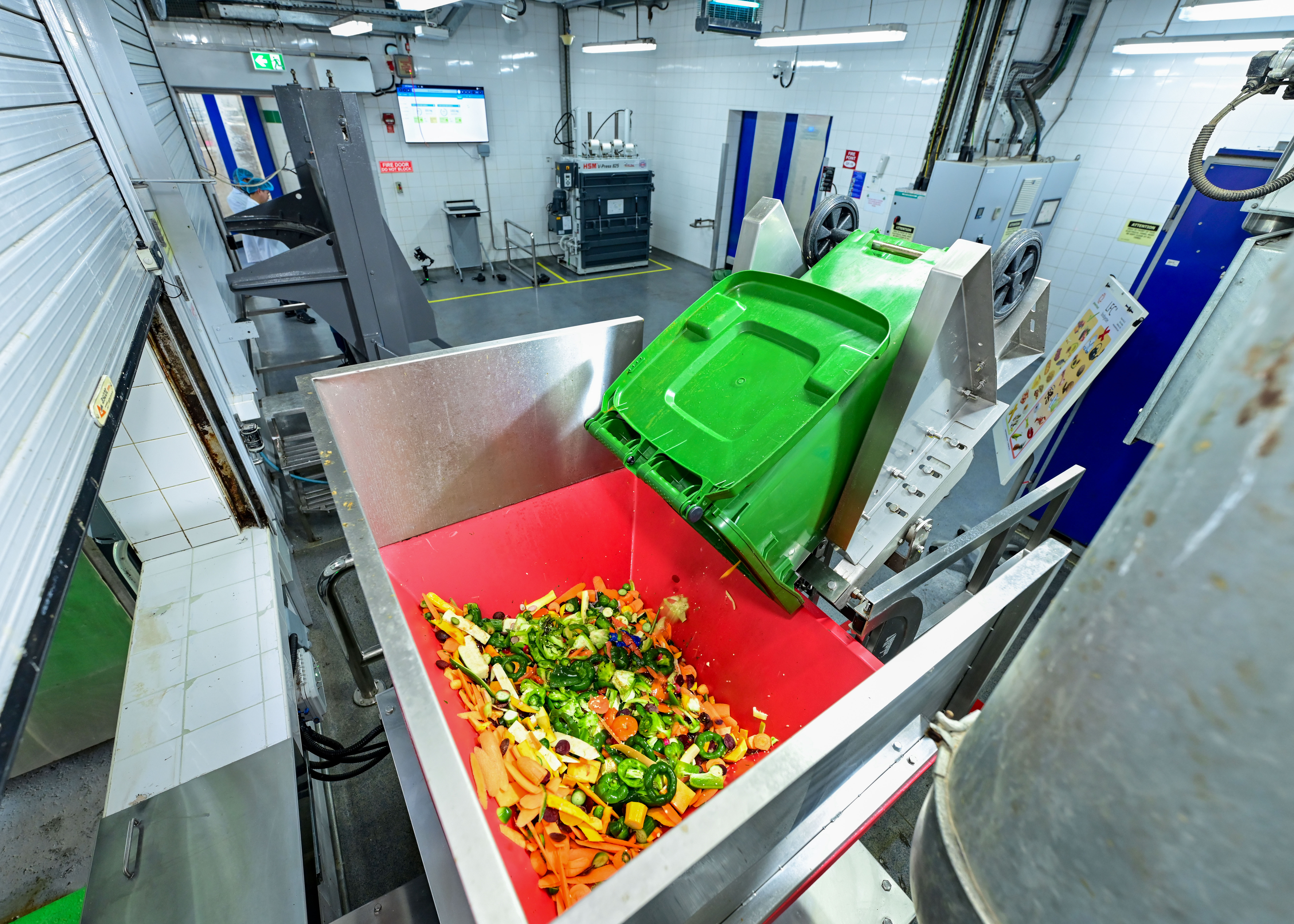
Emirates has taken another step in tackling aviation’s less visible emissions problem, unveiling one of the world’s largest commercial-scale biodigesters at its flight catering operation at Dubai International Airport, a move the airline says could eliminate more than 2,000 tonnes of CO₂ equivalent emissions each year once fully operational.
Installed at Emirates Flight Catering’s Central Commissary Unit, the custom-built system is designed to process food waste on site rather than sending it to landfill, cutting methane emissions generated by decomposing organic waste while reducing disposal costs and environmental impact.
As passenger numbers continue to rise and airlines generate ever larger volumes of unused meals, Emirates is positioning food waste, often overlooked in aviation’s net zero debate, as an increasingly material sustainability challenge.
Emirates installs new biodigester at its flight catering unit
As aviation works towards Net Zero goals by 2050, one area that has become a focus for airlines in recent years is the matter of food waste and how it can be reduced by the industry.
With airlines experiencing larger quantities of food waste as more passengers fly, the need for incorporating better methods in which to process food waste has increased, and solutions are being adopted as carriers rush to tackle the issue head-on. One such example of these initiatives is being employed by Middle-Eastern carrier Emirates.
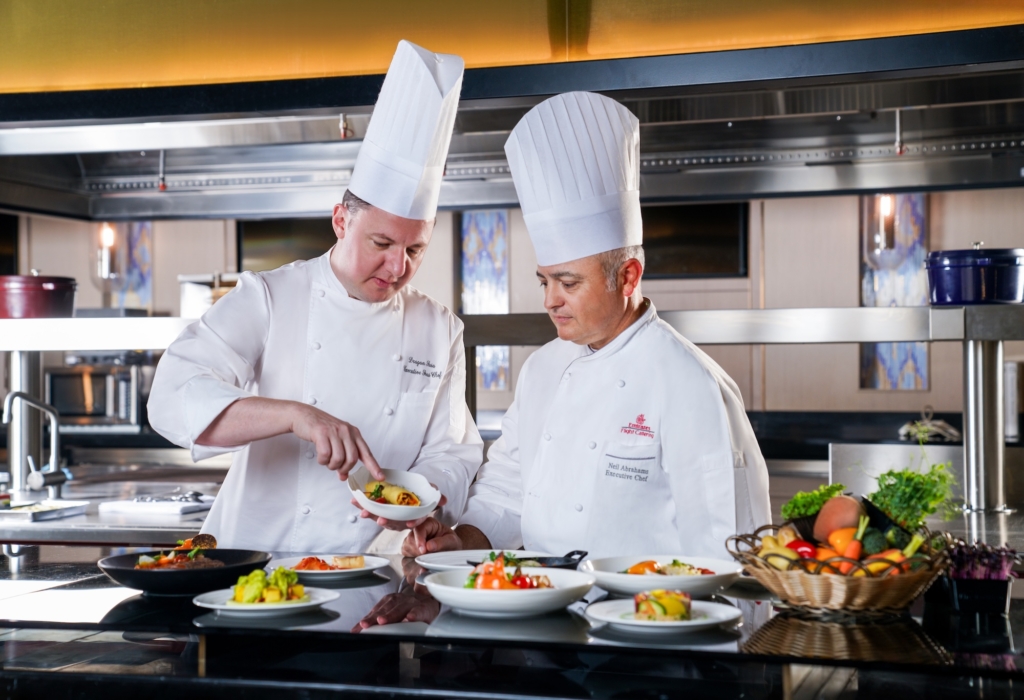
Emirates Flight Catering (EKFC) is scaling up its approach to waste management with a custom-built biodigester, one of the largest in commercial scale and capacity.
The Power Knot LFC-3000 biodigester, installed at EKFC’s Central Commissary Unit, enables the on-site processing of organic waste. The biodigester is able to treat the waste at source rather than diverting it to landfill.
As explained by an Emirates press release, a biodigester functions through aerobic digestion, using oxygen, heat and microorganisms to break down organic waste.
This natural process produces grey water, which can be repurposed for non-potable use. “Unlike mechanical systems that degrade over time, the biodigester becomes more efficient as its microbial culture matures and adapts to a wider variety of feedstock,” added the airline.
About the new Emirates biodigester
Since its commissioning in December 2025, throughput through the Emirates biodigester has risen steadily, with the system now processing an average of up to 3.5 tonnes (7,716 lbs) of food waste per day.
According to the airline, its current projections for the biodigester estimate that capacity will increase to around six tonnes (15,400 lbs) of food waste per day, subject to biological maturity of the waste and feedstock composition.
Using DEFRA-aligned greenhouse gas conversion factors, Emirates Flight Catering estimates that diverting one tonne of food waste from landfill avoids around 0.7 tonnes of carbon dioxide equivalent (CO₂e), primarily by preventing methane emissions during decomposition.
At full biological maturity and projected throughput of around six tonnes of food waste per day, EKFC says the biodigester could avoid more than 2,000 tonnes of CO₂e annually.
This is achieved primarily by preventing methane emissions stemming from the decomposition of food waste placed into landfills.
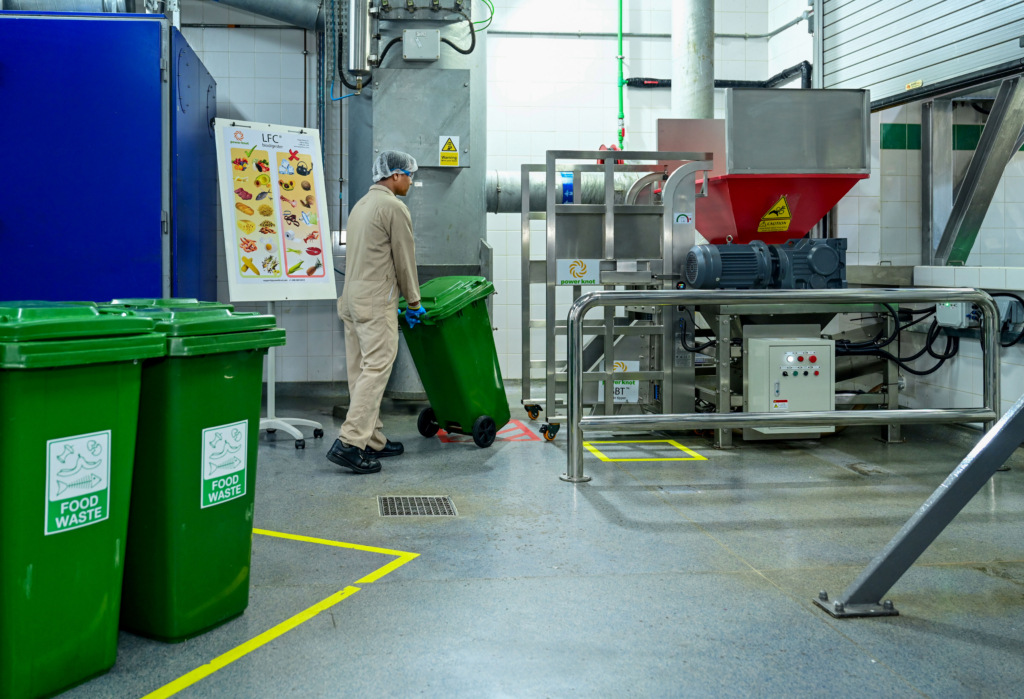
“At EKFC, when we look at where we can make the greatest difference, it’s in how we handle waste by treating it responsibly, diverting it from landfill, and finding ways to put it back into productive use,” commented Shahreyar Nawabi, Chief Executive Officer of Emirates Flight Catering.
Nawabi added that commissioning a biodigester of this scale was a major operational milestone for EKFC as the company accelerated its landfill diversion efforts.
“The strong cross-functional collaboration from every part of the business, in addition to consistent waste segregation efforts of teams on the ground, were also key drivers of this project’s successful delivery. The combination of innovation and operational commitment will continue to drive our progress on sustainability,” he said.
Emirates ploughs more efforts into making its catering function greener
The airline said that its new biodigester is just one component of EKFC’s broader efforts to embed sustainability into its day-to-day operations. The company said that it processed nearly 75,000 kg of food waste through its first LFC-50 biodigester, which was installed in 2025.
Alongside the biodigester, EKFC said it is advancing strategic investments in several sustainability projects specifically targeting energy use and vehicle fleet technology.
This includes the incorporation of new solar panels, which generated 4,000 MWh of green energy in 2025 alone. This, says the company, reduced its emissions totals for the year by 1,600 tonnes of CO₂e. Electric vehicles are also gradually being introduced across operations, and a proof-of-concept electric hi-loader, which will become the first in the Middle East region, is expected by mid-2026.
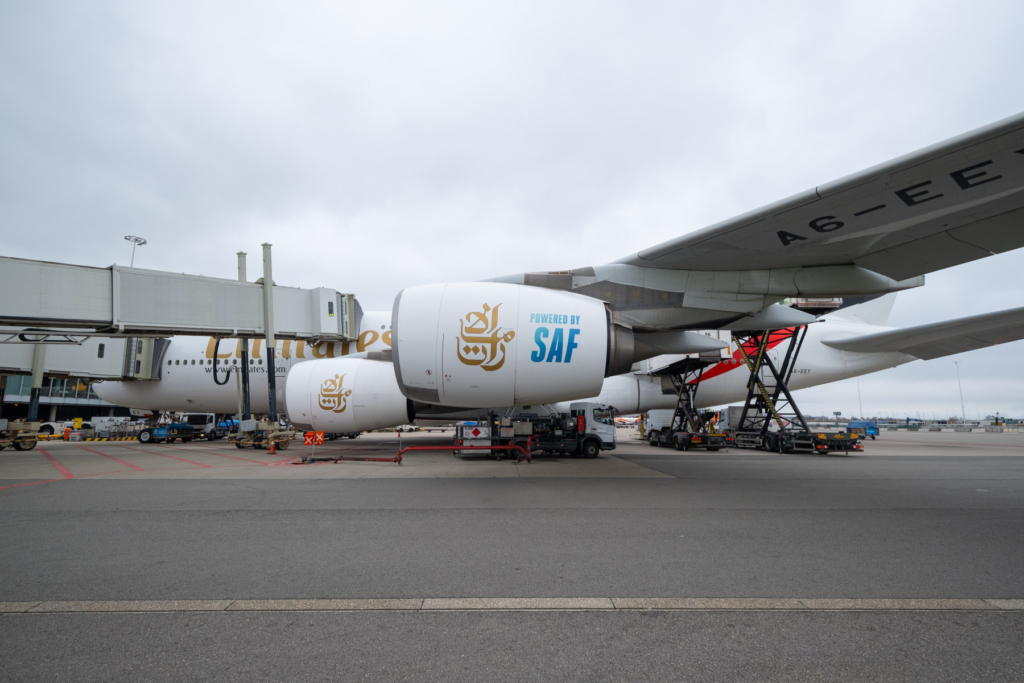
Elsewhere, EKFC said it has eliminated 45,000kg (99,210 lbs) of plastic annually through the making of packaging changes to in-flight meals. It has also developed 47 new recipes using production trimmings to repurpose potential waste.
The company has also used enough pesticide-free lettuce from its own in-house sustainable vertical farm in Dubai, known as ‘Bustanica’, to produce 28,000 passenger meal salads daily in 2025. Additionally, AI-driven automation and smart camera technology are also being used to further support the reduction of food waste in its in-flight catering function.
Managing food waste is becoming a priority for airlines
Managing food waste has become a big challenge for airlines. And with food allergies, dietary requirements and personal preferences all evolving all the time, airlines are constantly playing ‘catch-up’ to meet passenger expectations while also reducing food waste. Wasted food represents wasted revenue and also incurs additional costs through its processing and disposal.
Dealing with leftover meals is not as simple as just disposing of leftovers in the bin. There are strict rules based on safety, cost and sustainability that guide what can be reused and what has to be thrown out.
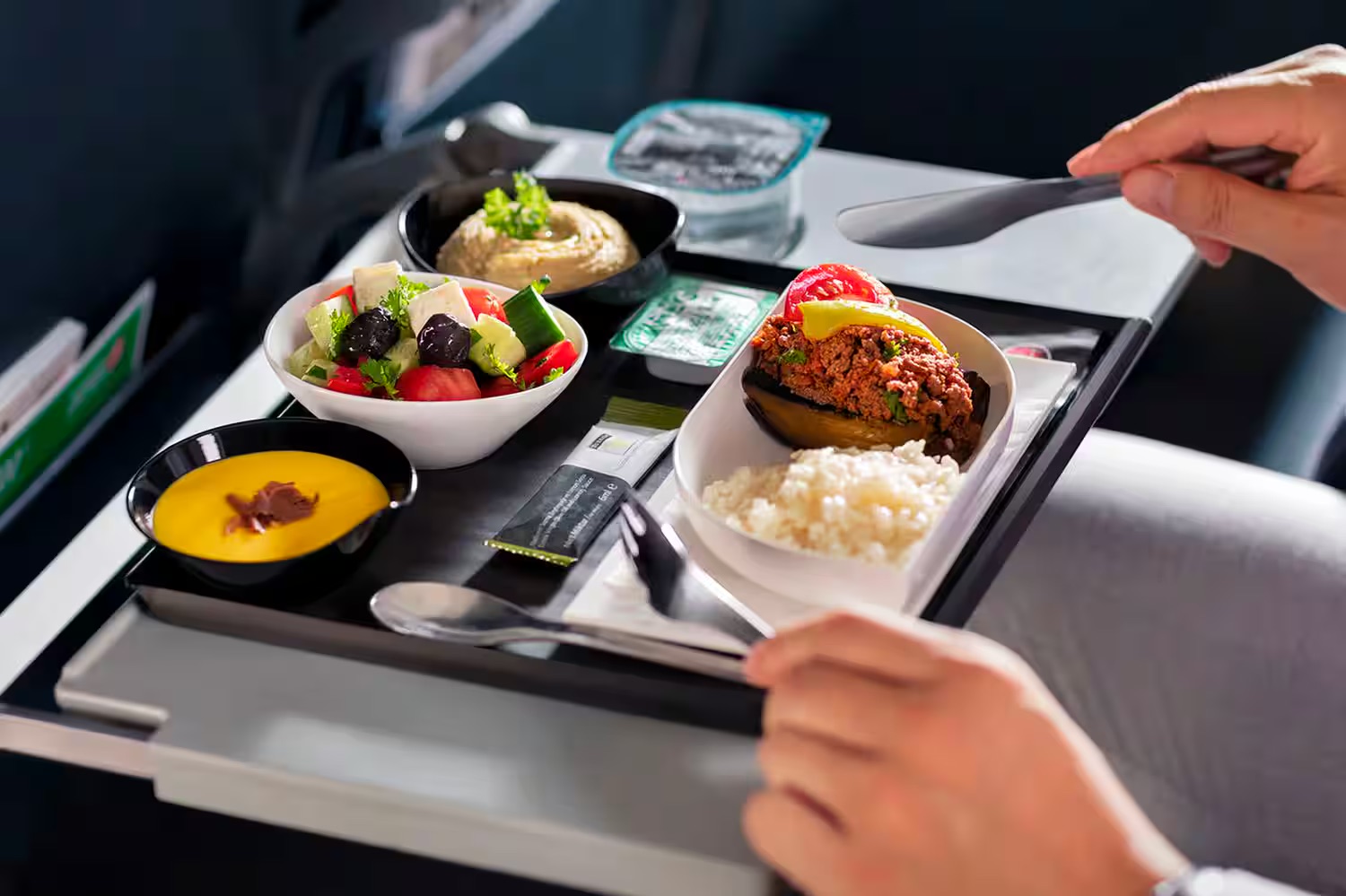
According to a recent audit by the International Air Transport Association (IATA), the aviation sector produces about 3.6 million tonnes of cabin and catering waste each year.
Airlines have therefore become more creative in cutting down the leftovers, with United just the latest carrier to introduce measures to cut waste with the introduction of a meal pre-ordering service in economy class.
Additionally, Lufthansa offers passengers the option to purchase fresh meals at a reduced price on the day’s final flights (called “Onboard Delights Last Minute”).
KLM is also using artificial intelligence to estimate the precise number of meals required for each flight. Several other airlines, including Lufthansa and Etihad, are also doing likewise, using technology that simply wasn’t available just a handful of years ago.
Additionally, like its UAE neighbour, Qatar Airways is also tackling food waste with the help of a biodigester that can process over a ton of organic matter into grey water each day, which can then be safely discharged.
Featured image: Emirates
Sign up for our newsletter and get our latest content in your inbox.


More from

October 17, 20265 min read

October 17, 20264 min read