ELECTRON Aerospace’s E5 electric aircraft passes key design milestone

4 min read
Dutch aviation company ELECTRON Aerospace has passed a key design milestone in its plans to have its E5 fully electric aircraft flying by 2027. With the final design of the aircraft now fixed and passed for production, the five-seat aircraft will now proceed to the construction phase with a first flight due late next year.
ELECTRON’s E5 passes Design Concept Review stage
On the first day of the AERO Friedrichshafen general aviation event in Germany, Rotterdam-based ELECTRON Aerospace announced that it has reached an important milestone in the design phase of its five-seat E5 dual-motor all-electric aircraft.
The company says that the battery-powered E5, designed for regional air mobility, has now passed the Design Concept Review (DCR) stage and will now proceed to full-scale production for the first time.
In a statement, ELECTRON said the review confirmed that the selected concept had successfully met the programme’s core payload and range requirements using modern, commercially available battery technology.
With the CDR now complete, the company plans to proceed with building a full-size flyable prototype with a first flight planned for the end of 2027.

In passing the DCR, ELECTRON’s E5 advances along the path to becoming a potentially certifiable project, having confirmed that the aircraft design is a credible basis for further development.
Having so far remained at the conceptual stage of development, the next step of constructing a full-scale prototype will see the company begin the engineering process that will test whether the performance claims made by the company so far can be backed up in flight test conditions.
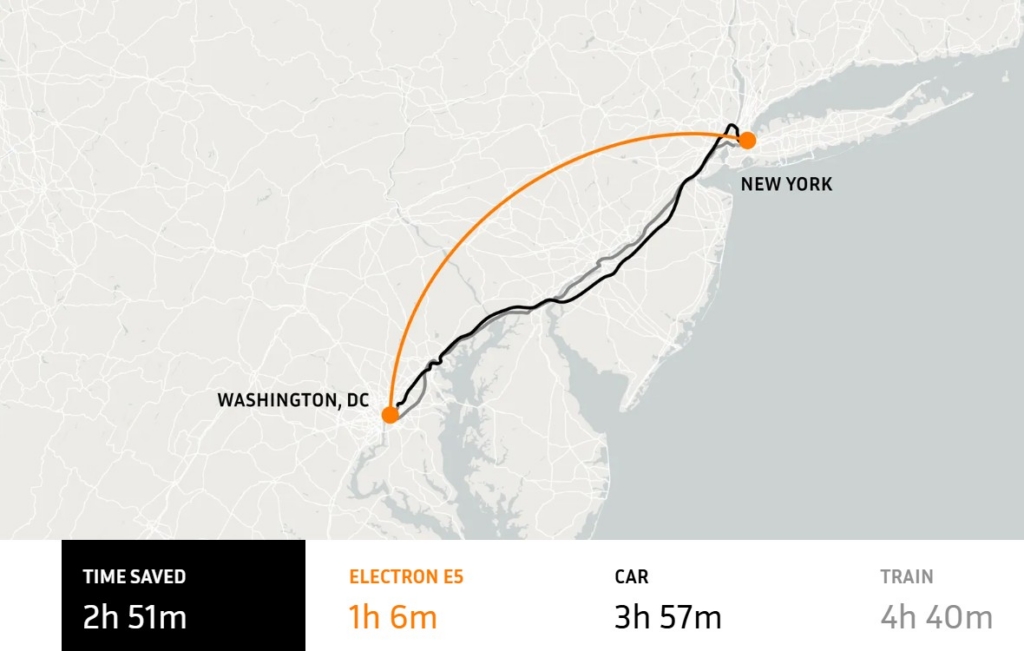
The review confirmed that the selected concept will be able to carry five people plus luggage (the equivalent of 500kg / 1,100 lbs of payload) over 750 km (470 miles) using batteries that already exist. By the time the plane enters service in 2031, ELECTRON expects the E5 to offer an increased range of up to 1,000 km as battery energy density improves.
The E5 design is deemed credible to proceed to production
ELECTRON states that the DCR for the E5 was carried out by an external review board to test whether the selected concept provided a credible basis for further development based on configuration, weight and performance assumptions and certification logic.
ELECTRON said that the board found that “the E5 programme had reached a high level of maturity for this stage and had progressed ahead of expectations.”
With the DCR milestone behind it, ELECTRON is now moving forward by sharing the selected concept publicly as the programme moves from concept validation into prototype build, with first flight targeted by the end of 2027.

Providing further details on the final design for the E5, ELECTRON stated that it had simplified the configuration of the aircraft.
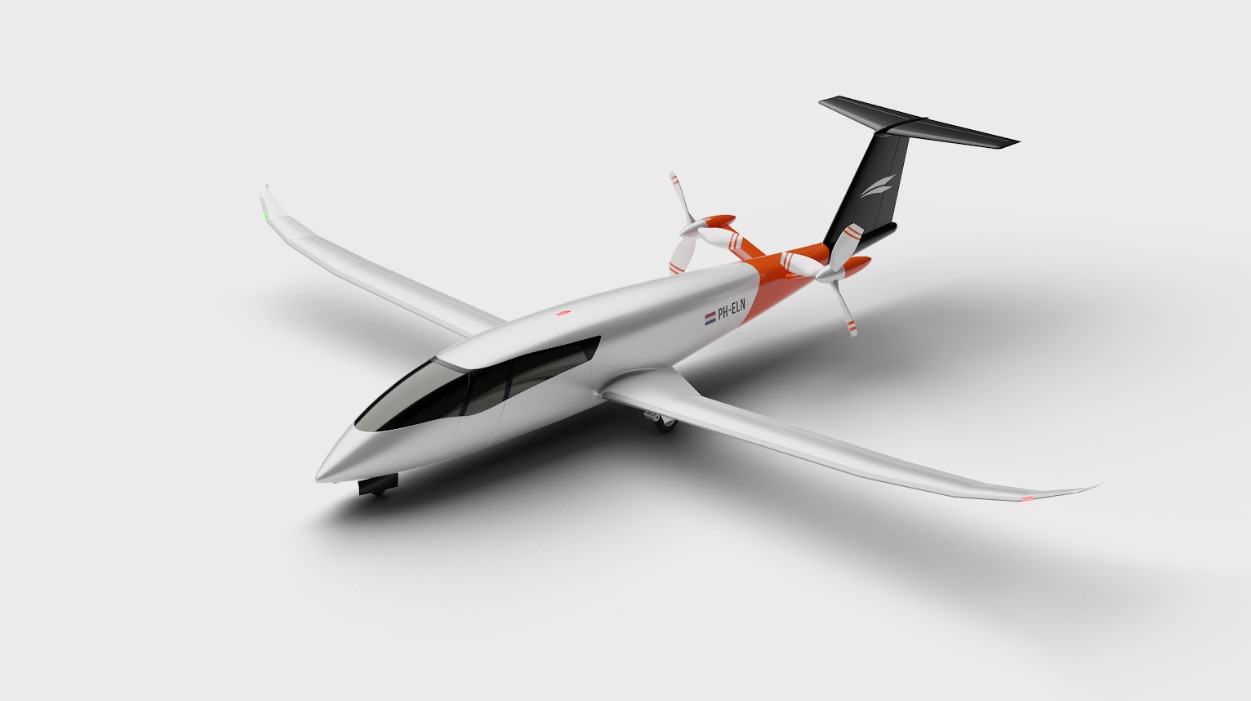
With the original design having featured a canard wing design on the forward fuselage, the company has now settled on a centrally mounted low-slung wing design. The powerplants are mounted on pylons slung either side of the rear fuselage, while the vertical stabiliser is of a T-tail design.
This design has been chosen “to keep the path to certification as straightforward and low-risk as possible,” said the company. Designers at ELECTRON concluded that the canard added aerodynamic complexity and risked delays, without offering enough performance benefit to justify it, the company added.
“Passing the DCR shows we now have an aircraft concept that works for the mission and gives us a practical path into the next phase,” said Josef Mouris, Co-Founder and CEO of ELECTRON aerospace. “We have made deliberate design choices to keep the aircraft aerodynamically efficient, certifiable and buildable. That is how you turn an idea into a real aircraft programme.”
Marc-Henry de Jong, Co-Founder and Chief Commercial Officer of ELECTRON Aerospace, added that with the design now fixed, it was the right time to reveal the final configuration to the public via the AERO Friedrichshafen event and that his company was looking forward to building its prototype, adding that in aerospace, “seeing is believing.”
The company said it would be unveiling a full-scale cabin mock-up of the E5 at the AERO Friedrichshafen event being held between 22 and 25 April. The company also plans to share more details on the aircraft architecture, mission profile and development roadmap as it looks towards the E5’s first flight next year.
Challenges still lie ahead for the E5
Rather than replacing existing regional aircraft, the E5 is targeting shorter trips where electric propulsion is a more realistic proposition. These are envisaged to include regional hops, business travel, family trips, air taxi operations, medevac, pilot training, or short-distance cargo flights.
While many of the electric aircraft concepts under development depend on future battery technology breakthroughs, ELECTRON says the E5 is designed to work with commercially available batteries that are available now, with a view to gaining additional range later as battery density improves. This, it is hoped, will expedite the certification process for the E5.
Should the E5 succeed, it could lower operating costs and emissions for routes too short to justify conventional aircraft economics.
However, the company has yet to prove key concepts. Battery weight versus range performance, the development of key airport charging infrastructure, the scaling of manufacturing, and the real-world operating economics will all determine whether the E5 is successful in the realm of all-electric aviation.
Featured image: ELECTRON Aerospace