


The last airworthy Havilland DH.88 Comet has been damaged in a landing accident in the UK

5 min read
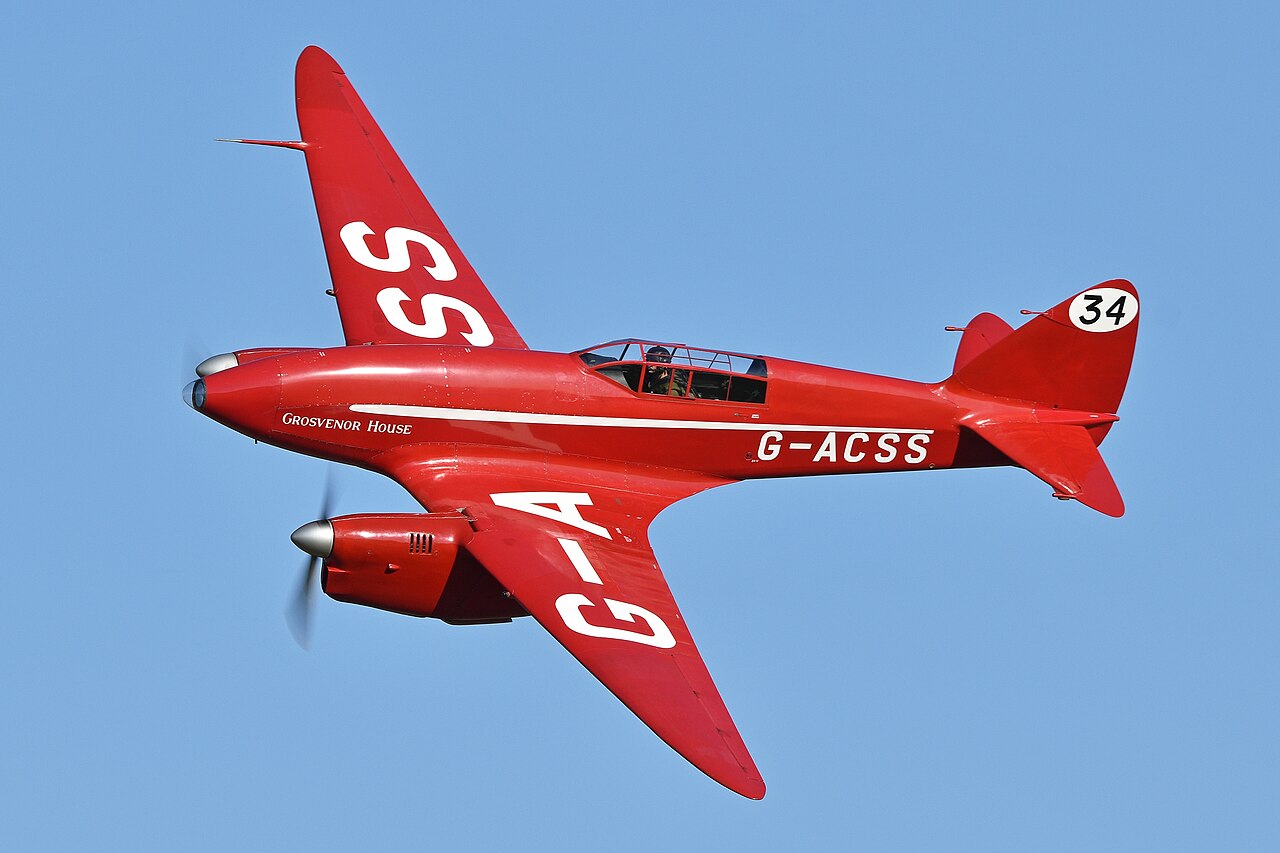
The world’s only airworthy de Havilland DH.88 Comet has been substantially damaged after a landing accident at its home base of Shuttleworth in Bedfordshire, UK. The aircraft, which was taking part in an air display at the time of the accident, ended up lying on its back after nosing over upon landing after its display had been completed.
De Havilland Comet G-ACSS damaged in landing accident
The accident happened on 15 August as the de Havilland DH.88 Comet, registered as G-ACSS and named ‘Grosvenor House’, came into land at Old Warden Aerodrome, the home of The Shuttleworth Collection located near Biggleswade, England.
The Collection is a well-known museum housing many early vintage aircraft and pre-war vehicles. The aircraft was taking part in Shuttleworth’s annual ‘Flying Proms’ weekend at the time of the accident.
At around 19:20 local time, as the aircraft concluded its flying display, it was seen to bounce slightly and then flip over, coming to rest with the landing gear pointing in the air and the aircraft lying on its back.
Date: Saturday 15 August 2026
— HEXJUMPER (@HEXJUMPER293949) August 16, 2026
Type: De Havilland DH.88 Comet
Owner/operator: Shuttleworth Collection
Registration: G-ACSS
MSN: 1996
Year of manufacture: 1934
Aircraft damage: Substantial
Location: Old Warden Aerodrome, Bedfordshire – United Kingdom
Phase: Landing pic.twitter.com/DWnUFAwuWD
Emergency services swiftly extracted the pilot, who was reported to be responsive to first responders at the scene. He was later taken to a local hospital for further assessment but was discharged without suffering any major injuries.
Shuttleworth later confirmed that the rest of the flying programme continued as planned. A Westland Lysander that was due to land immediately after the Comet was diverted to nearby Duxford Airfield as a result, while emergency services dealt with the incident.
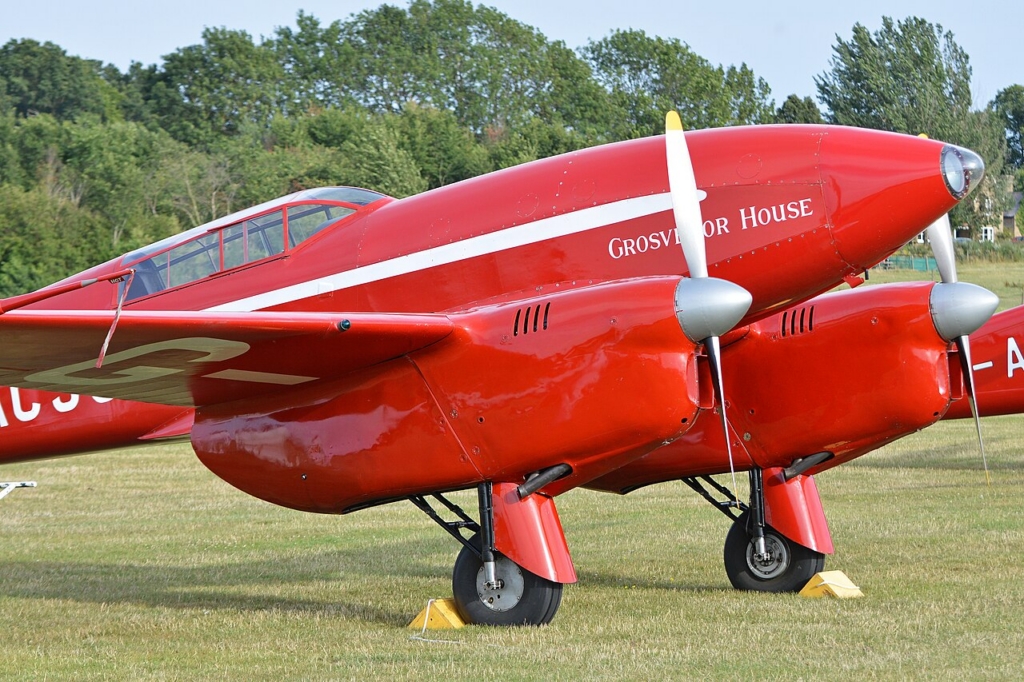
The UK Air Accident Investigation Branch has already begun its investigation into the cause of the accident, although its final findings are not expected to be published for several months.
The aircraft is being recovered and will be examined as part of the AAIB investigation. At the time of writing, The Shuttleworth Collection has not provided any update on the extent of the damage suffered by the Comet or whether it can be repaired.
An impressive history of air racing
The de Havilland DH.88 Comet G-ACSS is one of the most famous aircraft in British aviation history. It was built in 1934 by the de Havilland Aircraft Company specifically to compete in the MacRobertson Air Race, an 11,300-mile (18,080 km) race from Mildenhall in England to Melbourne, Australia.
The Comet was an advanced aircraft for its time, featuring a lightweight wooden construction, retractable undercarriage, enclosed cockpit and streamlined design.
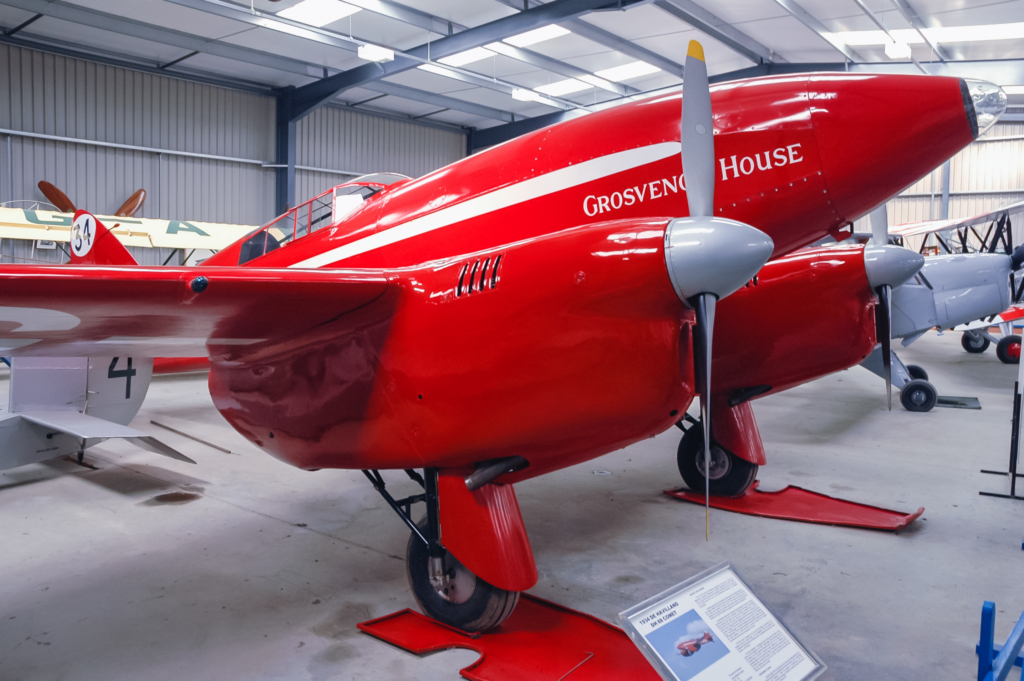
G-ACSS was originally sponsored by Arthur Edwards, the managing director of the Grosvenor House Hotel in London, and was painted red and named after the hotel.
Edwards hired experienced pilots C. W. A. Scott and Tom Campbell Black to fly the aircraft in the UK-Australia air race. The race began at RAF Mildenhall in Suffolk on 20 October 1934, with G-ACSS competing against two other DH.88 Comets and a variety of other aircraft.
During the race, Scott and Campbell Black quickly established themselves as serious contenders. They reached Allahabad ahead of their rivals and survived a severe storm over the Bay of Bengal before reaching Singapore.
Later, while flying towards Darwin, the aircraft developed an engine problem, but the crew continued. Despite the difficulties, they maintained their lead and eventually reached Melbourne on 23 October 1934. Their official time was 70 hours, 54 minutes and 18 seconds, making G-ACSS the winner of the speed prize.
An illustrious career for G-ACSS
After the race, G-ACSS was evaluated by the Royal Air Force and given the military serial number K5084. Following a heavy landing, it was eventually considered for disposal, but it was rescued and restored by Essex Aero. It subsequently took part in further races and record attempts.
In 1937, it competed in the Istres-Damascus-Paris race, and later that year it set a record for flights between England and Cape Town. In March 1938, it flew from England to New Zealand and back, covering approximately 26,450 miles in just 10 days, 21 hours and 22 minutes.
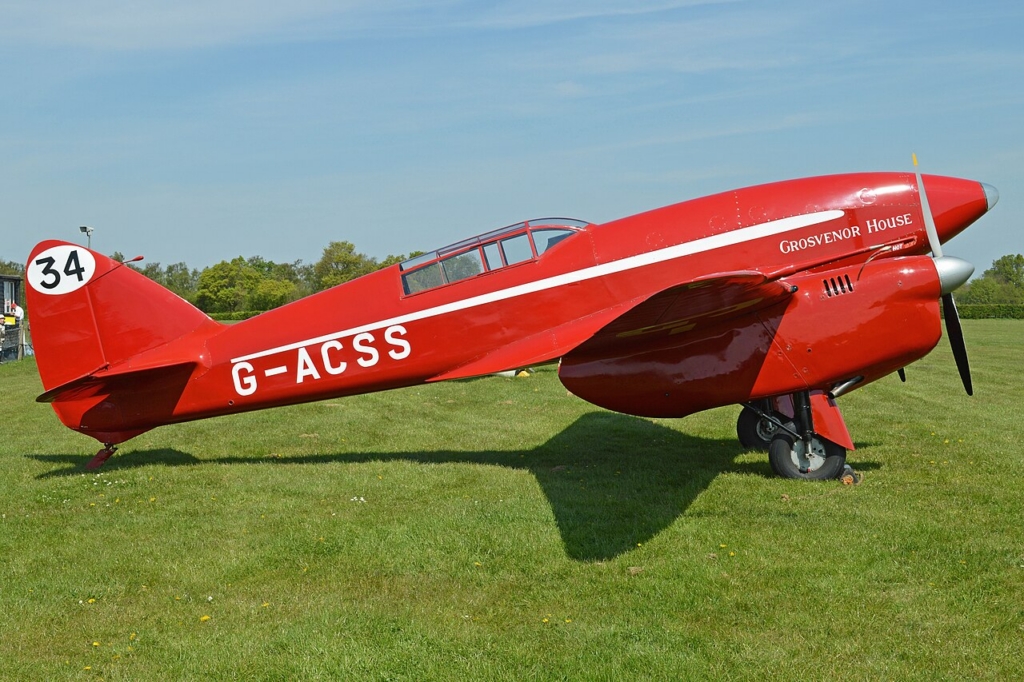
During the Second World War, the aircraft was stored at Gravesend in Kent. It was later restored for static display at the 1951 Festival of Britain.
In 1965, G-ACSS was given to the Shuttleworth Collection, where a major restoration programme began. After many years of work, the aircraft returned to the air in 1987, 49 years after its previous flight.
On 28 October 2002, after a test flight for its Permit to Fly, the aircraft bounced four times on landing before its right main landing gear collapsed. It was eventually repaired and flew again in 2022.
What does the future hold for the aircraft?
Given its historic nature and legendary status as one of the world’s foremost air racers, many will be looking on with interest to see whether G-ACSS will be repaired.
As a remarkable survivor of the golden age of air racing and a symbol of British engineering and aviation achievement, it would be considered a great loss if the aircraft does not take to the air again.
The accident was the second incident at the airfield in recent months following a crash involving an Avro Triplane IV replica at The Shuttleworth Collection’s Wings and Wheels event in May of this year. The pilot involved in that incident was not seriously injured.


