Boeing 787 vs Airbus A350: Which is better for long-haul flights?

3 min read

The Boeing 787 Dreamliner and Airbus A350 are two of the most iconic widebody passenger aircraft in commercial aviation. Both were designed to make long-haul flying safer, faster and more efficient – but they target different parts of the market.
When airlines go shopping, their choice of aircraft involves much more than just range or fuel burn. Passenger demand, cargo, route length, fleet strategy and aircraft size all matter. So, which one comes out on top?
Boeing 787 range and capacity
The 787 family comprises the 787-8, 787-9 and 787-10.
The 787-9 sits at the heart of the range, with Boeing listing a maximum range of 8,300 nautical miles and seating for 250 to 325 passengers in a typical two-class configuration.
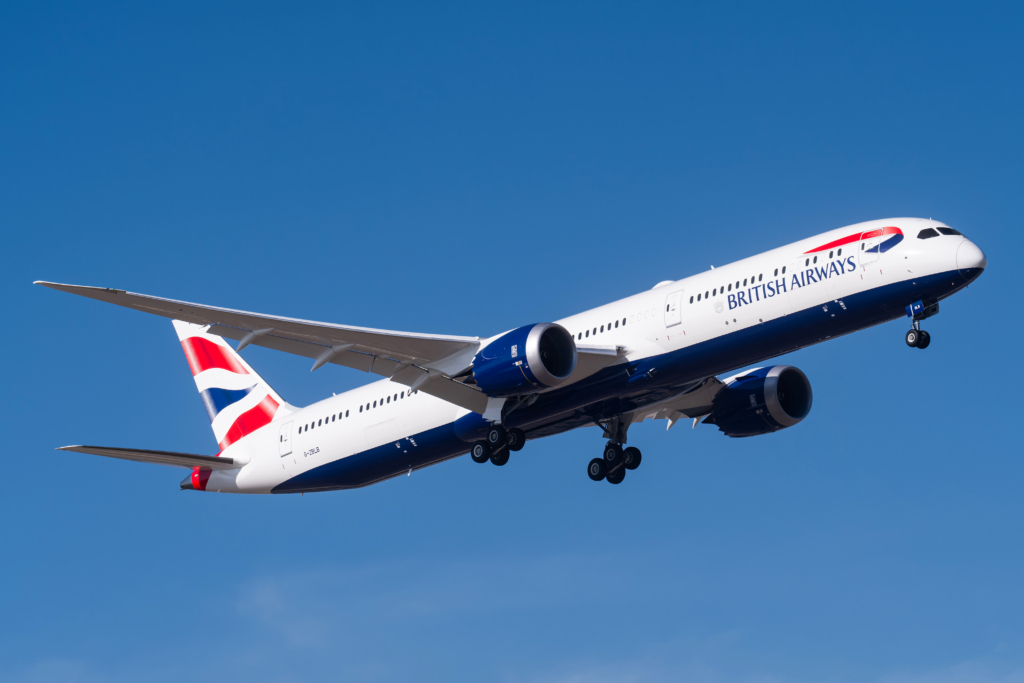
The larger 787-10 can carry 300 to 330 passengers but has a shorter maximum range of 7,500 nautical miles.
That makes the 787-9 ideal for airlines serving long-distance routes where demand is healthy but does not necessarily justify a larger aircraft. It can also give carriers more freedom to open city pairs that might have been difficult to serve economically with older widebodies.
Airbus A350 range and capacity
The A350 competes at a larger scale. Airbus lists the A350-900 with typical three-class seating for 300 to 350 passengers and a longer maximum range of up to 8,600 nautical miles.
The A350-1000 is larger again, with three-class capacity of 350 to 410 passengers.
The difference is particularly relevant on busy intercontinental routes. That’s because an airline with strong demand between major international hubs can use the A350’s additional capacity without moving to a four-engine aircraft.
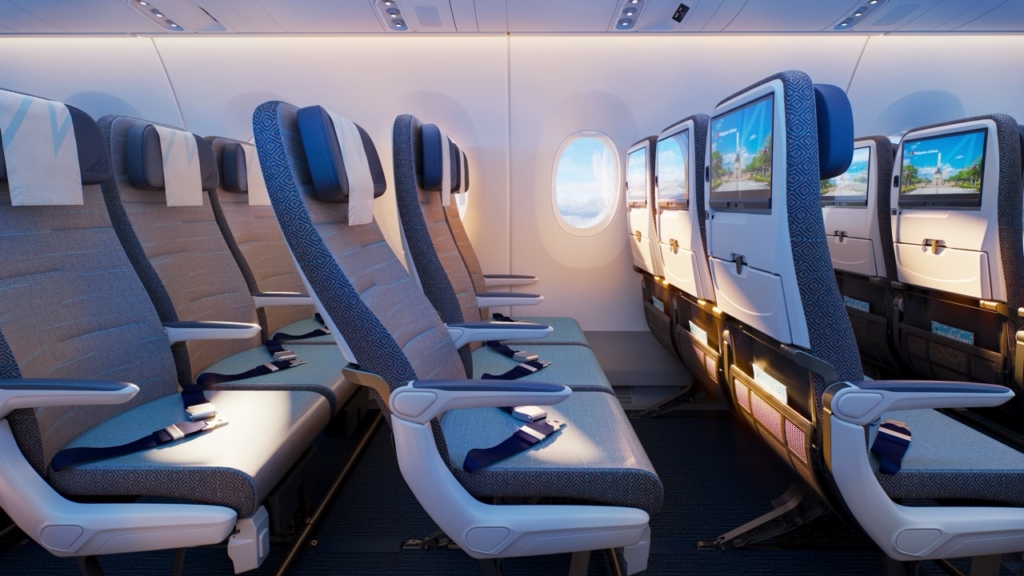
The A350 also has a wider cabin than the 787. That gives airlines more room to develop premium cabins, economy seating and other layouts around their particular business model.
Boeing 787 vs Airbus A350 fuel efficiency
Comparing the 787 and A350 directly, there isn’t a reliable published figure showing that one is simply more fuel efficient than the other.
Boeing says the 787 uses 25% less fuel than the aircraft it typically replaces, while Airbus says the A350 also uses 25% less fuel than previous-generation competitor aircraft, including the Boeing 777-200ER and 777-300ER.
In other words, both offer roughly a 25% improvement over older widebodies, but that does not mean they use the same amount of fuel.
In real-world airline operations, fuel burn depends on the aircraft variant, passenger numbers, cargo, route and cabin layout, so neither has a clear fuel-efficiency advantage based on the manufacturers’ published figures alone.
What do airlines look for when choosing?
The decision often comes down to the network. The 787-9 gives airlines the flexibility to serve long-haul routes without taking on the capacity of a larger aircraft, making it a good fit for markets with moderate or seasonal demand.
The A350 is better suited to airlines that need more seats and cargo space, with its larger airframe working well on busy routes.

The A350-1000 also gives carriers an option for higher-demand markets. Fleet strategy matters too, as airlines already operating large Airbus or Boeing fleets may prefer to stay with the same manufacturer, helping to simplify pilot training, maintenance and daily operations.
Boeing 787 or Airbus A350 for long-haul routes?
There is no straightforward winner as it’s rather subjective and depends on the airline’s needs. The 787-9’s strongest argument is versatility while the A350’s is capacity.
Both offer airlines the efficiency and range needed for today’s long-haul networks, but they solve slightly different problems.
For an airline, the better aircraft is therefore the one that fits its routes most effectively. A carrier opening thinner long-haul markets may find the 787-9 the better choice, while one carrying large passenger and cargo volumes between major hubs may have a stronger case for the A350.
That is what makes the competition between these two aircraft so interesting. Rather than one cancelling out the other, the 787 and A350 have given airlines two different ways to build an efficient long-haul network.

Sign up for our newsletter and get our latest content in your inbox.


More from

October 17, 20265 min read


October 17, 20264 min read