

Schiebel demonstrates a drone that launches another drone in flight

3 min read
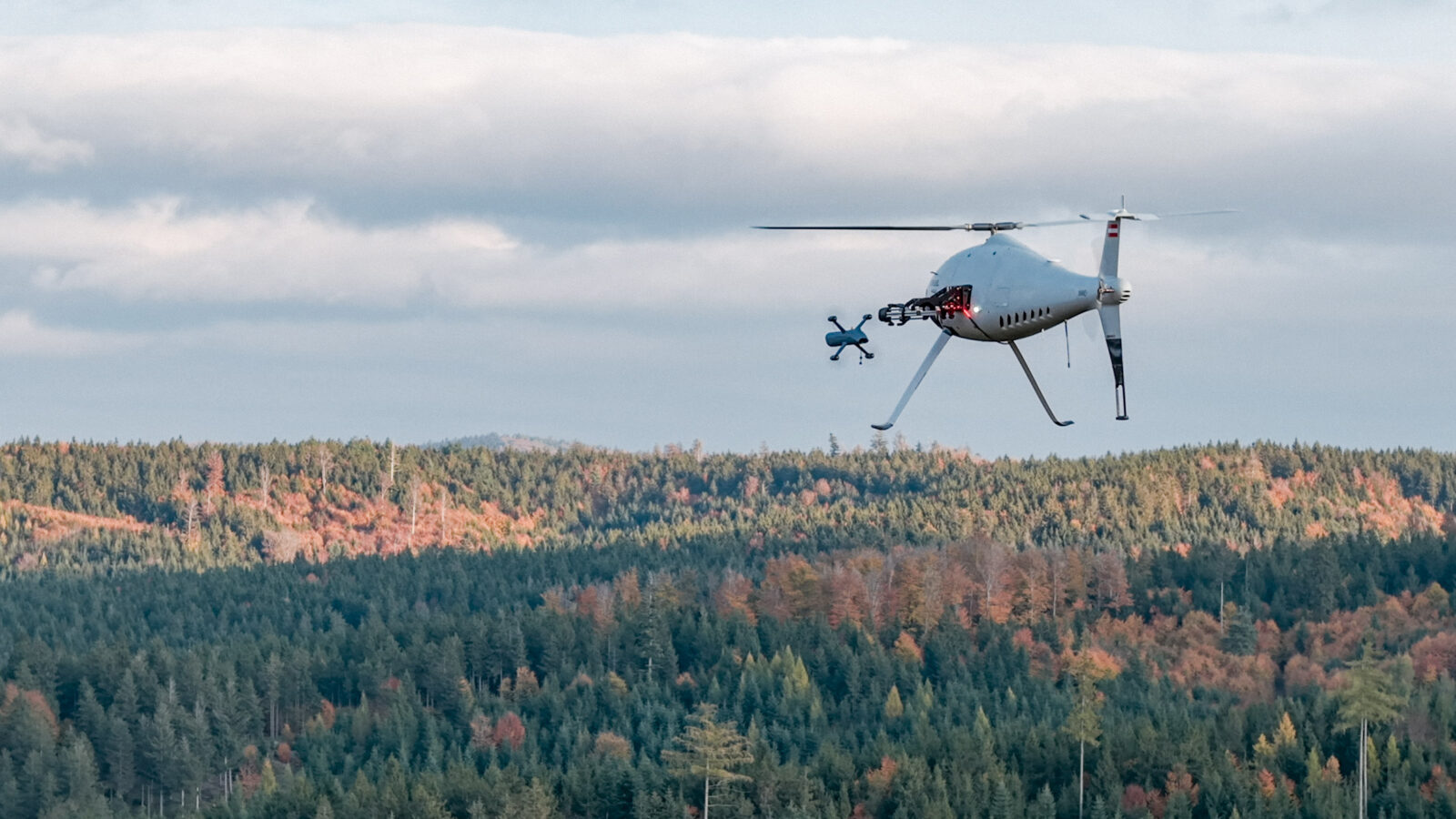

The Austrian company Schiebel has successfully demonstrated its Camcopter S-100 Unmanned Air System (UAS) acting as a mothership to launch smaller drones.
Footage from the trial shows a single HSCD-1 high-speed camera drone dropping from a mount on the side of the uncrewed helicopter as it flies forward. Schiebel and its partner, Osiris Poland, say the demonstration points to a possible counter-drone role for the S-100 as an airborne mothership.
Camcopter S-100 demonstrates ability to launch smaller camera drone
Schiebel, in partnership with Osiris Poland, has deployed a small Unmanned Air System (sUAS) from its flagship Camcopter S-100 in a proof-of-concept demonstration in Austria.
Launching the parasitic sUAS allows the Camcopter to act as an airborne carrier, deployer, and communications relay. It can deploy the drones during forward flight and at different speeds.
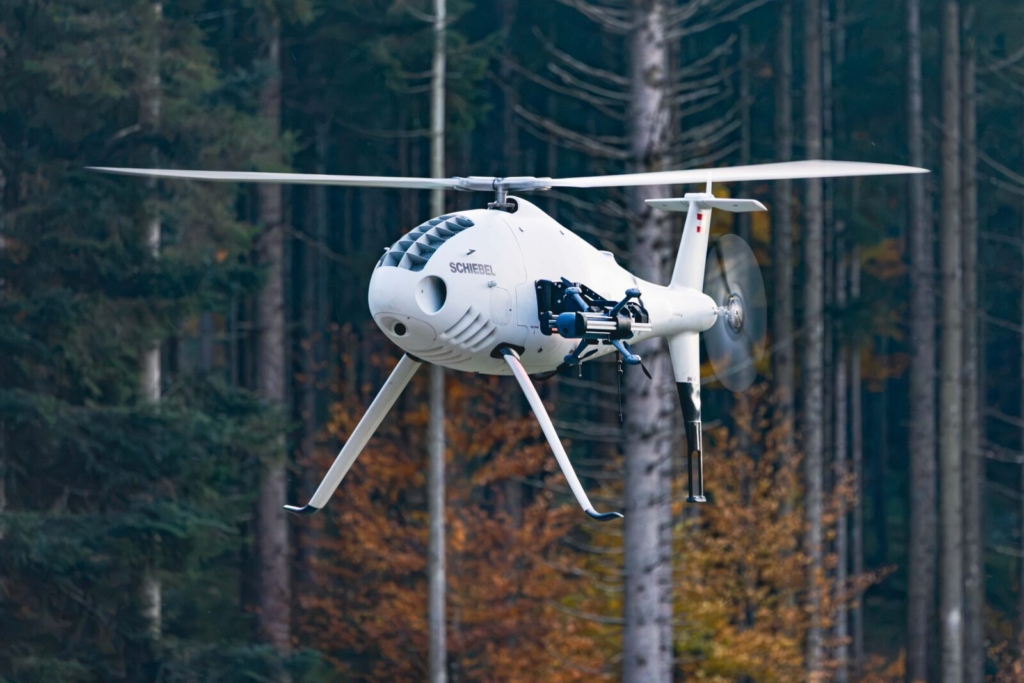
The sUAS deployed was an Osiris HSCD-1 (High-Speed Camera Drone), and resembles the interceptor drone designs seen in Ukraine.
Schiebel writes, “Following release, the small drone was operated through a communications link relayed via the S-100, successfully demonstrating the concept of using the larger UAS as a drone mothership as well as an airborne control and video relay.”
Hans Georg Schiebel, Chairman of the Schiebel Group, said it opens up “new possibilities for diverse operational scenarios.”
The potential C-UAS application
The pairing allows the duo to utilize the range and endurance of the larger Camcopter, while leveraging the speed and agility of smaller drones.
By transporting the sUAS closer to its intended area of operation or target, and by maintaining the communication link, the pair can significantly extend the operational reach of the smaller drones.
This is significantly further than what can be achieved by ground-based launching of the drone. Schiebel claims the proof-of-concept opens up a range of potential applications “particularly in the Counter-Unmanned Air System (C-UAS) domain.”
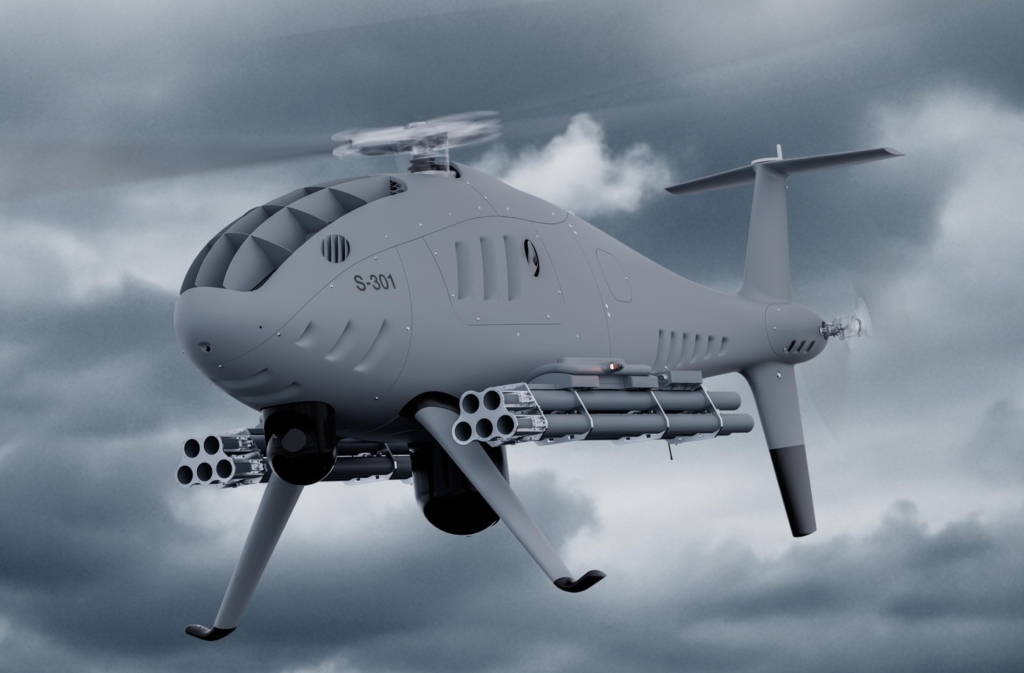
It suggests that the concept can support high-speed interceptor drones designed to destroy enemy drones. It also opens the door for the Camcopter to support loitering munitions.
This could allow the Camcopter series, including the S-100, S-300, S-101, and S-301, to serve as a carrier, launch platform, and airborne communications relay for smaller unmanned systems and loitering munitions.
The Schiebel Camcopter S-100 is operated by military, maritime, and civil agencies worldwide, including navies, coast guards, police forces, and aviation contractors. Navies include the Royal Navy (designated the Peregrine), the French Navy, Italian Navy, US Navy, German Navy, and others.
The trend toward drone motherships & relays
Attempts to develop motherships to extend the range of smaller aircraft have been ongoing since at least the US Navy developed the Akron-class airship aircraft carriers to carry biplanes in the 1930s.
Today, the trend to develop motherships carrying smaller drones and communication relays is explosive, and it covers everything from the purpose-built Chinese Jiutian drone mothership through to balloons hoisting drones and relays aloft.
❗️🌉Clean, watermark-free footage of the historic moment a Ukrainian FP-5 Flamingo cruise missile, carrying a warhead weighing over 1,000 kg, slammed into the road arch span of the Crimean Bridge overnight. https://t.co/b8BafYMeVz
— Special Kherson Cat 🐈🇺🇦 (@bayraktar_1love) November 17, 2026
Most recently, it appears that Ukraine was able to carry out the successful attack on the Crimea bridge using drone relays to keep in contact with its drones/missiles. This allowed the giant FP-5 Flamingo heavy cruise missile to transform into the world’s largest FPV drone.
Both Ukraine and Russia are developing a suite of systems to carry drones, ranging from Russia’s Shahed-type one-way attack drones through to light aircraft.
Recently, the US Army demonstrated an Unmanned Ground Vehicle (UGV) called R3NEGADE as a carrier for 18 small FPV drones.
Sign up for our newsletter and get our latest content in your inbox.