

How Ukraine used 11 weapons systems to strike Russia’s Kerch Bridge

6 min read
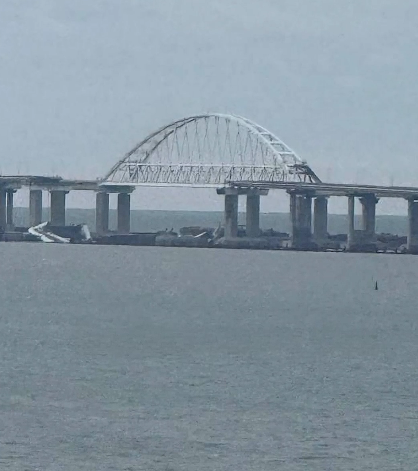

Ukraine used 11 types of drones and missiles in a weeks-long operation against Russia‘s Kerch Bridge, culminating in strikes that brought down a major section of the road crossing and damaged the parallel railway linking Russia with Crimea.
The operation, coordinated by Ukraine’s Security Service (SBU) and the military’s General Staff, involved attacks on Russian air defence systems, radars and electronic warfare equipment before the bridge itself was targeted on 16 and 17 November.
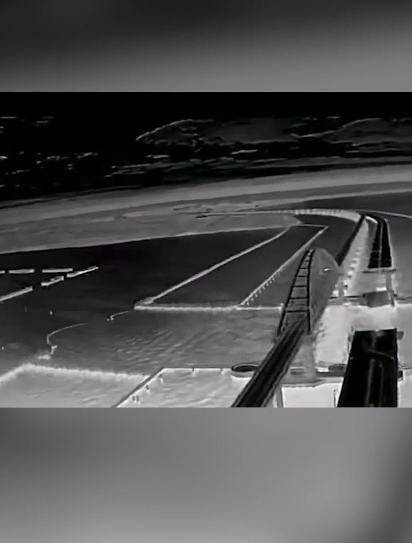
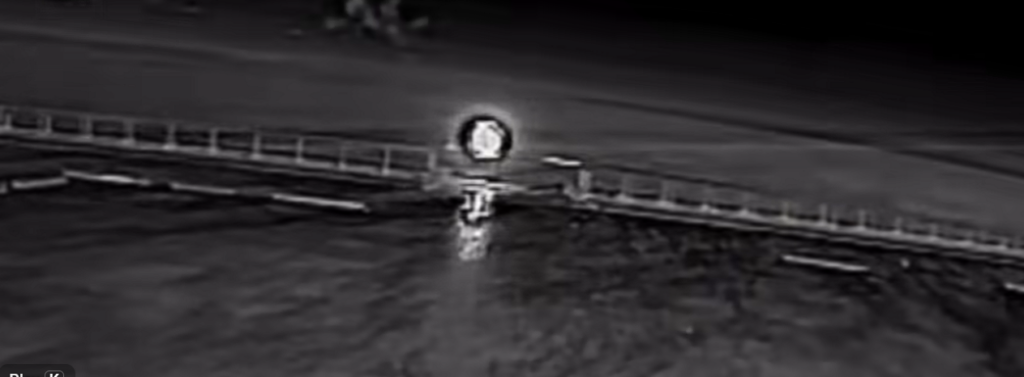
President Volodymyr Zelensky said the final stage involved Palianytsia drones striking the road crossing, while Neptune missiles, Ruta drones and FP-5 weapons attacked the railway section.
The bridge’s road arch and the roadway beneath it collapsed into the Kerch Strait. Satellite imagery taken on 19 November showed approximately 225 metres of the road crossing had fallen into the water, with additional damage visible on the railway section.
The operation offers an unusually detailed account of how Ukraine combined domestically developed long-range weapons against a heavily defended target. It also shows how the country’s missile and drone programmes have expanded since Russia’s full-scale invasion in 2022.
Seven stages before the final strike
Zelensky described the attack as the seventh stage of an operation conducted over several weeks.
Ukrainian forces first targeted the equipment protecting the crossing, including surface-to-air missile systems, surveillance radars and electronic warfare installations.
Those systems perform different tasks. Radars detect and track approaching aircraft and missiles. Surface-to-air missiles attempt to intercept them, while electronic warfare equipment can interfere with satellite navigation and communications used by attacking drones.
Ukraine’s approach was to weaken those defences before launching the main attack.
The President identified Dovbush, Vendetta, Da Vinci, Sichen, MICH-2000, An-197, FP-1, Ruta, Palianytsia, FP-5 Flamingo and R-360 Neptune as the weapons involved across the operation.
He did not disclose how many of each were launched.
The SBU said its Alpha special forces unit used Palianytsia weapons against the road section during the decisive attack. Russian authorities acknowledged structural damage and suspended traffic across the bridge.
“For years, the russians have been trying to convince the world that the Crimean bridge is one of the most heavily defended structures on the planet. Today, its remains lie on the seabed. It was not just the bridge that collapsed; the myth of russia’s greatness has once again been shaken. Through unique special operations, the Security Service is achieving the impossible and bringing a just peace closer to Ukraine,” the SSU said in a statement.
Flamingo brings a heavier warhead
Among the weapons named by Zelensky, the FP-5 Flamingo is particularly significant because of its size and payload.
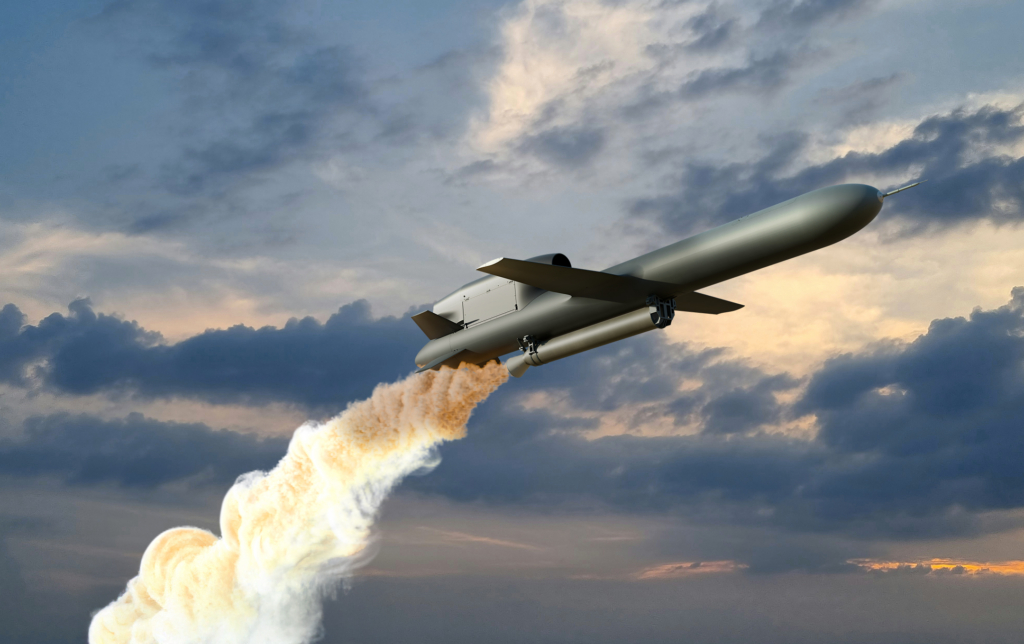
Developed by Ukrainian manufacturer Fire Point, Flamingo is a ground-launched cruise missile intended to attack fixed targets at long distances.
The company claims a range of up to 3,000km, a maximum speed of 950km/h and a payload of approximately 1,150–1,200kg. Those are manufacturer specifications, not independently verified figures for its performance during the bridge attack.
Flamingo is considerably larger than the one-way attack drones Ukraine has used extensively against Russian military and industrial targets.
According to an assessment by the International Institute for Strategic Studies (IISS), its propulsion system appears to use an Ivchenko AI-25TL turbofan, a type originally developed for crewed aircraft.
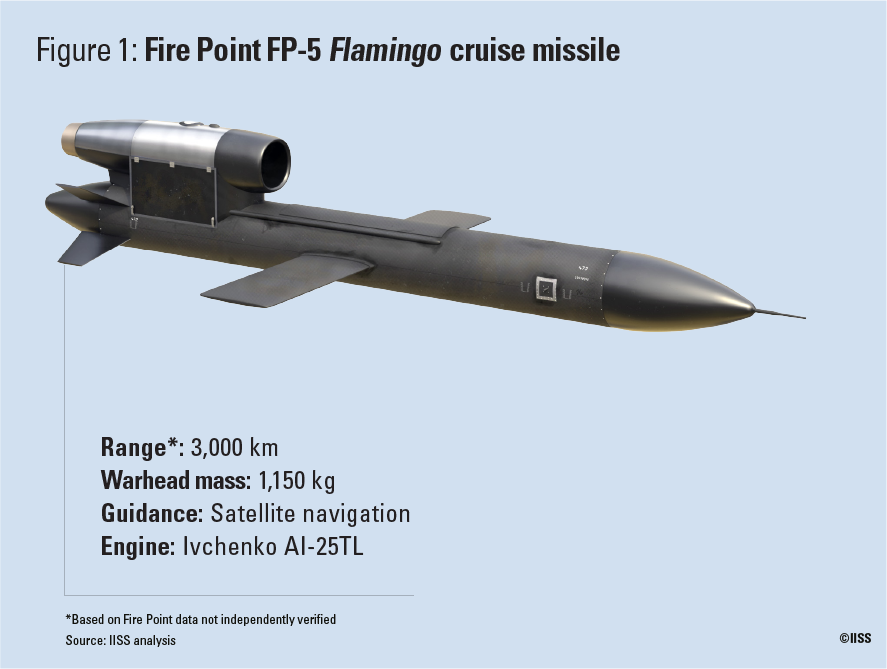
The IISS assessment also described the missile as a large, subsonic weapon that does not incorporate the stealth characteristics of more sophisticated cruise missiles.
Its principal advantage is the ability to carry a much heavier explosive payload than smaller attack drones. That distinction matters when attacking substantial infrastructure rather than relatively exposed equipment or vehicles.
Zelensky said Ukrainian forces used Flamingo in a precision-guided strike and that its communications uplink remained operational until the final seconds.
He did not explain how the link was maintained or whether operators could change the missile’s aim during its final approach.
Palianytsia and Neptune attack separate crossings
Ukraine attributed the destruction of the road section to Palianytsia, a jet-powered, long-range attack weapon.
Palianytsia has been described as a drone-missile because it combines characteristics of an unmanned aircraft and a cruise missile. Unlike a conventional propeller-driven attack drone, it uses jet propulsion.
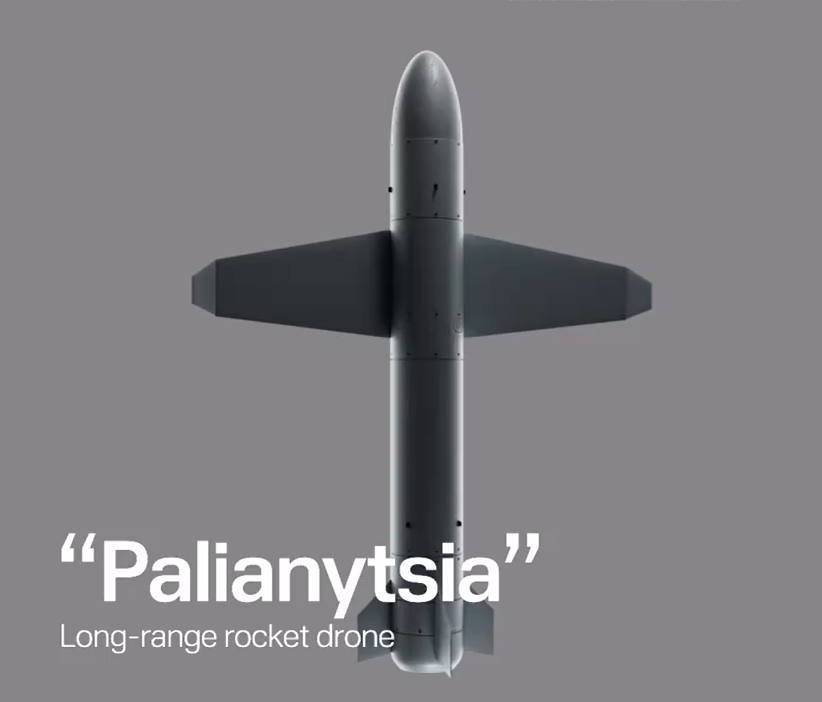
Ukrainian defence claims it has a range of up to 700 km, a speed of around 900km/h and carry a 100kg warhead.
The R-360 Neptune, meanwhile, began life as a Ukrainian anti-ship cruise missile.
It became widely known after Ukraine used Neptune missiles against the Russian Black Sea Fleet flagship Moskva in April 2022. The cruiser subsequently sank.
Ukraine has since developed land-attack versions of the Neptune family, allowing it to strike fixed targets ashore.
The variant used against the Kerch Bridge has not been identified publicly.
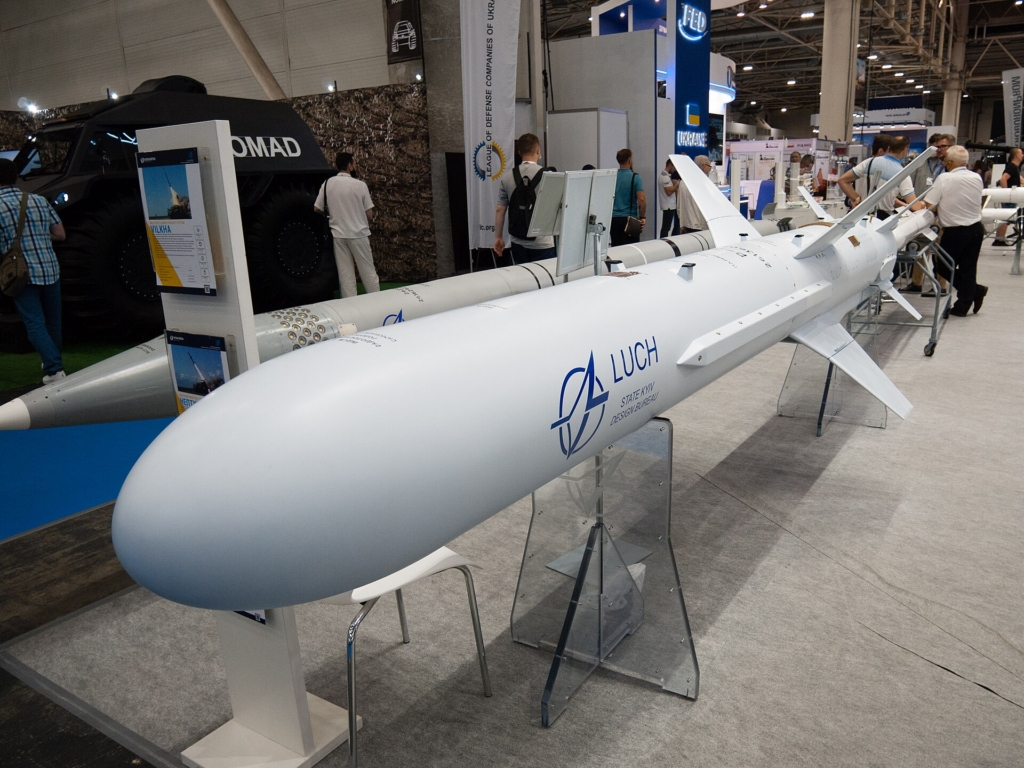
Neptune missiles were among the weapons directed at the railway crossing on 17 November. Ukraine’s military also reported a further Neptune attack overnight on 18–19 November, saying the railway tracks had been damaged.
Ruta and Ukraine’s drone arsenal
Ruta was another weapon used against the railway section.
Associated with European manufacturer Destinus, Ruta is a jet-powered strike system designed for longer-range attacks.
Published information describes two versions with different payloads and ranges. The Block 1 variant has a range of about 300km and a 150kg warhead, while Block 2 is credited with approximately 700km and a 250kg warhead.
It remains unclear which version Ukraine used.
The FP-1, developed by Fire Point, is a different type of weapon. It is a propeller-driven, fixed-wing one-way attack drone intended for long-distance missions.
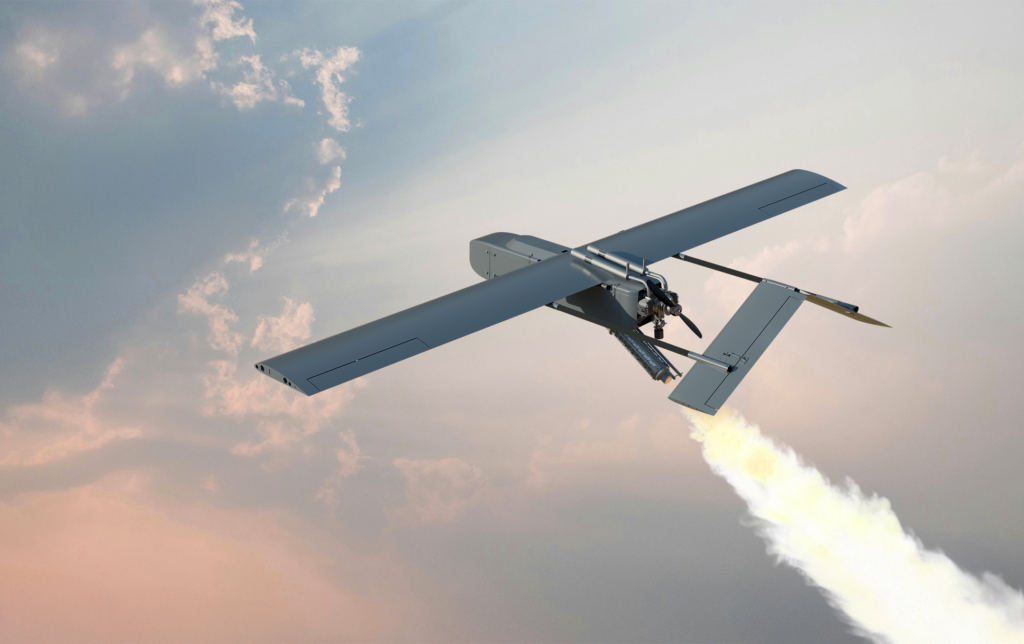
Several other Ukrainian drones took part in the wider campaign.
Dovbush is a family of unmanned aircraft. The long-range T40 version may have been involved, although Ukraine has not confirmed the variant.
Sichen is reported to have a range of up to 1,400km and a payload of around 40kg. MICH-2000 is another long-range drone, with published figures indicating a range of up to 2,000km and a payload between 25kg and 60kg.
Da Vinci has been described as a strike drone capable of carrying approximately 25–40kg.
Much less is publicly established about Vendetta and An-197.
What was actually destroyed?
The Kerch Bridge consists of separate road and railway crossings extending approximately 19km between Russia’s Taman Peninsula and Crimea.
The November attacks caused the collapse of the road bridge’s main metal arch and a substantial section of roadway.
Satellite images published after the strikes confirmed the scale of that damage.
Why the crossing matters
Russia opened the road bridge in 2018, four years after annexing Crimea. The railway connection followed later.
The crossing has since served as an important transport route for passengers, freight and military supplies moving between Russia and the peninsula.
Ukraine previously attacked it in October 2022, July 2023 and June 2025, using methods that included a truck bomb, naval drones and underwater explosives.
Sign up for our newsletter and get our latest content in your inbox.