


SpaceX aborts Super Heavy catch as Starship reaches orbit and deploys 26 satellites

5 min read
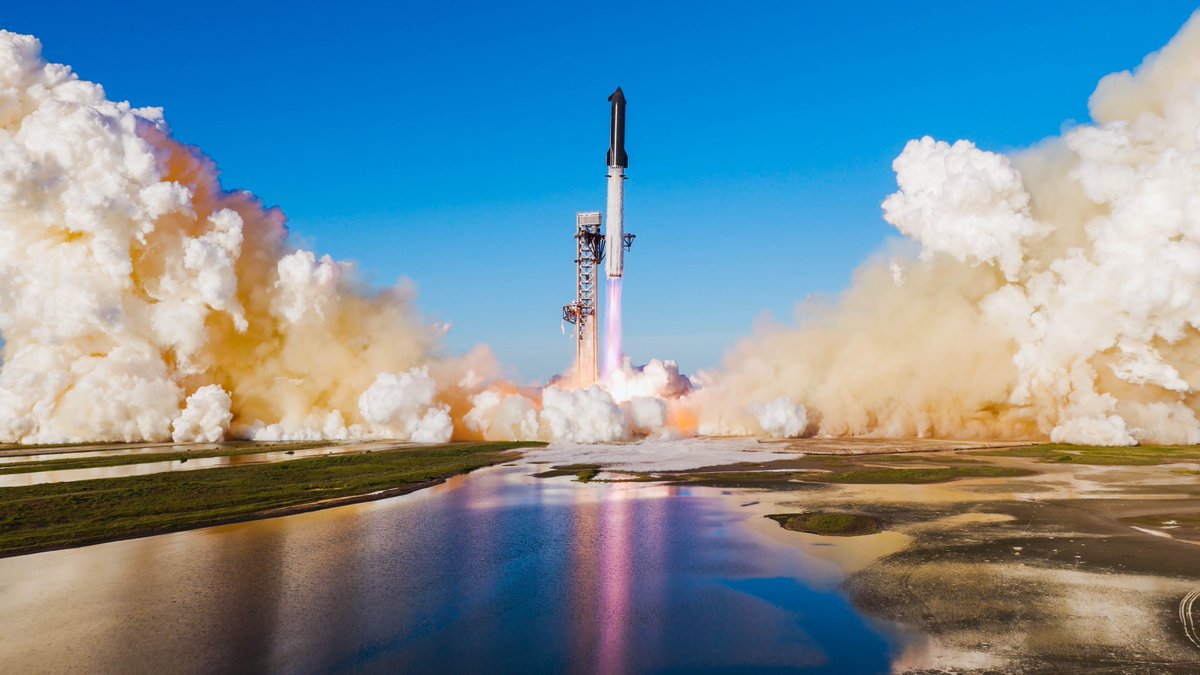
SpaceX abandoned an attempt to catch its returning Super Heavy booster during Starship’s 15th test flight on Friday, sending the giant rocket stage into the Gulf of Mexico, where it erupted in flames on reaching the water.
The setback ended the first half of the company’s ambitious plan to recover both stages of Starship during a single mission.
However, the upper stage successfully reached orbit, deployed 26 Starlink satellites and continued a flight that could culminate in the first-ever catch of a spacecraft returning from orbit on 14 November.
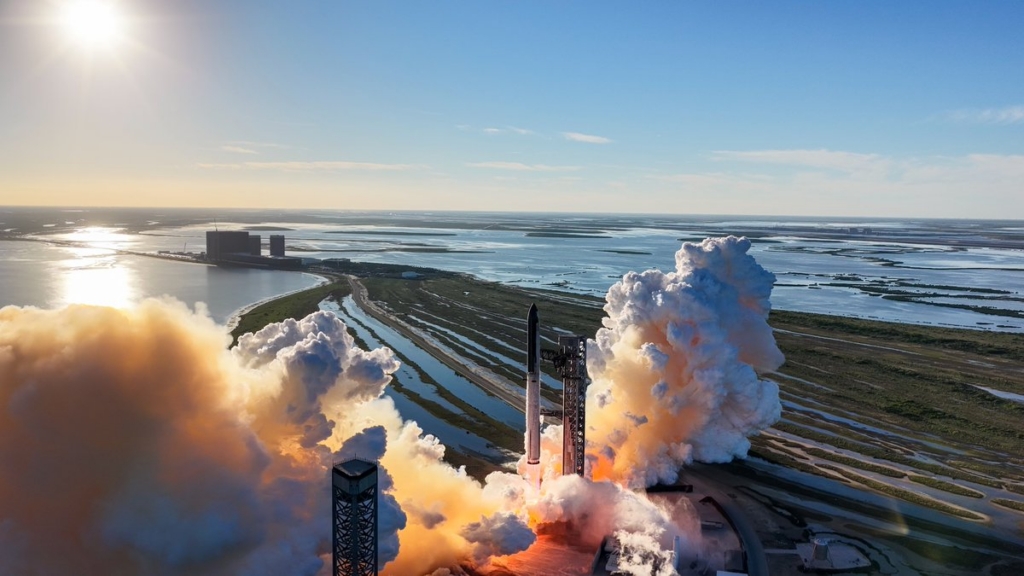
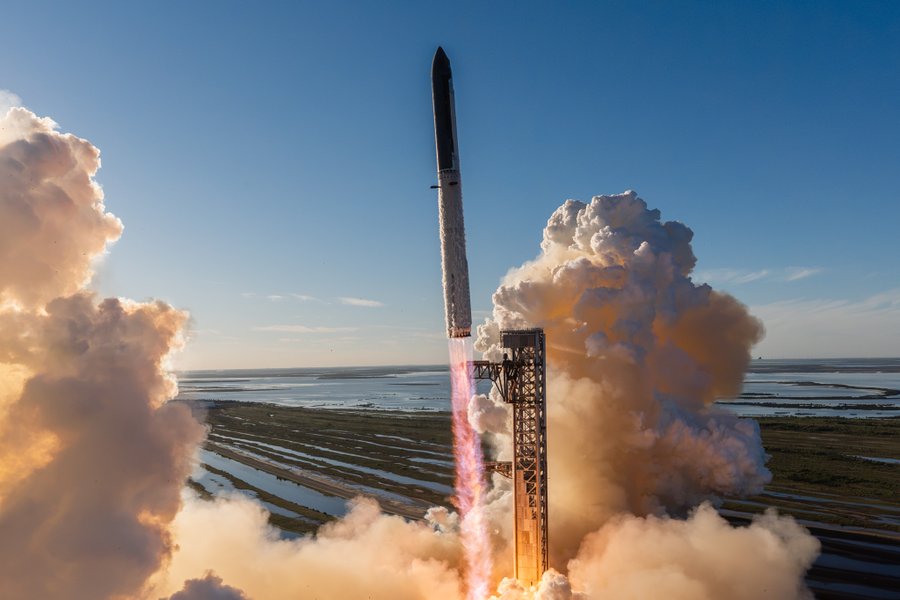
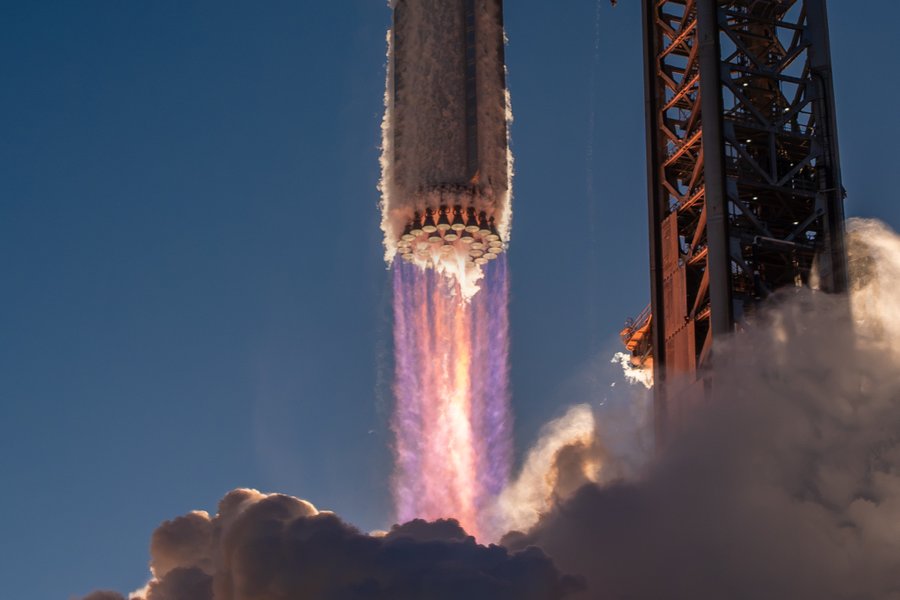
The 124-metre-tall Starship lifted off from SpaceX’s Starbase facility in South Texas at 4:47 p.m. local time on 13 November (22:47 GMT), powered by 33 Raptor engines on its Super Heavy booster.
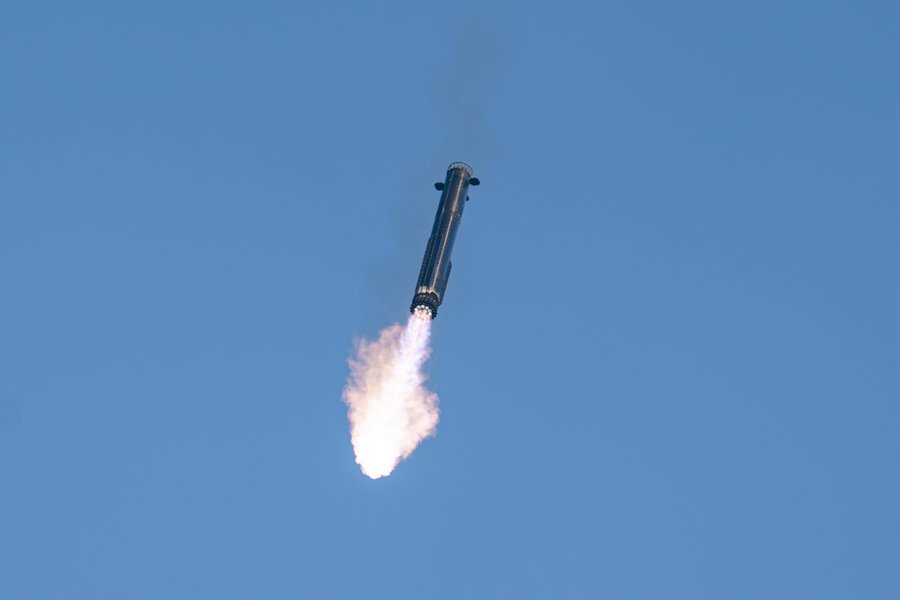
The initial climb proceeded as planned. About two and a half minutes after launch, the upper stage ignited its engines and separated from the booster. The manoeuvre, known as hot-staging, allows the spacecraft to begin accelerating towards orbit before the two stages have completely separated.
Super Heavy then turned towards Starbase, where SpaceX had intended to catch it using two enormous mechanical arms or chopsticks, attached to the launch tower.
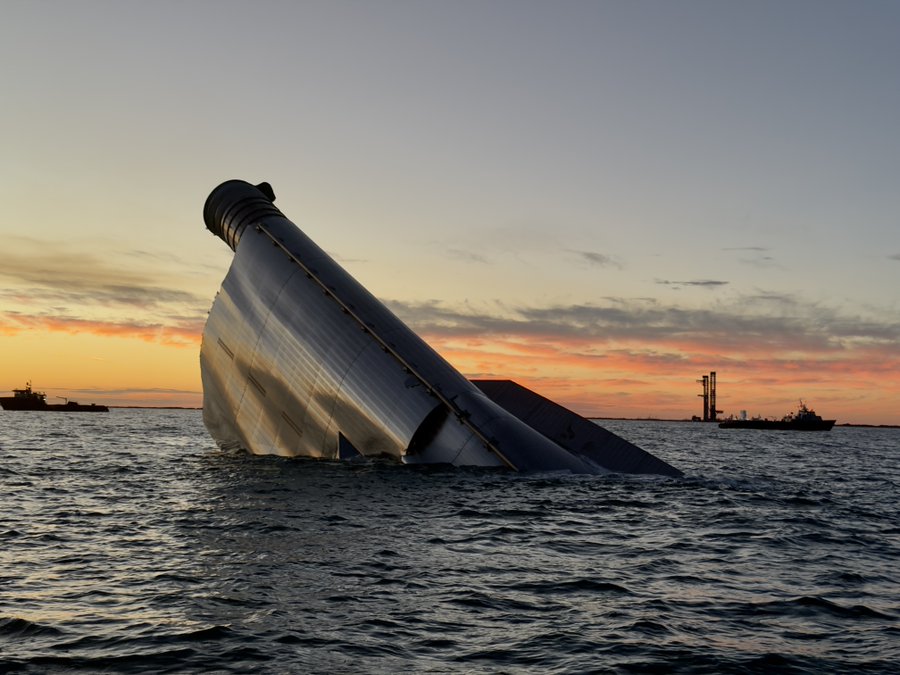
Instead, the company called off the catch and directed the booster towards a designated area offshore. It reached the water approximately six and a half minutes after liftoff, with a large fireball visible during its final descent.
SpaceX did not immediately explain what prompted the decision to abandon the catch.
“Well, that certainly isn’t the news that we had hoped to hear for today,” SpaceX launch commentator Kate Tice said during the live broadcast.
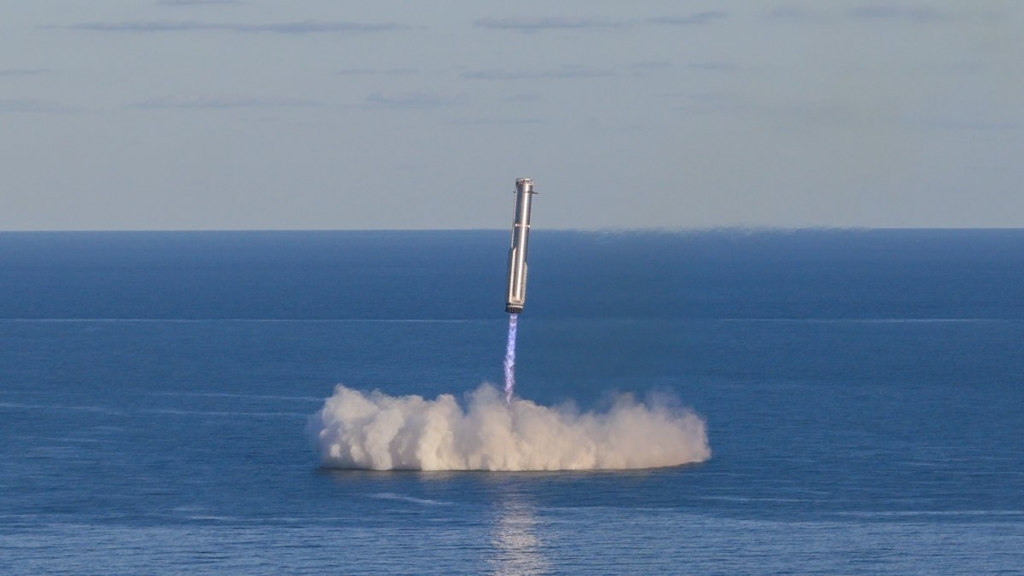
The company stressed that protecting the launch infrastructure and surrounding area takes priority over attempting a recovery.
“Safety is always the number one priority, and we’re still testing out things that we haven’t done before on these vehicles, and so we are prioritising making sure that we can perform each maneuver safely,” a SpaceX commentator said during the livestream.
Why SpaceX wanted to catch the booster
Starship consists of two sections. The Super Heavy booster provides the power needed to lift the rocket off the ground, while the upper stage, called Ship, carries satellites or other payloads into space.
Unlike conventional rockets, which generally discard their boosters after launch, SpaceX wants both sections to return to the launch site for reuse.
Its recovery system uses two large arms, nicknamed chopsticks, to support the descending rocket at specially designed attachment points.
The booster must slow almost to a hover and position itself precisely between the arms. Computers monitor its speed, position and other operating conditions before allowing the catch to proceed.
SpaceX has already demonstrated the technique three times, beginning with Flight 5 in October 2024. However, Friday’s mission involved a newer Version 3 booster equipped with Raptor 3 engines.
The company had not previously caught this upgraded version.
The aborted recovery does not necessarily mean the booster suffered a mechanical failure. SpaceX has built safety checks into the flight sequence that allow the vehicle to be diverted away from the tower if the conditions for a catch are not met.
The precise reason for Friday’s diversion has yet to be established. Although SpaceX has not yet disclosed the cause, multiple reports indicate an onboard anomaly triggered an automatic abort of the catch sequence.
Starship reaches orbit and deploys satellites
While the booster recovery ended unsuccessfully, the upper stage continued its journey.
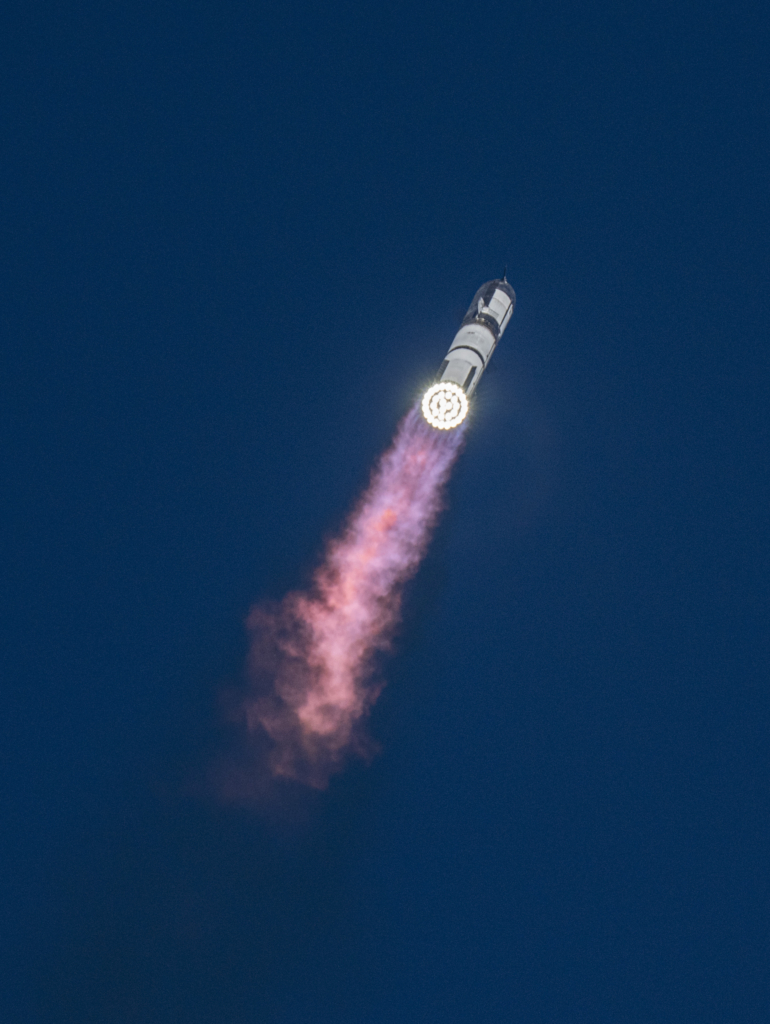
Its engines completed the initial ascent burn just over eight minutes after liftoff. A second engine firing, lasting approximately 20 seconds, placed the spacecraft into an orbit about 275 kilometres above Earth.
“We’ve got a nominal orbit insertion, so Starship now in orbit around Earth for the second time ever,” SpaceX commentator Dan Huot said during the webcast. “That’s a really great moment.”
The spacecraft subsequently deployed 26 Starlink V3 satellites, completing the operation over approximately 42 minutes.
These larger satellites are designed to increase the capacity of SpaceX’s broadband network. According to the company, the latest batch can add roughly one terabit per second of network capacity, equivalent to approximately ten Falcon 9 launches carrying the smaller Starlink V2 satellites.
Three of the satellites also carry cameras intended to photograph Starship’s heatshield and other external components while the spacecraft is in orbit.
The images will help engineers assess whether the vehicle is in suitable condition for its planned return.
A second catch attempt remains possible
The most demanding part of Flight 15 may still lie ahead.
Starship is expected to spend approximately 22 and a half hours in flight, completing about 14 orbits before returning towards Texas.
If SpaceX approves the manoeuvre, the spacecraft will fire an engine to leave orbit, descend through the atmosphere and attempt to return to the launch tower.
Unlike the booster, which operates for only a few minutes before returning, the upper stage must survive the intense heat generated as it re-enters Earth’s atmosphere at orbital speed.
Its heatshield consists of thousands of protective tiles. SpaceX has introduced changes to improve tile retention and reduce the risk of extremely hot gases penetrating gaps in the shielding.
During descent, Starship uses four movable flaps to control its orientation. Near the ground, its engines must restart to slow the spacecraft and rotate it into a vertical position before the tower arms can catch it.
No Starship upper stage has previously been recovered this way.
SpaceX has established several decision points during the mission when engineers can abandon the return-to-launch-site plan and direct the spacecraft towards an ocean splashdown instead.
The final decision will depend on the condition of its heatshield, engines and other critical systems.
If approved, the catch is scheduled for approximately 21:17 GMT on Saturday, November 14.
Why the test matters
Friday’s flight follows Starship’s first successful orbital mission in September, when Flight 14 deployed another 26 Starlink V3 satellites.
The latest mission is intended to demonstrate that Starship can carry operational payloads into orbit while progressing towards recovery of both rocket stages.
SpaceX already routinely reuses the first stages of its smaller Falcon 9 rockets. Starship is designed to go further by recovering the upper stage as well.
That capability is central to the company’s plans for frequent satellite launches and future missions to the Moon and Mars.
NASA has also selected a version of Starship to support its Artemis lunar programme, which will require the spacecraft to demonstrate reliable flight, manoeuvring and landing capabilities.
Sign up for our newsletter and get our latest content in your inbox.


More from

November 14, 20263 min read


