


Poland presses ahead with Port Polska hub as 2032 opening target remains in sight
4 min read

Poland is pressing ahead with plans to build a major new international airport and high-speed rail hub intended to challenge established Western European gateways, with the country’s airport operator insisting that a 2032 opening is still “achievable” despite financing and construction challenges.
The Port Polska project, formerly known as the Central Communication Port (CPK), is intended to become a major transfer gateway for Central and Eastern Europe.
Poland’s new airport moves to execution phase
Speaking to Aerospace Global News at the Routes World 2026 conference in Frankfurt, a Polish Airports (PPL) spokesperson said the project had moved beyond its initial planning and was now entering execution phase, with the focus shifting to construction contracts and securing the financing needed to deliver the airport.
“Maintaining the 2032 opening target is achievable provided we maintain strict contractual discipline and efficiently close the debt financing structure,” the spokesperson said.
The airport component is estimated to cost PLN42.7bn (€10.1bn), with the next two to three years described as critical for the project.
Major tenders covering earthworks, the passenger terminal and airside infrastructure are due to be awarded, while negotiations continue with a consortium of commercial banks and development institutions.
PPL said the final one of 18 executive design contracts covering 36 airport support facilities was completed in mid-October 2026.
The company said there had been administrative delays affecting earthworks, and there were additional complications from the availability of construction contractors and financing negotiations.

A new transfer hub for Central and Eastern Europe
Port Polska is designed to address what PPL said was a gap in the country’s aviation infrastructure, with the absence of a large transfer hub comparable with Frankfurt or other Western European airports.
The initial development will have capacity for more than 30 million passengers annually, with a modular terminal design allowing this to increase to 45 million.
Land will also be safeguarded for further expansion over subsequent decades.
The airport will operate 24 hours, with two parallel runways measuring 4,000m by 60m. Designed to the highest ICAO 4F classification, the facility is expected to accommodate between 80 and 90 independent aircraft movements an hour. The longer-term masterplan, extending to 2060, also reserves space for a third independent runway measuring 3,800m.

Facilitating more seamless connections
A key consideration in the design is the ability to facilitate connections between domestic, European and long-haul services. PPL is aiming for minimum connecting times of 35-45 minutes for domestic transfers and 45-60 minutes for international connections.
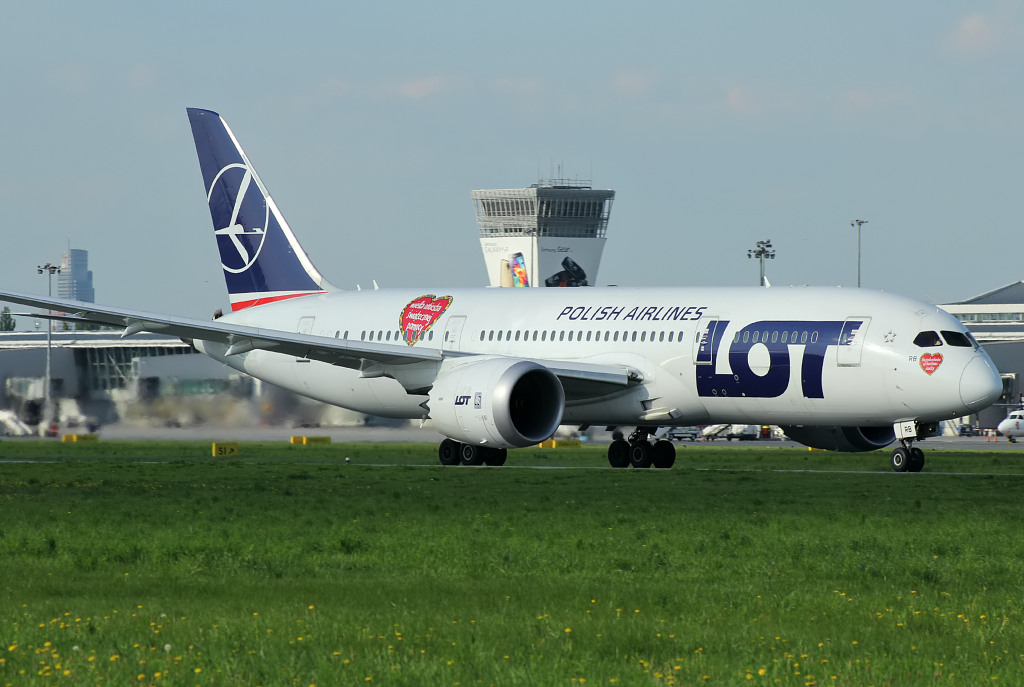
The airport’s development is closely linked to LOT Polish Airlines, which may use the new hub to expand its network and strengthen its hand against larger European carriers in neighbouring Germany and Scandinavia.
Cargo is another part of the strategy. PPL wants to increase Polish air freight volumes from approximately 200,000 tonnes annually to more than one million tonnes.
The new airport will include dedicated cargo infrastructure and will be able to operate without night-time noise restrictions, which PPL believes could help it attract new freight operators.

High-speed rail links to airport
The airport is being developed as part of a wider transport programme, with a new high-speed rail network intended to connect it with major Polish cities.
Trains operating at speeds of up to 350km/h will serve a station integrated directly into the airport terminal, allowing passengers to transfer between air and rail services.
The first section of the network, linking Warsaw, the airport and Lodz, is scheduled to open alongside the airport in 2032.
The wider Y-shaped railway network, extending to Poznan and Wroclaw, is scheduled for completion by 2035.

Chopin Airport faces capacity squeeze ahead of relocation
The transition to Port Polska will require the eventual transfer of civil passenger operations from Warsaw Chopin Airport, which handled 24.1 million passengers in 2025.
Chopin is already operating under considerable capacity pressure, with demand for slots reaching approximately 150% of available capacity, according to PPL.
The airport is undergoing a terminal modernisation and expansion programme intended to increase its annual capacity beyond 30 million passengers.
Dual-use infrastructure to help in times of war
The project also has a strategic dimension beyond commercial aviation, given Poland’s position on NATO’s eastern border and the proximity of the war in Ukraine.
PPL argued that aviation infrastructure should increasingly be considered part of Europe’s wider security architecture, particularly in relation to military mobility, air freight and the ability to support allied forces during a crisis.
It has called on the European Commission to establish dedicated funding for dual-use airport infrastructure, particularly 24-hour cargo facilities that could support commercial logistics during peacetime and military or humanitarian operations when required.
The company also highlighted the importance of developing domestic supply chains.
The scale of PPL’s ambitions for the country’s airports reflects the pace of growth in the Polish aviation market, which expanded by more than 14% in 2025, almost three times the European average.
PPL forecasts that national passenger traffic will exceed 114 million annually by 2040.
Sign up for our newsletter and get our latest content in your inbox.


More from

November 13, 20263 min read


