


KLM and British Airways report highest SAF shares as study exposes reporting gaps

5 min read
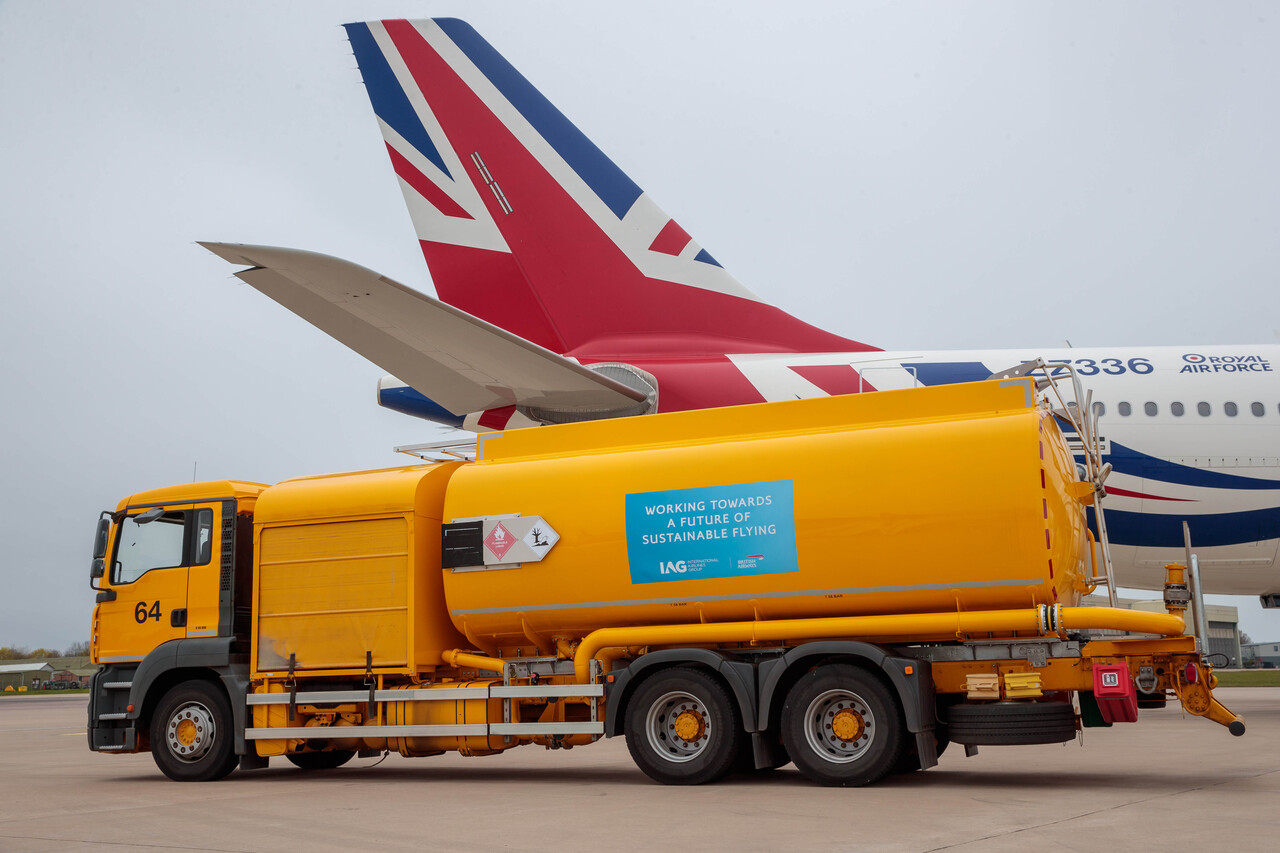
KLM Group (including KLM Cityhopper, Martinair and Transavia) and British Airways reported the highest sustainable aviation fuel (SAF) shares in a new comparison of 30 airlines. British Airways’ parent company, IAG, reported the largest voluntary SAF volume.
The C Level study found that SAF accounted for 4.6% of KLM’s fuel consumption in 2025, compared with 4.5% for British Airways.
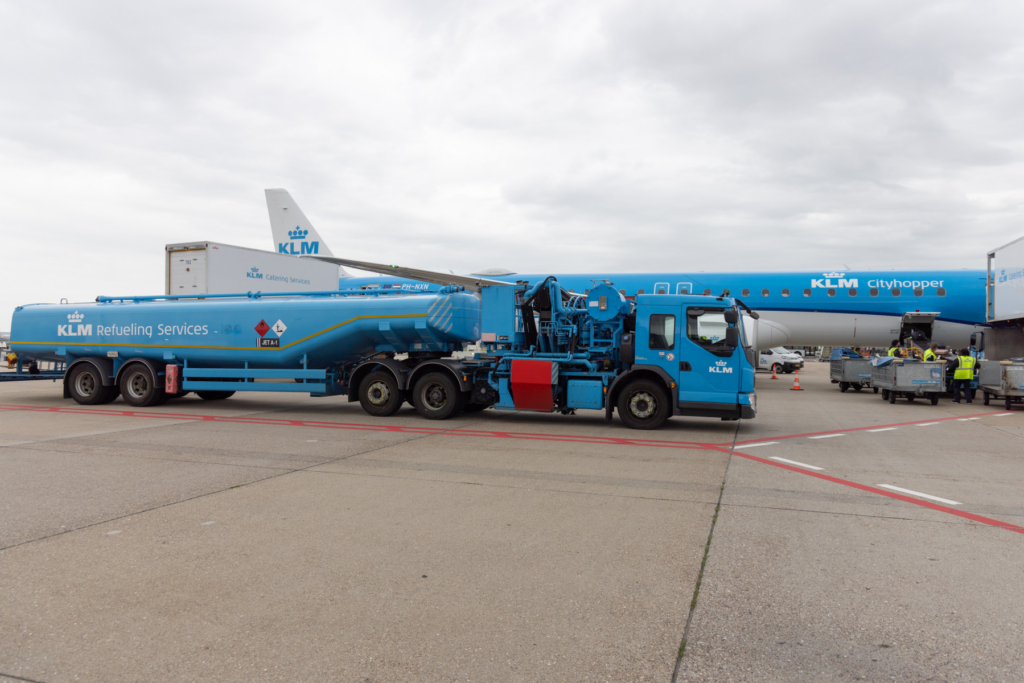
IAG, which owns British Airways, Iberia, Aer Lingus and other airlines, reported approximately 175,000 tonnes of voluntary SAF in 2025, up from about 156,000 tonnes in 2024. That represented around 60% of its total reported SAF use of 291,100 tonnes.
The study reveals significant differences in how airlines report SAF purchases, particularly whether fuel was required by law, purchased voluntarily or financed through customer contributions.
SAF shares reported by airlines
KLM Group and British Airways reported the highest SAF shares. IAG separately reported a 3.3% share across its airline portfolio, including British Airways. The remaining published figures in C Level’s comparison were below 2%.
Which airlines reported the highest SAF share?
Selected figures from C Level’s November 2026 airline comparison, primarily based on 2025 disclosures. Approximate and group-wide figures are identified.
| Airline / group | SAF share of fuel | Key finding |
|---|---|---|
| KLM Group | 4.6% | Highest reported SAF share in the comparison. |
| British Airways | 4.5% | Second-highest reported SAF share. |
| IAG (group-wide) | 3.3% | Group figure; not specific to Iberia or Aer Lingus. |
| SAS | 1.73% | SAF growth reflected customer purchases and legal requirements. |
| Air France | 1.71% | About three-quarters of SAF was legally required. |
| Finnair | About 1.6% | Discloses mandated and voluntary SAF separately. |
| Lufthansa Group | About 1.5% | Group-wide figure, not Lufthansa Airlines alone. |
| Air Canada | About 1.5% | C Level calculation; SAF funding was not fully disclosed. |
| TAP Air Portugal | About 1.28% | A ticket surcharge helps fund legally required SAF. |
| Qantas | 1.1% | Carbon-credit activity includes regulatory and customer programmes. |
| Virgin Atlantic | About 1% | Its 2025 SAF use matched UK legal requirements. |
| SWISS | 0.9% | Customers funded all voluntary SAF, according to C Level. |
| United Airlines | About 0.7% | Customers and public incentives funded some SAF. |
| Cathay Pacific | 0.68% | SAF grew; customers paid for much of its carbon credits. |
| American Airlines | 0.33% | SAF use rose without a US federal blending mandate. |
| Singapore Airlines | About 0.09% | C Level calculation; SAF remains a small fuel share. |
Note: Figures cover 2025 consumption. They measure SAF as a share of fuel consumption, not absolute SAF volumes or overall environmental performance. Group-wide results overlap with some individual airline figures.
Source: C Level, Which airlines are greenest? (November 2026) .
IAG leads the study’s voluntary SAF comparison
Voluntary SAF is not necessarily financed entirely by airlines. IAG says corporate customers support part of its programme, including a Microsoft agreement announced in April 2025 to co-fund 39,000 tonnes over five years.
The agreement involves emissions-reduction certificates associated with the SAF, which Microsoft can use in accounting for business-travel emissions. Such arrangements complicate comparisons of airlines’ own spending.

C Level said it could not identify a single airline among the 30 that published a complete figure showing how much voluntary SAF it financed itself, after excluding dedicated contributions from corporate and individual customers.
Without a consistent split, it is not possible to rank carriers by how much of their own money they spend on additional SAF.
United and American increase SAF volumes in the US
The US does not have a federal SAF blending mandate equivalent to the EU and UK requirements.
United Airlines said it used approximately 27.7 million US gallons of SAF in 2025, up 104% from 13.6 million gallons in 2024. The airline said SAF represented only about 0.7% of its more than 4.1 billion gallons of annual jet fuel consumption.

United expanded SAF use to three additional hubs in 2025: Houston Intercontinental, Newark Liberty and Washington Dulles, bringing its SAF operations to six hubs.
American Airlines reported an increase from 2.91 million US gallons in 2024 to 14.07 million in 2025, according to C Level.
Mandates are changing the European numbers
The EU’s ReFuelEU Aviation regulation introduced a minimum 2% SAF share for fuel supplied at EU airports from 2025. The UK introduced its own 2% mandate that year.
The European Union Aviation Safety Agency (EASA) reported in September 2026 that fuel suppliers delivered approximately 1.1 million tonnes of SAF at EU airports in 2025. That’s equivalent to 2.8% of the 39.3 million tonnes of aviation fuel supplied.
EASA also found that approximately 80% of the SAF supplied was aviation biofuel, overwhelmingly produced from used cooking oil. Around 85% of feedstocks were imported, the agency said.

The regulation has changed what year-on-year airline comparisons mean. A carrier can report a large rise in SAF use because suppliers are legally required to blend more into the fuel it purchases, even if the airline has not increased its voluntary commitment.
C Level found Finnair used 16,360 tonnes of SAF in 2025, more than triple its 2024 figure of 4,685 tonnes. Of the 2025 amount, approximately 14,100 tonnes came through the mandate and 2,259 tonnes were voluntary, funded jointly by Finnair and its customers. The airline’s voluntary volume actually declined from 2,657 tonnes in 2024 despite the sharp increase in total SAF use.
Does using more SAF make an airline greener?
The study deliberately avoided producing a single overall ranking of the ‘greenest’ airlines because its measures are not interchangeable.
Wizz Air reported the lowest carbon emissions per passenger-kilometre among the 17 airlines C Level considered sufficiently comparable, at 50.6 grams of CO2. TUI Airways followed at 60.7 grams of CO2, although differences in methodology limit direct comparisons.
That does not mean Wizz Air used the most SAF. Low-cost and leisure carriers can achieve lower emissions per passenger because they operate relatively dense cabins and carry more passengers per unit of fuel.
The emissions figures also differ in how they treat flight distances, cargo and greenhouse gases, limiting precise comparisons.
Carbon credits are also distinct from SAF: paying for emissions reductions elsewhere does not replace the fossil fuel burned by an aircraft.
What the latest SAF figures tell us
The C Level findings show that SAF consumption is increasing, particularly where government mandates require its use. However, airlines’ disclosures make it difficult to establish how much additional SAF they purchase at their own expense.
Until airlines consistently separate mandated fuel, voluntary purchases and customer contributions, comparing their independent investments in SAF will remain difficult.


