


Russia may have “rehearsed” satellite attack, expert warns as two more spacecraft approach ICEYE

4 min read

Russia may have rehearsed an attack on a satellite operated by Finnish company ICEYE, whose radar imagery supports Ukraine’s military operations, a military space specialist has warned. Two more Russian military satellites are now moving towards the orbital path of another ICEYE spacecraft, raising concerns about a possible new encounter.
Greg Gillinger, a senior space analyst at US consultancy Integrity ISR and a former US Air Force intelligence officer, told Reuters on 5 November that Russia’s Kosmos 2612 appeared to have gone beyond routine surveillance when it approached ICEYE-X36 in October.
The encounter “looks like an attack rehearsal,” Gillinger said. “This is the most aggressive posture I’ve seen Russia take in terms of threatening satellites from another nation.”
His assessment follows weeks of concern over Russian spacecraft manoeuvring near ICEYE satellites, which provide radar imagery used by Western governments and Ukraine.
Two more Russian satellites move towards ICEYE
The latest incident involves two Russian military satellites moving towards the orbital path of ICEYE-X37, another spacecraft in the company’s radar-imaging constellation.
Gillinger said the satellites were becoming positioned for a possible approach. US space-tracking company COMSPOC separately reported that the two spacecraft were moving into increasingly favourable positions to approach X37.
There is no confirmed close encounter with X37, and the satellites’ intentions remain unknown.
The warning comes after Kosmos 2612 approached ICEYE-X36 between 15 October and 19 October.
As Aerospace Global News reported last month, satellite tracking specialist Marco Langbroek monitored a series of Russian orbital adjustments that brought Kosmos 2612 unusually close to the commercial spacecraft.
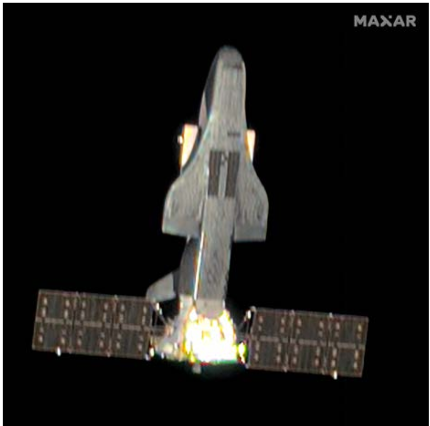
On 17 October, Langbroek estimated that the satellites were separated by one to two kilometres. US spatial intelligence company Vantor subsequently released an image captured that day showing Kosmos 2612 approximately one kilometre from ICEYE-X36.

Further observations suggested the Russian spacecraft may have approached within a few hundred metres or less on 18 October, although the precise distance remains uncertain.
LeoLabs later reported that Kosmos 2612 had begun drifting away from ICEYE-X36. Gillinger now estimates that the Russian spacecraft has moved approximately 400 kilometres from its earlier position near X36.
Why experts suspect an attack rehearsal
Kosmos 2612 is publicly classified as a servicing and inspection satellite, according to US space intelligence firm Slingshot Aerospace.
Such spacecraft can manoeuvre close to other objects in orbit, potentially allowing them to examine satellites or conduct technical operations.
The same capability could also be used to interfere with another spacecraft or damage it.
Gillinger believes the proximity of the October encounter raises questions about whether Russia was testing the ability to carry out a physical attack.
He argued that approaching so closely would not be necessary for ordinary intelligence gathering or electronic interference.
The US government has also expressed concern
Following the October encounter, US Under Secretary of State Thomas DiNanno said Kosmos 2612 had been “intentionally maneuvering dangerously close to a commercial satellite” in behaviour “consistent with on-orbit weapons operations.”
However, Germany’s military space commander, Major General Michael Traut, cautioned against treating the orbital movements as proof of an intended attack.
He told Reuters that close approaches could support inspection, observation or interference, depending on a spacecraft’s equipment.
“We must therefore consider the entire spectrum of possible effects, ranging from temporarily disrupting a satellite’s operations to permanently disabling it,” Traut said.
He stressed that publicly available orbital data alone could not establish Russia’s intentions.
Why ICEYE matters to Ukraine
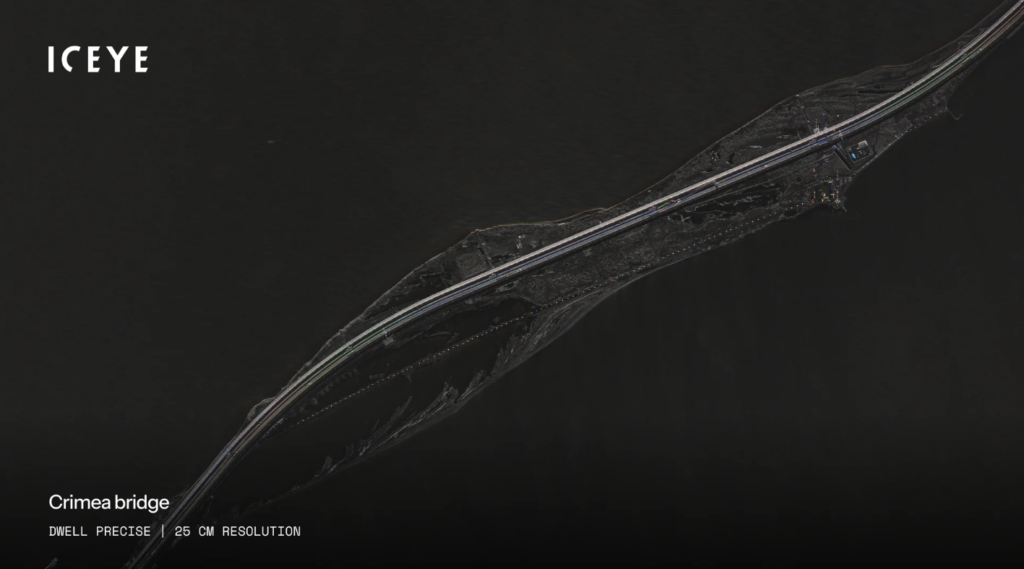
ICEYE operates synthetic aperture radar satellites capable of imaging the Earth’s surface at night and through cloud cover.
The technology is valuable for monitoring military equipment, infrastructure and movements when conventional optical satellites cannot obtain clear images.
Ukraine has used ICEYE imagery since 2022 to support its intelligence operations.
Russia has previously warned that Western commercial satellites supporting Ukrainian military activities could be considered legitimate targets.
ICEYE has said the October incident did not stop X36 from operating.
Ann Stevens, head of ICEYE’s US operations, told Reuters that the spacecraft “has been and will continue to be a productive satellite.”
The company also maintains that its wider constellation can withstand disruption to individual spacecraft.
AGN previously reported on 12 October that Germany’s space commander had warned similar Russian manoeuvres could threaten larger commercial networks, including SpaceX’s Starlink.
Repeated close approaches could force satellites to expend fuel avoiding potential collisions, shortening their operational lives even without a direct attack.
Russia’s defence ministry did not respond to Reuters’ request for comment.
No attack on ICEYE-X36 has been confirmed. But the movement of two additional Russian satellites towards ICEYE-X37 suggests that the October encounter may not be an isolated episode.
Sign up for our newsletter and get our latest content in your inbox.


More from

November 5, 20265 min read


