


Rafale Marine makes first landing on INS Vikrant as Indian Navy begins carrier trials

5 min read
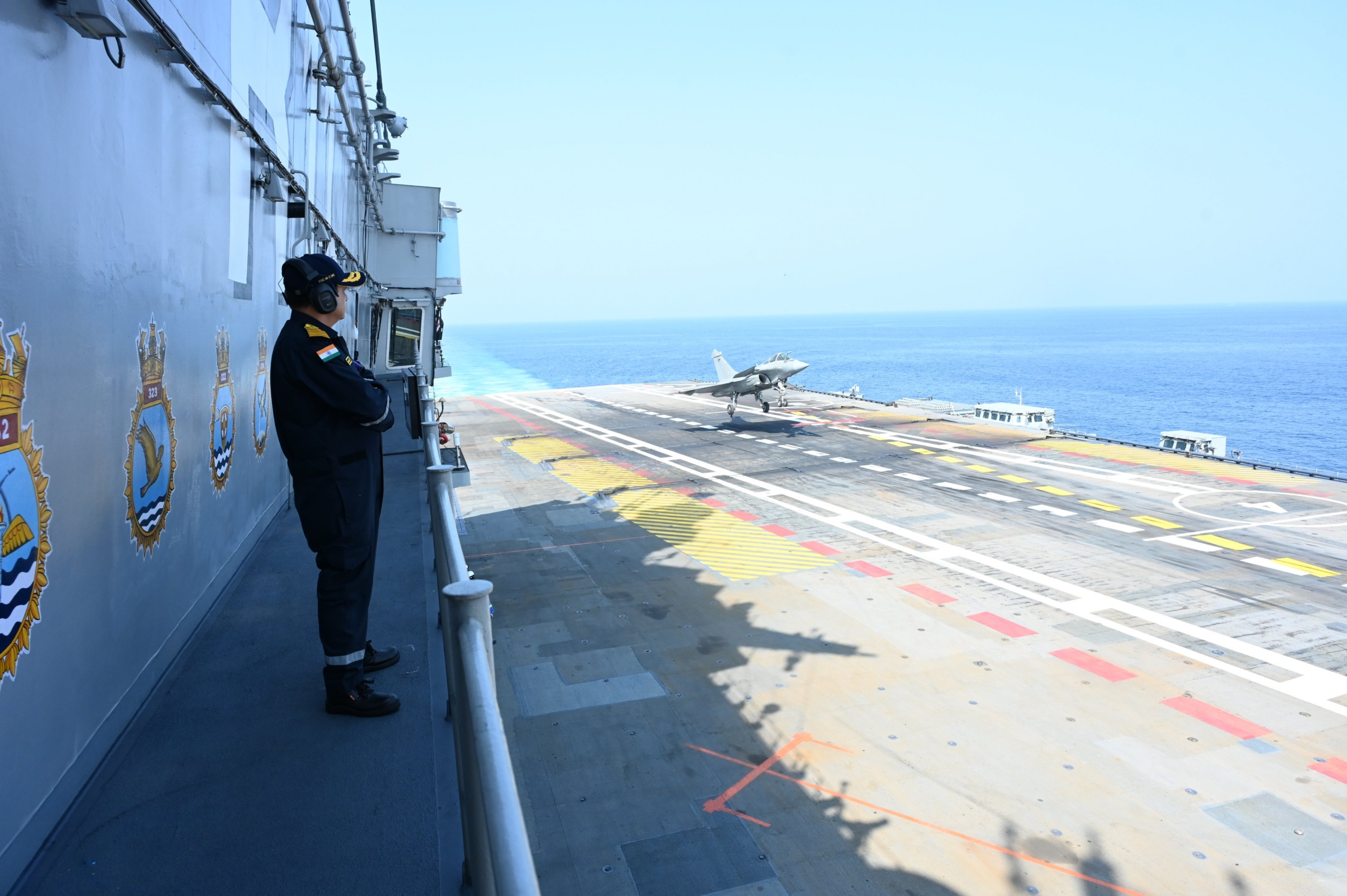
A French-built Rafale Marine fighter landed aboard India’s indigenous aircraft carrier INS Vikrant on its first attempt on 29 October, marking an important step towards bringing the aircraft into service with the Indian Navy.
The successful landing, followed by a take-off from the carrier, comes 18 months after India signed a INR63,000 crore (approximately $7.5 billion at the time of the agreement) contract with France for 26 Rafale Marine aircraft.
A Rafale Marine aircraft successfully landed onboard #IndianNavy’s indigenous Aircraft Carrier #INSVikrant on its maiden attempt on 29 Oct 26. The ongoing trials mark the first steps towards operationalisation of the aircraft in the #IndianNavy. https://t.co/gIZ0h3nl80
— SpokespersonNavy (@indiannavy) October 30, 2026
The Indian Navy confirmed the landing on 30 October and released footage of the aircraft operating from the carrier’s flight deck.
“The ongoing trials mark the first steps towards operationalisation of the aircraft in the Indian Navy,” the service said.
The test is particularly important because India’s aircraft carrier INS Vikrant uses a ski-jump ramp for launching fighters and arresting wires to stop them when they land. The Rafale Marine, which already operates from French aircraft carriers, must demonstrate its compatibility with the Indian ship’s different launch and recovery arrangements.
The latest trials follow earlier testing at the Indian Navy’s Shore-Based Test Facility in Goa, which replicates aspects of aircraft carrier operations.
The Indian Navy is now working to establish the Rafale Marine’s compatibility with its aircraft carriers and prepare for the induction of the 26 fighters ordered from Dassault Aviation. The new fighters are intended to supplement the Navy’s existing Russian-built MiG-29K aircraft and eventually provide a modern multirole capability for both INS Vikrant and INS Vikramaditya.
Why the carrier landing matters
INS Vikrant is India’s first domestically designed and built aircraft carrier. Commissioned in September 2022, the ship operates aircraft using a system known as Short Take-Off But Arrested Recovery, or STOBAR.
Instead of using steam or electromagnetic catapults to launch fighters, STOBAR carriers have an upward-curving ski-jump ramp at the bow. Aircraft accelerate along the deck and use the ramp to help them become airborne.
Landing is more demanding. The pilot must bring the fighter onto a relatively short, moving flight deck, where its arrestor hook catches a cable to bring it to a stop.
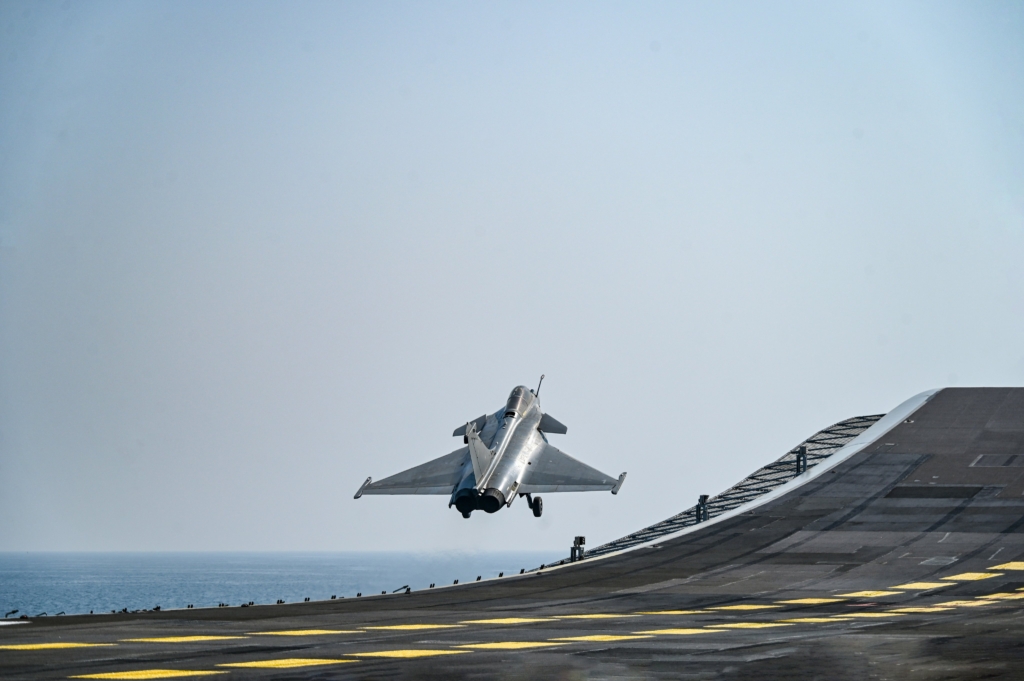
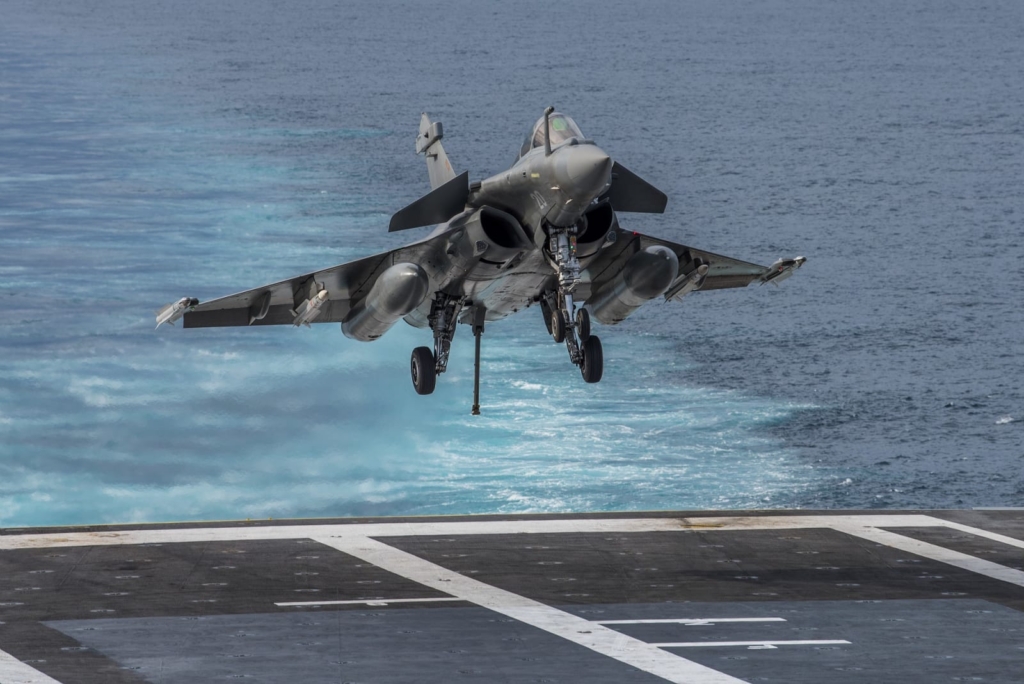
The Rafale Marine was developed for carrier operations and is equipped with reinforced landing gear and an arrestor hook. However, the French Navy operates the aircraft from catapult-equipped carriers, making its compatibility with the Indian Navy’s ski-jump configuration an important part of the current trials.
A naval official familiar with the programme told AGN that the landing is significant because it establishes the first practical step towards integrating the aircraft with the Navy’s carrier operations.
“The trials will help establish the procedures and operating limits needed before the fighter can be deployed routinely from the ship,” he said.
The Rafale Marine had already undergone shore-based testing at Goa, where the Navy has facilities for evaluating aircraft intended for carrier operations.
INS Vikrant has previously conducted trials with the MiG-29K and India’s naval Light Combat Aircraft demonstrator. Both types landed aboard the carrier in February 2023.
The MiG-29K subsequently completed a night landing on Vikrant in May that year.
India awaits 26 Rafale Marine fighters
India signed an intergovernmental agreement with France on 28 April 2025 for 26 Rafale Marine aircraft, comprising 22 single-seat fighters and four twin-seat aircraft.
The agreement includes weapons, simulators, pilot training, associated equipment and long-term maintenance support.
It also covers additional equipment for the Indian Air Force’s existing Rafale fleet and technology transfer to support the integration of Indian weapons.
India selected the Rafale Marine in July 2023 after evaluating options for its carrier-based fighter requirement. Deliveries under the agreement are expected to begin towards the end of 2028 or in early 2029.
The current shipboard trials should therefore not be confused with the arrival of India’s contracted Rafale fleet. They are part of the work needed to prepare the aircraft and carriers for future operations.
India will become the first export operator of the Rafale Marine, which is already in service with the French Navy.
What the Rafale will bring to the Indian Navy
The Indian Navy currently relies on the Russian-built MiG-29K/KUB for carrier-based fighter operations.
The aircraft entered Indian service to support operations from INS Vikramaditya and subsequently began operating from INS Vikrant.
However, the MiG-29K fleet has faced maintenance and serviceability problems. India’s Comptroller and Auditor General has previously raised concerns about technical defects and aircraft availability.
The Rafale Marine is expected to give the Navy another multirole fighter capable of protecting its carrier groups, attacking hostile ships, conducting reconnaissance and striking targets ashore.
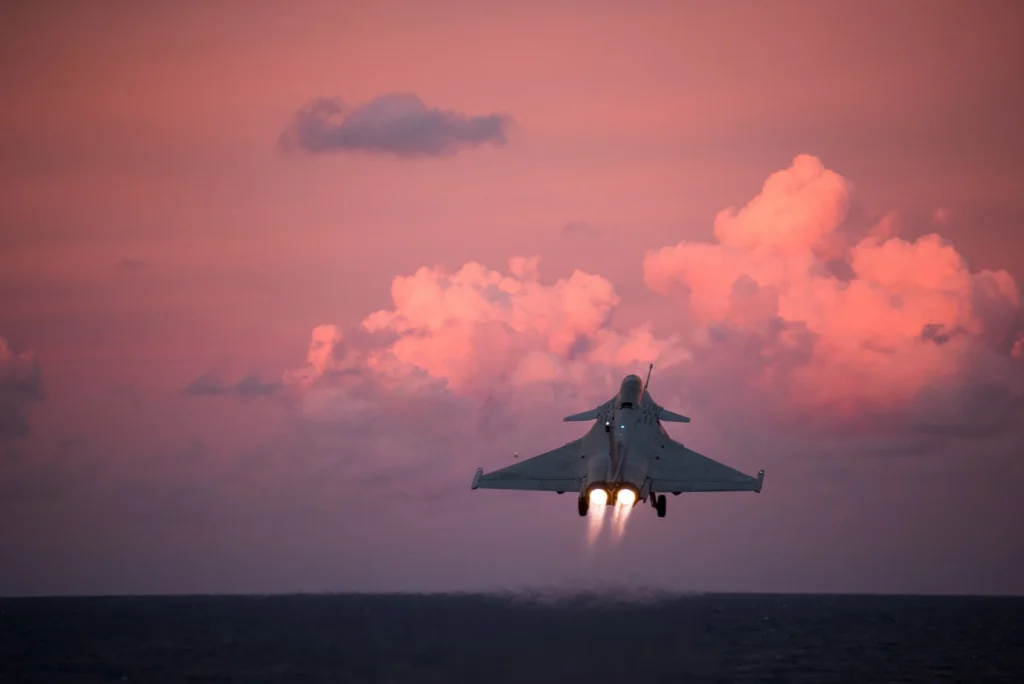
According to the naval official, the aircraft will strengthen the Navy’s ability to conduct air defence, maritime strikes, reconnaissance and land-attack missions.
The fighters are equipped with the Thales RBE2 active electronically scanned array radar and the SPECTRA electronic warfare system. The weapons options include the Meteor and MICA air-to-air missiles, SCALP-EG cruise missile and Exocet AM39 anti-ship missile.
These systems would give Indian carrier groups a broader range of options for defending themselves against aircraft and conducting strikes against targets at sea or on land, the official added.
The Rafale Marine is also capable of operating at speeds of up to Mach 1.8 and at altitudes of around 50,000 feet. Its arrival will expand India’s existing Rafale fleet. The Indian Air Force already operates 36 land-based Rafale fighters acquired under a separate agreement signed with France in 2016.
Although the naval variant has important structural differences, operating both versions offers opportunities for common training, maintenance support and logistics.
A bridge to India’s indigenous naval fighter
India is also developing a domestically designed Twin Engine Deck Based Fighter, or TEDBF, intended to provide a future replacement for the MiG-29K.
The programme is being pursued by the Aeronautical Development Agency as part of India’s effort to develop its own carrier-capable combat aircraft.
Unlike the single-engine naval Light Combat Aircraft demonstrator, the TEDBF is being designed as a twin-engine fighter for operational service.
The Rafale Marine purchase is intended to maintain and strengthen the Navy’s carrier aviation capability while that indigenous programme progresses.
The TEDBF’s development schedule has moved beyond earlier projections with its first flight, once expected in 2026, now being projected for around 2029–2030.


