Aperion: Virgin Galactic’s Delta spaceplane arrives at Spaceport America ahead of 2027 passenger flights

5 min read
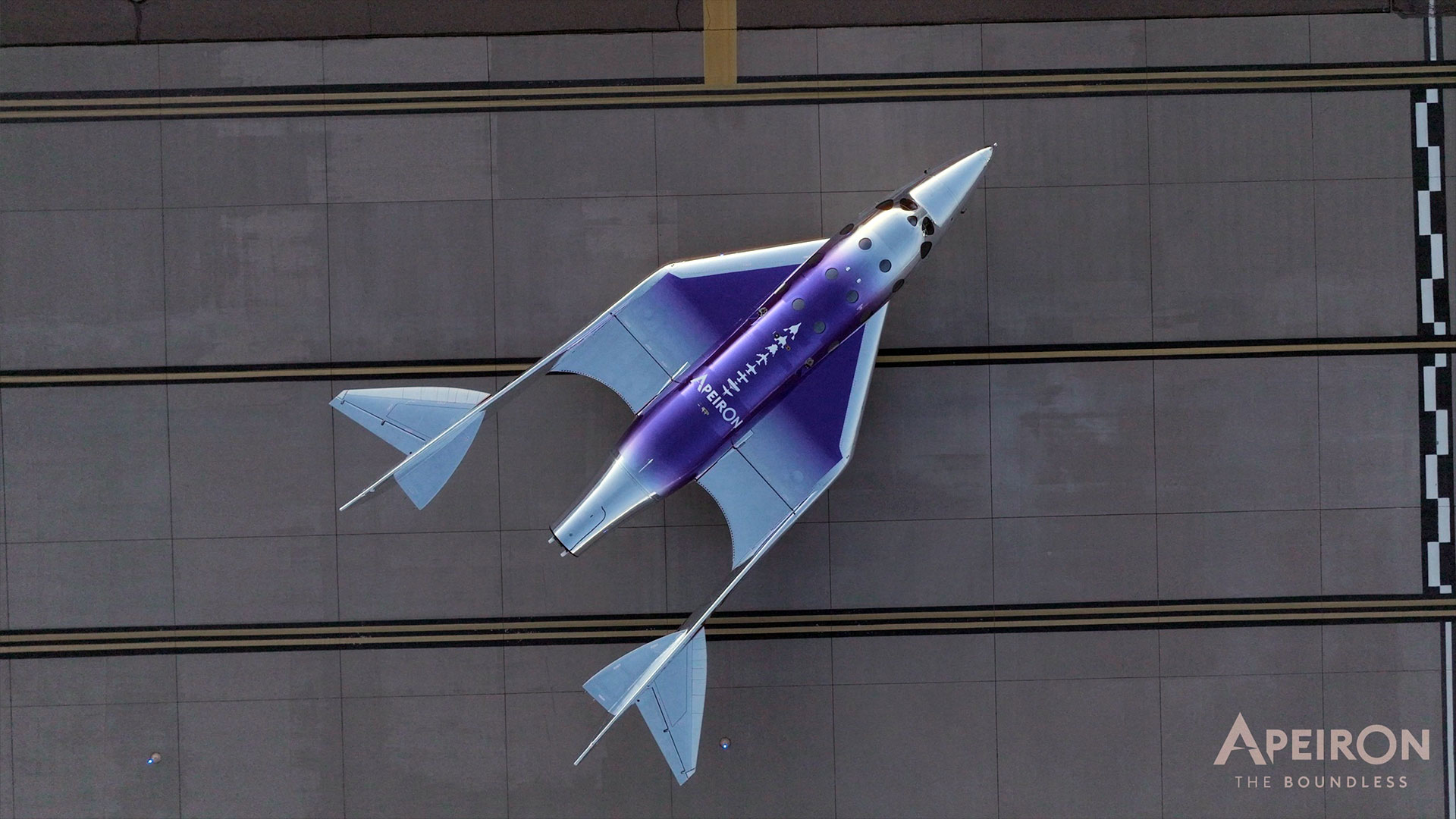
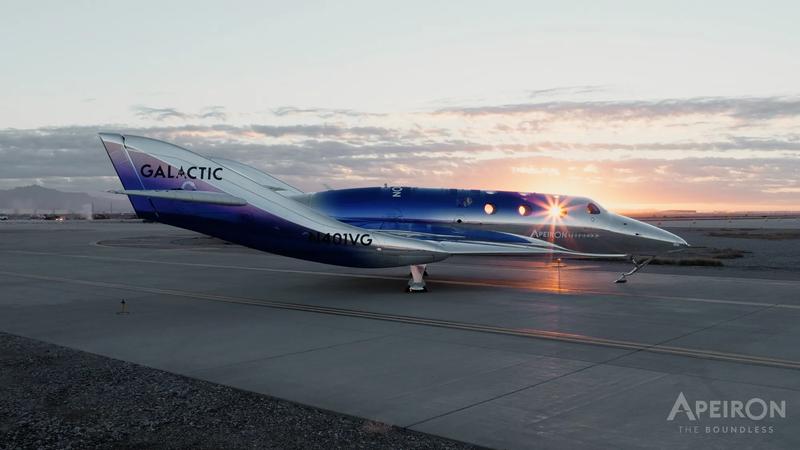
Virgin Galactic has unveiled its first next-generation Delta-class spaceplane, Apeiron, a name chosen by a worldwide public vote. On the same day, it flew the aircraft to Spaceport America in New Mexico as the company prepares to resume commercial passenger flights in the second quarter of 2027.
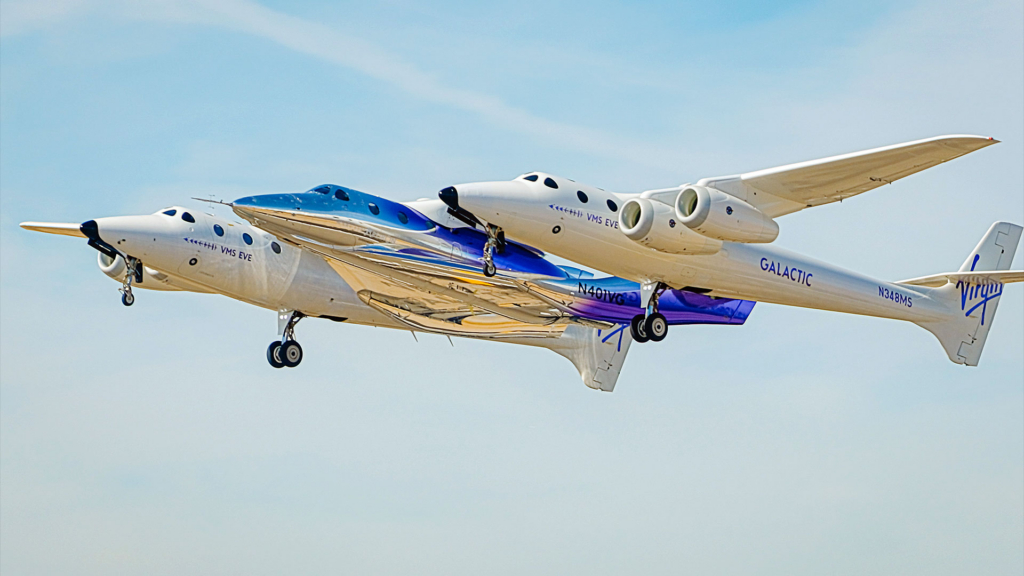
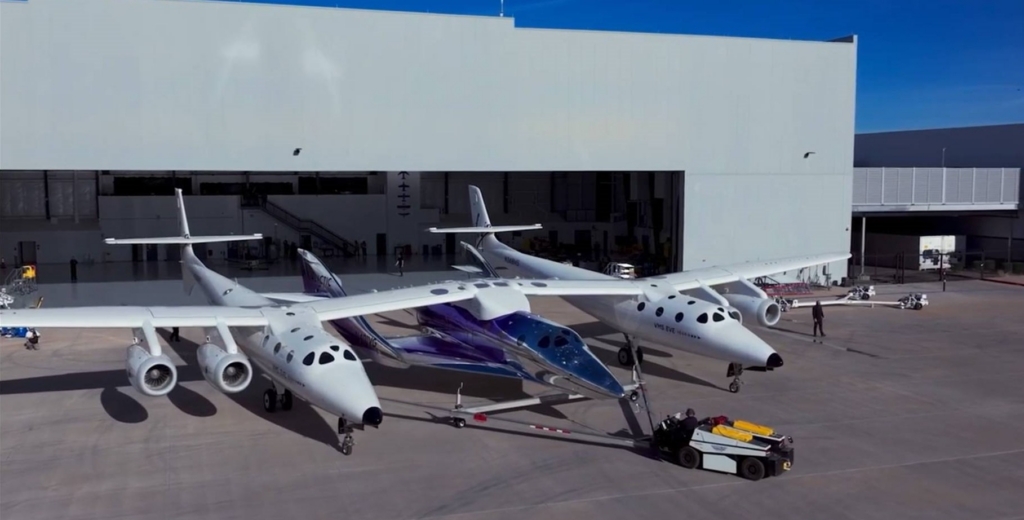
The spacecraft was revealed in its completed livery at Virgin Galactic’s factory in Mesa, Arizona, on Wednesday, October 28. Hours later, it was carried beneath the company’s VMS Eve aircraft to its permanent operating base in New Mexico, where engineers will complete avionics software testing before beginning flight trials.
Apeiron’s arrival marks a major step in Virgin Galactic’s effort to return to commercial operations after retiring its earlier VSS Unity spacecraft in 2024 to concentrate on the Delta programme.
The company has also revised its schedule. Apeiron’s first commercial flight is now expected in early April to June 2027, while a second Delta-class spacecraft is expected to enter passenger service in late Q2 or early Q3.
Virgin Galactic said the additional time is needed to complete avionics software integration and validation, a process that will continue at Spaceport America before the flight test programme begins.
Apeiron makes its first journey to Spaceport America
The newly named spacecraft left Phoenix-Mesa Gateway Airport at 10:29 local time on Wednesday, attached to Eve, the carrier aircraft that will eventually take it to altitude before releasing it for rocket-powered flights.
Eve landed at Spaceport America at 12:59 local time, completing Apeiron’s journey from its manufacturing facility to its operational home.
Pilot in Command Michael Masucci and pilot Dan Alix flew the carrier aircraft, with flight test engineer Tori Crichton also on board.
Virgin Galactic chief executive Michael Colglazier described the arrival as a milestone for the company and its future passengers.
“This morning, we gave Apeiron a name. This afternoon, Apeiron came home,” Colglazier said. “Seeing the ship fly beneath Eve to Spaceport America was a moment years in the making. To our team and our astronaut community: your Spaceship has arrived.”
Apeiron, pronounced A-per-on, takes its name from an ancient Greek word meaning “the boundless”. The name was selected through a public vote that attracted thousands of responses from 83 countries across six continents.
Virgin Galactic had narrowed the choices to four finalists from 276 suggestions submitted by employees. Apeiron was chosen ahead of Horizon, Explorer and Ascend. The company said the vote was intended to give its astronaut community and space enthusiasts a role in naming the first spacecraft in its new fleet.
“Apeiron, the Boundless, captures the ambition of human spaceflight and the possibilities it opens for humanity,” Colglazier said during the unveiling. “The extraordinary response to the public vote made choosing this name even more meaningful. We’re proud that the lead ship in Virgin Galactic’s Spaceship fleet will carry a name chosen by the people who share our excitement for what comes next.”
Avionics testing remains before first spaceflight
Although Apeiron has reached Spaceport America, it has not yet begun its own flight test programme.
Engineers will complete software integration and validation before the spacecraft can move into flight testing, which is expected to include unpowered glide flights and rocket-powered missions.
The work will be carried out at Spaceport America, where Virgin Galactic has based its commercial spaceflight operations.
The company said the revised commercial schedule reflects the time required for its avionics testing process. It now expects Apeiron to begin carrying paying customers in early Q2 2027, subject to the successful completion of flight tests.
Virgin Galactic plans to provide further details during its third-quarter earnings call in November.
The second Delta-class spacecraft remains under construction at the company’s Spaceship Factory in Mesa.
Work at the factory is also continuing on a structural test assembly involving the wing and fuselage, while preparations are underway for a rocket motor assembly line.
Structural testing of the feather assembly has already been completed.
The feathering system is a distinctive feature of Virgin Galactic’s spaceplanes. It allows the tail booms and wings to rotate upwards during the return from space, helping stabilise the vehicle during its descent through the atmosphere.
Delta fleet designed for more frequent passenger flights
The Delta-class spacecraft are intended to support a considerably higher flight rate than Virgin Galactic’s earlier vehicles.
Each spaceplane is designed to carry up to six passengers and operate as frequently as twice a week, or around eight flights a month.
Virgin Galactic is targeting a vehicle lifetime exceeding 500 missions, although those figures remain design goals rather than demonstrated operational performance.
The company expects the increased flight frequency to reduce operating costs and allow it to serve more passengers.
Like VSS Unity, the Delta spacecraft will be carried aloft by Eve before being released for a rocket-powered climb into suborbital space.
Passengers will experience several minutes of weightlessness and views of Earth before the spacecraft glides back to a runway landing.
The vehicles are designed for suborbital flights, not missions that enter orbit around Earth.
Virgin Galactic completed its final commercial flight with VSS Unity in June 2024, bringing an end to operations with the earlier spacecraft while it concentrated resources on developing the Delta fleet.
The company had previously conducted commercial passenger and research flights from Spaceport America, including missions carrying private astronauts and government-sponsored researchers.
More than 100 future astronauts begin preparations
With Apeiron now in New Mexico and the second spacecraft progressing through production, Virgin Galactic has begun preparing another group of customers for their flights.
More than 100 members of its astronaut community are entering the first phase of readiness and preparation, with further groups expected to follow as the Delta fleet approaches commercial service.
The company had approximately 675 customers holding reservations, according to figures reported in its second-quarter 2026 regulatory filing.
Virgin Galactic’s return to passenger operations will depend on completing the remaining software work, flight tests and preparations for regular service.
For now, Apeiron’s arrival at Spaceport America brings the first Delta-class spacecraft to the same base from which the company’s earlier commercial missions departed.
The next milestone will be its first independent flight, when the newly unveiled spaceplane begins demonstrating the capabilities Virgin Galactic needs before putting passengers aboard.