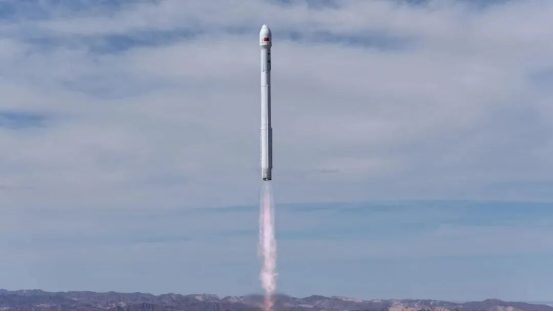
South Korea takes delivery of its first homegrown KF-21 fighter

3 min read
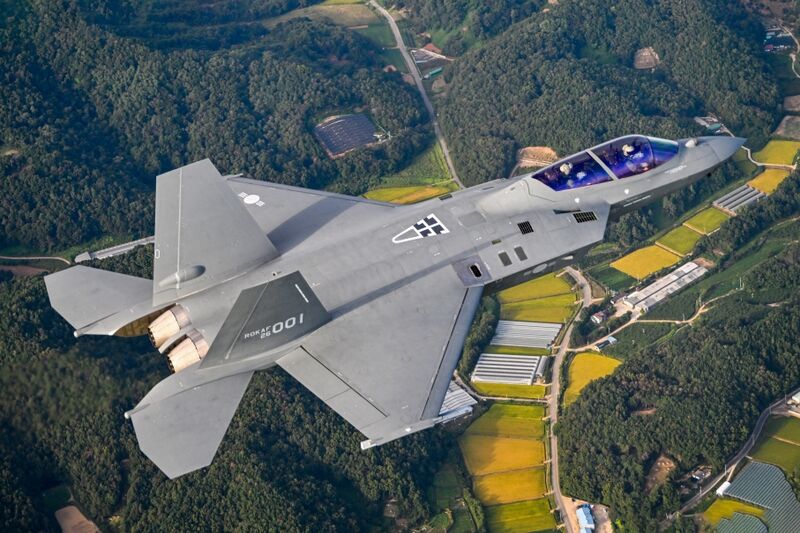
South Korea has taken delivery of its first production KF-21 Boramae, moving the country’s largest indigenous combat aircraft programme from development into operational service as the Air Force prepares to field its first unit next year.
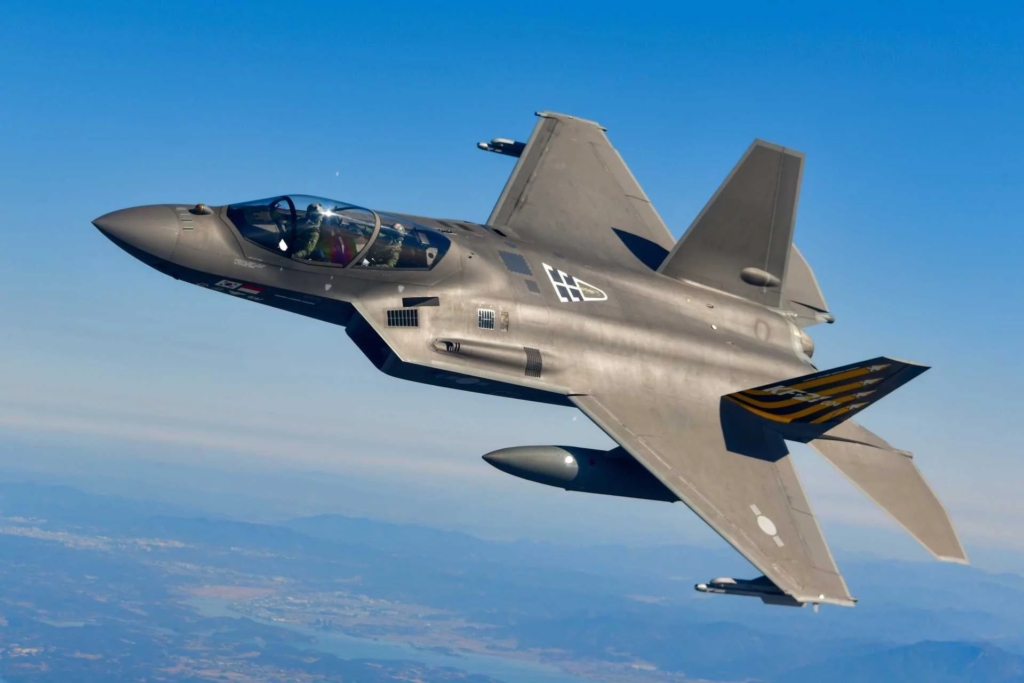
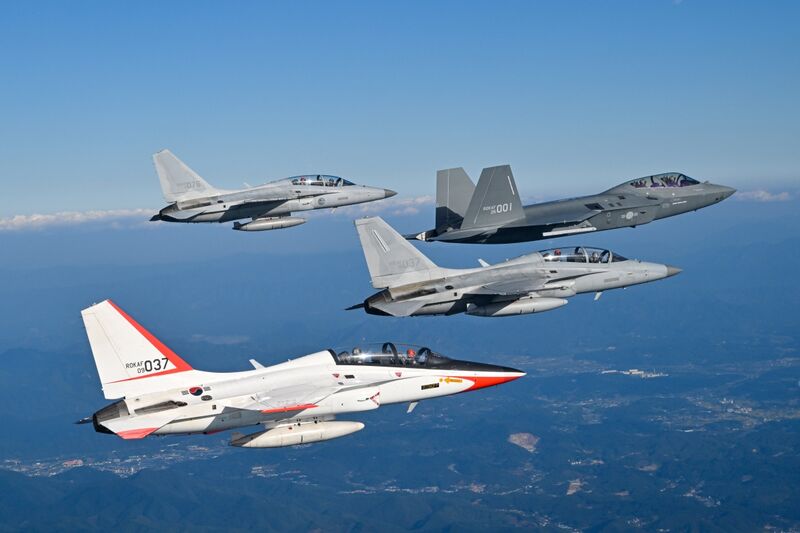
The aircraft flew from Korea Aerospace Industries’ (KAI) plant at Sacheon to an Air Force unit at Yecheon on 22 September, accompanied by an FA-50 light combat aircraft and TA-50 and T-50 trainers.
The delivery and first flight by the production aircraft were first reported by official Yonhap News Agency, citing a joint statement from the Republic of Korea Air Force and the Defense Acquisition Program Administration (DAPA).
The handover comes roughly two years after the KF-21 entered production in June 2024 and follows completion of its development programme earlier this year. The first prototype was rolled out in April 2021.
The Air Force reactivated its 156th Fighter Squadron in June to operate the aircraft. The unit previously flew the F-4E Phantom before being disbanded around 14 years ago.
From prototype to operational fighter
South Korea formally launched KF-21 development in December 2015 with Indonesia as a partner, although plans for a domestically developed fighter can be traced to an initiative announced by then-president Kim Dae-jung in 2001.
The programme was intended to provide an advanced supersonic fighter to replace South Korea’s retired F-4 Phantoms and ageing F-5s. The name Boramae translates as “young hawk”.
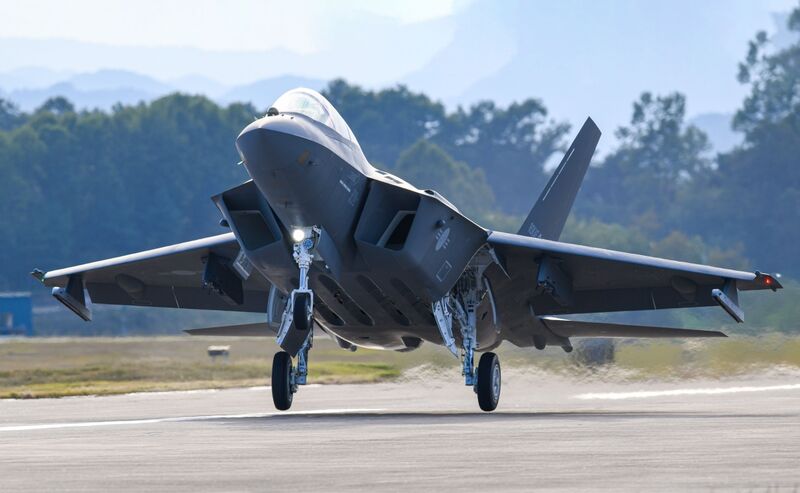
KAI describes the twin-engine aircraft as a 4.5-generation multirole fighter. The initial Block I configuration is focused on air-to-air missions, while Block II will add air-to-ground capabilities.
The programme also forced South Korean industry to develop several important systems domestically after the US government declined to transfer four technologies, including those associated with the active electronically scanned array radar and electronic warfare system.
Hanwha developed the KF-21’s AESA radar, while LIG Nex1 developed its electronic self-defence suite. The aircraft’s initial air-to-air weapons include MBDA’s Meteor beyond-visual-range missile and Diehl Defence’s IRIS-T short-range missile.

The first production aircraft was delivered after the KF-21 received combat suitability certification in May and completed systems development in June.
Air Force plans phased introduction
South Korea plans to build 120 KF-21s in two production blocks. KAI is expected to deliver the first 40 aircraft, configured primarily for air-to-air operations, by 2028. A further 80 Block II fighters with expanded air-to-ground capability are planned through 2032.
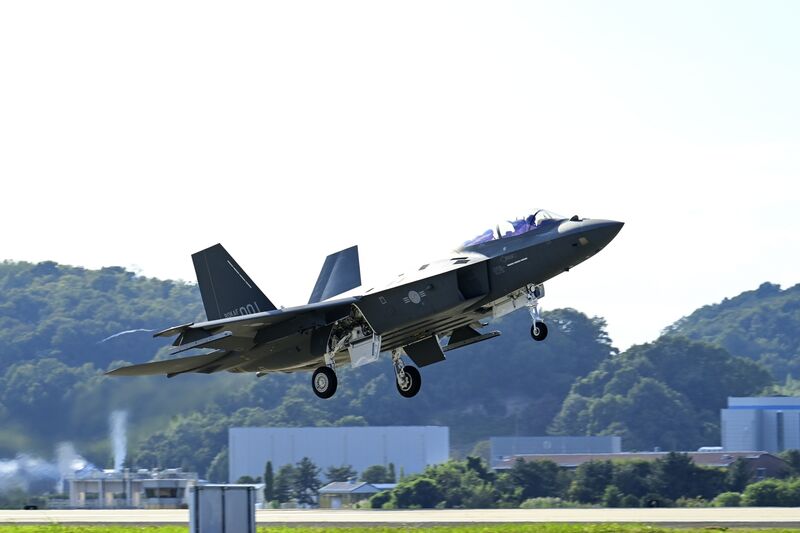
The Air Force expects its first KF-21 unit to be ready for deployment in 2027. The fighter will join a combat fleet that currently includes F-35As, F-15Ks and KF-16s.
The programme is also moving towards greater domestic control of its weapons package.
South Korea has launched a 1.9 trillion won ($1.4 billion) programme to develop a locally produced long-range air-to-air missile for the KF-21. Hanwha Aerospace is competing against a Hyundai Rotem-LIG team, with the Agency for Defense Development expected to select a preferred bidder in October and complete the decision by the end of 2026. Development is scheduled to run until December 2033.
The planned weapon will use ducted ramjet propulsion, the same broad propulsion approach used by the Meteor. South Korea currently imports the Meteor for the KF-21, while a domestic weapon would give it greater control over production, modification and future integration.
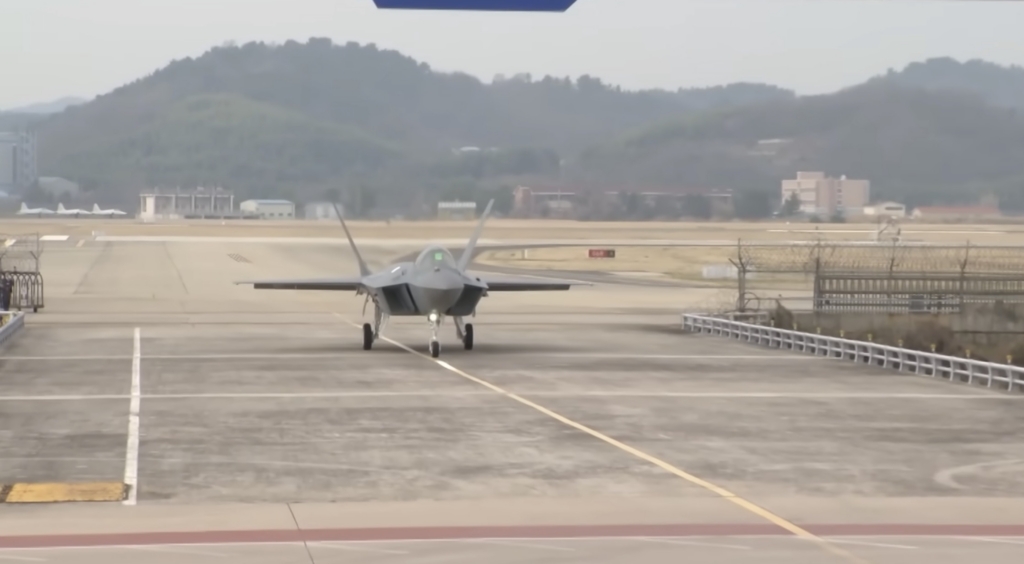
It has not yet been disclosed which KF-21 block will eventually carry the indigenous missile. The current schedule places completion of missile development after deliveries of both the 40 Block I aircraft and the planned 80 Block II fighters.
For the KF-21 programme, the September handover marks the transition from flight testing and development to Air Force operations. The next phase will be the introduction of the initial squadron, followed by the gradual expansion of the fleet through the end of the decade.