


Vengeance and Fury lead USAF push for 1,000 autonomous combat aircraft

8 min read
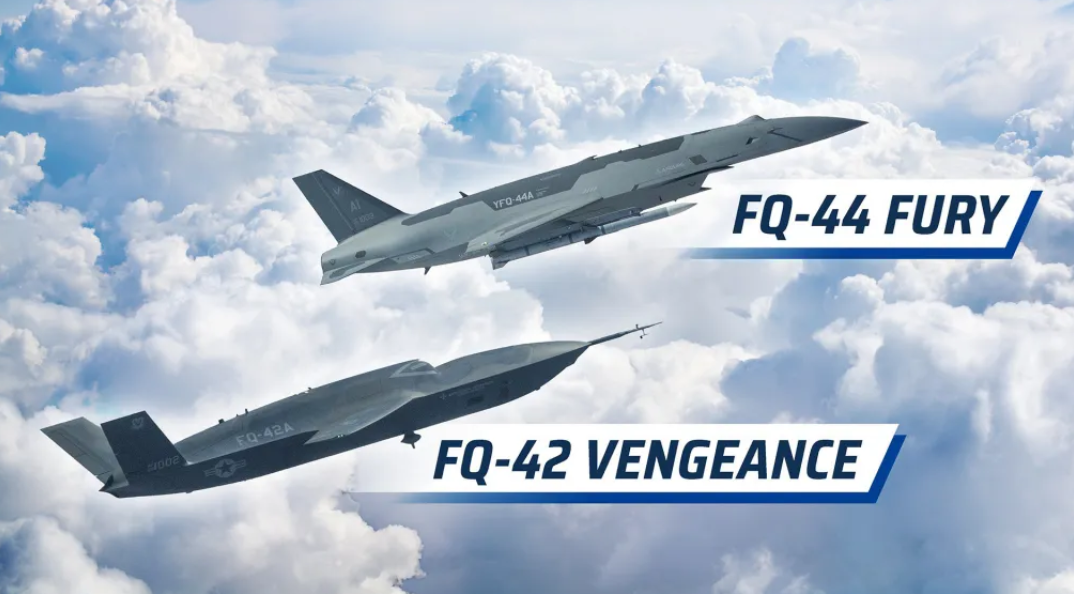
The US Air Force is targeting a force of about 1,000 Collaborative Combat Aircraft (CCA), with at least 500 expected to be operational by 2032.
The announcement comes as it moves its first two autonomous fighter designs, now officially named Vengeance and Fury, into production and prepares for a much broader competition for the next generation of uncrewed combat aircraft.
Air Force Secretary Troy Meink set the 500-aircraft milestone during the Air, Space and Cyber Conference in Maryland on 14 September, while the service separately confirmed its intention to acquire about 1,000 combat-ready, semi-autonomous CCAs.
“We will have autonomous fighters, like the Collaborative Combat Aircraft, or CCAs. We intend to have at least 500 of these in service by 2032,” Meink said.
“They’ll perform many of the missions that manned fighters currently execute.”
The announcement gives the clearest indication yet of the scale at which the Air Force expects autonomous combat aircraft to enter its future force. It also represents a sharp acceleration from the nearer-term numbers being discussed only months ago.
In June, when the service awarded engineering, manufacturing development and production contracts for its first CCA designs, Meink said the programme was on a path to procure more than 150 combat-capable aircraft by the end of the decade.
The latest plan now puts at least 500 in service two years later, with the wider acquisition objective standing at about 1,000.
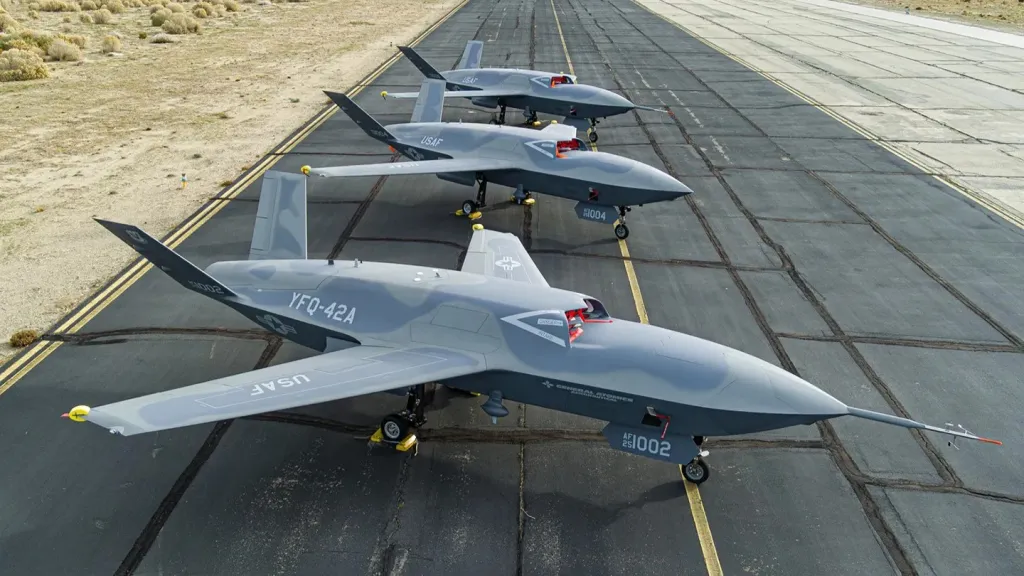
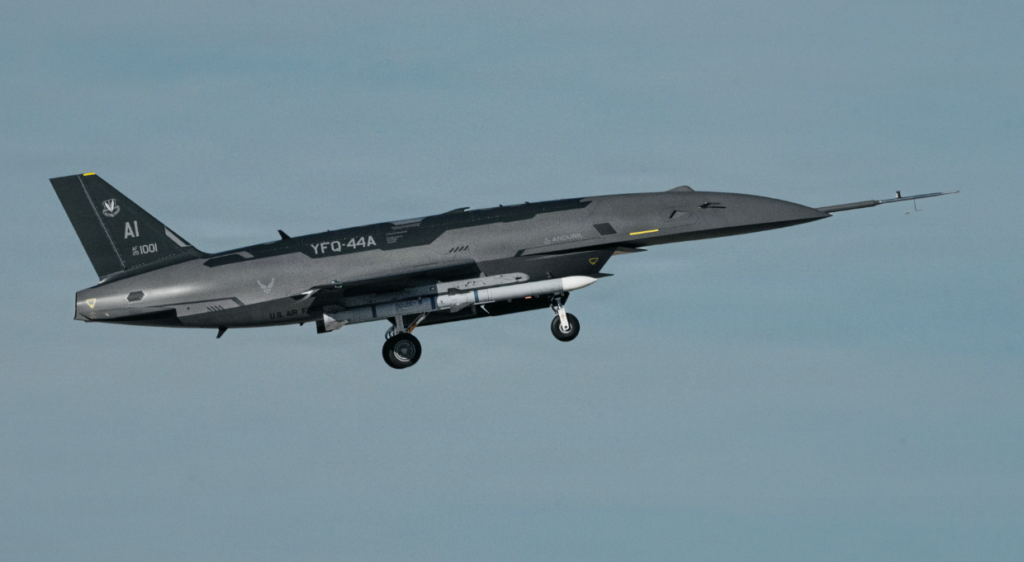
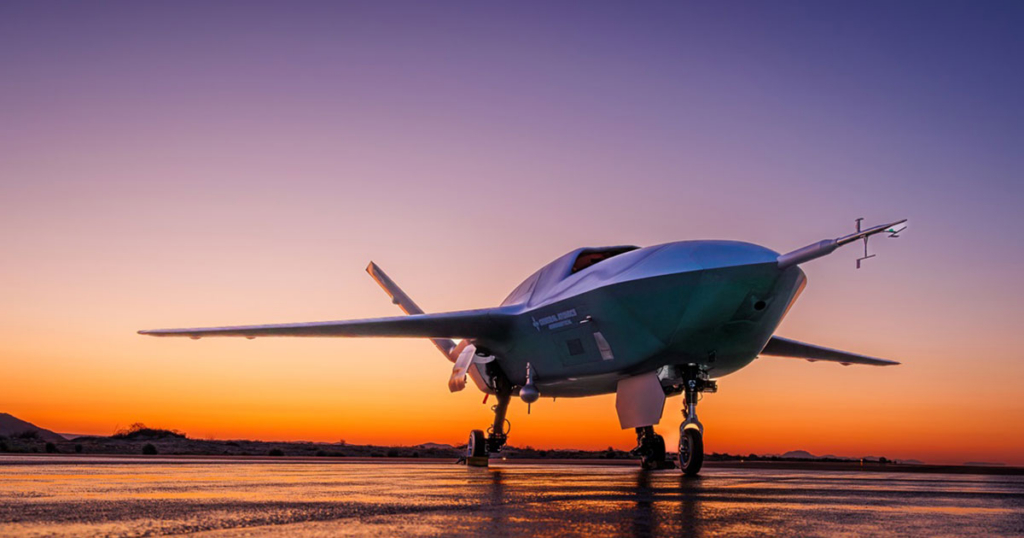
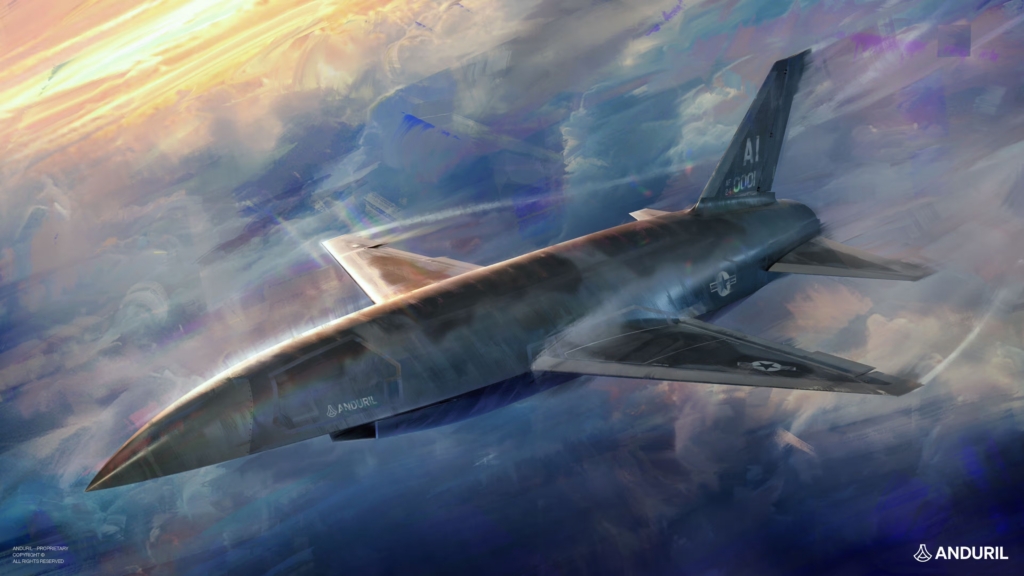
The Air Force has also, for the first time, given official names to the two aircraft leading that effort. General Atomics Aeronautical Systems’ FQ-42 is Vengeance, while Anduril’s FQ-44 is Fury. Both are already moving beyond prototype development and into manufacturing.
Vengeance and Fury move from prototypes towards an operational fleet
The FQ-42 and FQ-44 emerged from the first increment of the CCA programme, which is intended to put relatively affordable autonomous combat mass alongside crewed fighters.
The concept is not simply to create unmanned versions of conventional fighters.
CCAs are being designed to work alongside aircraft such as the F-35 and the future F-47, extending their sensors, weapons reach and survivability while allowing commanders to put additional combat aircraft into heavily defended areas without adding the same risk to aircrew.
“When we pair manned aircraft with low-cost autonomous systems, we will be able to unlock combat power at scale,” Meink said.
“We will dramatically increase our combat power by adding large numbers of highly autonomous systems.”
The Air Force selected General Atomics and Anduril for Increment 1 and in June awarded both companies engineering and manufacturing development and production contracts four months ahead of schedule.
Air Force Chief of Staff Gen Ken Wilsbach said the aircraft would change how the service generates combat mass in contested environments.
“Collaborative Combat Aircraft change how we project power and generate mass in highly contested environments,” Wilsbach said. “Delivering this capability to our warfighters faster ensures our forces maintain the tactical edge required to deter and, if necessary, defeat any adversary.”
Meink now says the first FQ-42 and FQ-44 aircraft are already coming off production lines.
The two programmes have moved quickly.
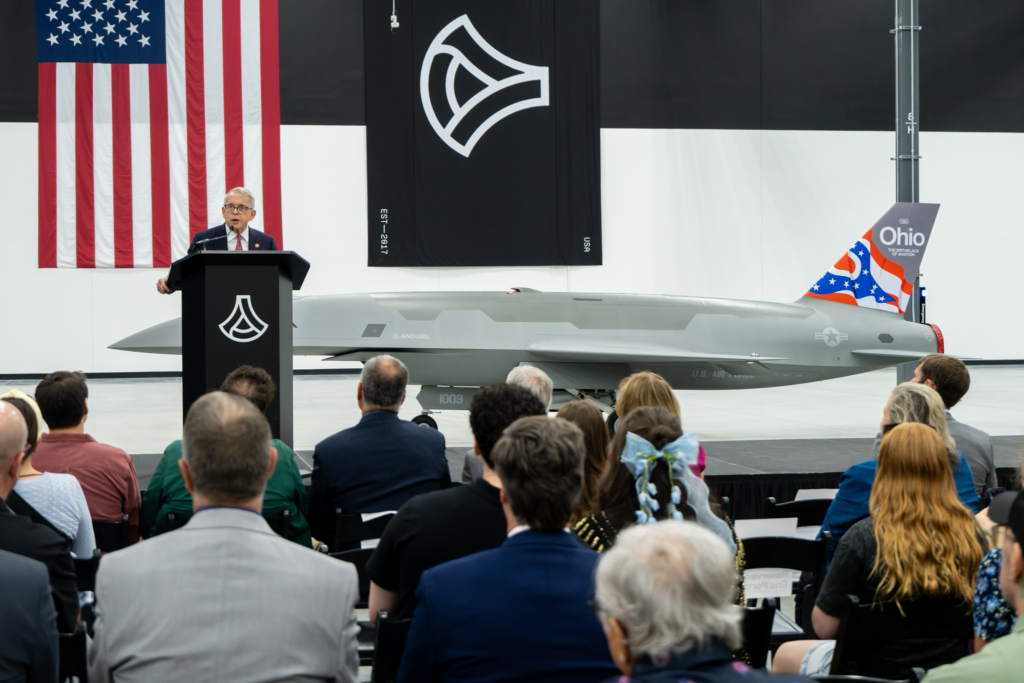
Anduril rolled out the first YFQ-44A built at its Arsenal-1 facility in Ohio in July. It was the first aircraft produced at the new factory, with earlier prototypes manufactured in California. Anduril plans eventually to produce 150 aircraft annually at the Ohio site.
The FQ-42 has followed a similarly rapid path. General Atomics has taken the aircraft through design, development and flight testing as the Air Force pushed Increment 1 towards production.
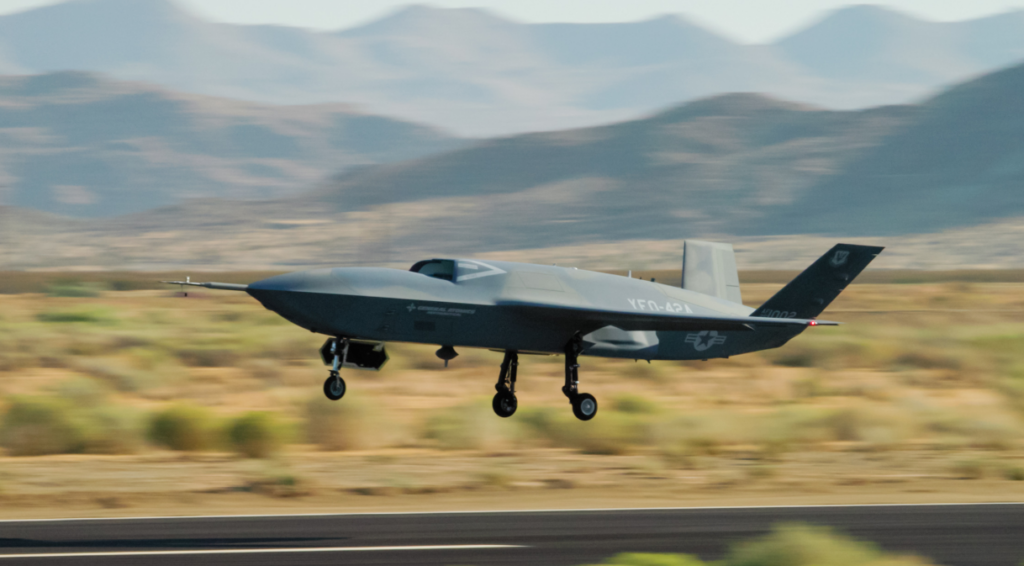
The Vengeance name replaces General Atomics’ earlier company name, Dark Merlin. Fury was already the name used by Anduril for its design before the Air Force formally adopted it.
From 150 aircraft to at least 500 in service by 2032
The numbers around CCA have moved repeatedly as the Air Force worked out how quickly it could afford to introduce autonomous aircraft.
Then-Air Force Secretary Frank Kendall outlined an ambition in 2023 for at least 1,000 CCAs over the programme’s lifetime. Subsequent planning concentrated on a much smaller initial force, before Meink said in June that the service intended to procure more than 150 combat-capable aircraft by the end of the decade.
The latest Air Force statement again explicitly describes the acquisition ambition as about 1,000 combat-ready semi-autonomous systems, while Meink has attached the 2032 date to the first 500.
There could eventually be more.
“We talk about 500 by 2032, we could actually build more of them than that,” Meink said during a question-and-answer session after his speech.
He said the CCA concept from the beginning had been to develop “simple aircraft that you could build fast and at a lower cost”. The problem may therefore become less about manufacturing capacity than available money.
“We’re in a situation to where we could actually build more than we can actually afford to buy,” Meink said.
That is central to the CCA experiment. The Air Force is trying to avoid creating another exquisite combat aircraft whose cost restricts the number it can field. Quantity is part of the capability.
The service has previously targeted a unit price around $20 million once full-rate production is reached, although current production costs for Vengeance and Fury have not been disclosed.
CCA competition is far from over as Increment 2 takes shape
Neither the 1,000-aircraft objective nor the 500-aircraft 2032 target should be read as meaning the entire force will consist of Vengeance and Fury.
The two aircraft belong to Increment 1.
The Air Force is already working towards subsequent increments that could introduce different aircraft with greater range, payload and survivability. At least one further increment is planned, opening the programme to additional designs.
That is where Lockheed Martin is positioning Vectis.
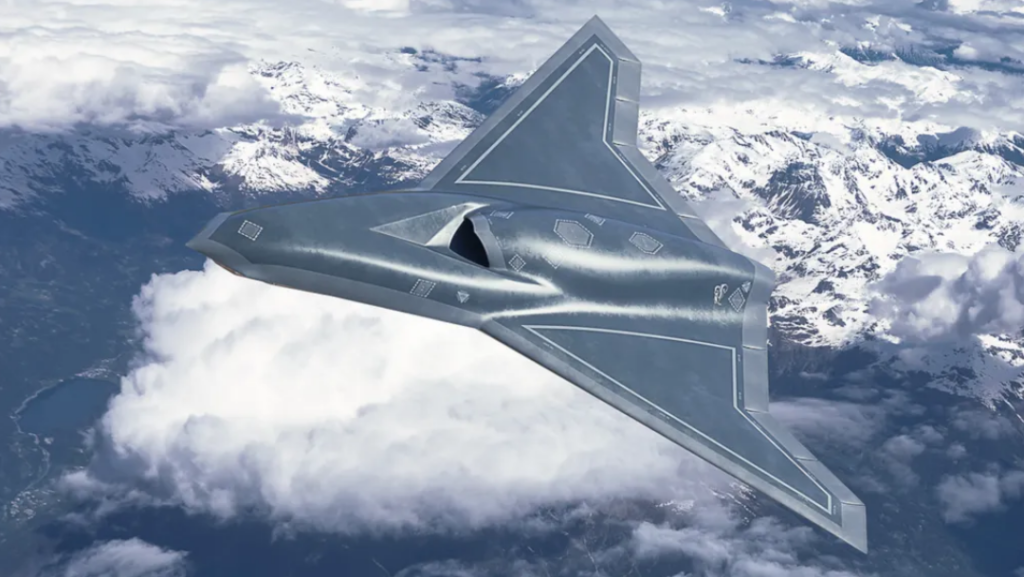
The Skunk Works autonomous aircraft was not selected for Increment 1, but Lockheed has continued development with company funding and is now expanding the programme substantially.
On the same day Meink disclosed the new CCA force target, Lockheed announced that four additional Vectis aircraft are planned for production, taking the programme beyond a single demonstrator as it works towards a first flight in 2027.
Skunk Works says development has moved from the first drawing to a wind-tunnel fly-off in less than two months. A first digital build was completed within six months and the first physical part released after eight months. The initial aircraft remains scheduled to fly by the end of 2027.
Lockheed also displayed a full-scale Vectis model publicly for the first time at the conference.
The aircraft is a larger, survivable autonomous design intended to operate independently or alongside crewed platforms including the F-35 and future next-generation aircraft. Lockheed says its architecture is designed to allow the platform to be adapted as missions and autonomy evolve.
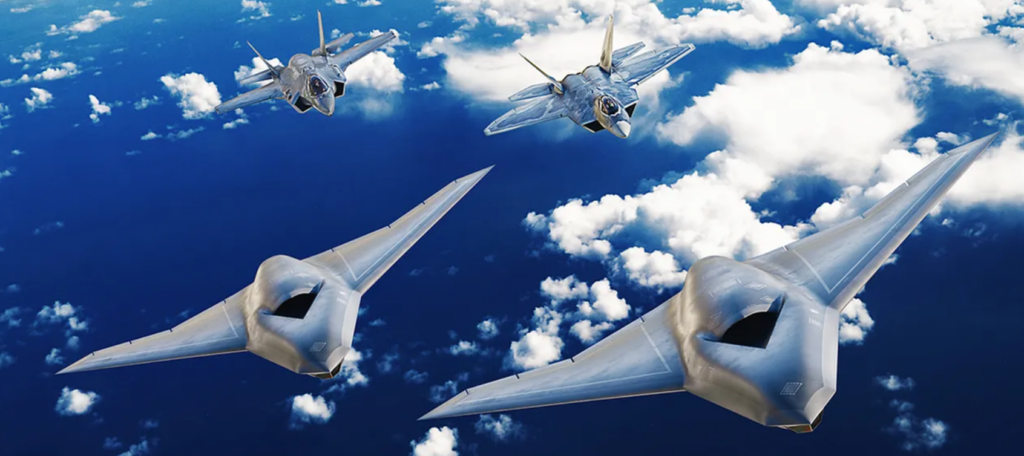
The decision to build another four aircraft is therefore more consequential than a conventional technology demonstrator programme. Skunk Works is creating a small flight-test fleet while the Air Force shapes the requirements for later CCA increments.
It also gives Lockheed another route into the CCA market after General Atomics and Anduril took the Increment 1 air-vehicle contracts.
The aircraft are only half of the CCA competition
A second competition is running behind Vengeance, Fury and future aircraft such as Vectis: who provides the autonomy that allows them to fight.
The Air Force has deliberately separated the aircraft from their mission-autonomy software rather than locking each platform permanently to one proprietary system.
Six companies – Anduril, General Atomics, Lockheed Martin, Northrop Grumman, RTX’s Collins Aerospace and Shield AI – are in the mission-autonomy contract pool. Anduril, Collins and Shield AI have also received production options for the first competitive phases.
A primary mission-autonomy provider for Increment 1 is due to be selected by summer 2027.
“Mission autonomy is the cornerstone of the CCA concept, and leveraging a competitive, multi-vendor environment ensures we capture the latest technology,” Meink said.
“This approach guarantees our Airmen are equipped with state-of-the-art capabilities today but keeps the door open for the breakthroughs necessary to maintain air superiority.”
That separation of hardware and software could prove as important as the aircraft themselves. It gives the Air Force scope to upgrade the autonomy without redesigning the airframe and potentially allows competing software packages to migrate between platforms.
USAF is also working out how hundreds of autonomous fighters will operate
Building 500 aircraft is only one part of the challenge.
The Air Force must determine how large numbers of CCAs will be commanded, launched, recovered, maintained and deployed, particularly from dispersed bases where conventional fighter infrastructure may not be available.
Recent work has increasingly shifted towards those operational questions.
The service has completed prototype evaluations of its portable CCA Command and Control Enclave, or C2E, a deployable ground system intended to command semi-autonomous aircraft. A second prototype phase is expected to examine cloud capabilities.
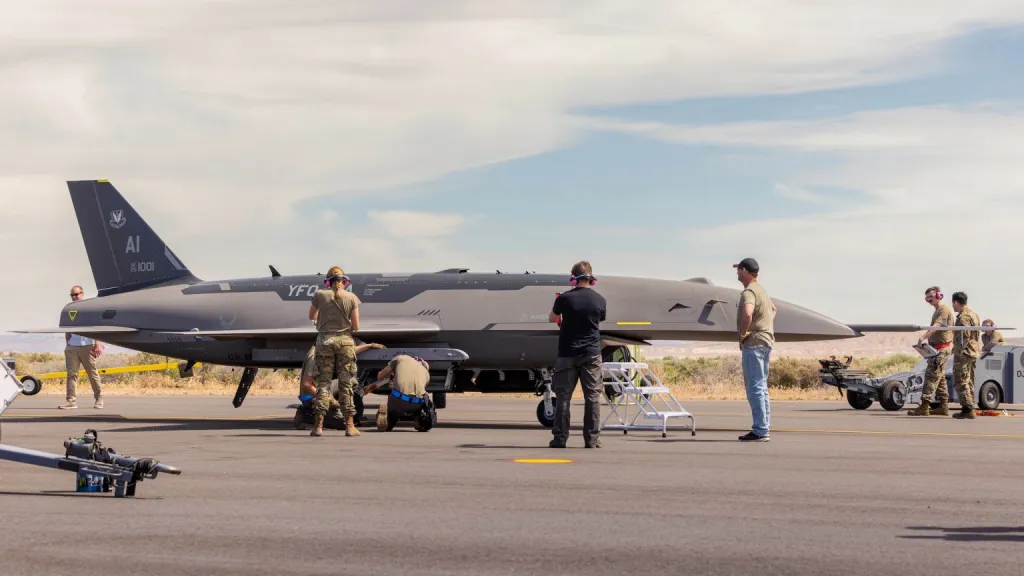
An Experimental Operations Unit has also been established to develop the tactics and operating concepts needed to turn CCA prototypes into a usable combat force. Meink pointed to the unit’s role in recent operational testing as evidence that the programme is moving beyond aircraft development.
The first operational aircraft will begin answering some of those questions. Later increments are expected to push the concept further, including longer-range designs intended for operations across the vast distances of the Indo-Pacific.
The programme is consequently becoming much larger than a contest between two drone manufacturers.
The Air Force is building the aircraft, autonomy, command architecture, production capacity and operating concepts needed to put autonomous combat aviation into service at a scale no Western air force has previously attempted. Meink believes the result will be visible within six years.
“Because of the steps we’re taking today, we’ll have a radically different looking Air Force by 2032,” he said.
Sign up for our newsletter and get our latest content in your inbox.


More from


September 12, 20264 min read


