


Ukraine pushes deep-strike drone frontier to 3,000km with Arctic attack

4 min read
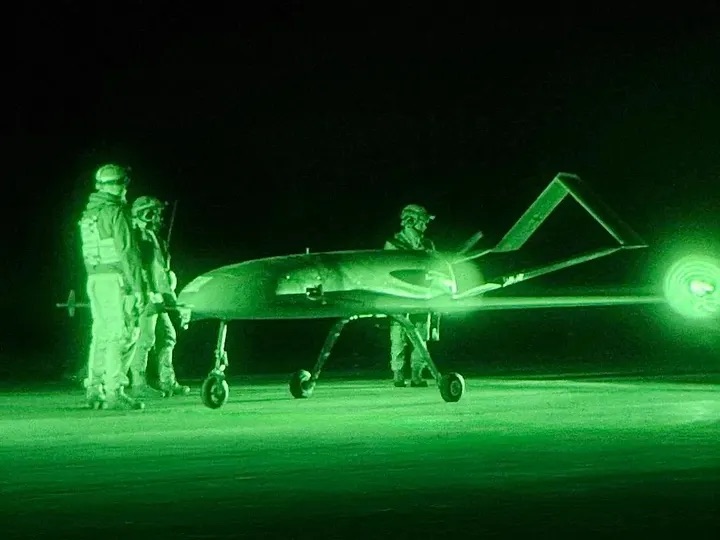
On the 9th of September, Ukraine once again broke its own record, striking the deepest target yet in Russia, hitting Gazprom in Russia’s Arctic region around 3,000 kilometres from the frontline.
The development highlights the pace at which Ukraine’s deep strike capabilities are maturing and how an ever-shrinking remote region of Russia remains beyond reach.
Ukraine launches deepest strike yet on Russia
Last week, Ukraine launched its longest-range-ever attack into Russia, striking two Arctic gas condensate facilities located around 3,000 kilometres (1,865 miles) from the border. It can be noted that actual flight routes can be longer due to manoeuvring around air defences.
BREAKING: 2800km from the frontline, deepest Ukrainian drone attack during the war is currently underway.
— Special Kherson Cat 🐈🇺🇦 (@bayraktar_1love) September 9, 2026
Russians report that Ukrainian drones are attacking Novy Urengoy in Russia’s Yamalo-Nenets Autonomous Okrug for the first time since the start of the war, around 2,800 from… pic.twitter.com/o0QlYOdYkR
This strike was reported to be the deepest strike yet by Ukraine launched from its territory. Deep strikes typially come with a trade-off of more fuel for a smaller warhead.
It appears that Ukraine used its Fire Point FP-1 one-way attack drone for the mission. AGN has previously reported how the capabilities of this family of one-way attack munitions have dramatically improved in 2026.
For most of its history, the sheer size of Russia was seen as a strategic asset; Russia could deploy assets deep into its hinterland, out of reach of enemy strikes.
Overnight, Ukrainian attack drones conducted the deepest OWA strike of the war, hitting Russia's Novy Urengoy and Purovsky gas processing plants in Yamalo-Nenets, almost 3,000 km behind the frontline.
— OSINTtechnical (@Osinttechnical) September 9, 2026
The strikes open up Russia's key western Siberian gas fields to attack. pic.twitter.com/VFRE8IZfYz
But now the thinking is flipping. With Ukraine increasingly able to hit anywhere, Russia is unable to provide air defence across all of its vast landmass.
Increasing scope of deep Ukrainian strikes into Russia
An early deep strike came in December 2022, when Ukraine hit Engels-2 aircraft around 500-650 kilometres from the front.
Breakthroughs beyond 1,000 kilometres came in 2024, with Ukraine hitting the Alabuga Special Economic Zone in Tatarstan (about 1,200 kilometres) in April. Today, Ukraine is estimated to have at least nine missiles/drones with a range of at least 1,000 kilometres.
| Ukraine’s 1,000+ km missiles and drones | Type | Claimed/observed range |
|---|---|---|
| FP-5 Flamingo | Ground-launched cruise missile (Fire Point) | Up to 3,000 km |
| Long Neptune (RK-360L / Neptune-D) | Land-attack cruise missile (Luch Design Bureau) | Up to 1,000 km |
| Upgraded FP-1 (Fire Point) | Piston-engine OWA UAV | Up to 2,500–3,000+ km (operational strikes) |
| Dovbush T40 | Multifunctional UAV (strike/reconnaissance) | Over 2,000 km |
| Zozulia | OWA UAV | Up to 2,100 km (light payload) |
| AN-196 Liutyi (Antonov / Ukroboronprom) | OWA UAV | Up to 2,000 km (later models) |
| Sichen / Behemoth (later variants) | Flying-wing OWA UAV | Estimated 1,400 km |
| UJ-26 Beaver (Bober) | Canard OWA UAV | Approximately 1,000 km |
| Bars (upgraded jet-powered) | Jet OWA UAV | Up to 1,000 km |
In October 2025, Ukraine struck an oil facility in Tyumen (around 2,000 kilometres); by July 2026, it was striking the Omsk oil refinery (up to 2,700 kilometres). Last week’s Arctic strike pushes this to at least 3,000 kilometres, with Fire Point suggesting it was 3,300 kilometres.
Note that some attacks, such as those on Russian airbases in Operation Spiderweb, don’t count here as they were short-range FPV drones launched from nearby trucks.
One of the more notable developments of 2026 was St. Petersburg becoming a normalised target, with Ukraine even being able to strike the Russian Baltic Sea Fleet.
The rise of Ukraine’s long-range strike capabilities
In the 1990s, Ukraine gave up its long-range strike capabilities, including its Tu-95 and Tu-160 strategic bombers, along with many ICBMs and cruise missiles.
Leading into 2022, Ukraine had no long-range strike capability, with Russia’s ability to fire missiles into Ukraine as one of its overwhelming advantages.
That has changed over the course of the conflict, with Ukrainian drones striking further and further into Russia. Ukrainian one-way attack drones often blur the line between a drone and a cruise missile.
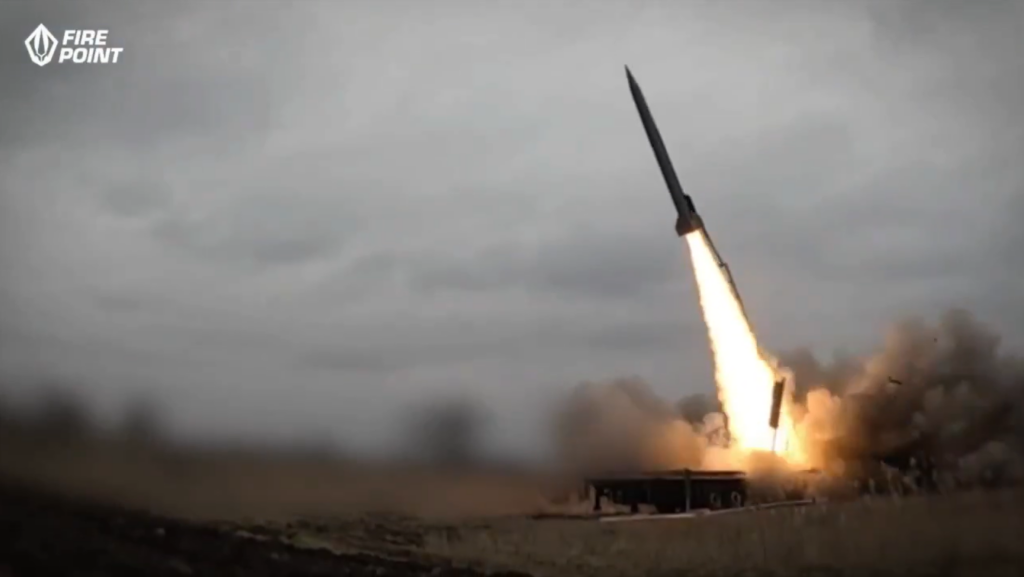
Ukraine has also developed its heavy FP-5 Flamingo cruise missile, and it says operational use of its new FP-7 ballistic missile is just weeks away, while longer ranged FP-9 is also in development.
At a straight-line distance of around 7,000 kilometres, Ukraine could strike essentially any target in Russia. Although actual flight distance would be greater to avoid third-nation airspace and Russian air defence.
Ukrainian President Zelensky said in a July interview with Laura Loomer, “We have drones [with a range of over] 3,000 km. This year, we will have 4,000 km. Next year – from 5,000 to 10,000.”
Sign up for our newsletter and get our latest content in your inbox.


More from


September 12, 20264 min read


