


Why cheap drones are changing air defence, not replacing missiles

5 min read

For years, advanced fighter aircraft and long-range air-to-air missiles dominated discussions about air combat. Then came the drone revolution.
Cheap one-way attack drones and FPVs have created a challenge that billion-dollar air forces were never designed to face at scale. And that means militaries are searching for new ways to defeat threats that can cost less than a missile fired to intercept them.
A growing misconception online is that the rise of cheap drones is making high-end air-to-air missiles obsolete. That is not the case.
In reality, drones have created an additional threat, not replaced the existing one. Militaries now need both inexpensive counter-drone weapons and increasingly sophisticated missiles for defeating advanced aircraft.
The race for increasingly high-end air-to-air missiles
High-end air-to-air missiles were developed to take on high-end aerial threats, like fighter jets; those threats are still here and are more capable than ever.
In fact, the United States and China are now locked in a race to develop longer-range and higher-end missiles. The PL-15 drew international attention following reports of its use during the 2025 India-Pakistan conflict. Chinese reporting and defence analysts indicate the PLAAF is introducing the newer PL-16 missile, which is expected to complement or eventually replace the PL-15.
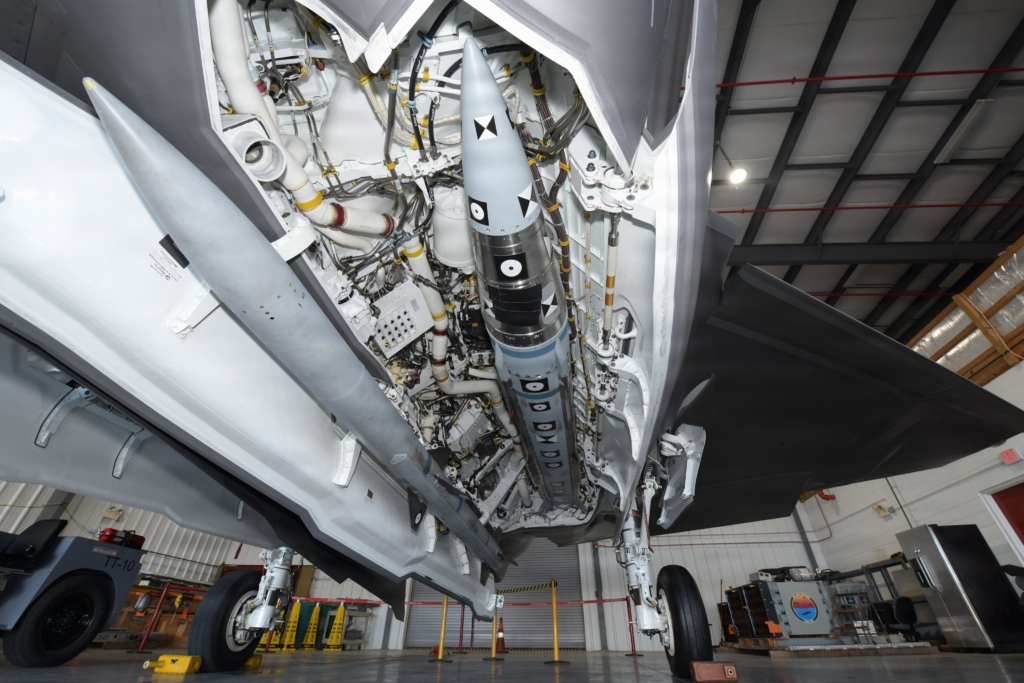
Meanwhile, the US Navy recently unveiled the AIM-424 “Malice” air-to-air missile with a headline range of 250 nautical miles. Critically, the missile is able to be carried internally by the Navy’s F-35C fighter jets, enabling them to preserve their stealth profile.
The Malice joins the AIM-174B Gunslinger and AIM-260 Joint Advanced Tactical Missile, while the US Air Force is exploring how to develop a 1,000-nautical-mile ultra-long-range air-to-air missile.
It’s not just about the long distances of the Asia-Pacific between the US and China. Ukraine is expected to receive legacy Gripen C fighter jets in 2027. Analysts have long said the most consequential aspect of the Gripens is that they are coming with the MBDA Meteor air-to-air missile.
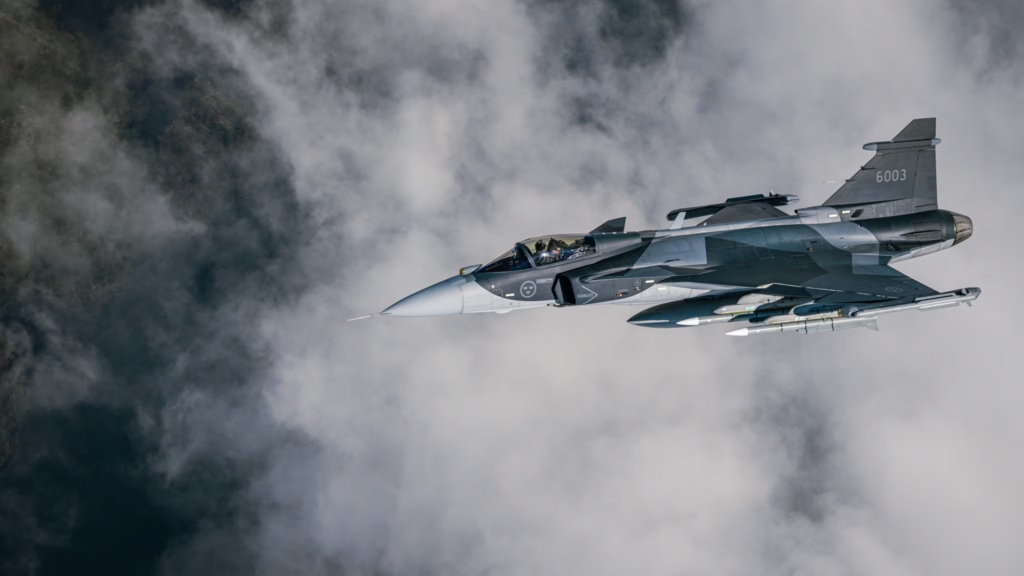
The Meteor is one of the best in service and has a very large no-escape zone. The idea is that it will push Russian fighter jets further back and make its glide bomb attacks much less effective.
Put another way, the development of cheap drones does not make advanced air-to-air missiles obsolete any more than small arms makes artillery obsolete.
Measures against Shahed-type drones
The issue that air forces are facing is that masses of cheap drones are a threat they had not designed their force posture to counter. Currently, drones are essentially able to exploit a former blind spot in air defence.
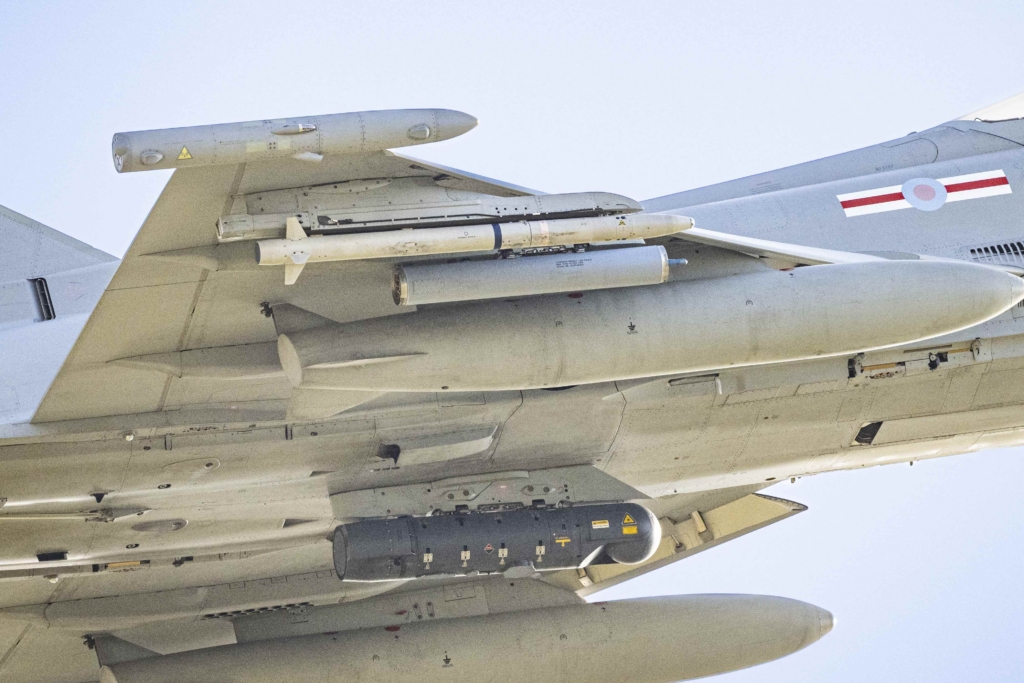
In 2024, the USAF urgently started integrating laser-guided 70mm Advanced Precision Kill Weapon System II (APKWS II) into its F-15E Strike Eagles. It then expanded this to include F-16s and A-10s, while the French, Royal, and other air forces have since followed suit.
APKWS II rockets are a good solution, or at least a useful interim solution. They are substantially cheaper than most traditional air-to-air missiles and may be competitive in cost with some one-way attack drones.
One of the leading counter-UAS efforts has been cheap interceptor drones; these have proven effective in Ukraine and may be one factor encouraging Russia to field faster turbojet-powered drones that are harder to intercept.
Other Shahed-level counter-UAS options have included using machine guns from Yak-52 trainers, helicopters, Cessnas, and other platforms to shoot down drones like its 1945. These are likely interim measures as more advanced methods are developed.
Fast jets, like F-16s, can also shoot down drones with their autocannons, but this is dangerous and an inefficient use of the fighters.
Developing a layered air defence approach
Counter-UAS can be broadly split into short-range (e.g., APKWS, Stinger, 30-40 mm guns), often against Shahed-type drones, and very short-range systems (e.g., interceptor drones, EW, lasers, shotguns), often more oriented against FPV-type drones.
| Air defence layer | Typical systems |
| Long range (100–250+ km) | Patriot PAC-3, SAMP/T, SM-6, Aster 30 |
| Medium range (20–100 km) | NASAMS, IRIS-T SLM, CAMM-ER, Buk-M3 |
| Short range (5–20 km) | APKWS II, Stinger, Mistral, 30–40 mm autocannons, Skynex |
| Very short range (0–5 km) | Interceptor drones, electronic warfare, high-energy lasers, C-UAS jammers, shotguns and heavy machine guns |
Lasers have long captured the imagination, but they remain limited in usefulness. Lasers often require an enormous amount of power generation, take time, are degraded in poor weather, and are limited to line-of-sight. They are likely to be a layer, not a complete defence system.
The issue with time is that a laser must wait for the drones to come within sight. Depending on the system and conditions, a laser may require several seconds of continuous dwell time to disable a drone. That could be a problem if there is a swarm of 20 drones.
Electronic warfare is not an afterthought; it is one of the primary counter-UAS layers, and it includes command-link jamming and GNSS/GPS spoofing and jamming.
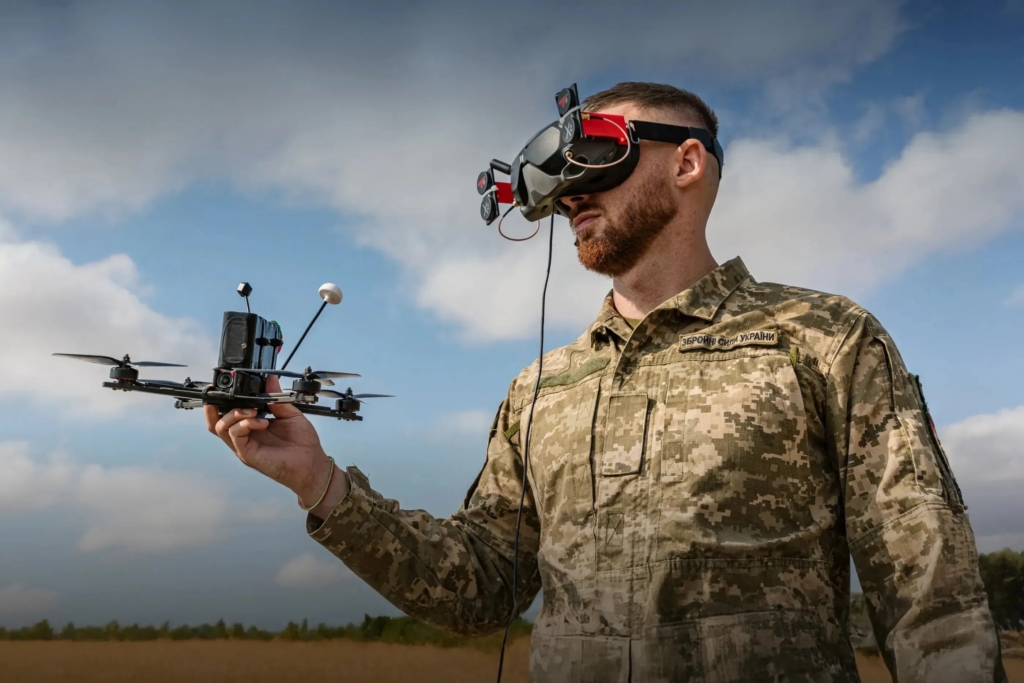
However, machine learning and automated target acquisition and terminal guidance limit the effectiveness, as the drones are able to operate even if their connection with the operator is severed.
Other aspects of countering drones
Nations around the world are racing to fill the counter-UAS gap. The US’s Fiscal 2027 budget documents are showing an increase in counter-drone technologies. The budget is swelling to $20.6 billion and is part of a larger $74 billion funding for drone dominance.
Ukraine has been experimenting with a large range of interceptor drone options, including drones firing nets onto quadcopter-style drones.
One of the most important ways to counter drones is to destroy relays. These can be other drones, balloons, UGVs, and other systems. Then there is targeting the operators themselves – the ‘archers, not the arrows.’
But perhaps the most overlooked aspect of counter-UAS is detection. Small drones have tiny radar cross-sections, fly low, and often blend in with clutter like birds.
Detection is fundamentally important, with modern counter-UAS strategies increasingly relying on passive RF detection, acoustic sensors, infrared cameras, and AI sensor fusion.
Future of air defence
The lesson emerging from Ukraine, the Middle East and military planning across the Indo-Pacific is that drones are not replacing traditional air power. Instead, they are adding another layer to an increasingly complex air battle.
Sign up for our newsletter and get our latest content in your inbox.


More from


August 31, 20264 min read


