NASA launches flagship Roman observatory on mission to probe dark matter and dark energy

7 min read
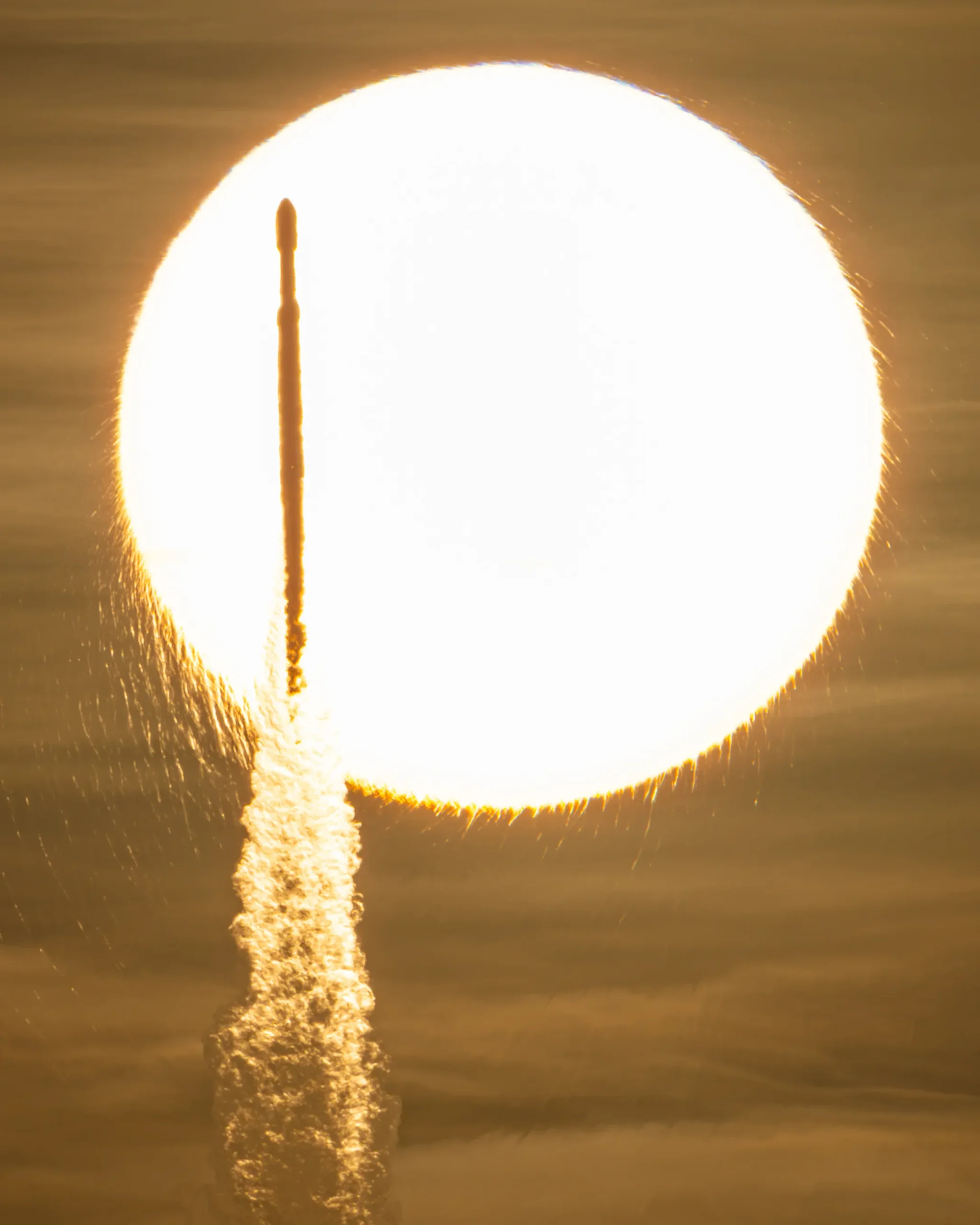
NASA’s Nancy Grace Roman Space Telescope has begun a million-mile journey into deep space after launching aboard a SpaceX Falcon Heavy rocket. It marks the start of a mission that could transform our understanding of dark matter and dark energy.
Roman lifted off from Launch Complex 39A at NASA’s Kennedy Space Center in Florida at 7:26am EDT on 30 August. The telescope separated from the Falcon Heavy about 31 minutes later, while the rocket’s two side boosters returned to the launch site for refurbishment.
It is now heading towards an observing station nearly a million miles from Earth, where its unusually wide view of the infrared universe will allow astronomers to survey billions of galaxies and search for planets across the Milky Way.
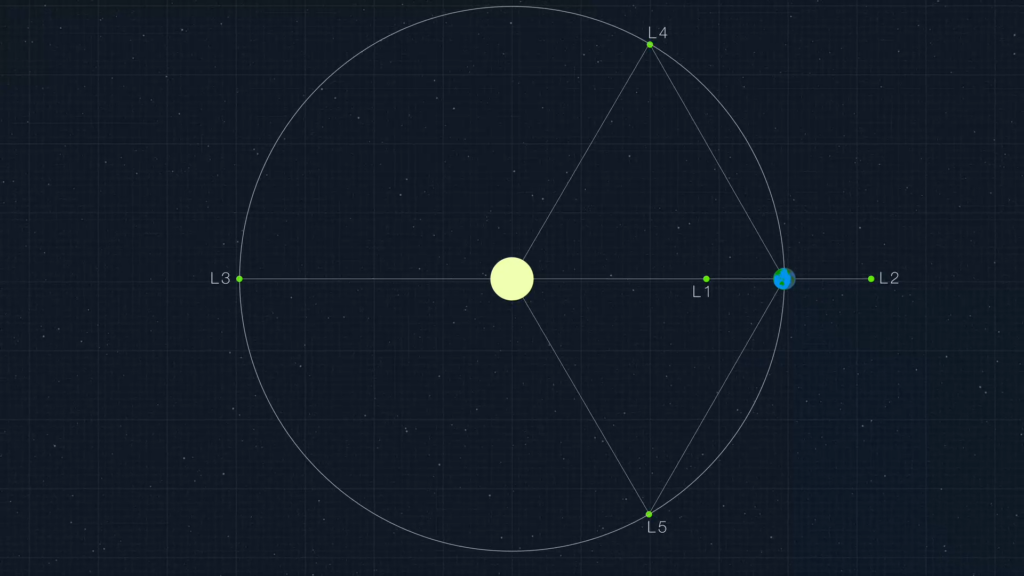
The mission has already completed its first trajectory adjustment. On Monday, Roman fired its propulsion system for about three minutes to refine its course towards the second Sun-Earth Lagrange point, or L2. A second correction can be made later this week if required. Orbital insertion is expected roughly 100 days after launch.
L2 lies about 930,000 miles (1.5 million km) from Earth, in the direction opposite the Sun. The region allows spacecraft to maintain a halo orbit with relatively little intervention, while also giving Roman the cool and thermally stable environment needed for sensitive infrared observations.
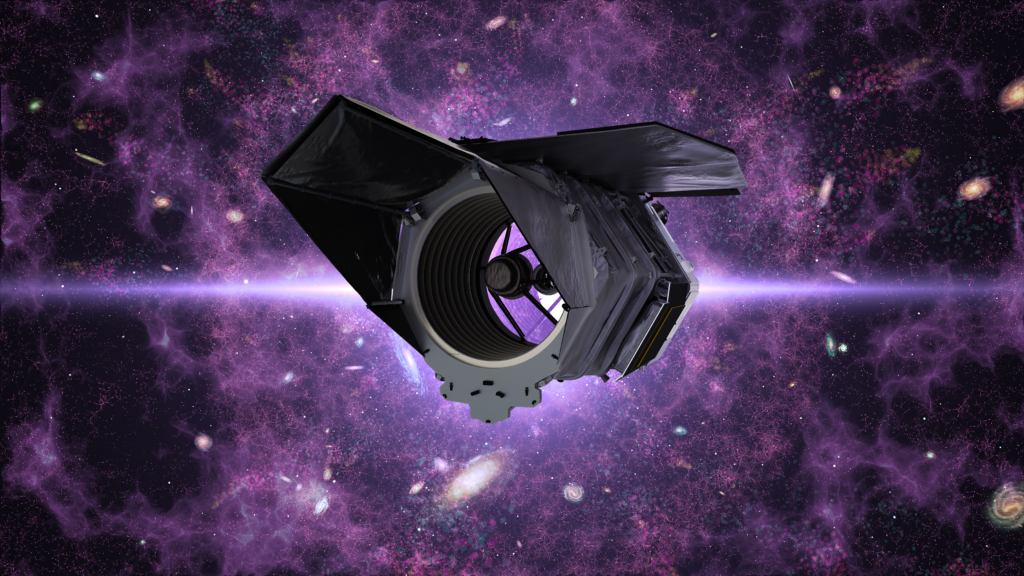
Once there, Roman will begin doing something difficult to achieve with existing space telescopes: combining Hubble-like sharpness with a view of the sky vastly wider than Hubble can see at once.
“We’ve never been able to view the universe with eyes like Roman’s before,” said Julie McEnery, Roman’s senior project scientist at NASA’s Goddard Space Flight Center. “There’s no telling what more we’ll know and have seen by this time next year.”
Roman combines a Hubble-sized mirror with a far wider view of the infrared universe
Roman’s primary mirror is 2.4 metres across, the same diameter as Hubble’s, although advances in manufacturing have reduced its weight to 186 kg, less than a quarter of Hubble’s primary mirror. Light collected by it will feed two instruments: the Wide Field Instrument and Coronagraph Instrument.
The Wide Field Instrument is a 300-megapixel infrared camera. Its 18 detectors will allow Roman to photograph enormous areas of sky while retaining the resolution needed to study individual distant objects.
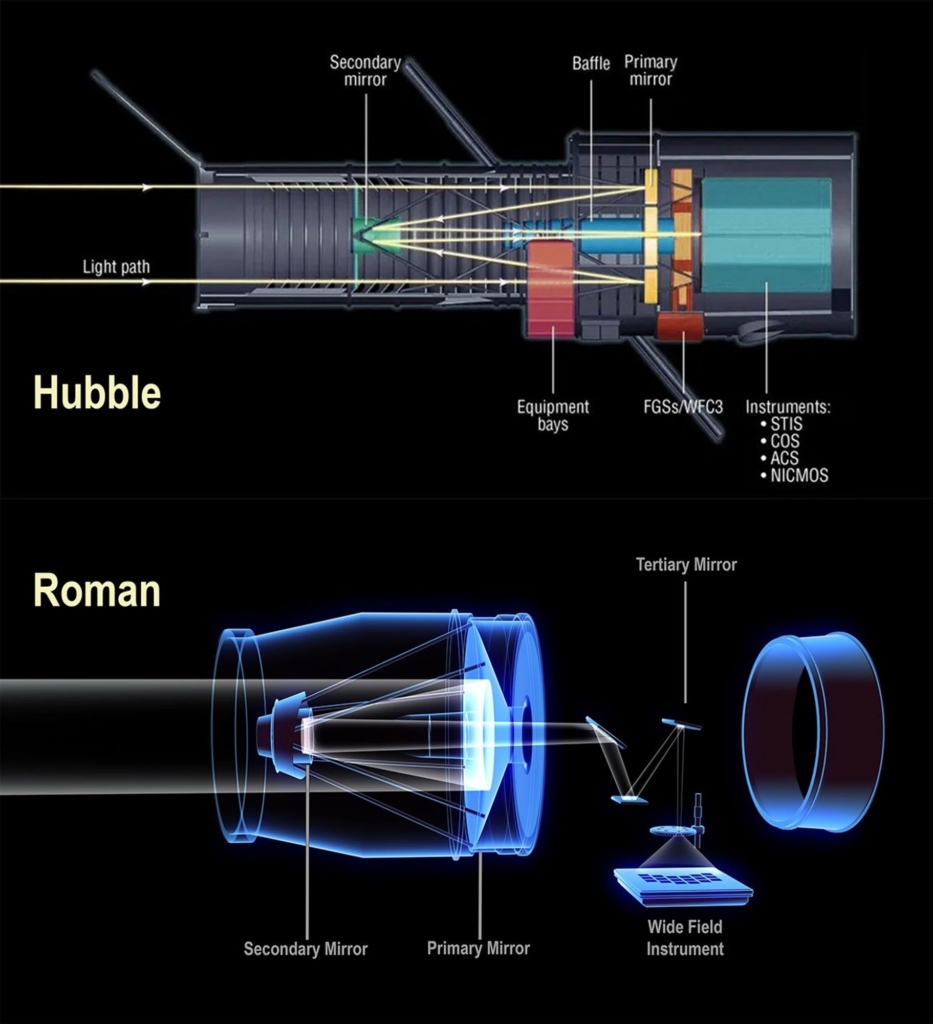
NASA says Roman’s field of view will be at least 100 times larger than Hubble’s and its survey design will allow it to map the universe roughly 1,000 times faster. The result will be less like looking closely at individual cosmic targets and more like conducting a census.
Roman is expected to return about 1.4 terabytes of data every day, the highest data rate yet for a NASA astrophysics mission. NASA expects machine learning, artificial intelligence and citizen scientists to help identify interesting objects and events buried in that stream.
The observatory is still months away from science operations. Its systems and instruments will be switched on, calibrated and tested during the journey to L2, with NASA expecting the first images in early 2027.
Dark energy surveys will trace how the expansion of the universe changed over cosmic time
One of Roman’s biggest jobs is investigating dark energy, the name given to the poorly understood phenomenon associated with the accelerating expansion of the universe.
Dark energy is estimated to account for about 68% of the universe, yet scientists still do not know what it is. Recent observations have also raised the possibility that its influence may have changed over time. Roman will test that by examining the universe at different stages in its history.
It will do this in several ways rather than relying on a single measurement.
One involves Type Ia supernovae. These exploding stars reach similar intrinsic brightnesses, allowing astronomers to use them as “standard candles”, by comparing how bright they should be with how faint they appear from Earth, scientists can calculate their distances. Roman will observe thousands of them, providing a record of how quickly the universe was expanding at different periods.
Roman will also measure baryon acoustic oscillations, or BAOs. These are remnants of pressure waves that travelled through the hot, dense universe shortly after the Big Bang. Their imprint survives in the way galaxies are distributed today. Measuring how the spacing changed over billions of years provides another ruler for tracking cosmic expansion.
The different techniques can be compared against one another, reducing the risk that an apparent discovery is simply a peculiarity of one method.
Hundreds of millions of galaxies will reveal the otherwise invisible map of dark matter
Roman will also tackle the other major invisible component of the cosmos called dark matter.
Unlike ordinary matter, dark matter does not emit or reflect light. Its presence is inferred from gravity. Observations show that visible matter alone cannot explain how galaxies rotate, how galaxy clusters remain together or how light bends as it travels through the universe.
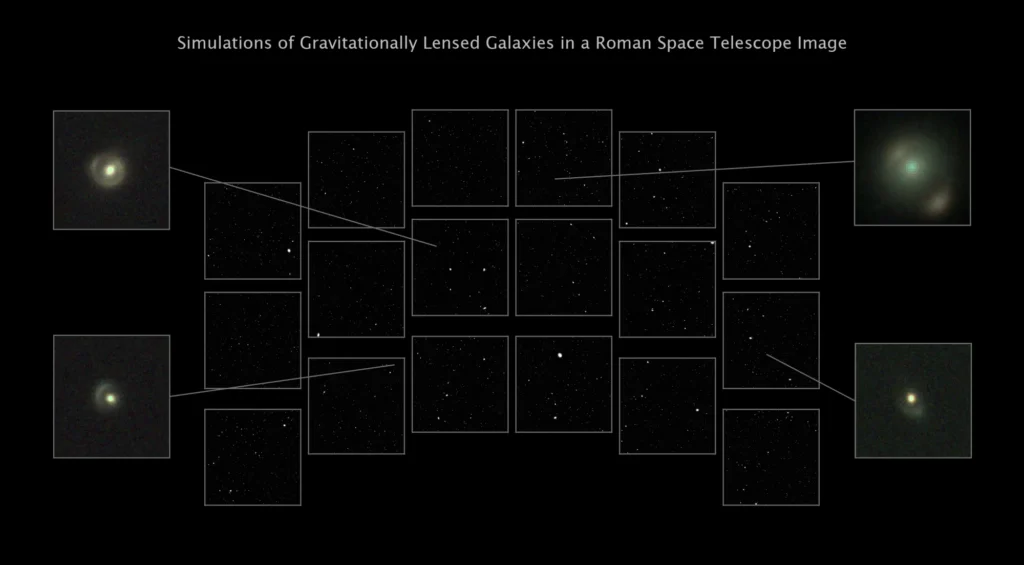
Roman will exploit that last effect.
Mass bends space-time and therefore changes the path taken by light from more distant galaxies. By measuring tiny distortions in the shapes of hundreds of millions of galaxies, a technique known as weak gravitational lensing, astronomers can reconstruct where matter lies, including matter they cannot see.
Roman will measure both normal and dark matter across hundreds of millions of galaxies and across different periods of cosmic history. The way dark matter clumped together influenced when galaxies and larger cosmic structures formed, potentially giving scientists clues about what dark matter itself might be made of.
Roman will conduct a census of distant planets and test technology for seeing them directly
The same observatory built to map galaxies billions of light-years away will spend part of its mission looking for planets inside the Milky Way.
Roman will monitor around 200 million stars towards the crowded centre of the galaxy and search for brief changes in brightness caused by gravitational microlensing.
Microlensing occurs when a planet or star passes almost exactly in front of a more distant star. Its gravity bends and magnifies the background star’s light, briefly revealing an object that may otherwise be impossible to see.
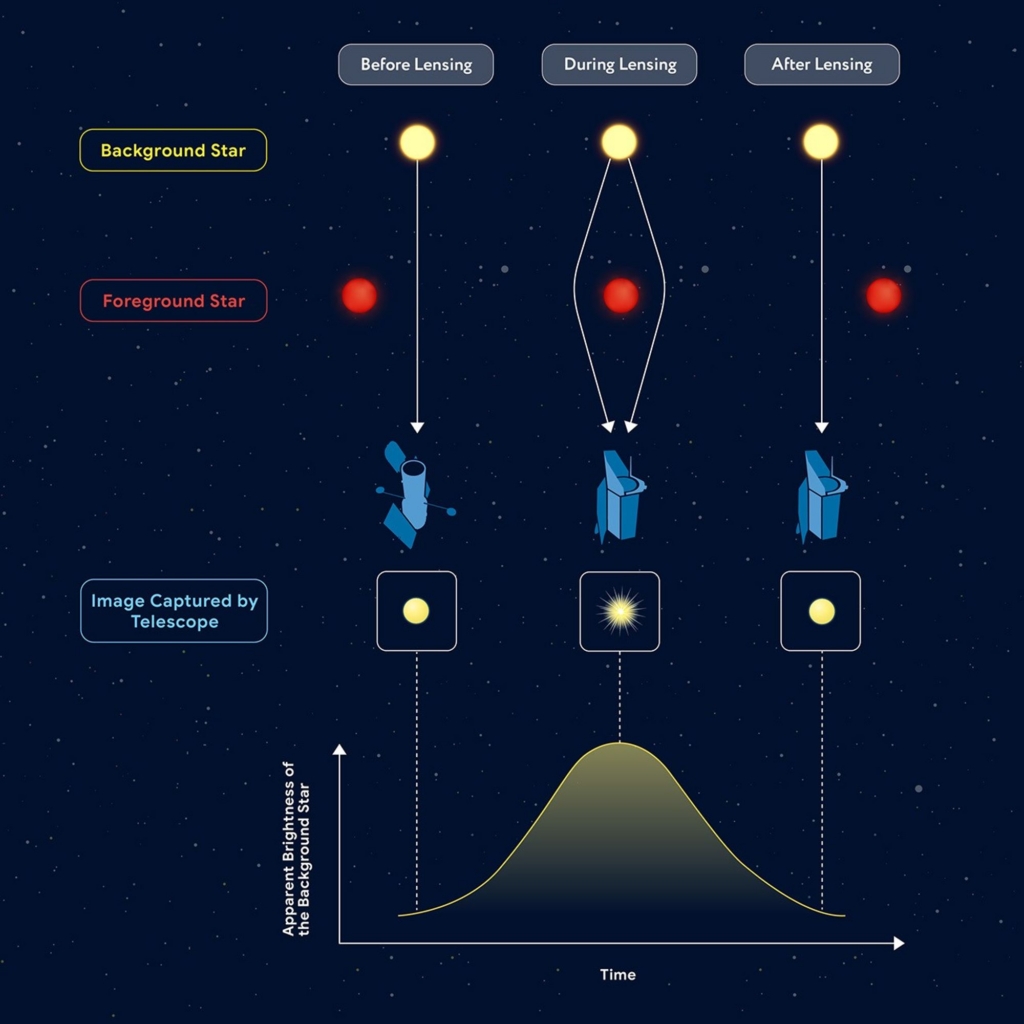
The technique is particularly useful for finding planets orbiting relatively far from their stars, including worlds resembling Uranus and Neptune, as well as “rogue” planets travelling through space without a host star. NASA expects Roman’s microlensing survey to discover 100,000 exoplanets through its surveys.
Roman will also test a different approach with its Coronagraph Instrument. By suppressing the overwhelming glare from a star, the instrument will attempt to image Jupiter-like planets and surrounding disks directly. NASA sees it as a technology demonstration for future observatories designed to photograph smaller, potentially Earth-like worlds.
A billion-galaxy survey will reach into the universe’s earliest chapters
Roman’s enormous field of view also makes it a survey telescope in the broadest sense.
Its High Latitude Wide Area Survey will combine imaging and spectroscopy to reveal more than a billion galaxies. Although designed principally for dark-energy research, the resulting dataset will allow astronomers to study subjects far beyond Roman’s primary mission.
NASA expects Roman to find tens of thousands of very early galaxies and hundreds of faint, distant quasars powered by supermassive black holes. Those discoveries can then provide targets for the James Webb Space Telescope, whose narrower field of view can examine selected objects in greater detail.
Roman will also search for streams of stars left behind as galaxies consume smaller neighbours. The shape of those streams can reveal gravitational disturbances caused by concentrations of dark matter.
That breadth is what makes Roman unusual. It was built around some very specific questions on how the universe expanded, how matter is distributed and how common planetary systems exist. But its wide surveys will inevitably collect objects and phenomena that nobody designed the telescope specifically to find.
Roman is named after Nancy Grace Roman, NASA’s first chief astronomer, whose advocacy for space astronomy earned her the nickname “mother of Hubble”.
Now her namesake has left Earth. Its first task is simply getting to L2 and proving that every system survived the launch and journey. The discoveries come after that.