The SR-71’s two-hour Atlantic crossing: Why a 52-year speed record still stands

6 min read
On 1 September 1974, an American reconnaissance aircraft did something that sounded almost impossible even by the standards of the jet age.
A Lockheed SR-71A Blackbird, serial number 61-7972, flew from New York to London in 1 hour, 54 minutes and 56.4 seconds – setting a transatlantic speed record that remains unbeaten today.
While aviation technology has advanced dramatically in the decades since, no aircraft has replicated the Blackbird’s unique blend of sustained Mach 3 speed, extreme altitude and long- range capability.
Here’s everything you need to know about one of the most enduring records in aviation history.
The Lockheed SR-71: a unique record-breaking aircraft
The SR-71 was never designed as an airliner or a record-breaking racer. It was a strategic reconnaissance aircraft, developed by Lockheed’s legendary Skunk Works to fly higher and faster than almost anything that might attempt to intercept it.
Its basic philosophy was brutally simple – if an enemy could not catch the aircraft, there was less need to fight its way through an air defence system.
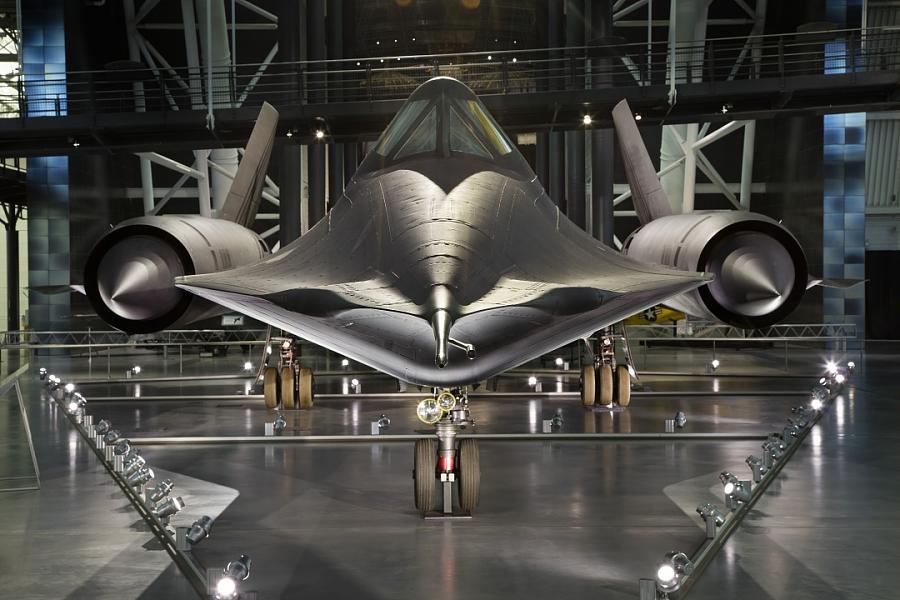
The Blackbird could cruise above Mach 3 at altitudes exceeding 80,000 feet. Its two Pratt & Whitney J58 engines, sophisticated inlet system and carefully shaped airframe allowed it to operate in an environment in which conventional jet aircraft simply could not function.
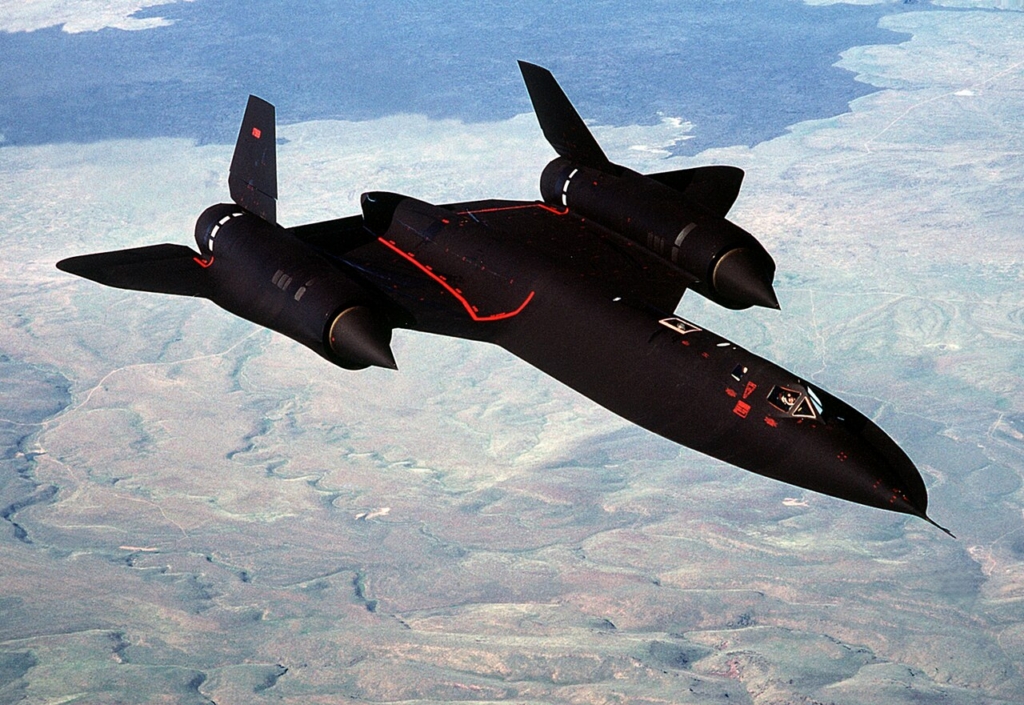
The aircraft was an extraordinary piece of engineering. Titanium construction was necessary because aerodynamic heating at sustained Mach 3 speeds caused the skin to become extremely hot.
Its black radar-absorbing paint also helped with thermal management, while its distinctive chines and engine nacelles contributed to both aerodynamic and radar characteristics.
The 1974 transatlantic record attempt
On 1 September 1974, US Air Force Majors James V. Sullivan and Noel F. Widdifield put all of that technology to work.
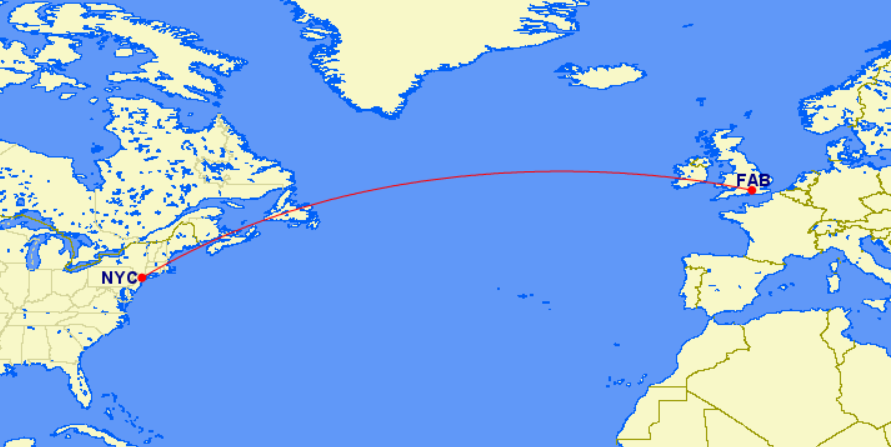
Crossing the New York starting gates at approximately 80,000 feet, they accelerated eastwards across the Atlantic, averaging 1,806 mph (2,908 km/h) over the recognised 3,46-mile (5,537 km) route. Despite slowing once to take on fuel from a specially modified KC-135 tanker, the Blackbird completed the journey in just under 115 minutes – a record that Guinness World Records still recognises today as the fastest ever flight across the Atlantic on the New York-London route.
More remarkably, the destination was not simply a military base. The Blackbird was heading for the Farnborough International Airshow, where it would become the first SR-71 in history to be placed on public display outside the United States.
At the time, the Blackbird was still an extraordinarily secretive machine, and displaying it publicly outside America represented a significant change in attitude.
Contemporary Air Force reporting described the arrival as the highlight of the newly internationalised Farnborough show. The 1974 event had expanded beyond its traditional British character, with American aerospace companies and equipment taking a prominent role.
The SR-71’s arrival therefore had both technological and diplomatic significance: it was a spectacular demonstration of American aerospace capability at a major British aviation event.
The aircraft itself (61-7972), later affectionately associated with another famous record. On 6 March 1990, the same Blackbird flew from Los Angeles to Washington, DC, in just an hour and four minutes and 20 seconds, averaging 2,124 mph. It then passed into the collection of the Smithsonian’s National Air and Space Museum.
Why does the 1974 SR-71 record remain unbroken today?
The obvious question is: with more than 50 years of technological progress, why has nobody flown New York to London faster? The simplest answer is that almost nobody has built an aircraft designed to do it.
The SR-71 occupied an unusual technological niche. It was not merely a fast aeroplane; it was a machine designed from the beginning around sustained Mach 3 flight at extreme altitude. Its successor would have needed to combine enormous speed, long range, aerial refuelling capability, thermal resistance, reliability and the ability to operate safely over an oceanic route.
However, after the Cold War, the incentive to build such an aircraft largely disappeared. The SR-71 itself was expensive and demanding to operate.
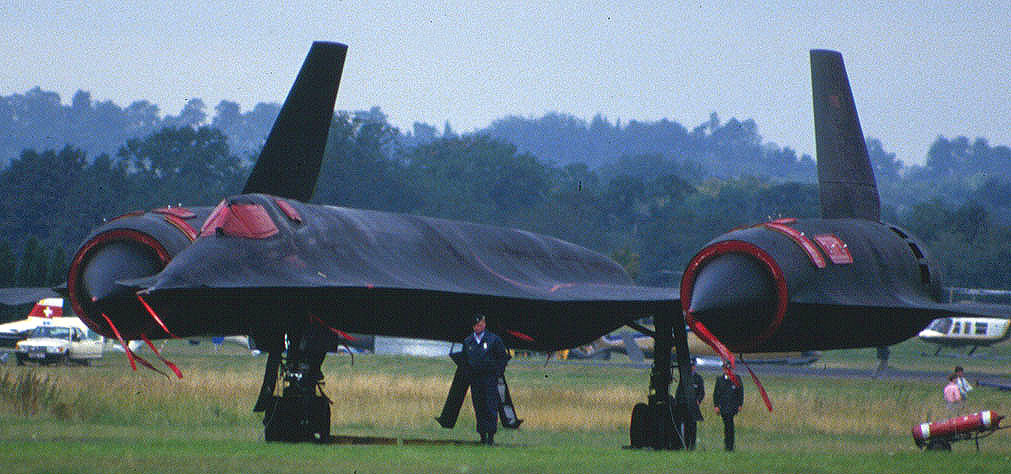
Additionally, the National Museum of the USAF notes that the fleet was retired in 1990 amid declining defence budgets and high operating costs, although a small number of aircraft were subsequently returned to service before the programme finally ended in 1998.
Maintenance was another problem. Smithsonian interviews with SR-71 personnel describe the aircraft’s fuel leakage and enormous maintenance workload.
The Blackbird’s tanks were deliberately designed around the thermal expansion and contraction associated with Mach 3 flight; when the aircraft was cold, fuel could leak through gaps that closed as the aircraft heated at speed.
Then there was the economic problem. Going faster than Concorde was technically possible, but commercially it made little sense. Concorde itself illustrates this difficulty.
The Anglo-French airliner could cruise at roughly 1,350 mph, allowing it to cross the Atlantic in under three hours. It was extraordinarily fast for a passenger aircraft, yet its career ended in 2003 after a relatively small fleet had operated for decades.
The SR-71 was roughly 450 mph faster than Concorde’s cruise speed. But achieving that performance required an aircraft that carried only two people, consumed enormous quantities of specialised fuel, operated at extreme altitude and required aerial refuelling for long missions. It was a military reconnaissance machine, not a commercially sustainable transport system.
The technological paradox
There is a fascinating paradox behind the 1974 record’s longevity. Aircraft technology has advanced enormously since 1974. Computers are vastly more powerful.
Materials are better understood. Engines are more sophisticated. Navigation and flight-control systems have transformed aviation. Yet none of those developments automatically produce a practical Mach 3-plus aircraft.
Modern aerospace development has generally prioritised stealth, efficiency, precision, range, unmanned systems and lower operating costs, rather than simply maximum speed.
Satellites, drones and advanced electronic intelligence systems have also reduced the need for an aircraft to physically race across the sky at Mach 3.
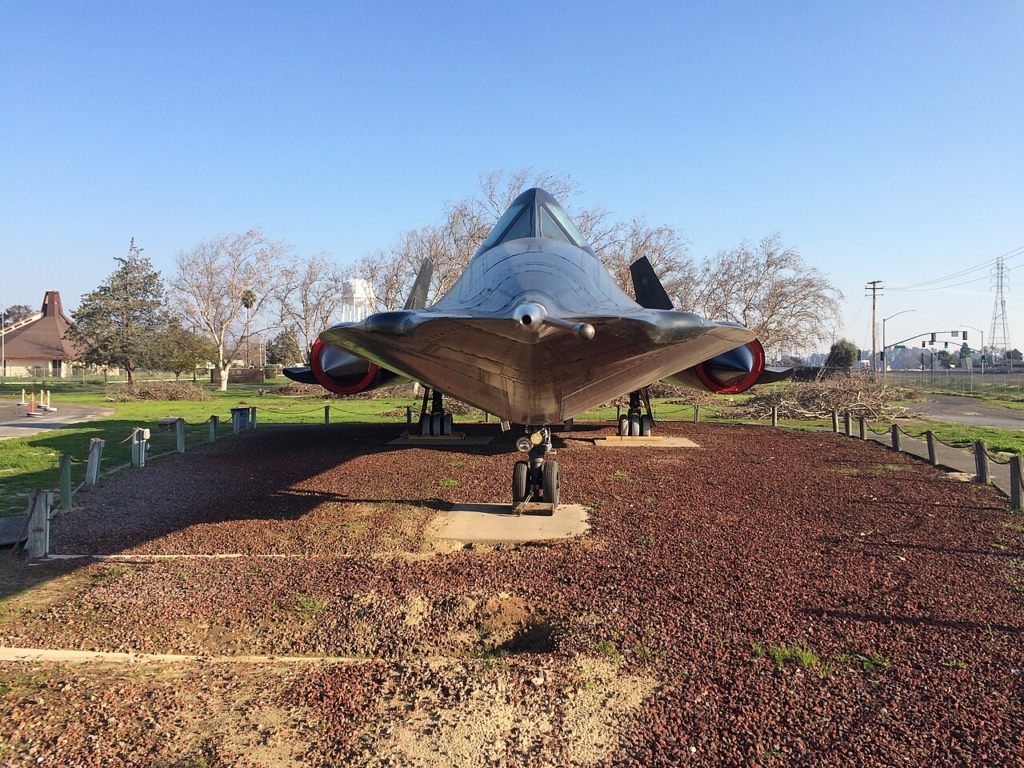
The SR-71’s mission has effectively disappeared into a different technological ecosystem. That is why the record is so difficult to break.
To beat 61-7972, someone would need not merely to build a faster aircraft, but to build one capable of sustaining that performance over the specific New York to London course under record conditions. No operational aircraft has ever emerged to fill that role.
A record from a different age of aviation
The achievement of 1 September 1974 is therefore more than an old aviation statistic. It represents the culmination of a particular era in aerospace engineering: the Cold War period when governments were willing to spend enormous sums pursuing extraordinary performance advantages. The SR-71 was the product of that philosophy.
It could fly above 80,000 feet at more than three times the speed of sound, gather intelligence over hostile territory and outrun threats that would have destroyed conventional aircraft. In 1974, it demonstrated the same capability spectacularly by crossing an ocean in less than two hours.
Today, the Blackbird is a museum piece. Its pilots have retired, its engines are silent, and its technology is more than half a century old. Yet the clock stopped at Farnborough after one hour, 54 minutes and 56.4 seconds.
And until somebody builds another aircraft capable of making the extraordinary practical, that figure remains the benchmark. More than fifty years later, the Blackbird is still waiting for something faster to come along.
Sign up for our newsletter and get our latest content in your inbox.


More from

October 13, 20263 min read

October 13, 202612 min read

October 13, 202612 min read