Why NASA still needs wind tunnels in the age of supercomputers

11 min read
NASA has built a new facility where engineers can put model aircraft into stalls and spins, test spacecraft falling through an atmosphere, and find dangerous problems before a real vehicle ever takes to the air.
A small aircraft model is released into a column of air rushing upwards at more than 100 mph. Nothing holds it in place. The model can turn, fall or spin much as an aircraft might in the sky, while engineers watch what happens.
This is a wind tunnel, although NASA’s newest one is rather different from the long horizontal tunnels most people may have seen in photographs.
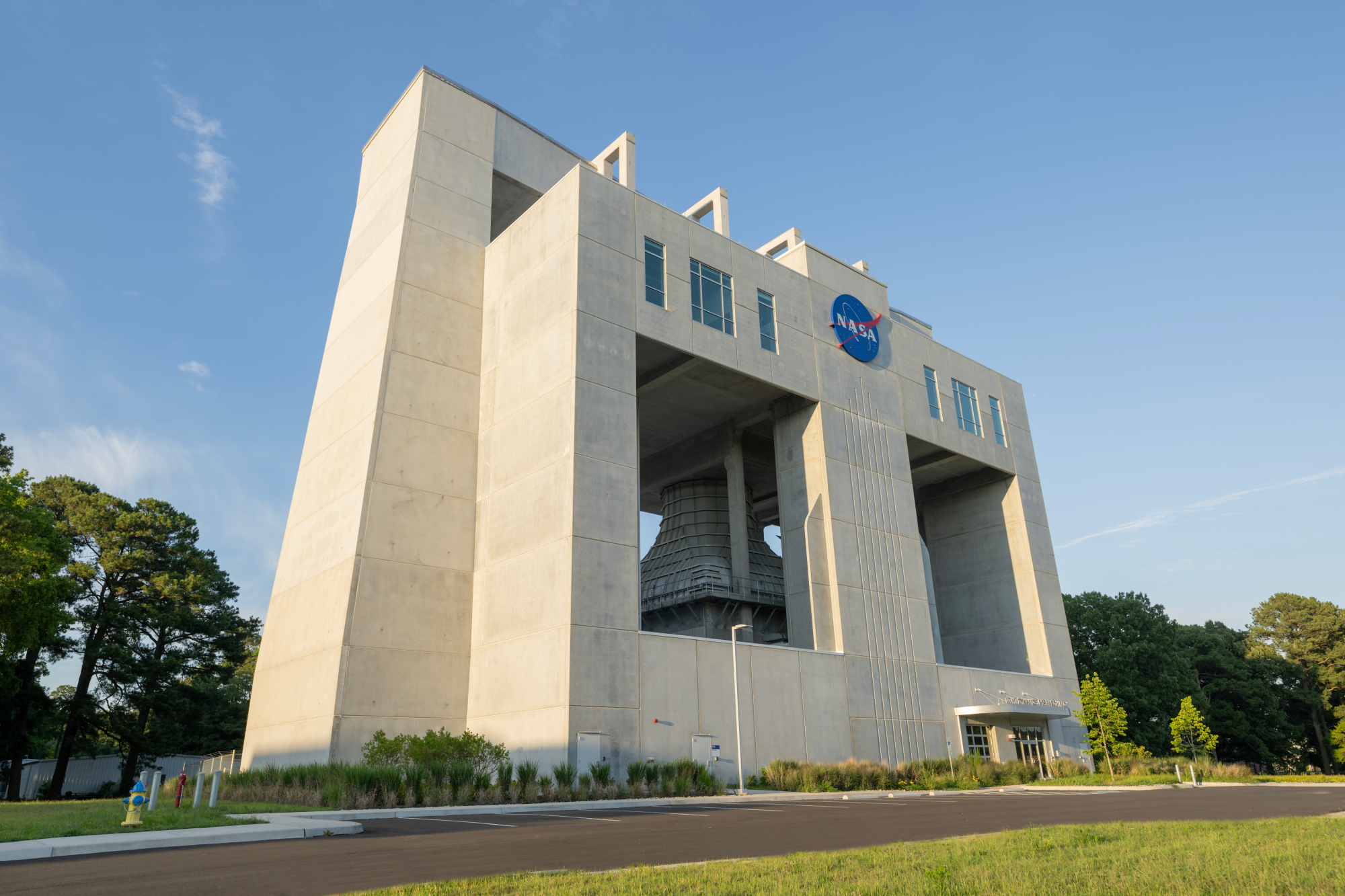
The Flight Dynamics Research Facility, or FDRF, at NASA’s Langley Research Center in Hampton, Virginia, pushes air upwards through a 20-foot-wide test chamber. By carefully controlling that airflow, researchers can make models of aircraft and spacecraft behave much as they would while moving through the atmosphere.
NASA opened the facility on July 31. It is the agency’s first major new wind tunnel in more than 40 years and replaces two Langley tunnels that spent decades helping engineers understand how aircraft fly, stall and spin.
Its opening also provides a good reason to ask why wind tunnels still matter.
Aircraft can now be designed and tested extensively on computers. Engineers can simulate airflow around a wing before building anything at all.
Why NASA still needs physical wind tunnels
Because a computer can predict how air should behave. A wind tunnel allows engineers to see what actually happens.
How does a wind tunnel work?
The basic idea behind a wind tunnel is surprisingly simple.
An aircraft normally moves through the air. Inside a wind tunnel, engineers turn that around. The aircraft model stays in roughly the same place, and the air moves around it.
From the point of view of the model, the effect can be made similar to flight.
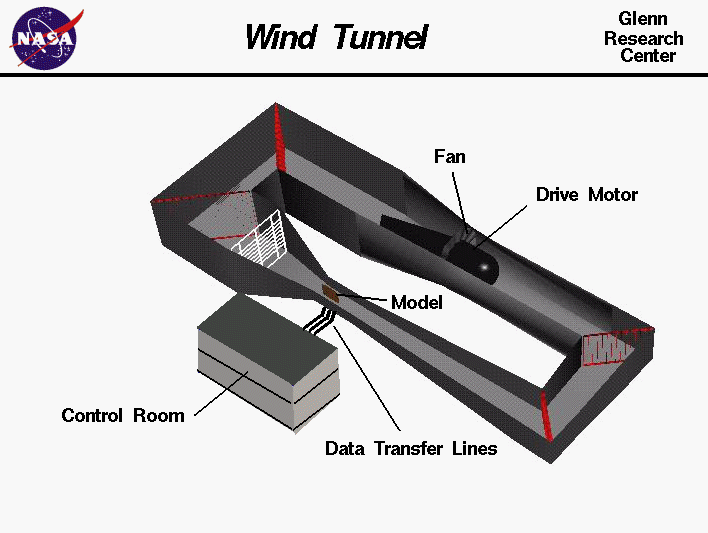
Large fans produce the airflow. Engineers control its speed and place sensors on or around the model. They can then measure how the air pushes, pulls and flows around different parts of it.
NASA describes a wind tunnel as a machine that can simulate the movement of air around an aircraft in flight.
Measurements taken from a model can be used to predict the forces that will act on the real aircraft.
Imagine that engineers are developing a new wing.
They want to know whether it will produce enough lift to keep the aircraft flying. They also want to know how much resistance, or drag, it will create as it moves through the air.
Rather than build an entire aircraft and discover the answers during a test flight, they can build a smaller model and put it in a wind tunnel.
They can change the wing shape, test it again and compare the results.
More importantly, they can deliberately create conditions that would be dangerous to try first with a pilot sitting in a real aircraft.
That is where NASA’s new tunnel becomes particularly interesting.
How NASA’s vertical wind tunnel works
Most people who have seen photographs of wind tunnels will recognise the familiar arrangement: an aircraft or model sits inside a long chamber while air moves horizontally around it.
The FDRF can do something different. Its main airflow travels vertically.
Four 750-horsepower motors drive four fans, each 14 feet in diameter. The fans push air upwards through a test chamber 20 feet across and 24 feet high. Airspeed can reach 117 mph. Researchers can release a model directly into that rising air. The airflow can effectively hold the model up while still allowing it to move freely. There is no pole or other support fixing the model in position during this type of test. It can roll, turn, fall or spin.
That means researchers are not simply measuring the air passing over a stationary wing. They can watch how the whole vehicle behaves when it is free to move.
Mike Fremaux, a retired chief engineer with NASA Langley’s Intelligent Flight Systems division, said the facility brings together capabilities not found in any other single facility.
“It’s a high-performance vertical wind tunnel with a large test section capable of conducting all manner of tests to assess the dynamics of flight vehicles,” Fremaux said.
The FDRF can also conduct more conventional tests in which a model is held in position. But allowing models to fly freely is central to one of its most important jobs.
Testing aircraft stalls and spins safely
An aircraft wing needs air flowing around it in the right way to produce lift. Under some conditions, that smooth flow can break down and the wing can stall. A stall does not mean that an aircraft’s engine has stopped. It means the wing is no longer producing enough lift in the normal way because of how it is meeting the airflow. Pilots are trained to recognise and recover from stalls.
But a stall can sometimes develop into a spin. The aircraft begins descending while rotating, and recovery can become more difficult. This is exactly the sort of dangerous situation that engineers would rather study with a model. NASA has been doing that at Langley for generations.
Its 20-Foot Vertical Spin Tunnel opened in 1941. Researchers would launch models by hand into rising air and watch them enter a spin. They could study how the aircraft behaved and test what was needed to recover control. The facility became one of the world’s major centres for this kind of research.
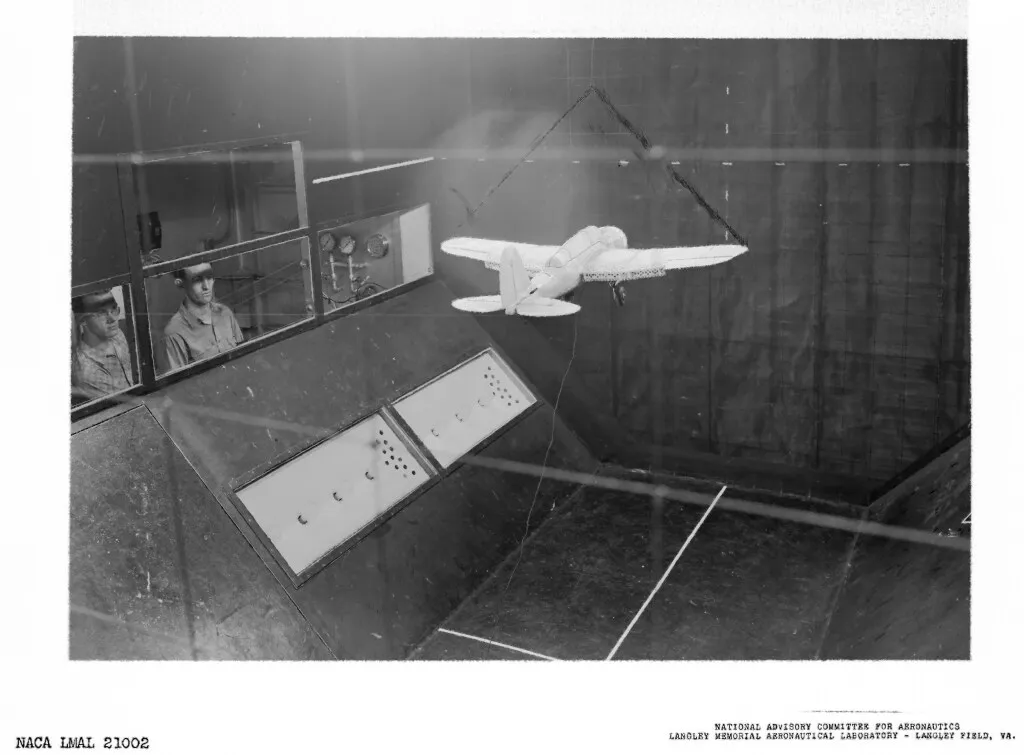
NASA says its work supported commercial aviation, parachute systems and space missions, as well as the development of nearly every US military aircraft designed since the Second World War. The new FDRF takes over that role.
Its greater airflow speed means it can support heavier models. Its larger test chamber gives those models more room to move. Modern cameras, sensors and other instruments allow researchers to record exactly what happens.
There is another useful feature hidden inside those enormous fans.
Their blades are made from carbon fibre and are relatively light. NASA says this allows their speed to be changed quickly and precisely. That matters when a model is flying freely.
If it begins dropping too quickly, engineers can increase the airflow. If it starts rising too far, they can reduce it. The aim is to keep the model inside the test area while allowing it to behave naturally.
The historic NASA wind tunnels replaced by the FDRF
The spin tunnel is only half the history behind the new facility.
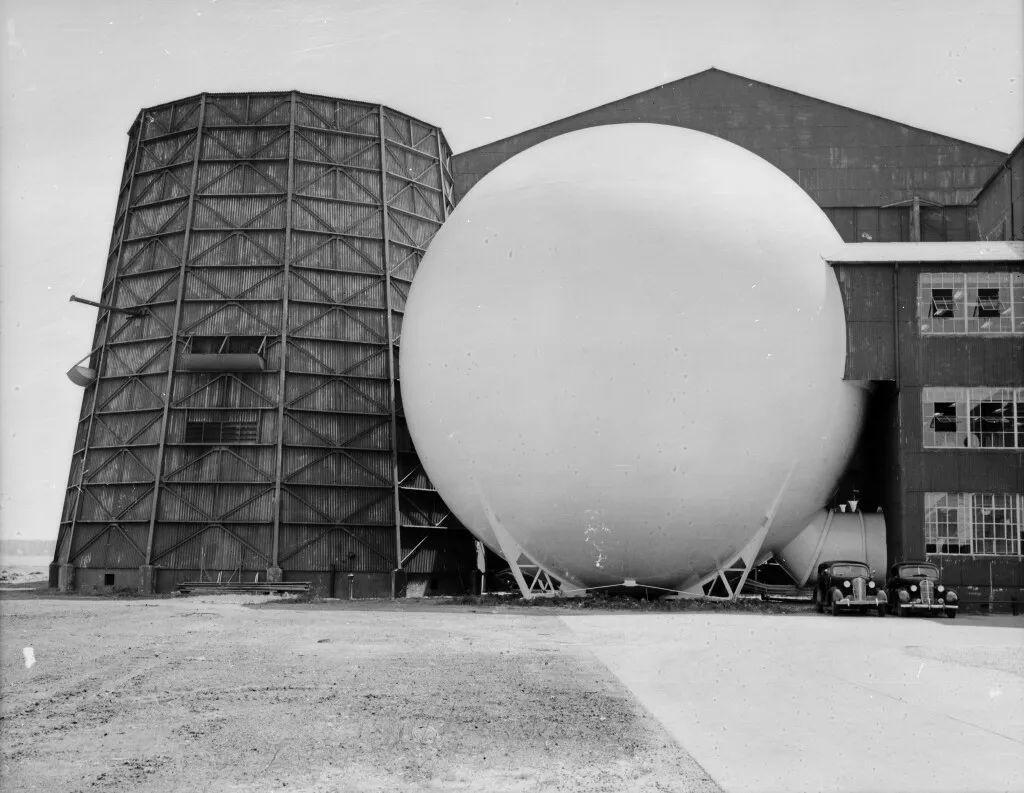
The FDRF also replaces Langley’s 12-Foot Low-Speed Tunnel, which began operating in 1939.
It was built for the National Advisory Committee for Aeronautics, or NACA, the organisation that existed before NASA was created in 1958.
Even by today’s standards, the original design was unusual.
The test area was housed inside a sphere 60 feet in diameter. Small aircraft models flew freely rather than being fixed to supports. Several people operated remote controls to fly them.
The tunnel itself could even be moved to follow the model. Hydraulic equipment allowed its test section to pivot as the model changed direction.
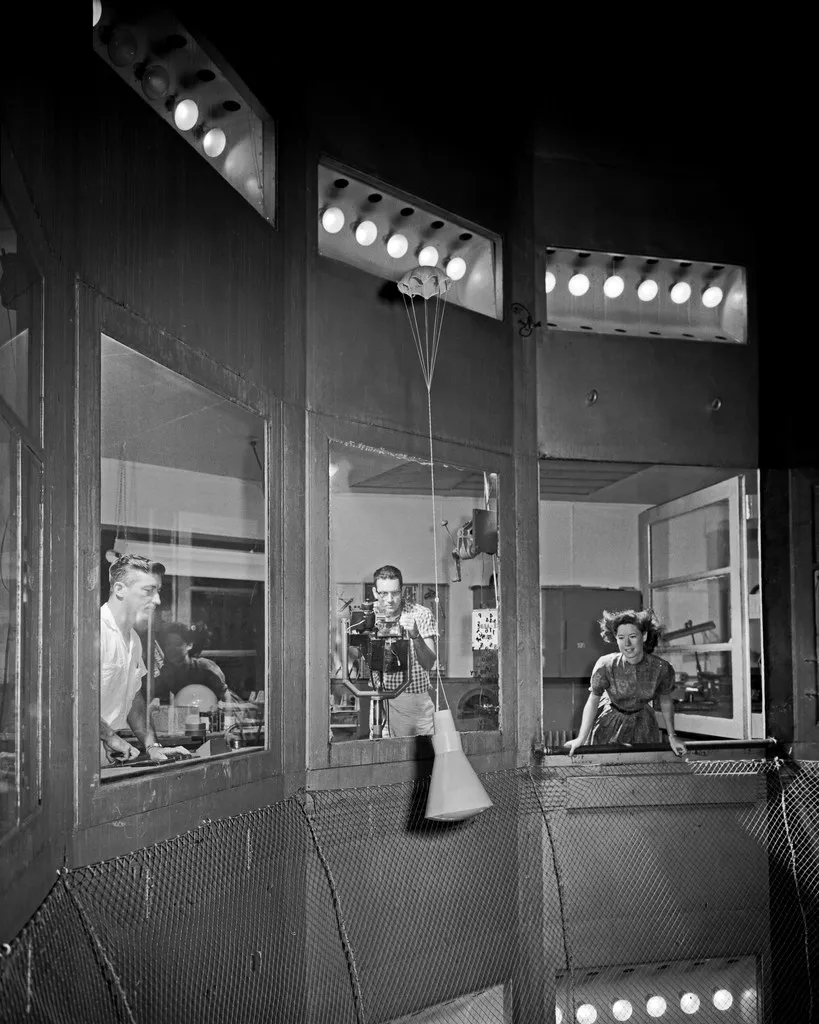
The facility was later converted for more conventional wind tunnel work and remained in service for 86 years.
Think about what happened to aviation during that lifetime. The tunnel began work when piston-powered aircraft dominated the skies. It remained useful through the arrival of jets, supersonic flight and increasingly unusual experimental aircraft.
Models tested there included the X-29, famous for wings that swept forward rather than backwards, and the X-31 experimental aircraft.
More recently, it supported work on NASA’s X-59, an experimental aircraft intended to demonstrate quieter supersonic flight, and on the aeroshell connected with Dragonfly, NASA’s planned rotorcraft mission to Saturn’s moon Titan.
The 12-Foot tunnel finally closed in 2025. NASA has carried some of that history into its replacement.
Major test rigs, instruments and data systems from the older facilities were reused in the FDRF, which NASA says reduced both cost and development time.
How wind tunnel models predict real aircraft performance
Testing a model creates another obvious question. How can a small aircraft tell engineers what a much larger one will do?
It is not as simple as building a miniature aircraft and placing it in front of a fan. The air around the model has to behave in a way that represents the air around the real vehicle. Speed is one part of that. Air density and the size of the model also matter.
Engineers use several measurements to make sure the comparison works. One is Mach number, which simply relates the speed of an object to the speed of sound.
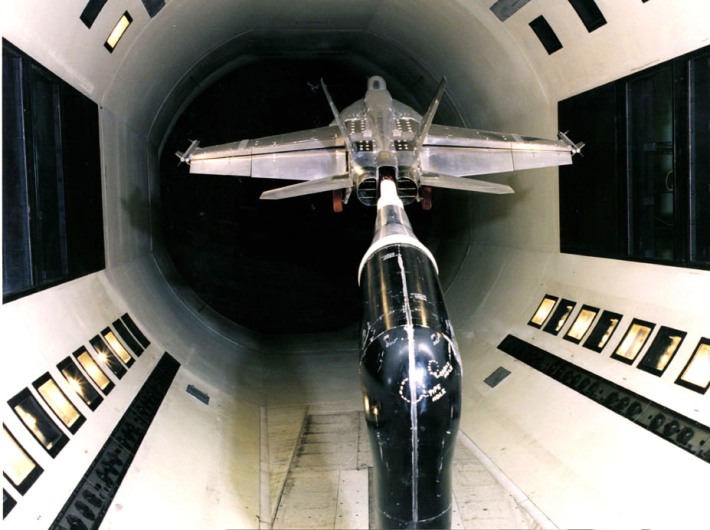
Another is Reynolds number. The mathematics behind it is complicated, but what engineers are trying to establish is much easier to understand: does the air flowing around this small model behave closely enough to the air around the real aircraft for the test to tell us something useful?
NASA says matching these conditions is necessary if engineers are to use measurements from a model to predict what will happen to the full-size aircraft.
Size therefore matters. A larger test chamber allows larger models to be used. They can include more detail and carry more instruments. There is also more space for air to move around them without the tunnel walls interfering as much with the airflow. The FDRF’s 20-foot-wide chamber gives NASA that extra room.
Testing spacecraft entry and landing in a wind tunnel
The new tunnel is not only about aeroplanes. NASA also plans to use it for spacecraft. That may sound strange. Space is a vacuum, so why put a spacecraft in a wind tunnel?
Because spacecraft do not spend their entire journey in space.
A vehicle returning to Earth eventually meets the atmosphere. As it descends, air begins acting on it. The vehicle must remain stable and eventually slow enough to land safely.
Other worlds present similar problems. Mars has an atmosphere, although much thinner than Earth’s. Venus has an extremely dense one. Saturn’s moon Titan also has a substantial atmosphere.
A vehicle sent to any of these destinations may have to fly or descend through gas before reaching the surface. The FDRF allows researchers to study how models behave during parts of that journey.
NASA expects it to support research into entry, descent and landing technologies. That includes work connected with Artemis as the agency develops systems for returning astronauts safely to Earth.
NASA also expects research in the tunnel to support future science missions to places including Venus and Titan.
Parachutes can be studied there too. So can drones, autonomous aircraft, experimental X-planes and other new vehicles whose shapes or ways of flying may be very different from today’s conventional aircraft.
Why not use a computer?
This brings us back to the question that makes NASA’s new facility interesting in 2026.
Wind tunnels versus computational fluid dynamics
Aircraft manufacturers already use powerful computers to simulate air moving around an aircraft. The technique is known as computational fluid dynamics, or CFD.
Instead of putting a physical model into moving air, engineers create the aircraft and the airflow mathematically.
It has transformed aircraft design. An engineer can change the shape of a wing on a computer and run another simulation without manufacturing a new model. Thousands of possible designs can be studied before engineers decide which are worth building.
But the computer is still calculating what should happen according to the mathematical model it has been given.
Air may move smoothly over one part of an aircraft and become turbulent over another. It can separate from a wing. An aircraft can turn, roll and spin while all of this is happening at once.
A physical wind tunnel gives engineers something valuable: a real flow of air around a real object.
That does not mean wind tunnels are better than computers, or that computers have made wind tunnels less useful. Modern aircraft development uses both.
Engineers can run computer simulations first. Those simulations help them understand a design and decide what needs to be tested physically.
NASA’s new wind tunnel builds on 80 years of research
NASA began considering the concept that eventually became the FDRF around three decades ago.
Fremaux said seeing the facility come to life was the culmination of about 30 years of work by teams at Langley. The long gestation makes more sense when set against the lifespan of the facilities it replaces. The 12-Foot Low-Speed Tunnel served for 86 years. The Vertical Spin Tunnel dates from 1941. A major wind tunnel can therefore outlive several generations of aircraft.
Fremaux argues that the real inheritance is not simply machinery. “That’s what kept those other facilities going,” he said. “Not just the buildings, the fans, and the motors, but also the expertise associated with those facilities. You can’t have one without the other.”
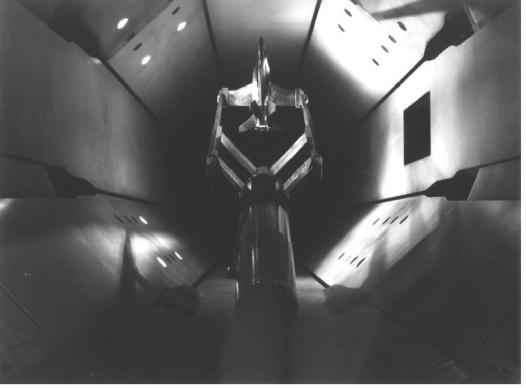
That expertise now has a new home. The aircraft going into the FDRF will look very different from the models tested at Langley in 1939. Some may fly without pilots. Others may eventually travel to another world.
Yet the question NASA wants the tunnel to answer remains remarkably simple. Before an aircraft or spacecraft meets the real atmosphere, what is the air going to do to it?
Sign up for our newsletter and get our latest content in your inbox.


More from

October 11, 20263 min read