


Ukraine unveils Magura MV11 drone mothership built to carry the fight far out to sea

5 min read
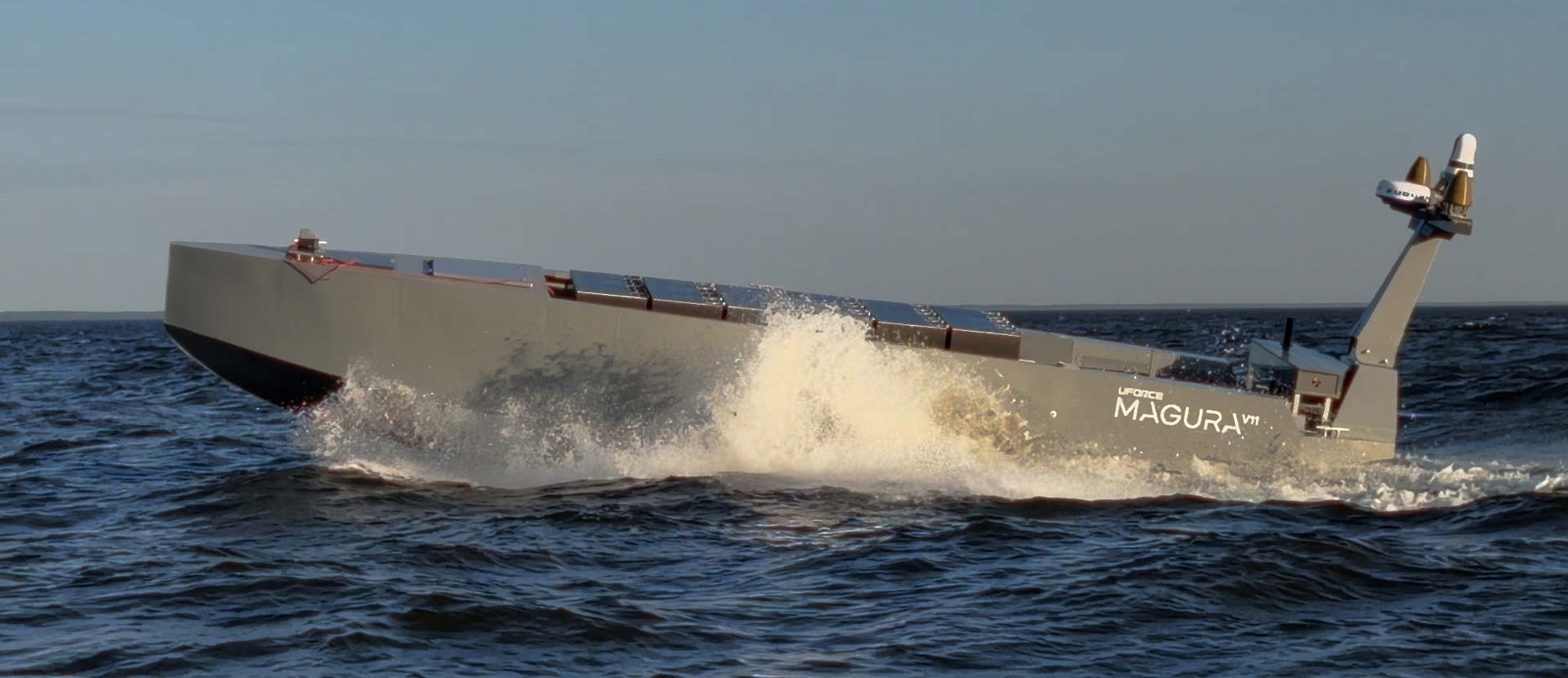
Ukraine has unveiled a new Magura unmanned surface vessel that can carry and launch other drones at sea, giving the combat-proven family a new role as a maritime mothership.
The Magura MV11, developed by UFORCE, made its public debut during Ukraine’s Independence Day unmanned systems parade on the Dnipro River in Kyiv on August 24. Unlike the smaller Maguras that made their name attacking Russian warships, the new vessel has been designed primarily as a carrier and transport platform, with a payload of up to 2,200kg and endurance of as much as seven days.
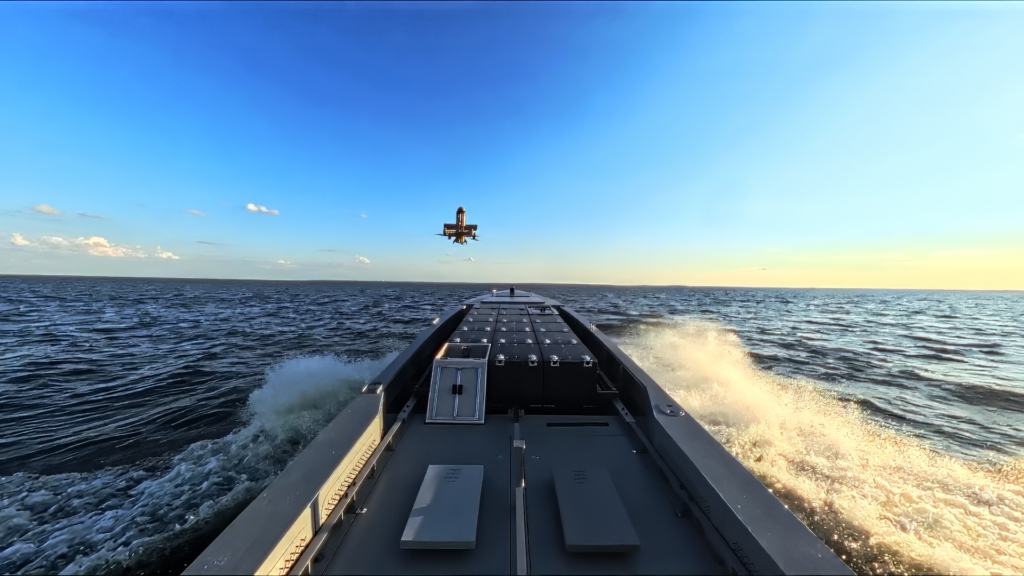
UFORCE says the MV11 can deliver and launch aerial and other unmanned systems at sea, conduct reconnaissance and surveillance, support amphibious operations and carry fuel and equipment to other unmanned surface vessels.
Its arrival marks a significant expansion of a Magura concept that has evolved rapidly during the war, from explosive-laden attack boats into armed, reusable platforms capable of carrying missiles and launching aerial drones.
A 12-metre carrier designed for operations beyond coastal waters
The MV11 is substantially larger than previous members of the Magura family. UFORCE gives an overall length of up to 12 metres and a beam of 3.5 metres, with 10 cubic metres of available payload space.
The company describes it as an ocean-going vessel rather than a coastal USV. Its stated range exceeds 2,000 nautical miles, while its seven-day endurance allows it to remain at sea considerably longer than the smaller strike craft from which the Magura programme emerged.
That extra volume and payload capacity are central to the design. Images released by UFORCE show a long, largely flat working deck divided into enclosed sections, allowing equipment or smaller unmanned systems to be carried behind protective doors before deployment.
The MV11 was developed by UFORCE’s design and research and development bureau in Portugal with international investment. The company says lessons from operating its Portuguese-built MV7 in Atlantic conditions were incorporated into the new design.
UFORCE, which was founded in Ukraine and has its main headquarters in London, operates a number of unmanned systems businesses, while the Magura design and R&D operation is based in Portugal.
The company has not disclosed when the development of the MV11 began or how many vessels have been built.
MV11 shown carrying 18 Sting drone interceptors
One of the most striking configurations shown so far turns the MV11 into a mobile counter-drone platform.
The vessel has been displayed carrying 18 Sting aerial interceptors in individual box launchers. Developed by Ukraine’s Wild Hornets, Sting is an electrically powered quadcopter carrying a small explosive warhead and is intended primarily to intercept one-way attack drones.
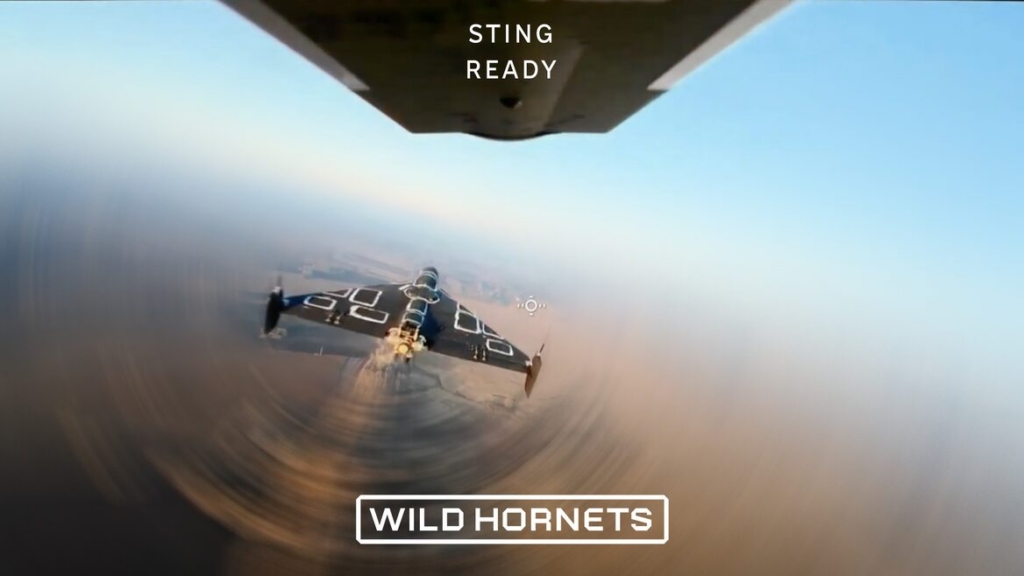
Wild Hornets gives Sting a maximum altitude of almost 23,000ft and a range of around 23 miles, although actual performance varies with battery capacity, weather, payload and the way it is flown. The interceptor has already been used against Russian versions and derivatives of the Iranian-designed Shahed-136.
The interceptors are currently controlled by a human operator over a wireless link. Wild Hornets has previously said operators can control them from locations as far as 2,000km from the launch point using a laptop-based interface.
Precisely how that control architecture has been integrated with the MV11 has not been disclosed.
Images of the vessel show a mast carrying a camera turret, navigation radar and additional antennas. A fixed forward-looking camera is mounted above the bow, while what appear to be two satellite communications terminals are positioned around the main deck.
UFORCE has outlined a more heavily equipped air-defence configuration combining several dozen aerial interceptors with a gyro-stabilised 12.7mm weapon station and sensors for radar surveillance and target tracking. The company says the configuration is intended to protect coastal areas and straits against aerial and unmanned threats.
Drone-launching concept has already been tested at sea
The idea of launching aircraft from a Magura is not confined to the MV11.
UFORCE released footage in March showing a Magura-type USV launching an aerial interceptor from a container installed on its deck. The aircraft emerged directly from the launcher while the vessel was at sea, demonstrating one of the concepts now incorporated on a much larger scale into the MV11.
Ukraine has also begun using Maguras as launch platforms for FPV attack drones. In early August, Ukrainian military intelligence said FPV aircraft launched from Maguras off Crimea attacked two Russian S-400 air-defence launchers and a radar protecting the peninsula’s southern coast.
UFORCE has not disclosed how many aerial drones an MV11 can carry. One outside estimate by the Kyiv Post suggested its deck could potentially accommodate 20 to 40 FPV drones for a single launch wave, but the publication stressed that the actual capacity remains unknown.
The vessel’s 2,200kg payload also leaves room for configurations that have little to do with launching aircraft. UFORCE lists reconnaissance, surveillance, amphibious support and logistics among the planned missions, including carrying fuel and equipment for other USVs.
“We are proud to present the MV11 on Ukraine’s Independence Day,” UFORCE chief executive Oleg Rogynskyy said. “This is not just the largest naval drone — it is a platform that delivers multi-domain capability: a single carrier that transports and launches other unmanned systems far from shore.”
Magura has moved far beyond its original strike role
The MV11 joins a family that has undergone unusually rapid development under combat conditions.
Magura vessels first appeared publicly in 2023 and initially became known as explosive attack craft used against Russia’s Black Sea Fleet. UFORCE says the family has been involved in the destruction of at least 12 Russian vessels.
Ukraine subsequently began adding weapons to the boats rather than treating the vessels themselves as expendable munitions.
In May 2025, Maguras equipped with air-to-air missiles were deployed against Russian aircraft. Ukrainian sources subsequently reported that helicopters had been shot down by missile-armed sea drones, demonstrating that the USV could function as an armed platform rather than simply carrying an explosive charge towards a target.
The emergence of aerial-drone launchers extended that progression further. The MV11 now brings the various strands together on a hull large enough to remain at sea for days while carrying substantial mission equipment.
UFORCE is also preparing to take the Magura family beyond Ukrainian production. In July, the company signed a memorandum of understanding with US boatbuilder ReconCraft covering licensed production in Oregon and South Carolina.
Under the proposed arrangement, ReconCraft would provide manufacturing capacity while UFORCE supplies software, guidance systems and command-and-control technology.
UFORCE has not disclosed when the MV11 will enter operational service or whether the vessel displayed in Kyiv has already been deployed on combat missions.
Sign up for our newsletter and get our latest content in your inbox.


More from


August 16, 20265 min read


