


What happens when a fighter pilot ejects from an aircraft?

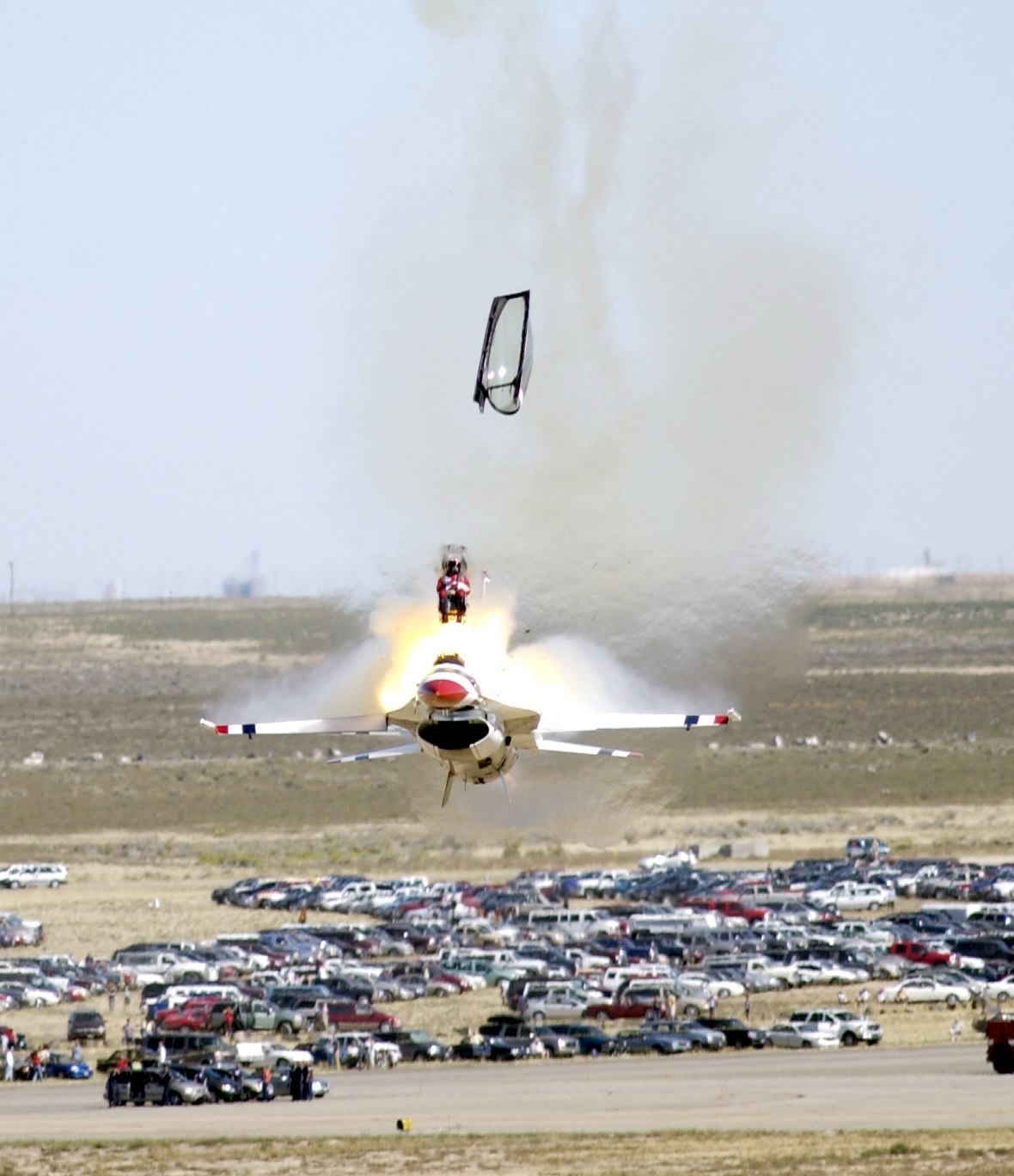
When a fighter pilot pulls the ejection handle, there is no graceful escape plan. It really is a last resort.
In a matter of seconds, a carefully choreographed sequence of canopy removal, rockets, parachutes and restraints has to turn a catastrophic aircraft emergency into a survivable descent.
Ejection seats nowadays are really complete escape systems. To give some examples, the Martin-Baker US16E is used in all variants of the F-35 Lightning II, while its US18E serves the F-16 and the Mk16A is fitted to the Eurofighter Typhoon.
The US Navy uses the Martin Baker MK 14 NACES (Navy Aircrew Common Ejection Seat) in their F/A-18, E/A-18G Growler and T-45 Goshawk jets.
How fighter pilots clear the canopy before ejection
The first problem is obvious: the pilot cannot eject through a solid canopy.
On many fighter jets, the sequence begins by jettisoning the canopy. In Martin-Baker systems, rocket motors can propel it above and behind the aircraft.
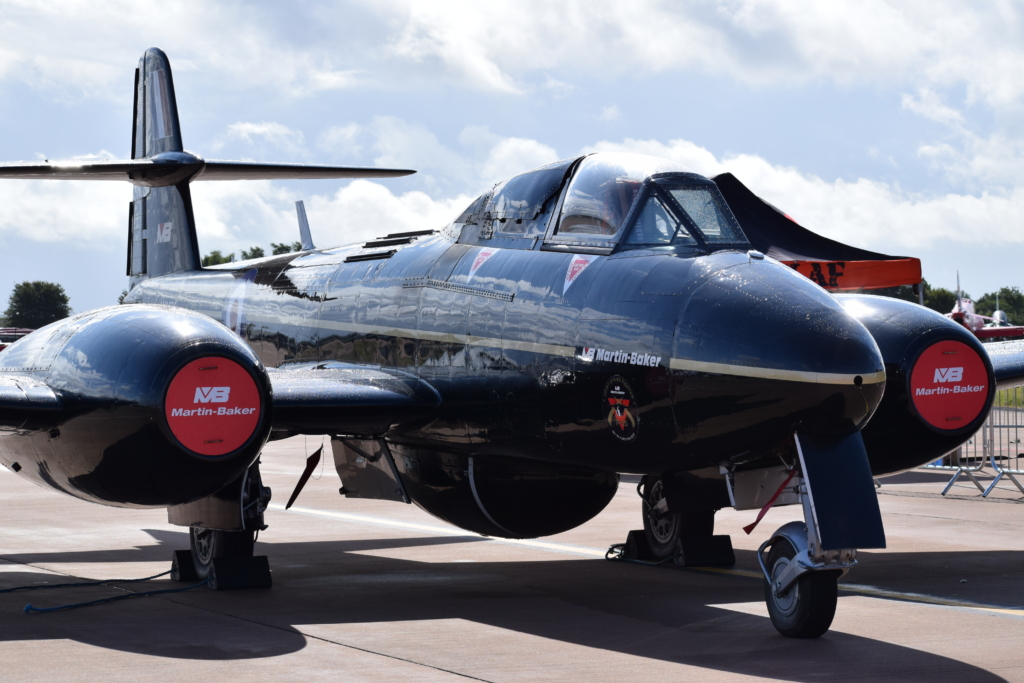
Some aircraft also use explosive cord to weaken or fracture the canopy, providing another route out if necessary.
Timing is crucial here. The seat cannot safely launch until there is a clear escape path, but waiting too long could mean losing the only chance to survive.
How ejection seats launch pilots clear of the aircraft
Once the explosive cord called MDC (Miniature Detonating Cord) is triggered, a gas-powered catapult fires the ejector seat up its cockpit rails. That initial launch gets the pilot moving, but then it’s time to add rocket power.
An under-seat rocket motor increases the seat’s altitude and helps separate it from the aircraft. This is what gives many modern systems their “zero-zero” capability.
A zero-zero seat works at zero altitude and zero airspeed. So, a pilot could eject if they see another aircraft about to crash into them on the ground or if they are on fire. Older seats used to have a minimum forward speed of 90kts.
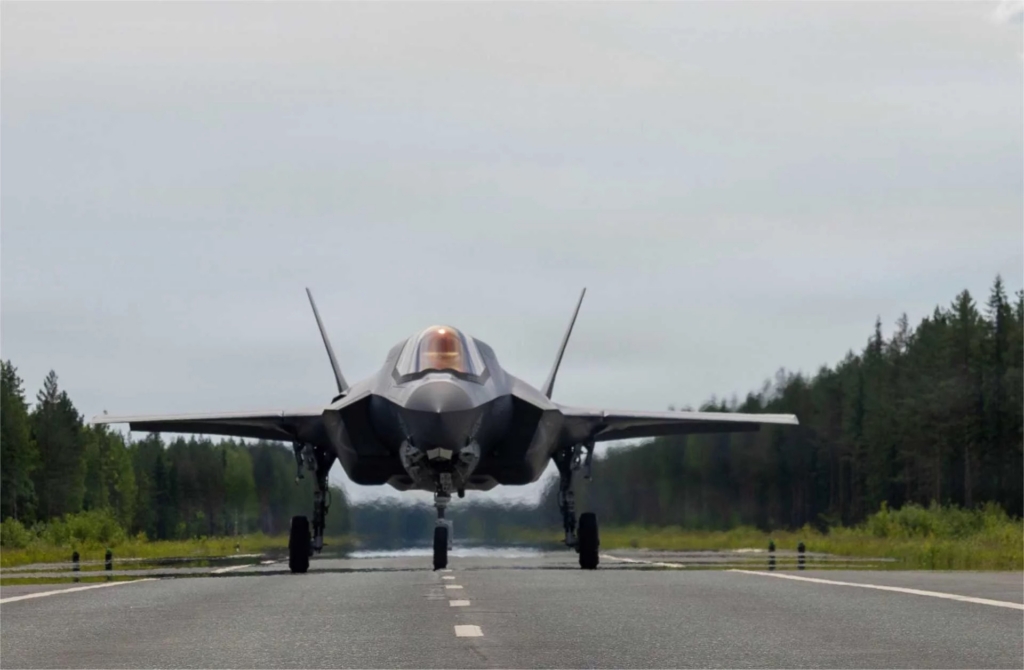
The F-35B vertical take-off/landing variant is equipped with an automatic ejection seat system that activates under certain conditions, allowing the aircraft to eject the pilot without manual intervention.
What happens to the pilot during ejection?
The human body is the most vulnerable part of the whole process. An ejection exposes the pilot to violent acceleration, rapid changes in direction and, at high speed, potentially punishing aerodynamic loads.
The seat therefore restrains the pilot tightly. Harnesses secure the torso, while leg restraints pull the lower limbs into a safer position. Some seats also incorporate systems designed to protect the arms, head and neck.
The forces involved can be extreme. Safran Martin-Baker’s Mk10, used in aircraft including the Mirage 2000 and Alpha Jet, specifies acceleration of a fully equipped 85kg pilot at less than 16g.
In other words, for a brief period the pilot can experience forces equivalent to many times their normal body weight.
Real fighter pilot ejections that saved lives
The technology has been tested in some remarkably unforgiving circumstances.
On 29 August 1951, RAAF Meteor pilot Ron Guthrie was hit by gunfire during combat over Korea and lost control of his aircraft. He ejected from 36,600 feet, making the first combat use of a Martin-Baker seat.
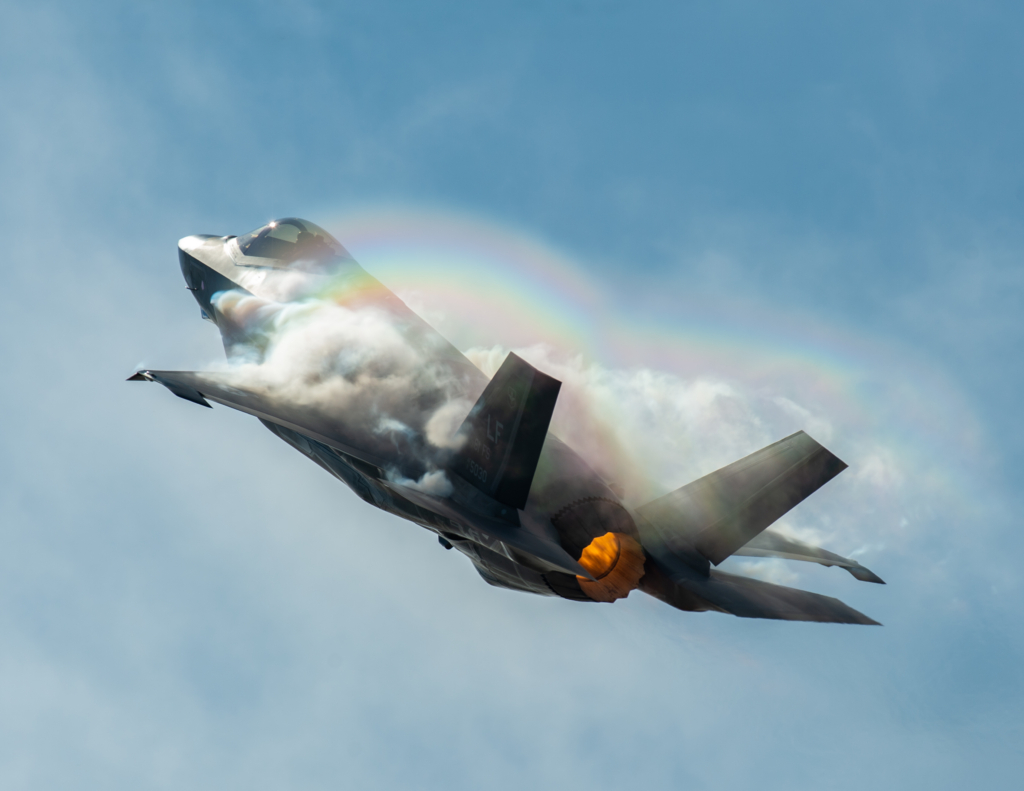
The same principle is still being demonstrated today. On 31 March 2026, a US Air Force F-35A crashed during a training mission over Nevada. The pilot successfully ejected using the Martin-Baker US16E.
Martin-Baker seats have saved 7,826 lives so far (and this total increases regularly).
What happens after a fighter pilot ejects?
After the seat leaves the aircraft, a drogue parachute stabilises it. The system then decides when conditions are suitable for the main parachute to deploy and for the pilot to separate from the seat.
The entire process can happen astonishingly quickly. Martin-Baker’s sequence shows the main parachute deploying around 1.5 seconds after seat initiation, with seat separation around two seconds and full parachute inflation at roughly 2.5 seconds.
Survival equipment then becomes important. Depending on the system, the pilot can have emergency oxygen, a survival pack, rescue beacon and even an automatically deployed life raft. With a bit of luck, the descent to the ground should then be smooth.
An ejection is therefore much more than firing a chair into the sky. It is a tightly timed escape system designed for when a fighter is no longer flyable. The pilot may have only seconds to get out but it’s their very best chance of survival.


