


From golf balls to lunar rovers: Everything humans have left on the Moon

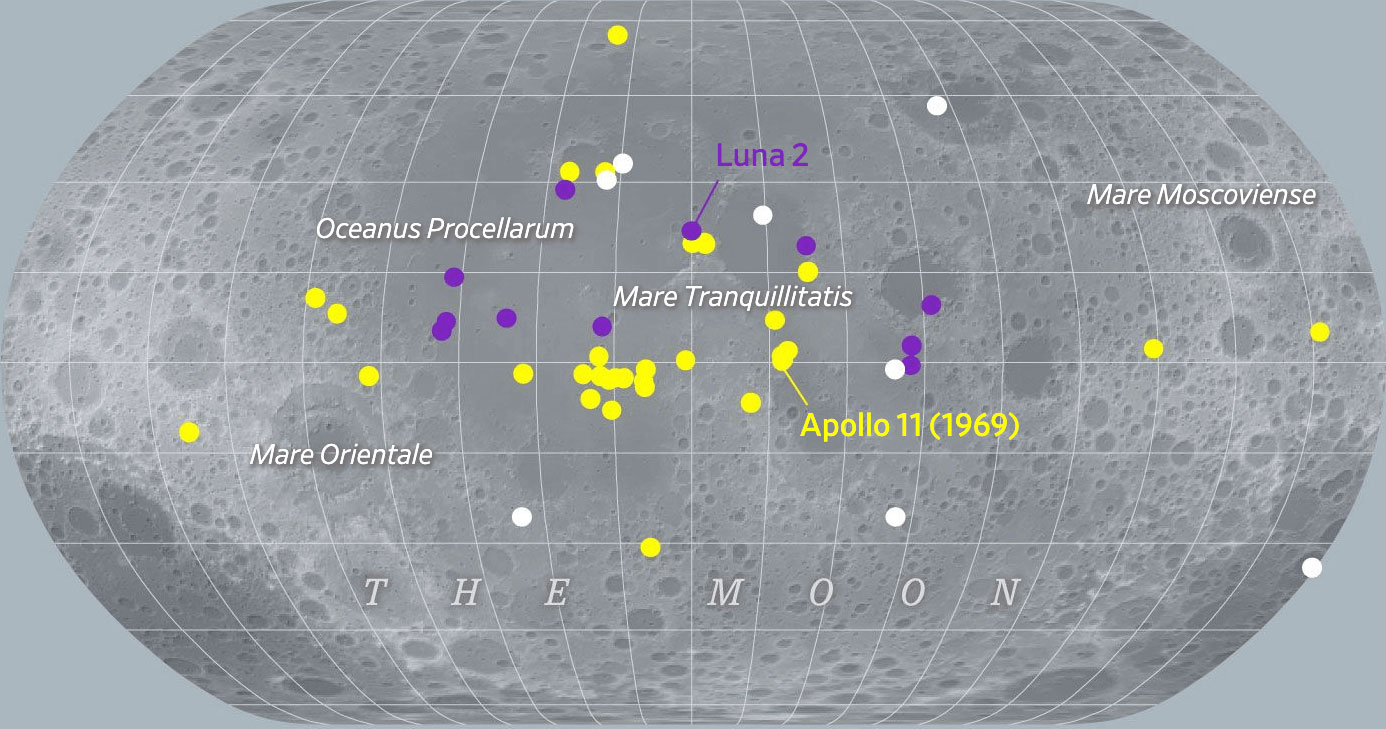
When the upper stage of a SpaceX Falcon 9 rocket struck the Moon on 5 August, it became the latest human-made object to reach the lunar surface. Travelling at more than 5,000mph, the discarded rocket was expected to carve out a fresh impact near the Einstein and Bell craters, adding one more chapter to humanity’s growing presence on Earth’s closest neighbour.
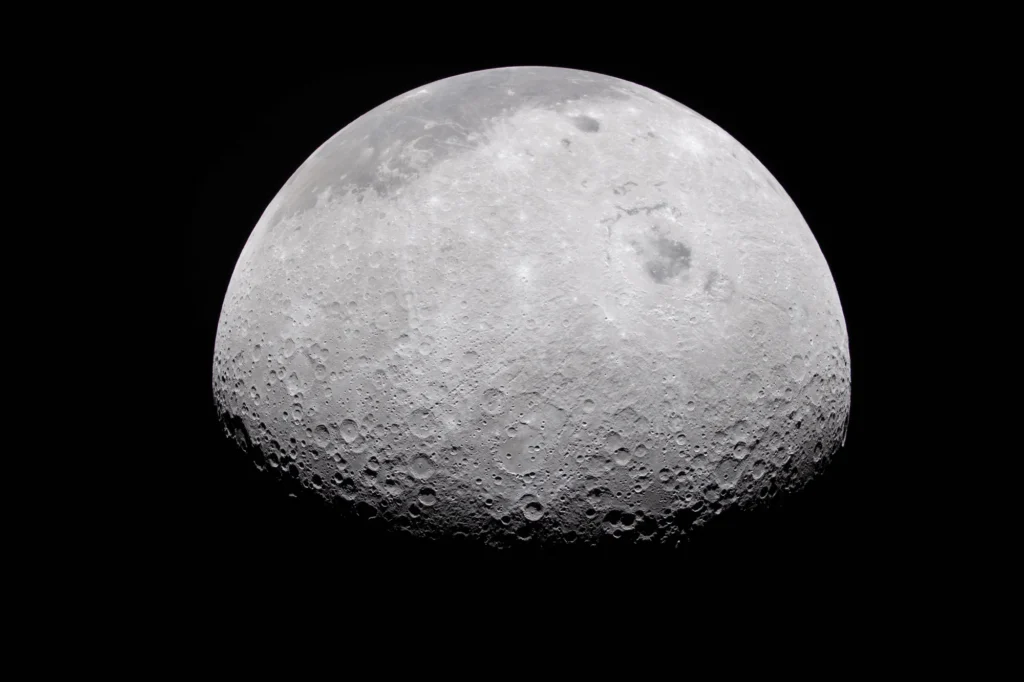
Yet the impact was remarkable for another reason. It reminded us that the Moon is no longer an untouched world.
Long before the Falcon 9 stage arrived, humans had already transformed parts of the lunar surface into an extraordinary archive of exploration.
Scattered across its grey plains are abandoned spacecraft, scientific experiments, lunar rovers, memorials, flags, golf balls, family photographs, artworks and even bags of human waste. Each object tells a story, not only about space exploration, but about the people who left them behind.
Today, scientists estimate that humans have deposited hundreds of thousands of pounds of material on the Moon over more than six decades of exploration. Much of it was never meant to be recovered. Instead, it remains exactly where it was left, preserved in a world with virtually no atmosphere, no rain and no wind to erase its history.
The Moon became a museum without anyone planning it
Unlike museums on Earth, there are no display cases, security guards or opening hours.
The exhibits are spread across thousands of kilometres, frozen in time exactly as astronauts and spacecraft left them.
Some arrived deliberately. Others were abandoned out of necessity. A few were simply forgotten.
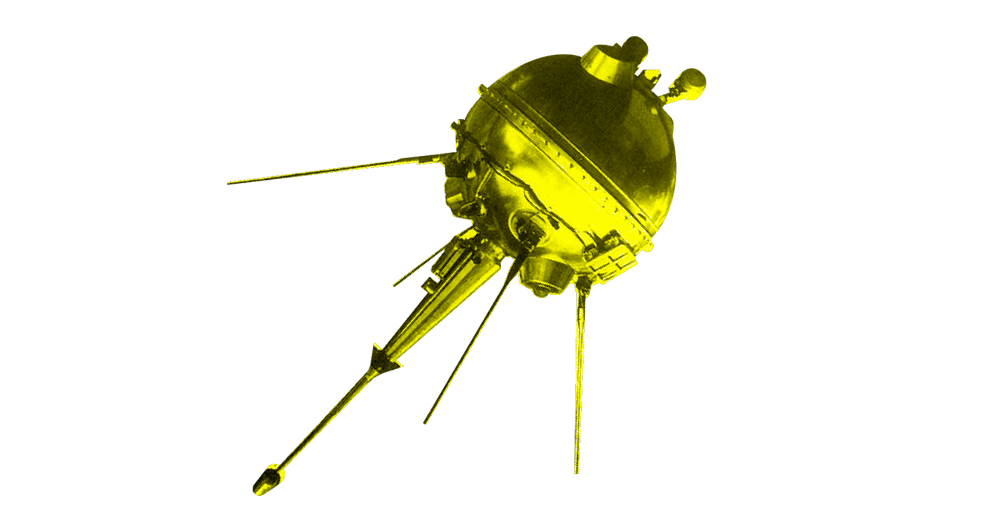
Since the Soviet Union’s Luna 2 became the first human-made object to reach the Moon in 1959, dozens of robotic spacecraft have landed, crashed or completed their missions there. Then came the Apollo era, when six successful crewed landings between 1969 and 1972 added not only astronauts but an astonishing collection of equipment, experiments and personal mementoes.
Perhaps surprisingly, the biggest contributors are not souvenirs or scientific instruments. They are spacecraft.
More than 70 spacecraft and vehicles remain on the Moon because bringing them home would have added enormous cost and complexity. Together they account for most of the material humans have left on the lunar surface.
Why did Apollo astronauts leave equipment on the Moon?
To many people, leaving equipment on another world seems wasteful. For Apollo crews, it was basic physics.
Every kilogram carried back to Earth meant one kilogram less that could be devoted to precious lunar rocks and soil.
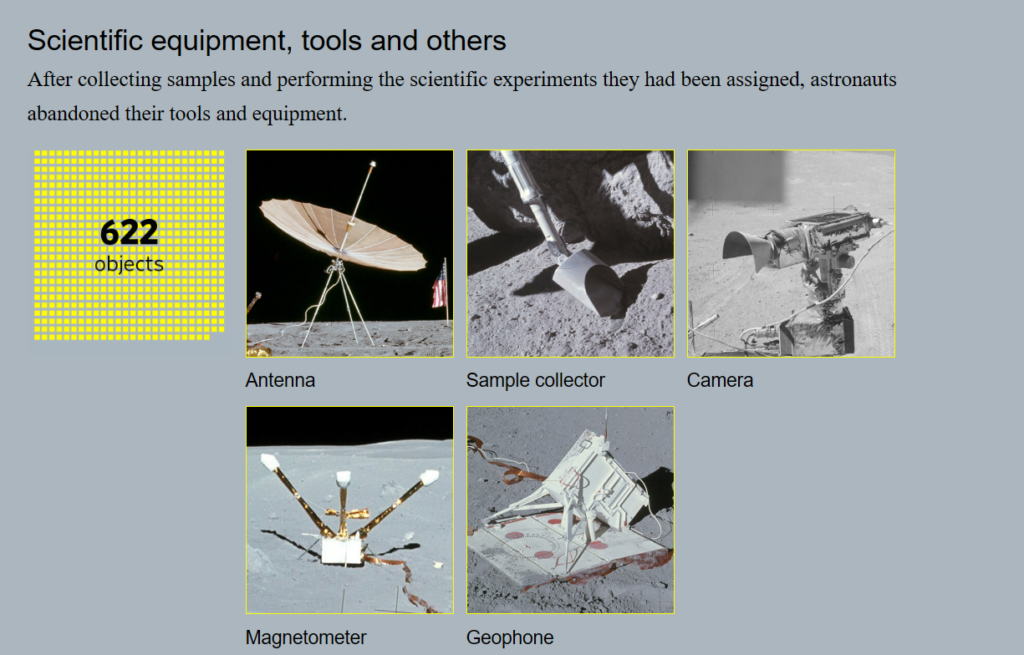
Before leaving the surface, astronauts routinely emptied their lunar modules of anything they no longer needed. Television cameras, empty equipment containers, tools, sample scoops, packaging and other hardware were discarded in carefully chosen areas that became known as “toss zones”.
The objective was simple: lighten the spacecraft so it could lift off safely while bringing home as many geological samples as possible.
The decision paid off.
Across the Apollo programme, astronauts returned around 850 pounds (386kg) of Moon rocks and lunar soil, material that continues to underpin lunar science more than half a century later. In many ways, every discarded object bought scientists another piece of the Moon.
Which spacecraft and vehicles remain on the Moon?
Walk across one of the Apollo landing sites today and the largest structures would still dominate the landscape.
The lower descent stages of the lunar modules remain exactly where astronauts climbed aboard for their journey home. They still stand on their four landing legs, silent reminders of humanity’s first visits to another world.
Nearby sit the Lunar Roving Vehicles used during Apollo 15, 16 and 17. Designed to carry astronauts and equipment across rough terrain, the battery-powered vehicles dramatically expanded the distances crews could travel during their brief stays. Once the missions ended, there was no practical way to return them to Earth, so they remain parked where their final journeys ended.
Surrounding them are antennas, experiment packages, instrument pallets, cameras and cables that once turned the landing sites into temporary scientific field stations. Many robotic spacecraft met a similar fate.
Some made controlled landings. Others crashed intentionally after completing their missions. Several Soviet Luna spacecraft, Surveyor landers and more recent robotic explorers remain scattered across different regions of the Moon, each marking a different chapter in the history of lunar exploration.
Not everything left behind was meant to stay forever
One of the most overlooked collections on the Moon isn’t made of metal. It’s made of science.
The Apollo astronauts installed instruments that continued working long after they had returned to Earth. These experiments measured moonquakes, monitored the lunar environment and helped scientists understand what lay beneath the surface.
Rather than dismantling them, crews left the equipment operating, turning the landing sites into the first long-term scientific observatories established on another celestial body.
Those instruments demonstrated that the Moon was not simply a destination to visit. It was a laboratory to study.
Many have now fallen silent, but they remain where they were deployed, still pointing skywards or anchored in the lunar dust exactly as astronauts positioned them decades ago.
More than machines
It would be easy to think the Moon is littered only with hardware. It isn’t.
As the Apollo programme progressed, astronauts began leaving objects that had little scientific value but enormous human meaning. Some honoured friends. Some remembered colleagues who never came home.
Others simply reflected the fact that, even on another world, people remain people. That is where the Moon’s story becomes far more personal.
What memorials have humans left on the Moon?
Not everything left on the Moon was designed to collect data or survive the harsh lunar environment. Some objects were left simply because they mattered to the people who carried them there.
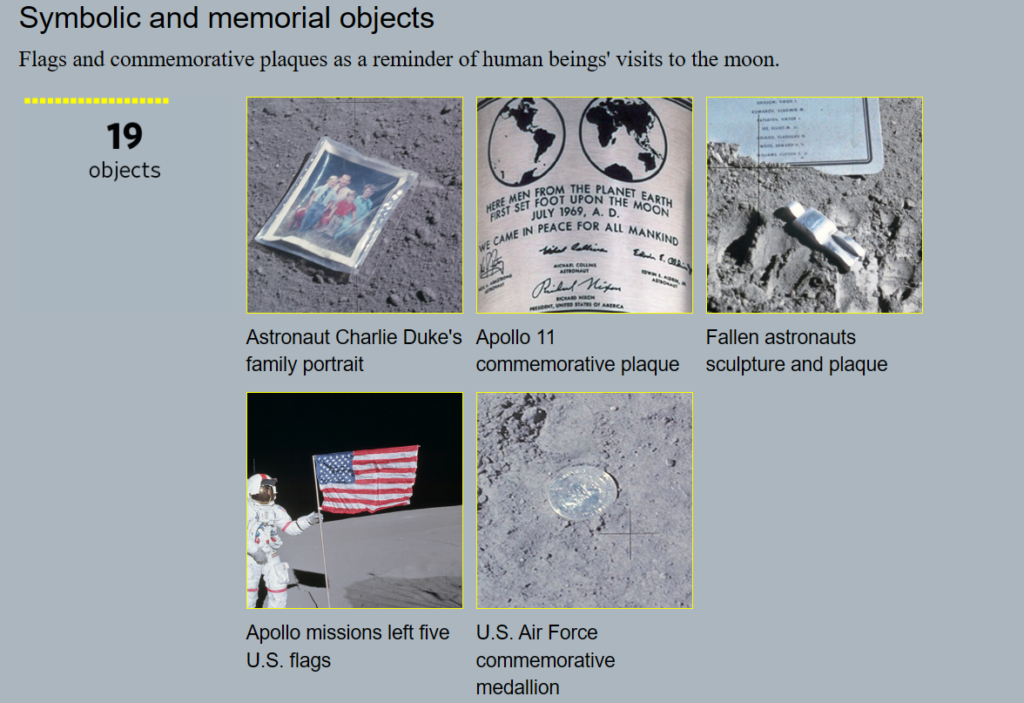
One of the first things visitors would notice at Tranquility Base is the stainless steel plaque attached to the leg of Apollo 11’s lunar module. It carries a message that has outlived the Cold War that inspired the race to the Moon: “Here men from the planet Earth first set foot upon the Moon, July 1969 A.D. We came in peace for all mankind.”
More than half a century later, the words remain one of the most enduring symbols of humanity’s first landing on another world.
Nearby, although invisible to the naked eye, lies one of the smallest diplomatic messages ever carried into space.
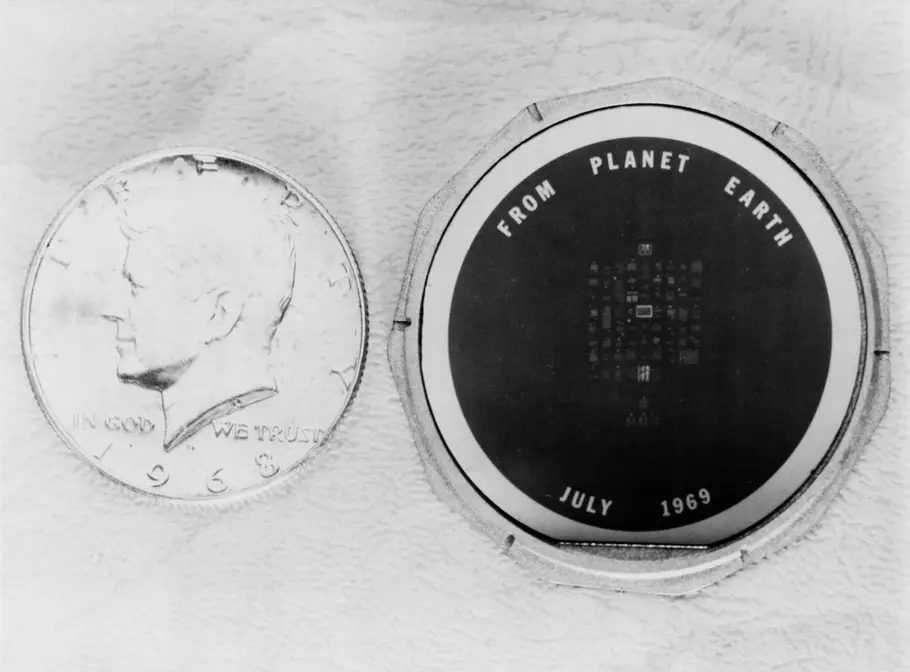
Apollo 11 astronauts left behind a tiny silicon disc containing goodwill messages from leaders of 73 countries, together with messages from US President Richard Nixon and Pope Paul VI. Barely larger than a coin, it was intended as a reminder that the mission belonged not only to one nation but to humanity as a whole.
How astronauts commemorated fallen space pioneers on the Moon
The Moon also became a place of remembrance.
The Apollo 11 crew carried two medals honouring Soviet cosmonauts Yuri Gagarin and Vladimir Komarov, both of whom lost their lives while helping pioneer human spaceflight. Leaving the medals on the Moon was a quiet gesture of respect at a time when the United States and the Soviet Union remained locked in intense political rivalry.
It acknowledged that, despite competing to reach the Moon first, the risks of exploration were shared by everyone who ventured into space.
A few years later, Apollo 15 astronauts left another memorial.
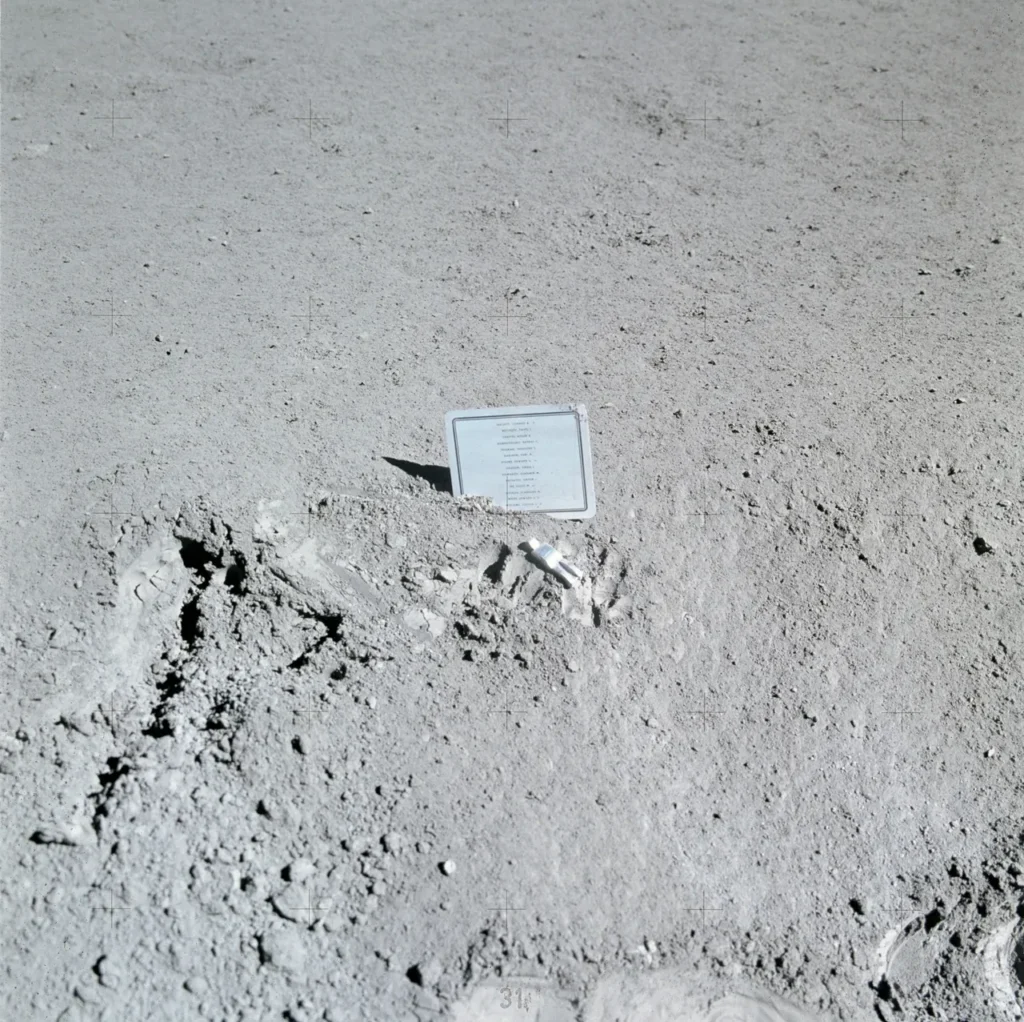
Known simply as Fallen Astronaut, it consists of a small aluminium figure placed on the lunar surface beside a plaque bearing the names of 14 American astronauts and Soviet cosmonauts who had died in the pursuit of space exploration.
Unlike monuments on Earth, it stands in complete silence, untouched by weather or time.
Why Charles Duke left a family photo on the Moon
Among all the scientific equipment and engineering achievements, perhaps the most personal object on the Moon is a family photograph.
During Apollo 16 in 1972, astronaut Charles Duke placed a framed picture of his wife and two sons on the lunar surface.
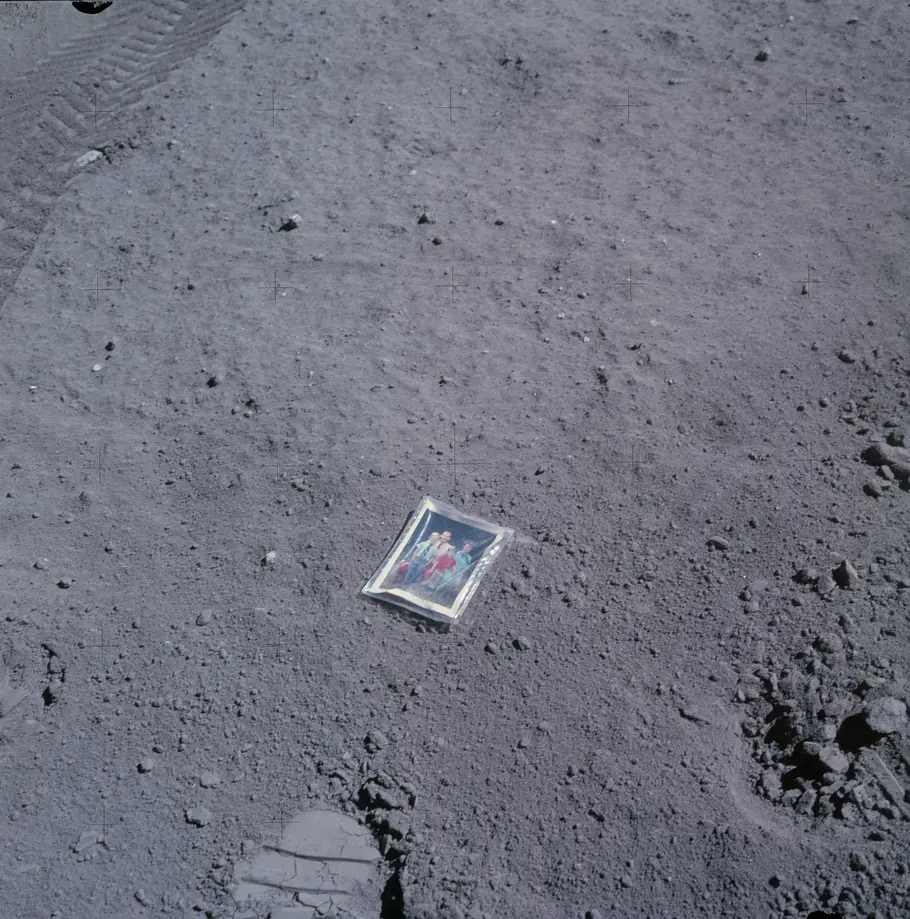
On the back he wrote: “This is the family of astronaut Charlie Duke from planet Earth who landed on the Moon on April 20, 1972.”
The photograph almost certainly no longer resembles the one Duke left behind. Decades of intense solar radiation are believed to have bleached the image almost completely white.
Yet the gesture itself survives as one of the most touching reminders that even while making history, astronauts were also husbands, fathers and sons.
Are the Apollo flags still flying on the Moon?
One of the best-known images from every Apollo landing is the American flag standing against the blackness of space.
But the flags were never designed to flutter. Because the Moon has virtually no atmosphere, there is no wind. Engineers solved the problem by fitting each flag with a horizontal metal support rod that held the fabric open, creating the illusion of movement seen in photographs.
Six flags were planted during the Apollo landings. Scientists believe years of exposure to intense ultraviolet radiation have probably faded their colours dramatically, even though they remain standing on the lunar surface. One flag has its own remarkable history.
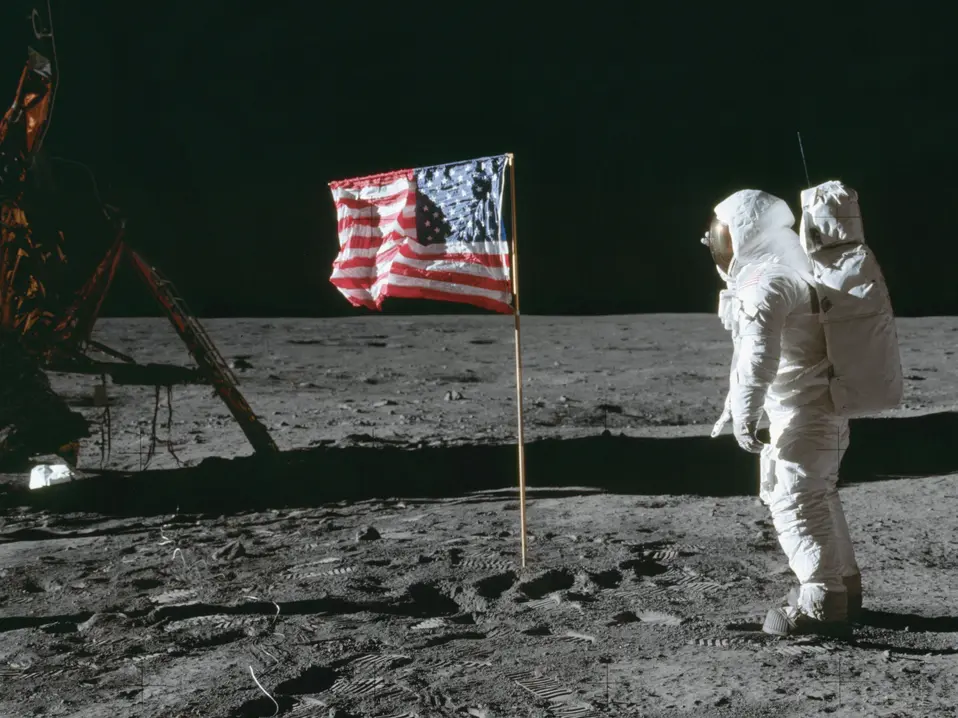
The Apollo 17 crew carried a replacement for a flag that had previously travelled to the Moon aboard Apollo 11 before being returned to Mission Control. To preserve that historic display, another flag completed the lunar journey instead.
Why are their golf balls on the moon?
Not everything left behind carried great scientific or historical importance. Sometimes astronauts simply allowed themselves a moment of fun.
During Apollo 14, commander Alan Shepard secretly carried the head of a modified six-iron golf club aboard the spacecraft. Standing on the Moon in his bulky spacesuit, he swung twice and sent two golf balls sailing across the low-gravity landscape. Both are still there.
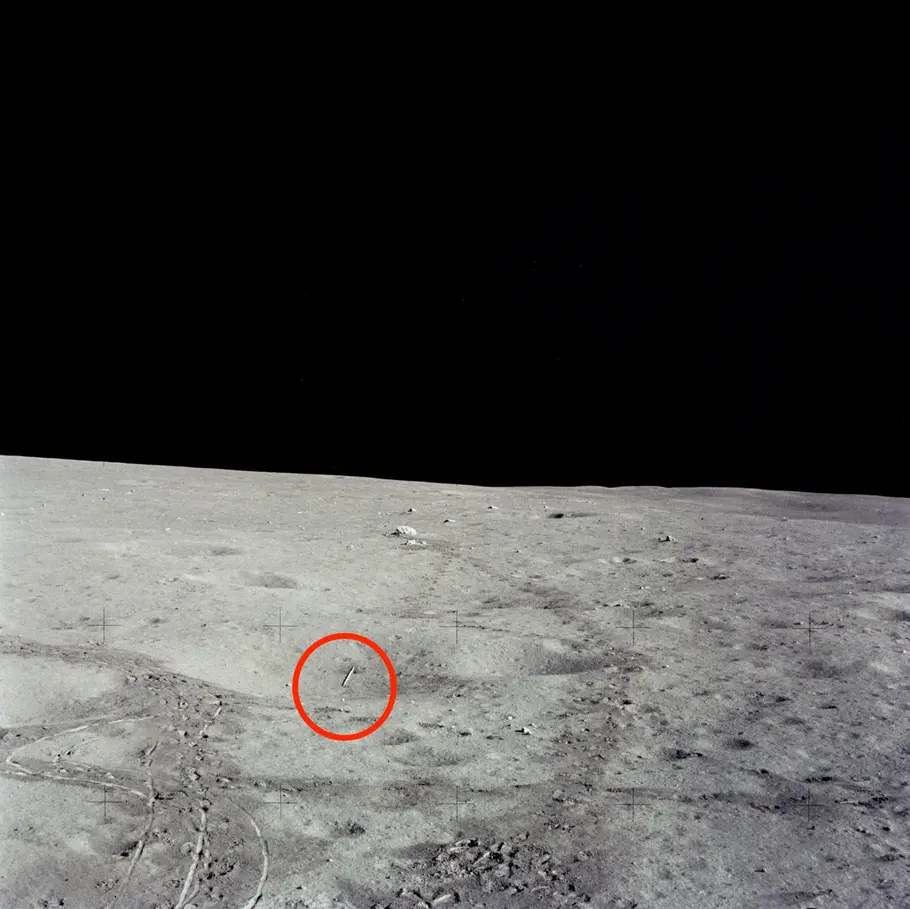
No one knows exactly where they came to rest, but they remain among the most unusual sporting relics anywhere in the Solar System.
The only person buried on the Moon
The Moon is also the final resting place of one remarkable scientist. In 1998, some of the ashes of planetary geologist Gene Shoemaker were carried aboard NASA’s Lunar Prospector spacecraft.
Shoemaker had spent much of his career studying impact craters and helped establish planetary geology as a scientific discipline. Although a medical condition prevented him from becoming an astronaut, he ultimately reached the Moon in another way.
To this day, he remains the only person whose ashes have been placed on the lunar surface.
Is there artwork on the Moon?
Perhaps the Moon’s most mysterious artefact is one that almost nobody can see.
Known as the Moon Museum, it is a tiny ceramic wafer carrying miniature artworks by six American artists, including Andy Warhol. The chip measures less than an inch across.
According to artist Forrest Myers, NASA never officially approved the idea, but an engineer involved with Apollo 12 is believed to have attached it discreetly to one of the lunar module’s legs before launch. If that account is correct, one of the world’s smallest art galleries has been sitting on the Moon for more than five decades.
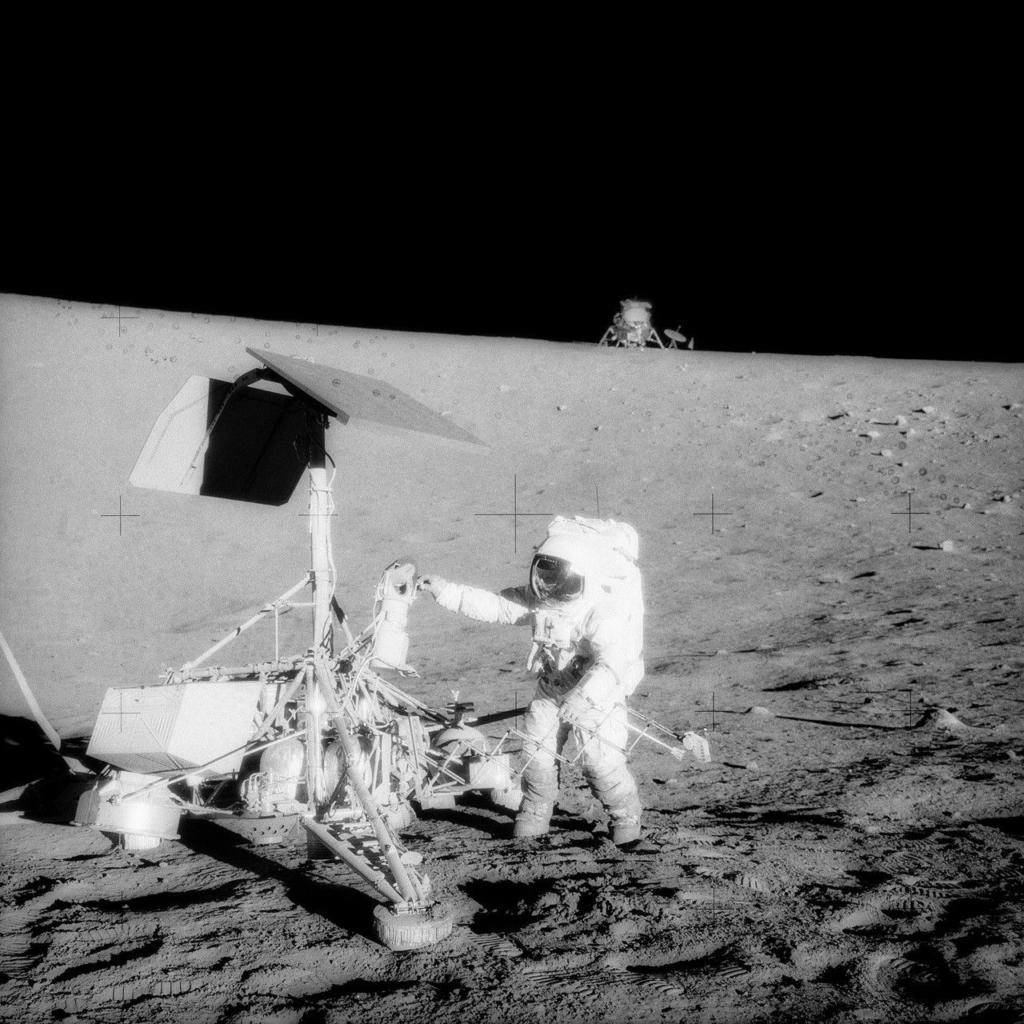
Taken together, these objects reveal a side of lunar exploration that mission reports rarely capture.
They remind us that the people who travelled nearly 400,000 kilometres to another world did not leave only machines behind. They also left memories, tributes, humour and pieces of themselves.
What everyday objects have astronauts left on the Moon?
Some objects on the Moon are surprisingly ordinary.
There are food wrappers, empty containers, storage bags, camera accessories, tools and pieces of clothing that once served a purpose for only a few hours before being abandoned in the lunar dust. On Earth they would have been rubbish. On the Moon, they have become part of history simply because nothing has disturbed them since they were left behind.
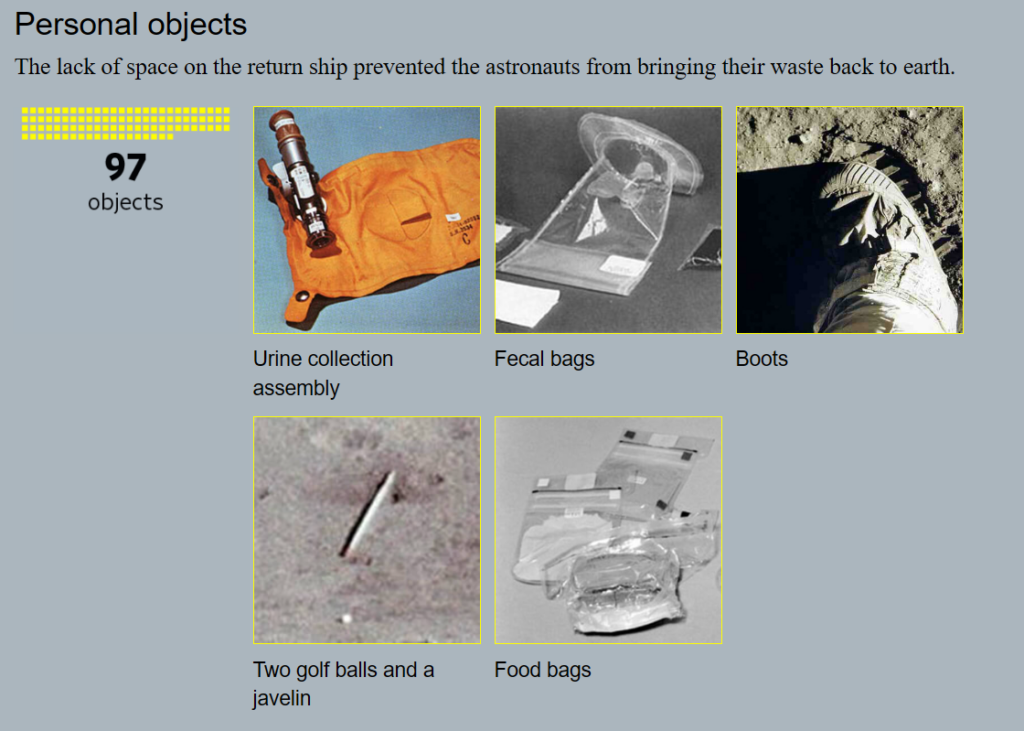
Among the more unusual items are 96 bags containing human waste, including urine and faeces produced during the Apollo missions. They were left for a practical reason, but today they have become objects of scientific curiosity.
Researchers have suggested that one day those bags could be recovered to study how decades of exposure to the Moon’s harsh environment have affected the microbes they contain. The results could help scientists understand how life survives prolonged exposure to radiation beyond Earth’s protective atmosphere.
Which countries and missions have left items on the Moon?
Humanity’s presence on the Moon did not end with Apollo.
Robotic explorers continued arriving from several nations, each adding another page to the Moon’s growing story.
The Soviet Luna programme opened the way for robotic exploration before later missions expanded scientific understanding of the lunar surface. Decades later, China’s Chang’e programme successfully returned to the Moon with landers and rovers, demonstrating that lunar exploration had entered a new international era.
Unlike the Apollo era, today’s lunar missions increasingly involve commercial companies as well as national space agencies.
That trend was underlined once again this week when the Falcon 9 upper stage became the latest human-made object to reach the Moon after completing its role in delivering lunar payloads.
Should historic Moon landing sites be protected?
As interest in returning to the Moon gathers pace, another challenge is emerging. How should humanity protect the places where the first explorers landed?
NASA has repeatedly stressed the importance of preserving historic landing sites and artefacts because of their scientific and cultural significance. Future missions, whether government or commercial, will have to avoid disturbing areas that record some of humanity’s greatest achievements. Those concerns are becoming more urgent.
The Moon is no longer visited once every few years. Governments, private companies and international partnerships all have plans for new landers, robotic vehicles and, eventually, permanent surface operations. And each mission has the potential to leave its own mark.
How Artemis astronauts will encounter a lunar legacy
The next astronauts who step onto the Moon will experience something none of the Apollo crews ever did. They will not arrive on an untouched world.
Instead, they will walk through more than six decades of human exploration.
Some objects will be easy to recognise. Others will be almost impossible to spot without careful searching. Many will simply appear as weathered pieces of metal resting where they were last handled by human hands decades earlier.
The footprints themselves are expected to remain, protected by the Moon’s almost airless environment where there is no wind or rain to erase them.
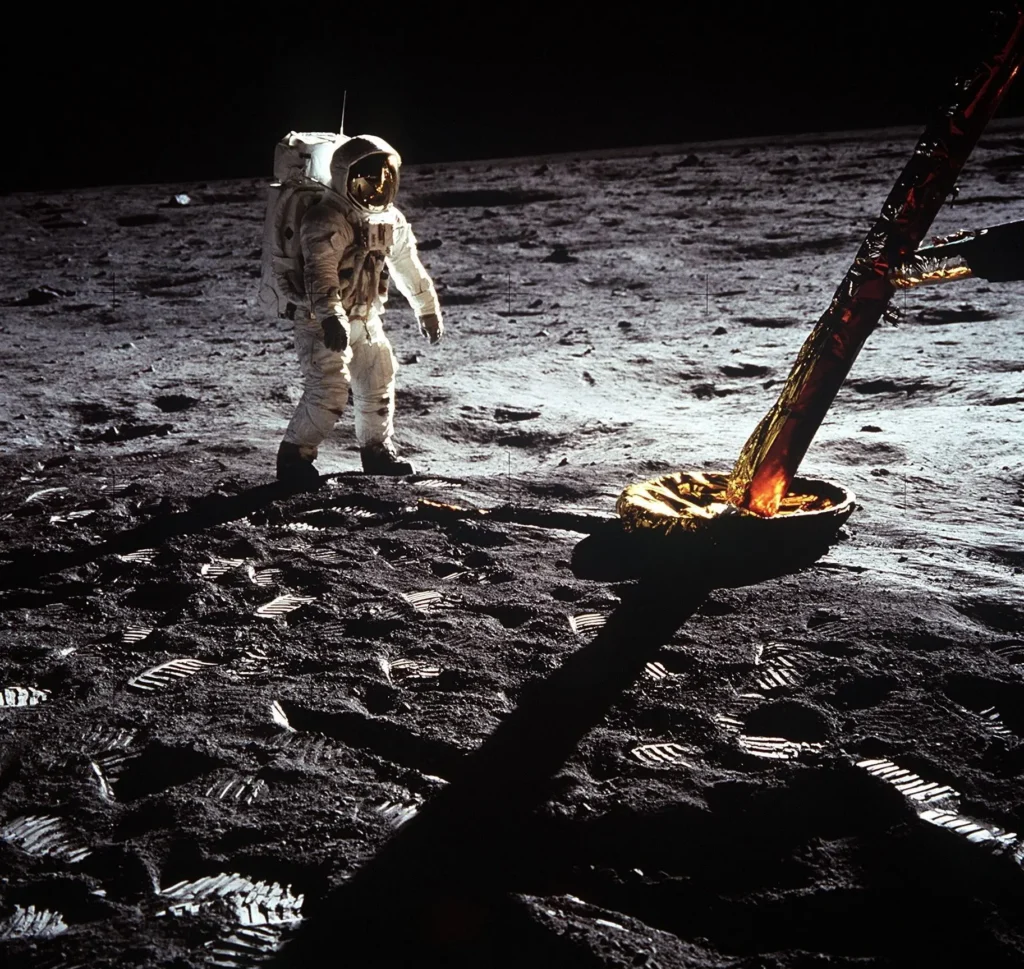
NASA’s Artemis programme is already opening a new chapter in lunar exploration. Artemis II has carried astronauts around the Moon, while future missions are expected to return crews to the surface.
When those astronauts eventually climb down onto the lunar soil, they will not be the first visitors to arrive after Apollo. They will be the first generation to inherit a landscape that already carries the fingerprints of human civilisation.
The Moon has often been described as a barren world. In one sense, it still is.
But scattered across its surface are reminders of curiosity, ambition, remembrance, ingenuity and even humour.


