


Rocket Lab to acquire Iridium in $8bn deal that reshapes space communications market

6 min read


Rocket Lab has agreed to acquire Iridium Communications in an $8 billion deal that would transform the launch and space systems company into a vertically integrated satellite communications operator.
The two companies announced on 29 June that Rocket Lab will purchase all outstanding shares of Iridium common stock for $54 per share in a cash and stock transaction. The transaction is expected to close in mid-2027, subject to Iridium shareholder approval and regulatory clearances.
If completed, the deal would combine Rocket Lab’s launch, satellite manufacturing and space systems capabilities with Iridium’s global low Earth orbit communications network, L-band spectrum and established customer base across government, maritime, aviation, emergency response and industrial markets.
Who is Rocket Lab?
Rocket Lab has become one of the most prominent commercial space companies outside SpaceX, building its business around launch services, spacecraft production and satellite components.
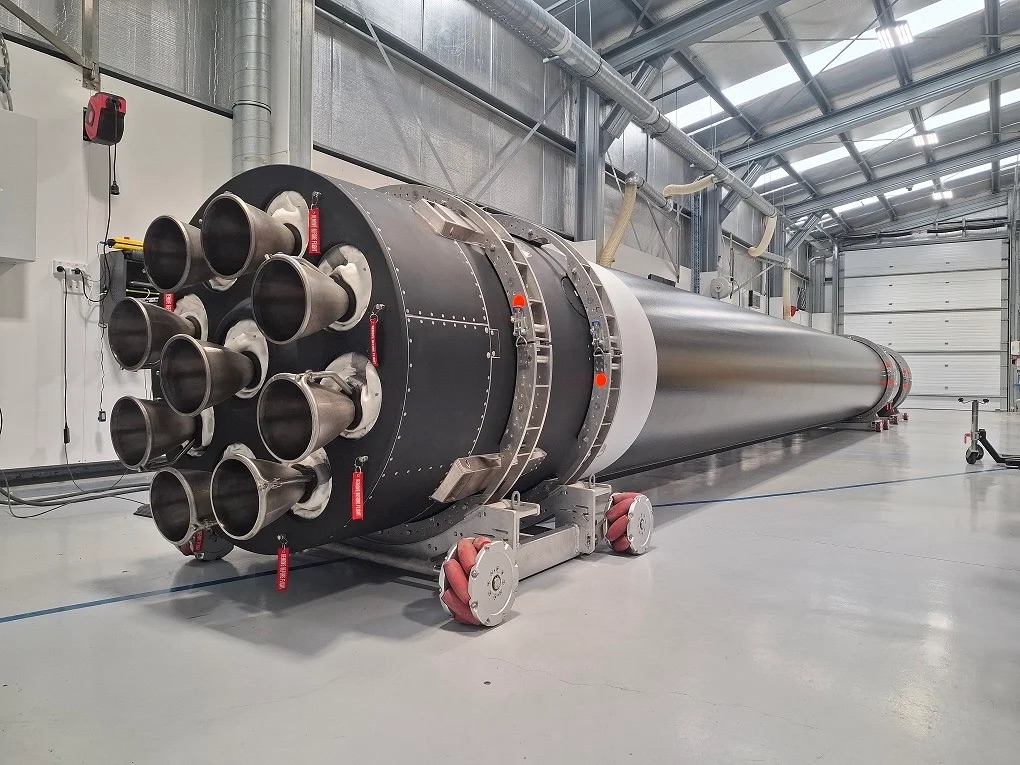
Founded by Sir Peter Beck, the company is best known for Electron, its small orbital launch vehicle, which has become a regular route to orbit for commercial, civil and defence payloads. Electron gives customers dedicated access to space, rather than forcing small satellites to fly as secondary payloads on larger rockets.
That launch business has been Rocket Lab’s public face, but the company has been steadily broadening its role across the space value chain. It now designs and manufactures spacecraft, satellite subsystems, solar power products, reaction wheels, separation systems, radios, software and other components used across commercial and government missions.
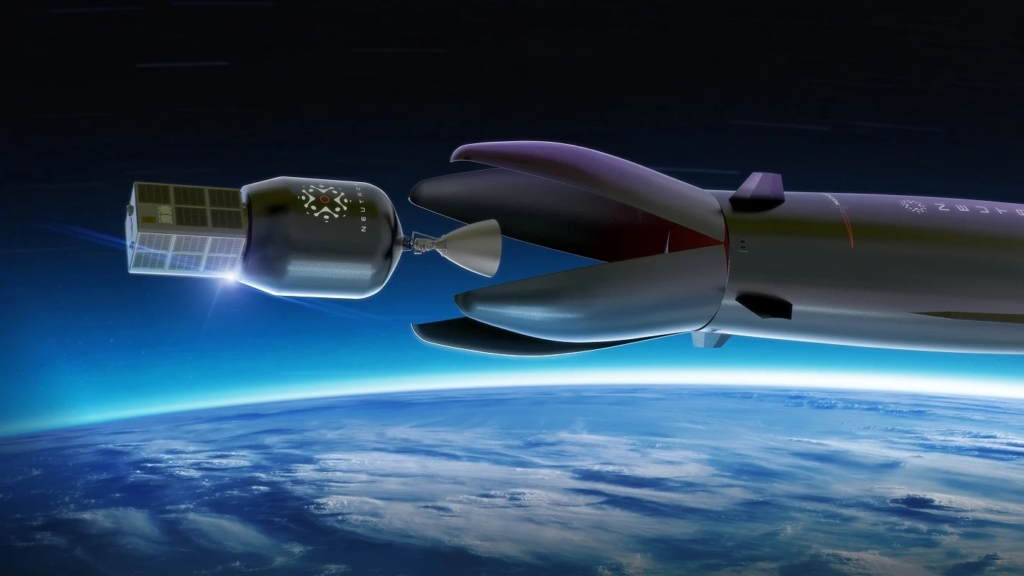
Rocket Lab is also developing Neutron, a larger reusable launch vehicle intended to serve medium-lift missions, constellation deployment and national security customers. Although Neutron remains in development, it is central to Rocket Lab’s ambition to move from small launch specialist to a broader space infrastructure provider.
Recent acquisitions have underlined that strategy. Rocket Lab completed its acquisition of Mynaric in 2026, adding laser communications terminals to its portfolio, and has continued to position itself as a company that can build, integrate, launch and operate increasingly complex space systems.
That context matters. The Iridium deal is not a sudden diversion into satellite communications. It is the logical, if very large, extension of Rocket Lab’s long-running attempt to own more of the space stack.
Why Rocket Lab wants Iridium
The main attraction is that Iridium gives Rocket Lab something that is extremely difficult to build from scratch: a working global satellite communications business.
Iridium operates a low Earth orbit satellite network using globally coordinated L-band spectrum. Its services are used in markets where reliability matters more than consumer broadband speeds, including aviation, maritime, government, emergency services, logistics, energy and remote industrial operations.
The company supports more than 2.55 million active subscribers worldwide and has a partner ecosystem of more than 500 companies. In 2025, Iridium generated $871.7 million in revenue and $495 million in operational EBITDA, giving Rocket Lab immediate access to recurring service revenue and cash flow.

That is strategically important because launch is not always where the greatest long-term value sits. Rockets are essential infrastructure, but the higher-margin, stickier business is often in the services that operate once a satellite is in orbit. Connectivity, safety services, data, direct-to-device communications and resilient PNT are the applications customers pay for over time.
By acquiring Iridium, Rocket Lab would gain not only satellites, but spectrum rights, regulatory permissions, ground infrastructure, customers and market credibility. Those are all difficult and time-consuming to develop organically.
The deal also gives Rocket Lab a clearer route into national security communications. Iridium’s network is already used in critical and remote environments, and the companies are pitching the combined business as a provider of resilient communications where terrestrial networks are unavailable, compromised or degraded.
That makes the transaction about more than commercial satcom. It sits directly in the growing market for space-based infrastructure that can support defence, emergency response, aviation safety, maritime operations and alternative navigation services.
What it means for Rocket Lab, Iridium and the wider industry
For Rocket Lab, the deal promises to change the company’s centre of gravity.
Instead of being primarily a launch and space systems supplier, Rocket Lab would become a company with its own operational satellite network and recurring applications revenue. That would make it far more vertically integrated, spanning design, manufacturing, launch, spectrum and on-orbit services.
It would also give Rocket Lab a major internal customer for future spacecraft and launch services. The next generation of Iridium satellites could be built, integrated and potentially launched through Rocket Lab’s own industrial base, allowing the company to capture more value internally and reduce reliance on third-party providers.
For Iridium, the appeal is access to a space manufacturing and launch company at a time when satellite networks need to evolve quickly. Its existing L-band network remains valuable, particularly for resilient and safety-critical communications, but the market around it is changing fast. Direct-to-device services, satellite IoT, defence connectivity and alternative PNT are all becoming more competitive and more strategically important.
Being part of Rocket Lab could give Iridium a faster route to constellation renewal and new service development. Rather than acting mainly as a network operator that procures satellites and launch capacity from others, it would sit inside a company with the capability to design, build and deploy its future infrastructure.
The wider industry implication is that vertical integration is becoming harder to ignore.
SpaceX has already shown the power of controlling launch, spacecraft, production and services through Starlink. Rocket Lab is not operating at that scale, but the logic is similar: the companies that own both the infrastructure and the customer relationship may have a stronger position than those selling single pieces of the value chain.

The deal could also raise pressure on other space companies, satellite operators and defence suppliers to rethink their own models. Launch providers may look for applications businesses. Satellite operators may seek closer manufacturing and launch partnerships. Defence customers may increasingly favour companies that can deliver end-to-end sovereign capability rather than fragmented supply chains.
There are still major caveats. The transaction needs shareholder and regulatory approval, and Rocket Lab must manage the financing of a very large acquisition. The company has secured commitments for a $3.6 billion bridge loan facility, but the final funding mix of cash, debt and equity will be watched closely by investors.
If the Iridium acquisition closes, it will give Rocket Lab something that many space companies spend decades trying to build: a global network, real customers, protected spectrum and recurring revenue.
That makes this more than a large acquisition. It is a bet on what the next phase of the space industry looks like.
Featured image: Rocket Lab
Sign up for our newsletter and get our latest content in your inbox.



More from


August 31, 20264 min read


