RAF Protector RG1 drone spotted with mysterious Outdragon pod in Cyprus

4 min read
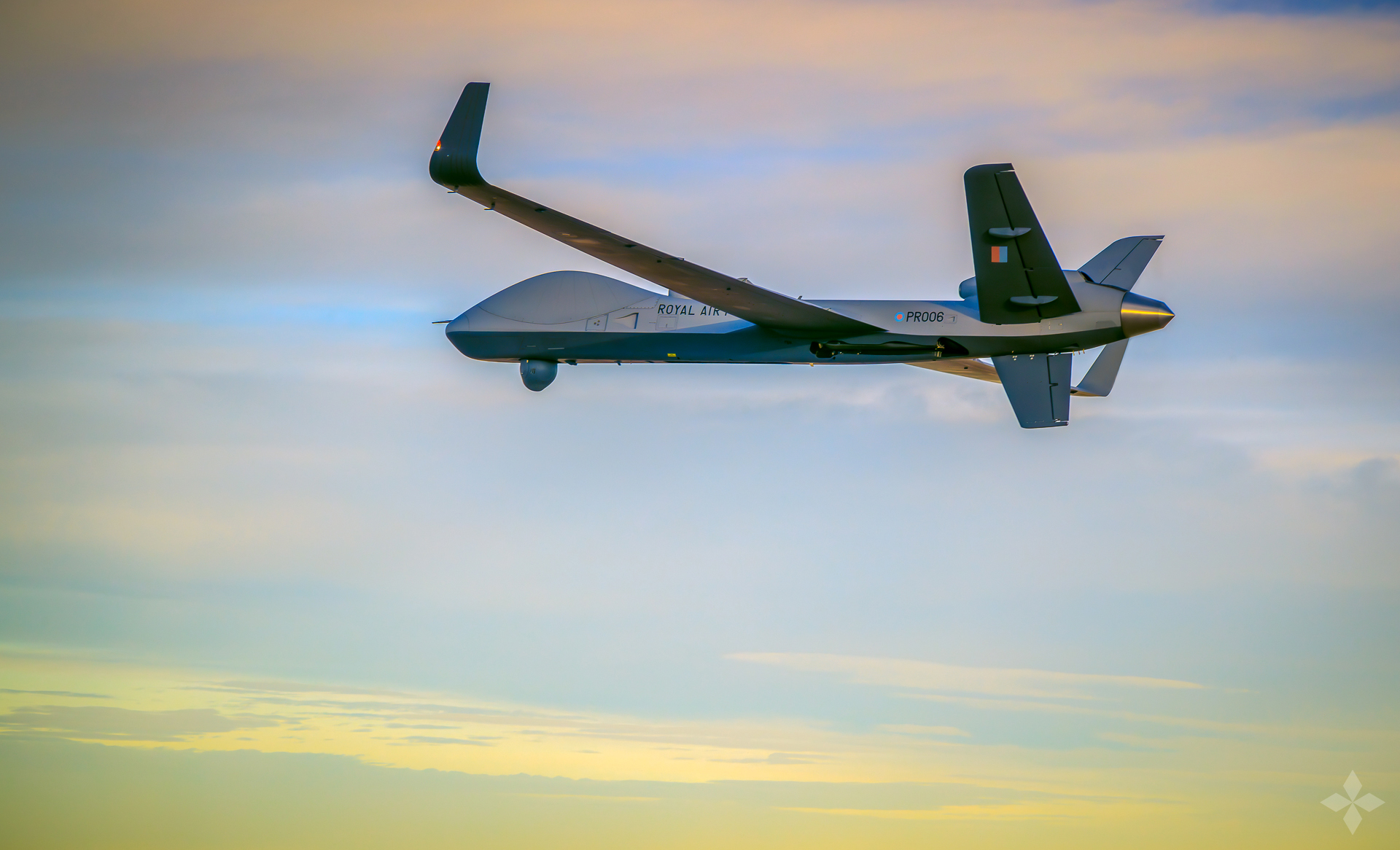
Photos of the RAF’s new Protector RG1 drone in Cyprus appear to show the aircraft fitted with an Outdragon pod. While little is known about these pods, it is believed to be a signals intelligence pod designed to track persons of interest.
RAF Protector RG1 spotted with a new Outdragon pod
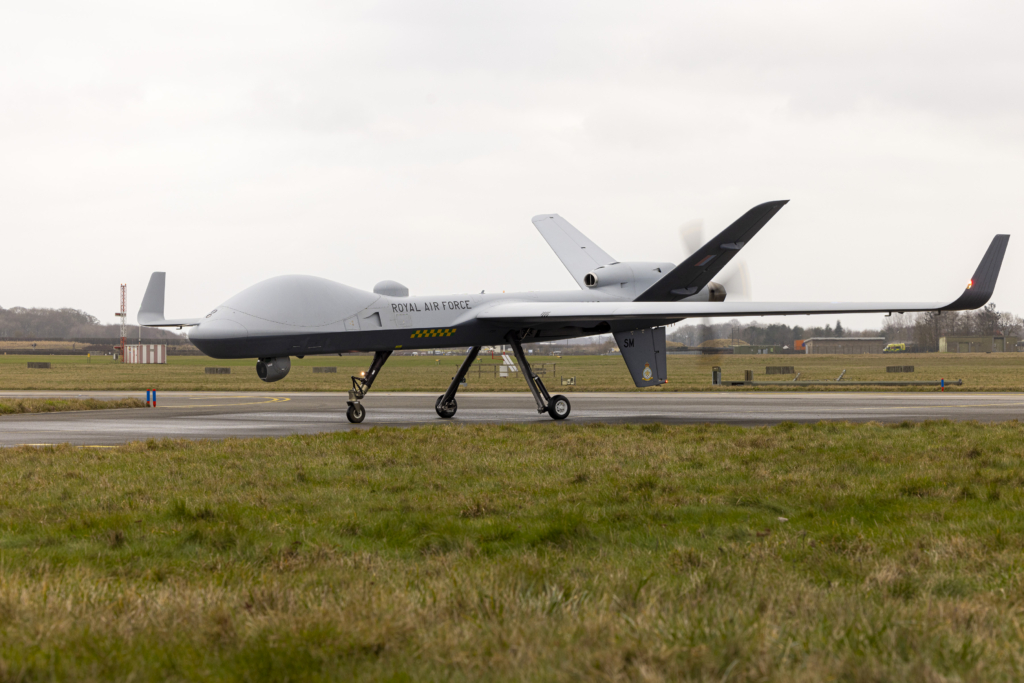
AGN recently reported that an RAF 54 Squadron’s MQ-9B Protector RG1 drone flew nonstop from the UK to the British air force base RAF Akrotiri. This was the first time it was able to fly through civilian control airspace and didn’t need restricted routes or an alternative means to reach its destination.
New Images Show RAF Protector RG1 Operating from Akrotiri with ‘Outdragon’ SIGINT Pod
— The Aviationist (@TheAviationist) June 23, 2026
The UK Ministry of Defence has published new photos of the first deployments of the MQ-9B Protector RG1 to RAF Akrotiri on Cyprus, including some of the best official views of what is believed…
Now the UK Ministry of Defence has published imagery of its Protector RG1 aircraft at Akrotiri on its official Defence Imagery service. These images confirm that the aircraft are using weapons and podded capabilities.
A Paveway IV precision-guided bomb can be seen on an aircraft, as can a large pod. The UK has not explained what that pod is, but it appears to resemble the ISR pods seen on US MQ-9 Reaper drones.
The Aviationist writes, “For a brief time, the Royal Air Force’s own documentation for the Protector RG1’s loadouts (Form 725) was published openly on the official GOV.UK website. From this file, we can see a piece of equipment listed for station 8 on the starboard wing known as ‘Outdragon’ or ‘OD’. Newer versions of these forms are not publicly available.”
Get the latest aerospace defence news here on AGN.
The Outdragon pod mystery
It remains unclear exactly what the role of Outdragon is, but it is likely to be a type of advanced signals intelligence (SIGINT) suite.
The existence of Outdargon in British service was first reported in April 2024 by Drone Wars UK, which tracked British armed drone operations. The organization was able to establish through a Freedom of Information request that these had been procured by Britain from General Atomics as a Foreign Military Sales in April 2018.
The initial purchase cost was $5 million, followed by another $2.2 million in 2019 for the modification and integration of the system into the now-retired RAF MQ-9A Reapers.
Other than that, the British MoD refused to confirm or deny the existence of Outdragon. According to the UK Defence Journal, the MoD cited national security interests for being mum.
This is an ISR pod that is known as "Outdragon" in UK service. General Atomics was the prime for it via a Foreign Military Sale. The US is also known to operate it, but I'm not sure what the official designation is. https://t.co/34RYPtWukH pic.twitter.com/eEqgQFydke
— Colby Badhwar (@ColbyBadhwar) March 16, 2026
Given that Outdragon was previously integrated into the older MQ-9s, it is expected that it should be integrated into the new Protector RG1 drones.
What is known about Outdragon
The system is primarily intended for detecting, locating, and tracking persons of interest through their electromagnetic emissions (e.g., mobile phones, wireless routers, etc.).
#RAF Royal Air Force – Middle East Activity
— Armchair Admiral 🇬🇧 (@ArmchairAdml) March 4, 2026
General Atomics MQ-9 Protector RG Mk.2#43C972 PR010 – RAFAIR 7331
Airbus KC.2 Voyager 1x#43C6F6 ZZ333 – ASCOT 9958
With reports of alarms again sounding at RAF Akrotiri, PR010, a Protector RG Mk.2 / MQ-9B is off the coast, and… https://t.co/K4CGNuVfk1 pic.twitter.com/GjxzIeVRic
It is thought to be able to operate in the upper VHF, UHF, and lower SHF frequency bands. The system is frequently paired with a large blade antenna on the aircraft’s fuselage centerline for increased ISR capabilities.
The usefulness of these capabilities was put on display by Israel in 2025 when it struck Iran and again in 2026 by Israel and the US. During those strikes, Israeli and American strikes decimated much of Iran’s leadership, crippling its ability to centralize a coordinated response.
In response, Iran decentralized its decision-making, with local commanders making decisions typically reserved for higher-level officials. Note that the UK did not take part in offensive operations.
Iranian leaders and high-ranking officials were also completely banned from using mobile phones and connected devices to prevent Israeli intelligence from tracking and targeting them.
In 2026, there were reports that Iranian officials were relying on physical paper dispatches delivered by trusted couriers, particularly with the new Supreme Leader, Mojtaba Khamenei.
Iranian officials have emphasized the use of walkie-talkies. In 2024, the world’s attention was grabbed when thousands of pagers and hundreds of walkie-talkies used by Hezbollah in Lebanon exploded after being booby-trapped by Israel.
Featured Image: Royal Air Force