“Performing magnificently”: US Air Force officials satisfied with Boeing’s fix of KC-46 Remote Vision System

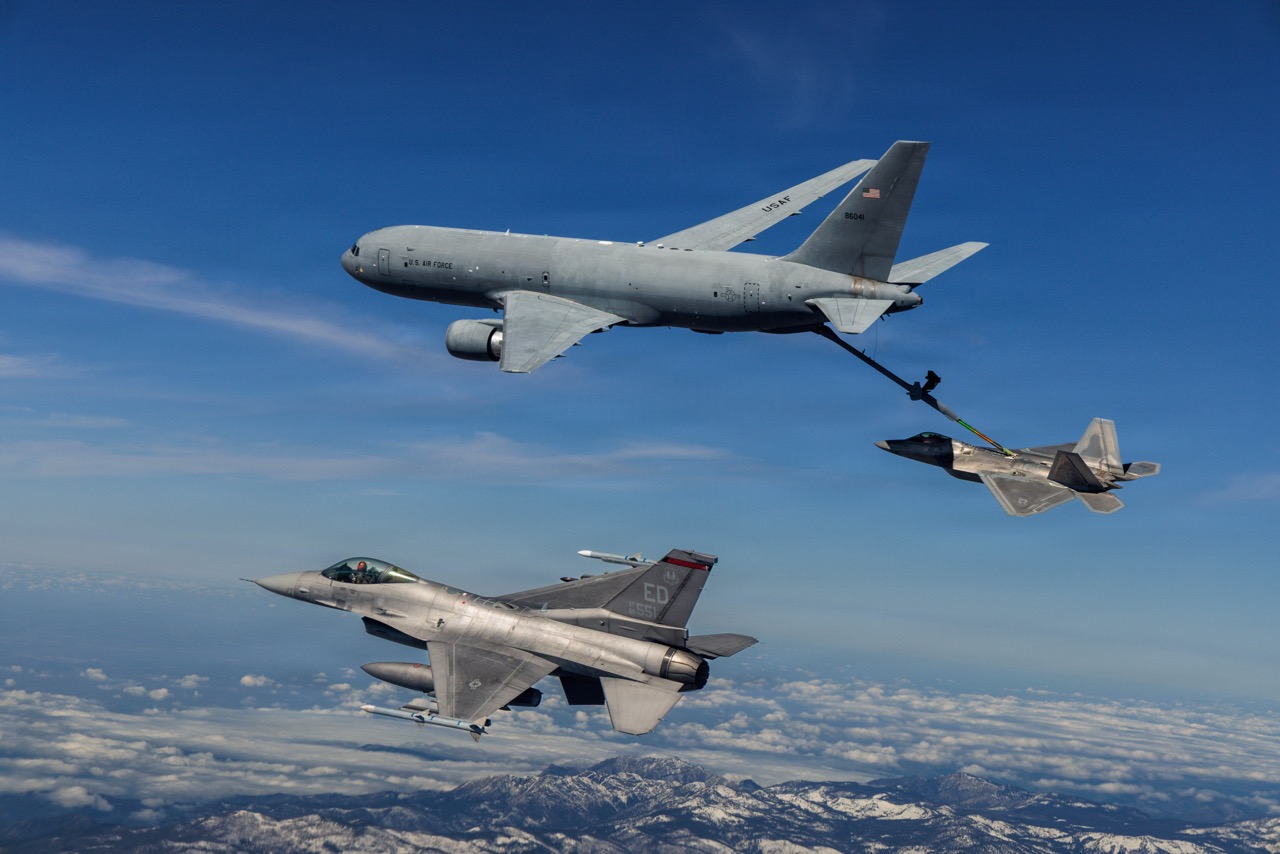
During a Senate Sub-Committee Hearing this week, US Air Force officials expressed confidence in the KC-46A Pegasus refuelling tanker programme, including Boeing’s recent update of the aircraft’s problematic Remote Vision System (RVS). The critical vision system issue has held up a follow-on contract from the US Air Force for another 75 KC-46s.
“Critical defects” in the KC-46 Remote Vision System 1.0
The KC-46 Pegasus refuelling tanker is a critical asset for the US Air Force. Still, its initial rollout has been complicated by what the Government Accountability Office described as “critical defects with the aircraft’s remote vision system” in a 2022 report.
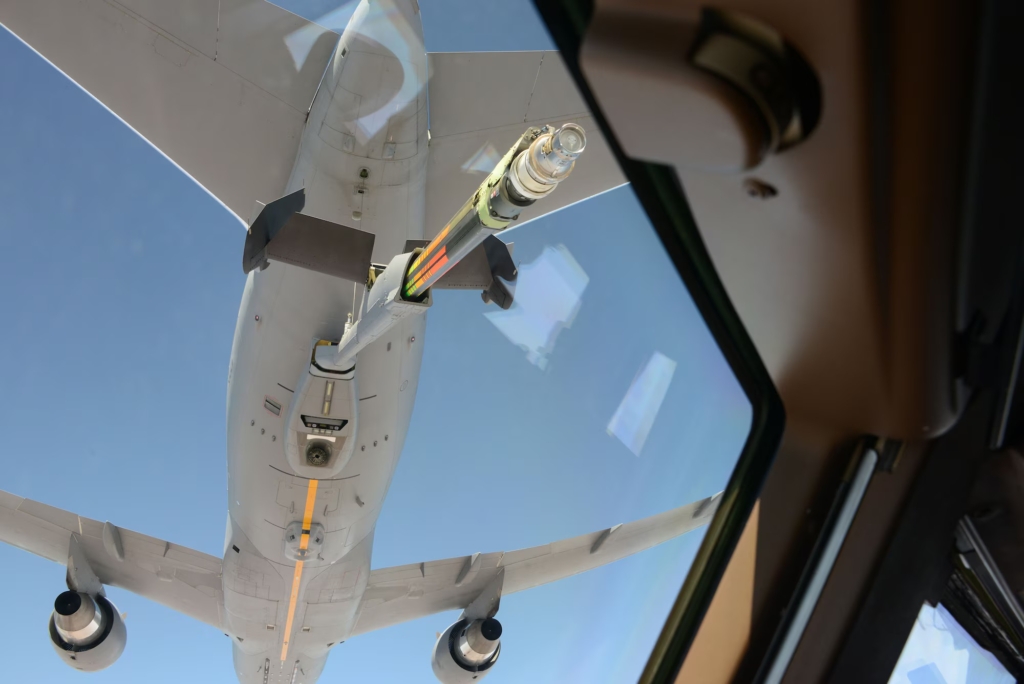
Unlike older tankers, where operators lie prone and look out a window, the KC-46 relies entirely on cameras and screens. The core problem is that RVS 1.0 often gave operators a distorted view of the receiver aircraft and the boom. That created a risk of striking and damaging the aircraft being refuelled.

The cameras and displays could produce image distortion, slow adaptation to changing light, and difficulty seeing the boom tip. In some cases, operators reportedly used shadows cast on the receiving aircraft to infer the boom’s position because the boom itself was difficult to see.
The Air Force designated the RVS problem a Category I deficiency, meaning it could potentially cause death or injury, damage aircraft, or prevent the system from accomplishing its mission.
Boeing and the USAF strike an agreement to accelerate the KC-46 Pegasus
In May of this year, Boeing and the US Air Force agreed on a plan “to improve the readiness of the KC-46 Pegasus tanker and accelerate capability delivery to the fleet.”
That plan included “accelerating the Remote Vision System 2.0 retrofit schedule and implementing a targeted performance-based logistics effort to resolve systemic readiness challenges.”
As Secretary of the Air Force, Troy Meink, said in the USAF announcement: “The KC-46 is a cornerstone of US power projection, and we are proactively partnering with Boeing to ensure it is always ready to deliver.”
Boeing announces successful flight testing of KC-46 RVS 2.0
On June 3, Boeing announced it had completed successful flight testing of the new RVS 2.0 system, which addresses the shortcomings of the original remote vision system. Boeing has had to redesign the system free of charge, under a fixed-price contract for which it has already incurred $7 billion in losses.
According to Boeing, RVS 2.0 features a 4K Ultra HD 3D immersive visual display, which can “perform in a wide range of operational environments” and “gives Airmen a more realistic view of their surroundings while performing mission-critical aerial refuelling operations.”
Boeing conducted the RVS 2.0 flight tests on a modified test aircraft.
“This flight testing demonstrated the system’s maturity and validated the ground-breaking optical performance of the ruggedised cameras, as well as control and processing hardware,” Boeing stated.
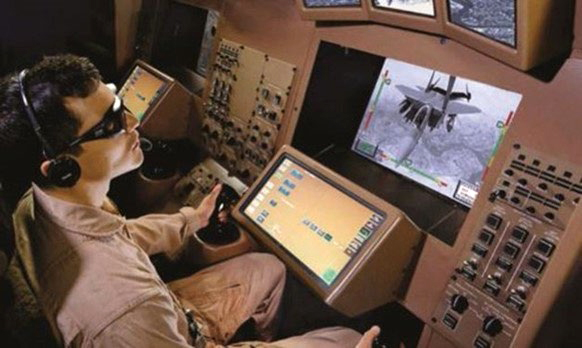
The US Air Force Research Laboratory has been working with Boeing on the redesign and testing of the KC-46’s RVS 2.0. It has reported a “vast improvement over 1.0,” citing a boom operator as saying, “it gave me a more realistic version of what I would see if I was looking out of a window.”
Air Force officials confirm RVS 2.0 success and KC-46 tankers’ performance, but retrofit is pending
While Boeing’s successful flight trials were positive for the programme, the aircraft cleared a more critical hurdle during Air Force leaders’ recent testimony at a Senate Appropriations Committee hearing on the FY27 budget. Officials confirmed that the US Air Force is satisfied with the results of the RVS 2.0 upgrade.
Confirmation came in answers to questions posed by Jeanne Shaheen, senior United States Senator from New Hampshire, where the 157th Air Refuelling Wing is based—the only KC-46 wing in the US which has reached initial operational capacity.

“We’re very proud of [the KC-46]…and the investment of over a billion dollars in the program, but as we know, the remote vision system has continued to have issues. I understand that they’re getting very close to a resolution and that they will be incorporated in the new planes,” the Senator said, asking Air Force Secretary Troy E. Meink for an update on plans to retrofit the new system in the existing fleet.

“I think the good news is that we have tested the new 2.0 vision system and that we should start rolling that into the production line in ‘28,” Meink responded. He added that the Air Force was “working through the strategy” for retrofitting aircraft in service and that the retrofit would require significant work. “Whether or not we can do that in the field or we do that as part of Depot, we’re just working our way through that.”
RVS 2.0 improves a “phenomenal aircraft”
The Senator also asked General Kenneth S. Wilsbach, Chief of Staff of the Air Force, to provide his own views on the aircraft.

“What I’ll tell you, Senator, is the KC-46 is performing magnificently, even though we know the current vision system isn’t what we ordered, and that’s why we’re getting the 2.0 version of it, but even so, it is flying fantastically. It’s been doing a great job in Epic Fury, and really all over the world.” Wilsbach added that he had recently had a chance to fly the aircraft himself. “I can tell you it’s a phenomenal aircraft. When we get the deficiency solved, it will be even better.”
Still, Wilsbach confirmed that the Air Force has not yet decided which aircraft currently in the fleet will receive the RVS 2.0 upgrade first.
Contract for 75 more KC-46s pending, with additional orders on the horizon
The positive confirmation of the RVS 2.0’s performance from US Air Force officials is welcome news for Boeing, as it stands to gain a contract for an additional 75 tankers on top of the current 188 KC-46s the US Air Force has committed to under the existing contract.
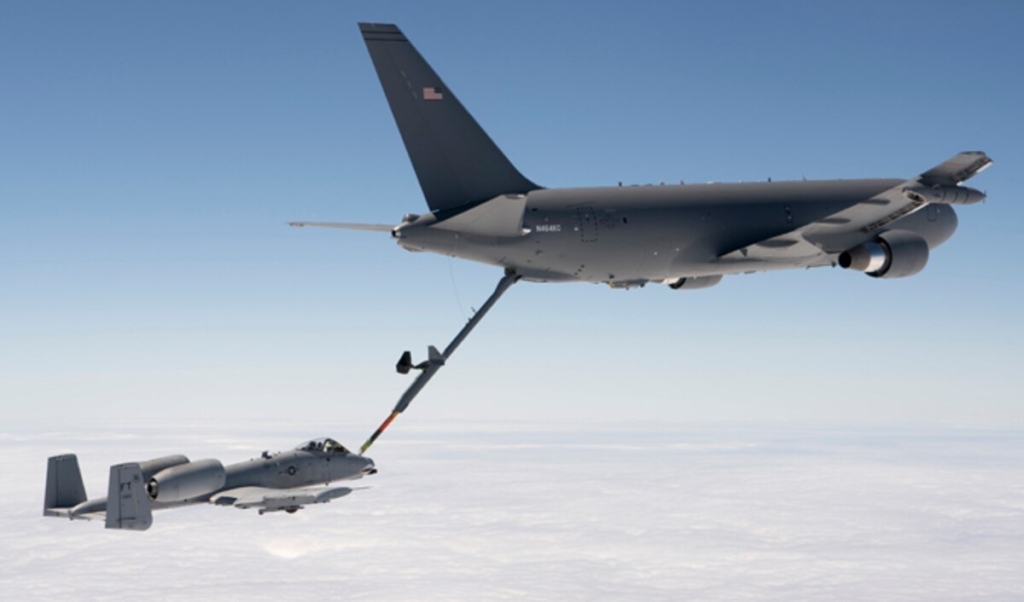
As Air & Space Forces Magazine reported in March, Vice Chief of Staff General John D. Lamontagne said the Air Force would not finalise a new deal with Boeing until the planemaker resolved the “deficiencies” with the tanker.
As previously reported by AGN, the US Air Force is considering expanding the KC-46 fleet to as many as 319 KC-46As.
Featured Image: US Air Force