Hitler’s VTOL: The Focke-Wulf Triebflügel could have changed WWII

5 min read
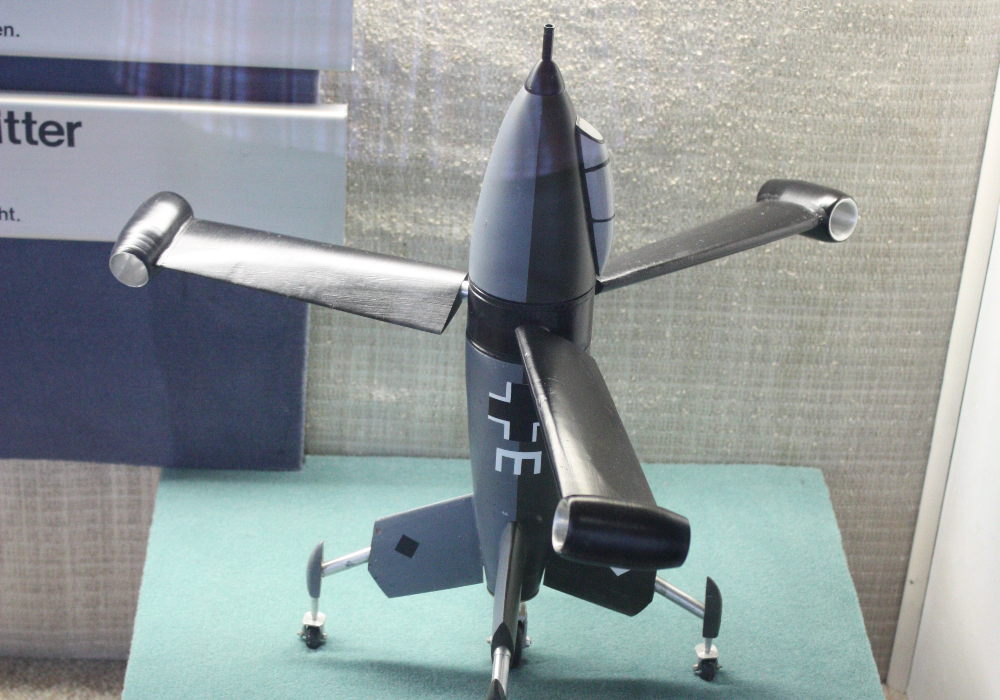
As Nazi Germany’s Luftwaffe collapsed and proved incapable of defending its industry from Allied bombing, including its airfields, it looked for runway-independent VTOL solutions.
The Focke-Wulf Triebflügel is a great example of how German engineers were forced to think outside the box. They had to respond to German industry grappling with aviation fuel shortages, a lack of experienced pilots, material shortages, and overwhelming Allied numbers.
Germany’s need for a runway-independent VTOL fighter
One of the most eye-catching of Germany’s so-called “Wunderwaffe” projects was the tail-sitting Focke-Wulf Triebflügel (“thrust-wing fighter” in English). The concept was developed in 1944 as a defence against the increasing Allied bombing raids flattening German cities.
New in the Store: Amusing Hobby's 1/48 Focke Wulf Triebfluegel – nicely detailed and fairly straight-forward kit of a late-WW2 point interceptor (what were they smoking?!): https://t.co/7Vqc0RA0k9 pic.twitter.com/ApGCWM9qai
— Starship Modeler (@StarshipModeler) September 2, 2021
Instead of having fixed wings, the aircraft had a large rotor/propeller assembly mounted around the fuselage, midway between the cockpit and tail.
The idea was for the aircraft to provide local defence for factories or other strategic sites that had no airfield or only a small airfield. Germany’s airfields had become vulnerable and targets.
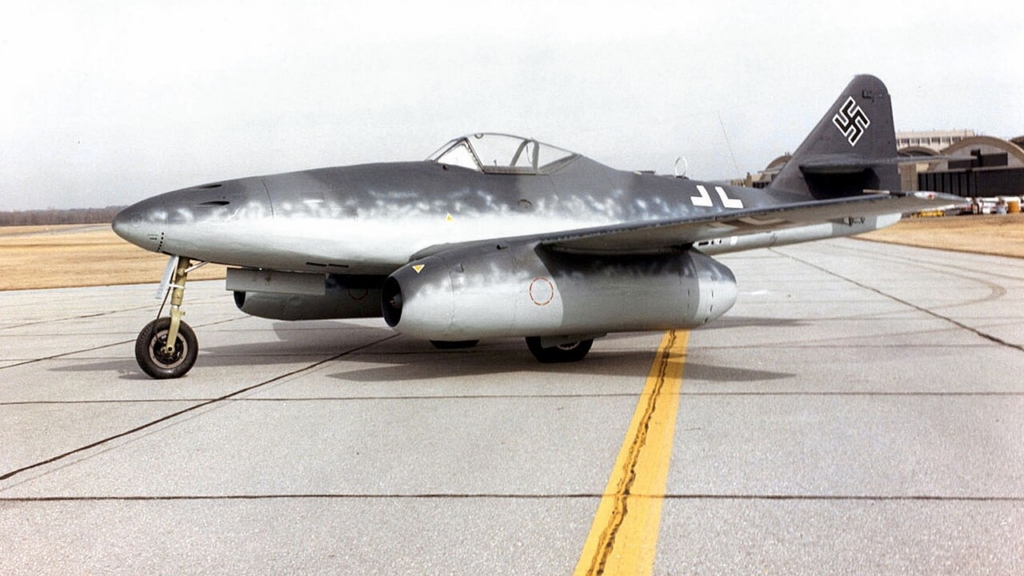
For example, while the world’s first operational jet fighter, the Messerschmitt Me 262, could on paper outclass Allied piston-engine fighters in the air. But it suffered from poor pilot training, low-quality aviation fuel, and Allied air forces adapted by targeting it on the ground. They were also vulnerable in their take-off and landing phases.
Focke-Wulf Triebflügel byl německý projekt stíhacího letounu kategorie VTOL, který měl být poháněn třemi náporovými motory systému Lorin.
— 🍀Tomáš Doupal 🇨🇿 (@TomasDoupa39474) October 10, 2024
Výzbroj měla být složená ze dvou kanónů MK 108 ráže 30 mm a dvou kanónů MG 151 ráže 20 mm měla být instalována v přídi společně s radarem.⬇️ pic.twitter.com/JbwdY9iRRn
By the time the Allies reached the production facilities, no complete prototype had been built, having only reached the wing-tunnel testing phase.
Get the latest aerospace defence news here on AGN.
How the Focke-Wulf Triebflügel was to work
The Focke-Wulf Triebflügel significantly changed the assumption of how a fighter would be built. It used a vertical tail-sitting fuselage, three rotor/propeller blades on a rotating ring assembly around the fuselage, and ramjets mounted at the wingtips.
Focke-Wulff Triebflügel: German superweapon (Wunderwaffe) that could have changed the trajectory of the war if it was ever mass produced pic.twitter.com/9CQfKo2diy
— Sonny “#450” Frogett (@1980sViceSquad) October 5, 2023
The three Pabst ramjets were intended to be mounted on the tips of the blades. These provided the power to spin the rotor (tip drive), which in turn generated thrust and lift. They enabled high tip speeds for efficient ramjet operation.
Initial spin-up was provided by small auxiliary rockets to get the rotor up to speed for ramjet ignition.
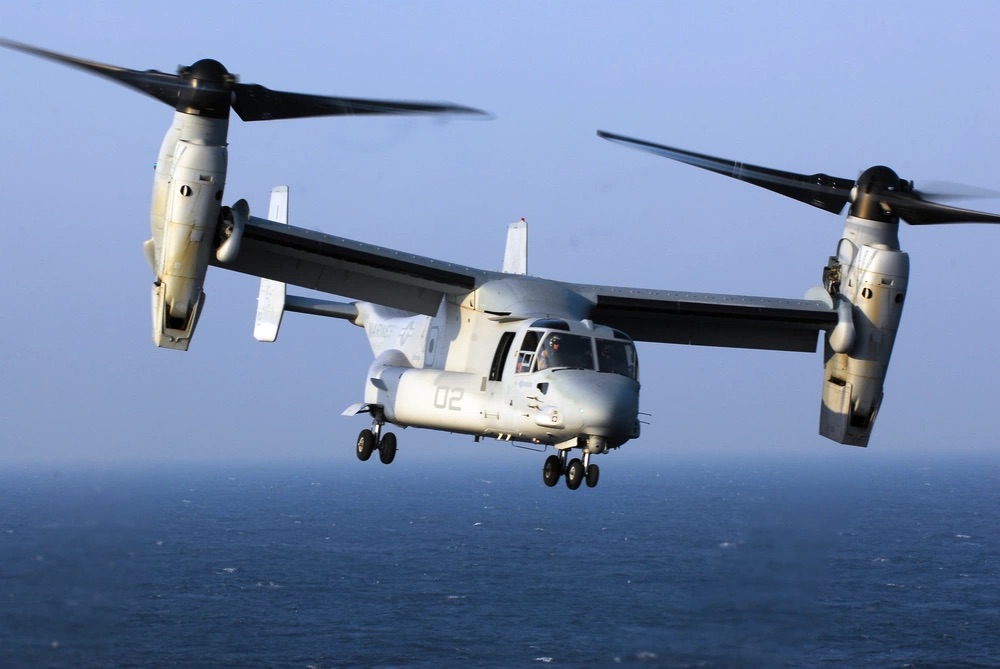
The setup and rotating wing assembly acted something like a helicopter rotor, while its transition to horizontal flight is reminiscent of today’s CV-22 Osprey. That said, it was jet-powered.
After taking off, the pilot would have to gradually tilt the aircraft into horizontal flight. Once at speed, the rotating wings would continue to provide lift and propulsion.
The most difficult part was landing the Triebflügel, where the pilot would have to rotate the aircraft upright and descend tail-first. The pilot would have had to do this with little visibility as he would have been facing backwards.
A sign of later WWII German desperation
It is a common myth that Nazi Germany was more technologically advanced than countries like Great Britain or the United States. In fact, the Wehrmacht was never particularly mechanized, with mechanization decreasing as the war went on. Its dependence on horses is rarely accurately portrayed in movies.
In some respects, Nazi Germany’s push for “wunderwaffe” was a symptom of its desperation, being unable to counter the combined industrial might of the Allies.
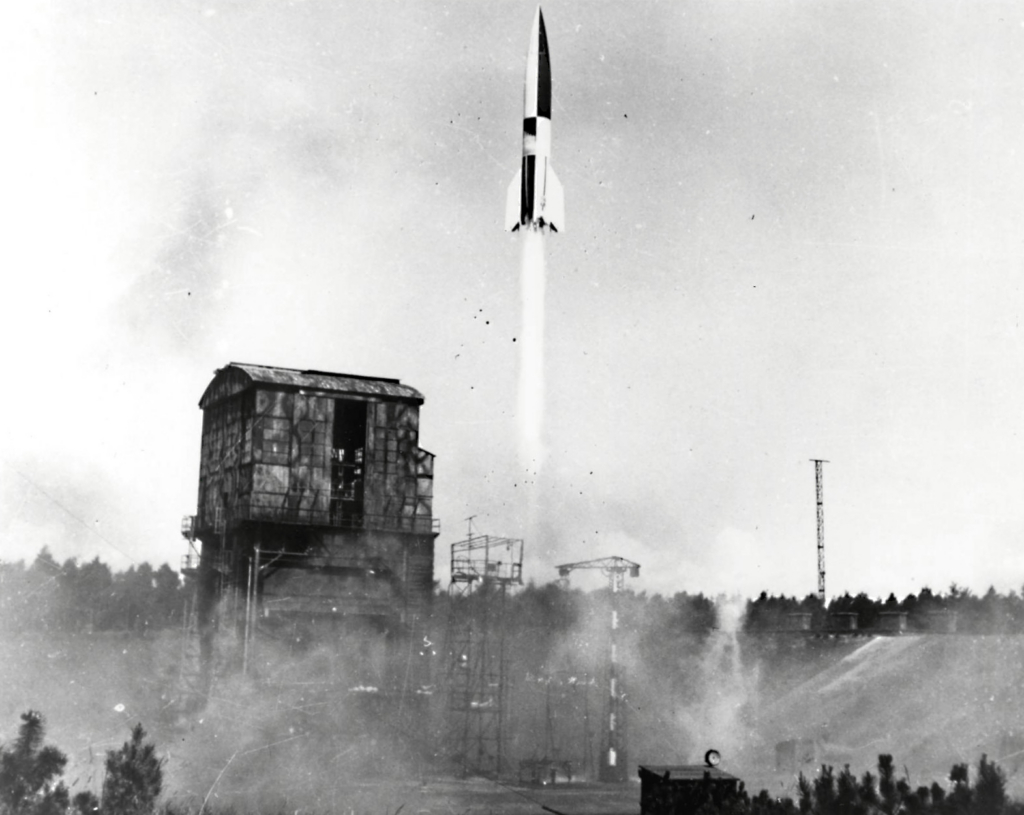
Many of these projects never left the drawing board, and many (like the rocket programme) consumed ruinous amounts of Germany’s limited resources for limited strategic effects in return.
The German “wunderwaffe” programmes were mythologized post-war, while parallel Allied technological advancements and revolutionary designs were downplayed.
Germany was ahead of the Allies in some aerospace fields like ballistic missiles, while the Allies were ahead in fields like radar, strategic bombing, proximity fuzes, nuclear research, jet engine durability, and others.
Examples of notable German aerospace development:
- V2 Rocket: Entered service, but extremely expensive
- Messerschmitt Me 262: First operational jet fighter
- Focke-Achgelis Fa 223 Drache: Early German helicopter
- Messerschmitt Me 264: Amerikabomber prototype to strike New York
- Fieseler Fi 103R Reichenberg: Manned kamikaze version of the V-1 flying bomb
This said, Germany did work on a large number of genuinely interesting aerospace projects, some of which appear ahead of their time.
While helicopters entered German service (notably the Focke-Achgelis Fa 223 Drache), they were in their infancy.
As stated, Germany did deploy the Messerschmitt Me 262, which was the world’s first operational jet fighter. But then again, Britain had superior jet engine technology at the time.
The British Gloster Meteor jet fighter followed a short while later with better and more durable engines.
Later VTOL/STOVL solutions
After World War II, the US experimented with developing tail-sitting VTOL aircraft like the Convair XFY Pogo and Lockheed XFV-1. These proved impractical, and the US largely abandoned developing VTOL aircraft for a time (apart from helicopters).
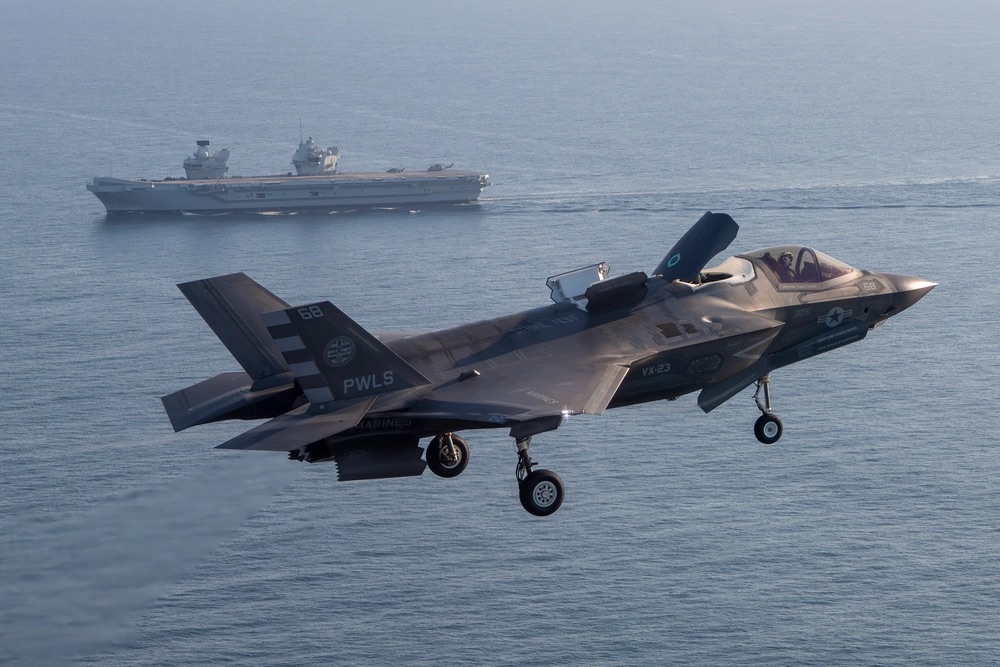
Today, VTOL/STOVL capabilities are provided by systems like interceptor missiles, helicopters, various drones, tiltrotors (e.g., CV-22 Osprey), and F-35B fighter jets.
The first in-service STOVL fighter jet was the Harrier jump jet that the US adopted from Britain. The US Marines are expected to retire these in 2026.
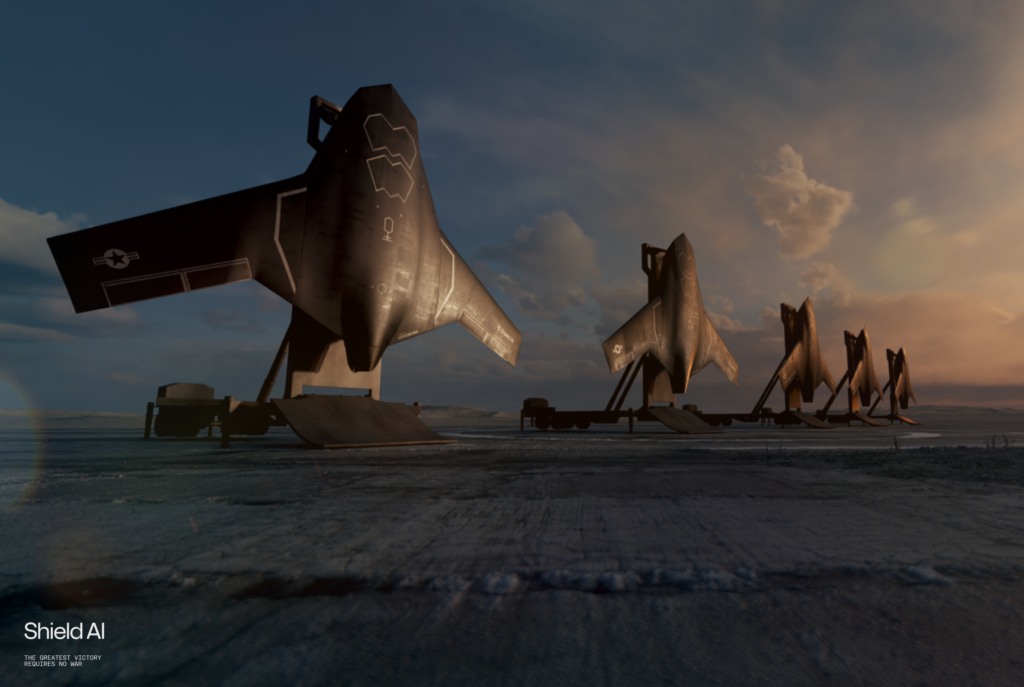
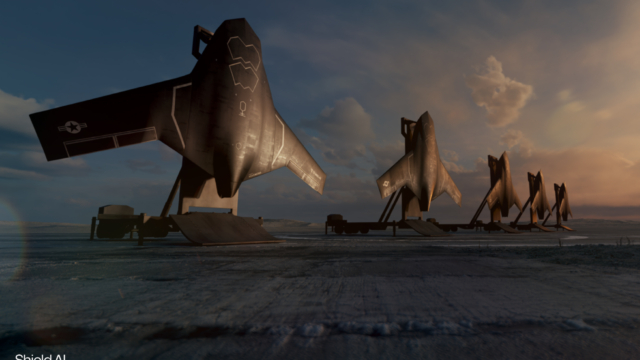
In warfare, what was old has a habit of becoming new. Various somewhat analogous tail-sitting projects are in development now, from the Anduril Omen drone to the Shield AI X-Bat, with the latter marketed as an autonomous fighter jet.
Featured Image: Wikimedia Commons
Sign up for our newsletter and get our latest content in your inbox.


More from


October 13, 202612 min read