


Rolls-Royce and easyJet complete full hydrogen engine flight cycle test at NASA

4 min read
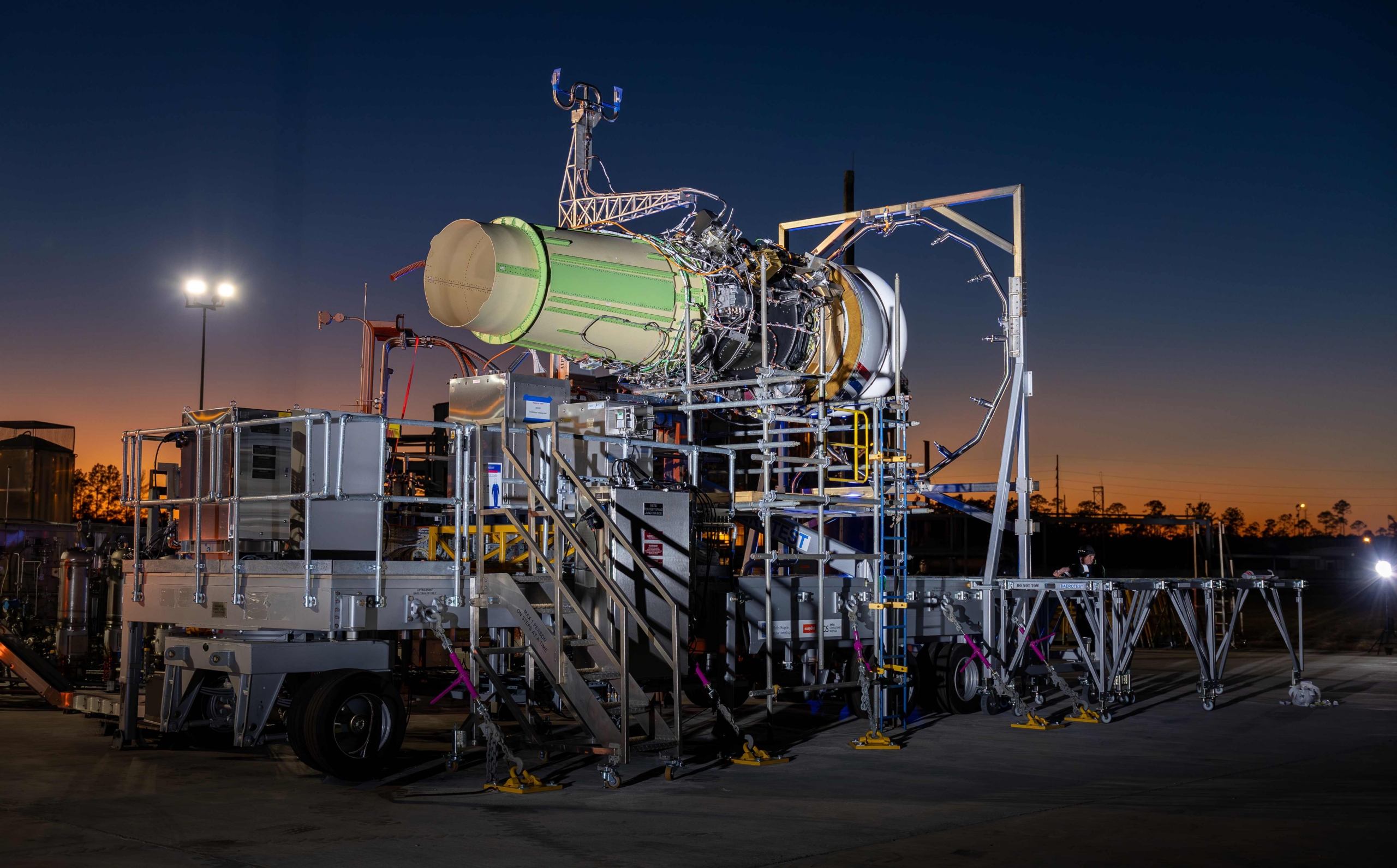
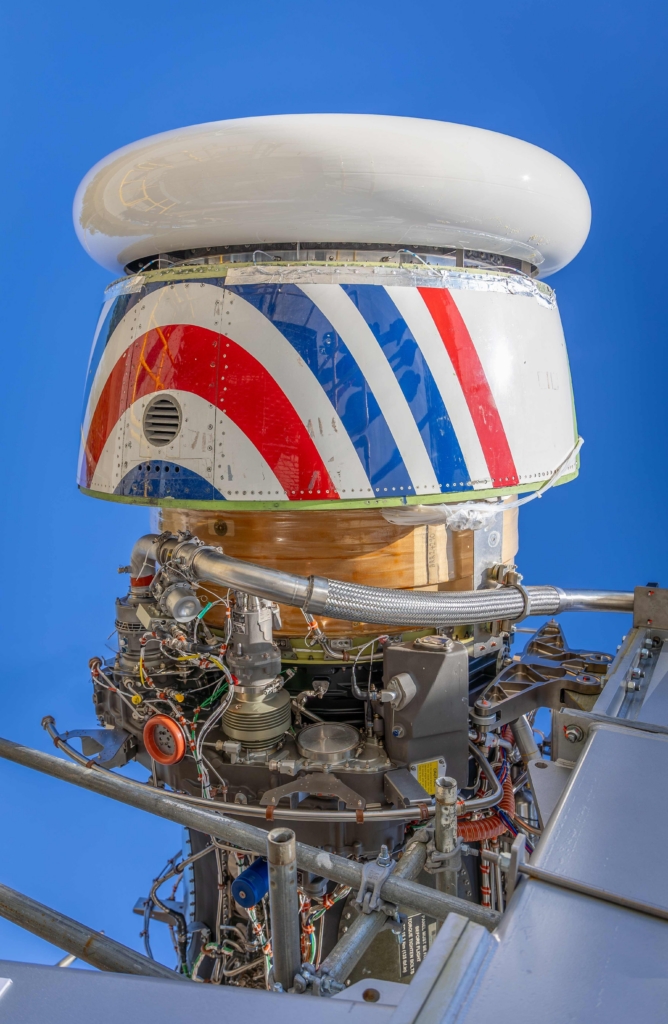
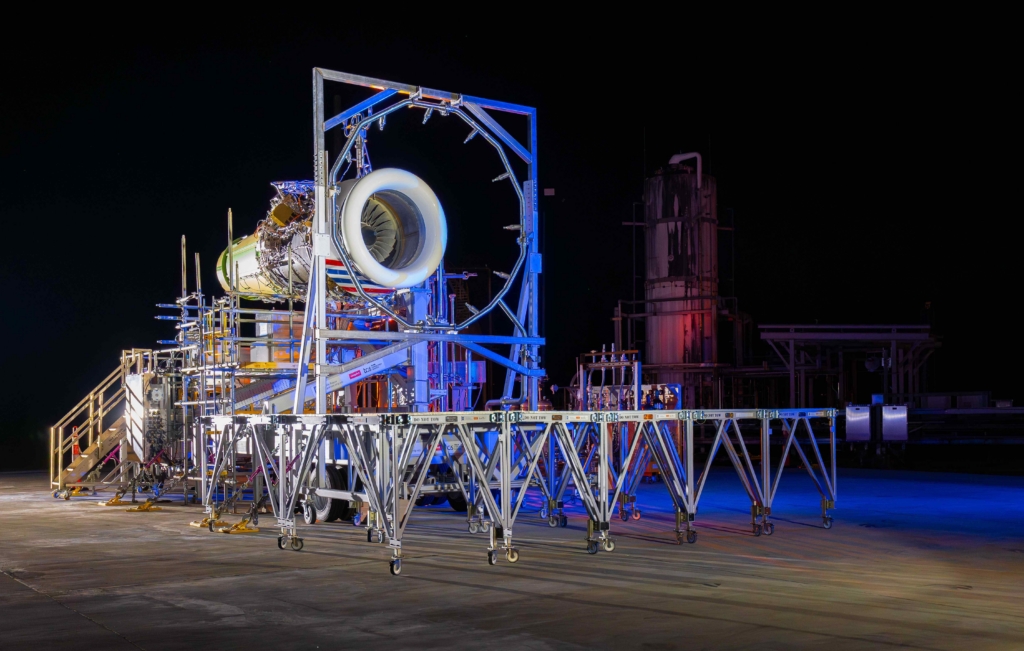
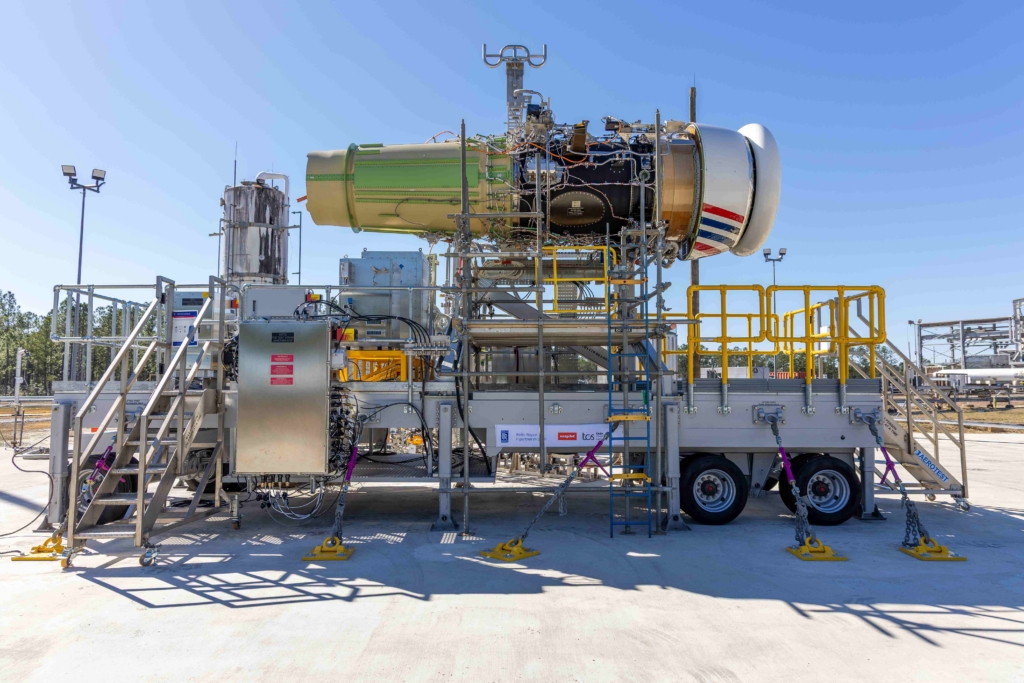
Rolls-Royce and easyJet have completed ground testing of a modified Pearl 15 aero engine running on 100% hydrogen, marking a key milestone in efforts to develop lower-emission propulsion for commercial aviation.
The test, carried out at NASA’s Stennis Space Center in Mississippi, saw the engine operate across a full simulated flight cycle-from start-up through take-off, cruise and landing-using hydrogen as the sole fuel.
The companies said the campaign demonstrated that a modern gas turbine engine can run safely on hydrogen under conditions representative of real-world operations.
Hydrogen engine reaches full take-off power in Rolls-Royce and easyJet test
The modified Pearl 15 engine achieved full take-off power during the trials, one of the most demanding phases of any flight profile.
The programme tested not only performance but also fuel delivery, combustion behaviour and control systems under varying operating conditions.
According to Rolls-Royce, the campaign included fault scenarios and maximum-power settings, helping engineers understand how hydrogen behaves in a modern aero engine.
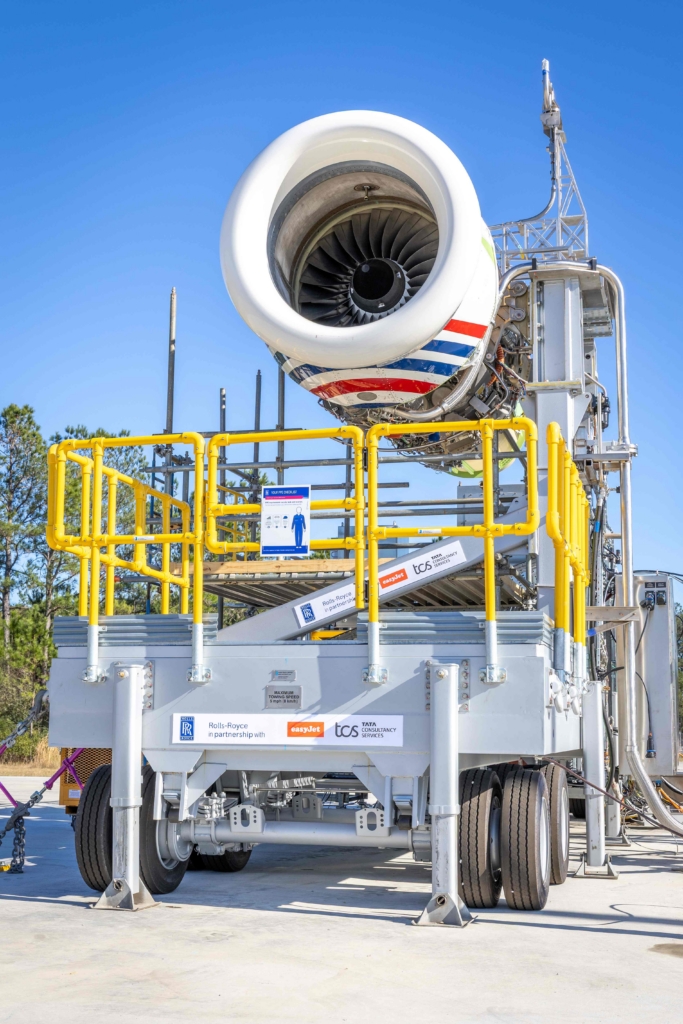
“This programme achieved a major milestone, successfully demonstrating a modern aero engine running on 100% hydrogen at full take-off power, an important step toward decarbonising aviation,” said James Coulson, Development Engineer responsible for this hydrogen engine test.
“It’s been a rewarding experience contributing to a project at the forefront of sustainable propulsion, helping to prove the viability of hydrogen as a future aviation fuel.”
The results will feed into future engine development, including the company’s UltraFan programme, which aims to improve efficiency and reduce emissions in next-generation engines.
Rolls-Royce hydrogen engine test builds on earlier UK and European trials
The Stennis campaign is the latest phase of a multi-year effort.
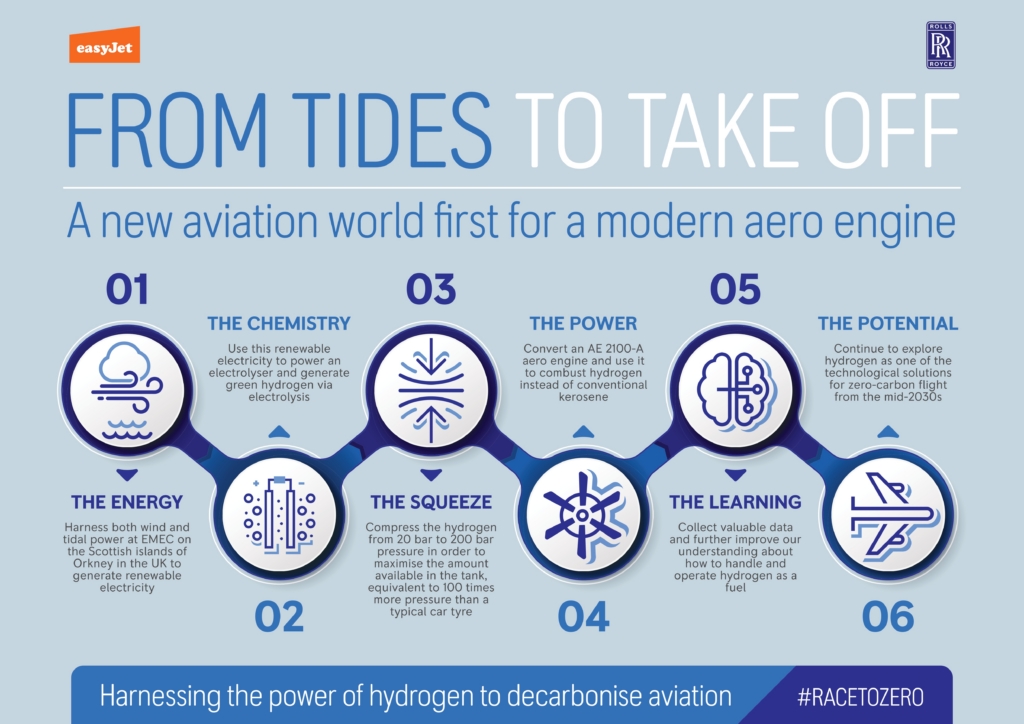
Rolls-Royce and easyJet first ran a modern aero engine on 100% hydrogen in 2022, using an AE2100 engine in the UK.
This was followed by combustor tests in Germany and further system-level work across Europe.
The current test represents the first time a modern engine of this class has completed a full simulated flight cycle on hydrogen, covering all major operating phases.
The work has also involved a wider network of partners, including the UK’s Health and Safety Executive, which supported hydrogen infrastructure testing, and Tata Consultancy Services, which contributed engineering expertise.
easyJet links hydrogen progress to long-term net-zero strategy
For easyJet, the programme forms part of a broader strategy to reduce emissions and reach net zero by 2050.
The airline’s roadmap combines several approaches, including fleet renewal, operational improvements, sustainable aviation fuels and future propulsion technologies such as hydrogen.
Hydrogen is seen as a longer-term option, particularly for short-haul aircraft, where it could offer zero carbon emissions at the point of use if produced from renewable sources.
“This industry-first is a real testament to the progress our partnership with Rolls-Royce has achieved… helping take us a step closer to our vision of operating zero-carbon hydrogen-powered aircraft,” said David Morgan, easyJet’s chief operating officer.
Hydrogen propulsion offers potential but faces major technical and infrastructure challenges
Despite the progress, both companies acknowledge that hydrogen-powered commercial aircraft are not close to entering service.
Hydrogen presents several challenges, including storage, handling and integration into aircraft designs. Its lower energy density compared with conventional jet fuel means larger or differently configured fuel systems are required.
There are also broader issues around airport infrastructure, fuel supply chains and certification.
Industry studies note that hydrogen can be used either through direct combustion in gas turbines or in fuel cells to generate electricity for propulsion systems, each with its own technical trade-offs.
Rolls-Royce hydrogen engine programme supports wider push for low-emission aviation
The hydrogen engine work sits alongside other industry efforts to cut aviation emissions.
Airlines and manufacturers continue to focus on sustainable aviation fuels in the near term, while exploring hydrogen and electric propulsion as longer-term solutions.
Rolls-Royce said its hydrogen research is supported by multiple international programmes, including initiatives in the UK, Germany and the European Union aimed at advancing cleaner aviation technologies.
The company also continues to develop conventional gas turbine technology to improve efficiency, reflecting a multi-path approach to decarbonisation.
Hydrogen engine test marks progress, but commercial aviation entry remains distant
The successful test demonstrates that hydrogen combustion in a modern aero engine is technically feasible under controlled conditions.
However, translating that into commercial aviation will require further development, certification and infrastructure readiness.
For now, the results provide data rather than a near-term solution.
But they also mark a clear step forward in efforts to reduce aviation’s carbon footprint, showing that hydrogen, while still at an early stage, is moving from concept towards practical application.
Featured image: easyJet


