Lie-down aircraft seats for everyone? Chaise Longue seating might make it possible

4 min read
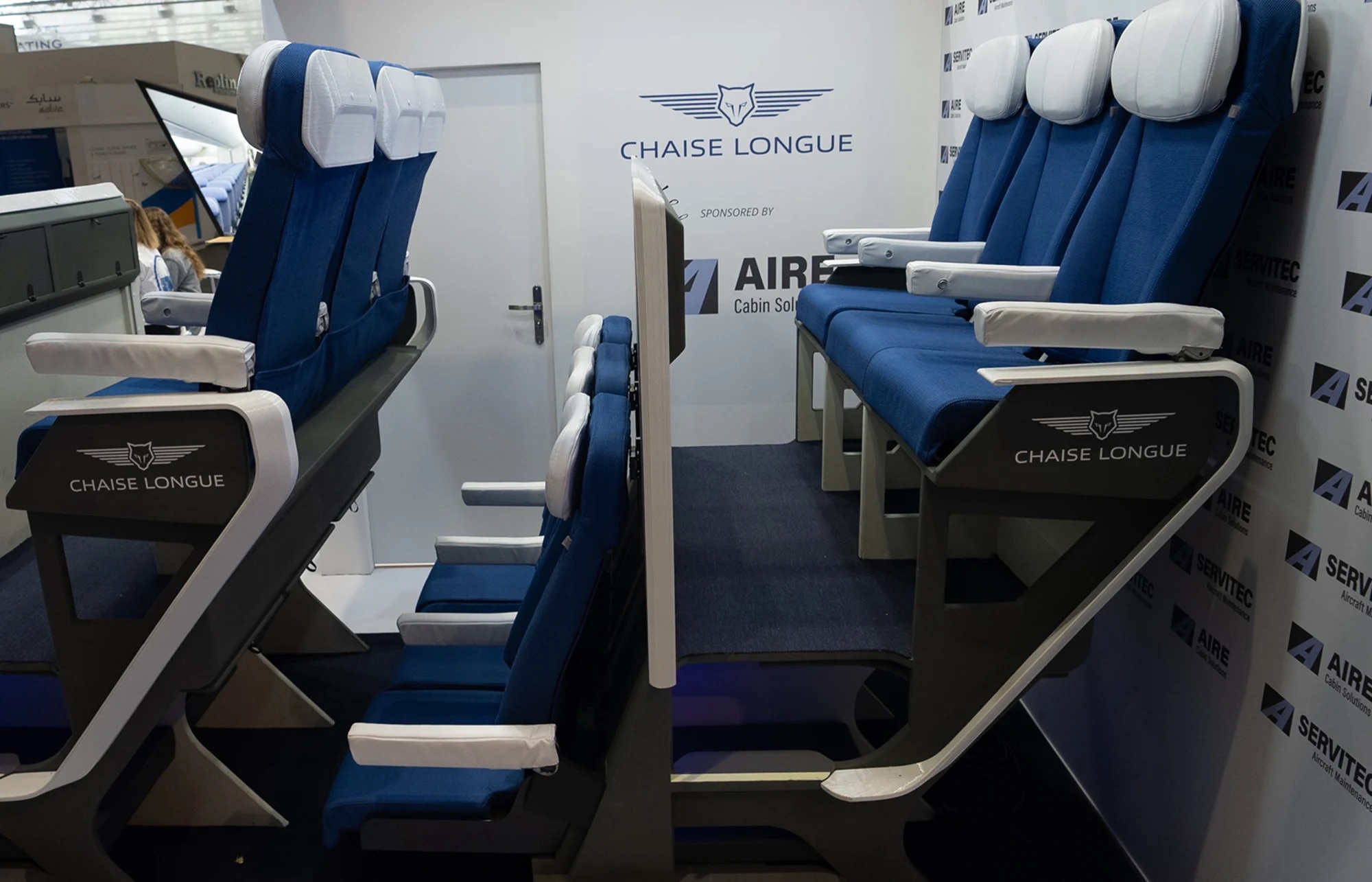
In the never-ending quest to give economy class passengers more room within a limited cabin footprint, the vertically stacked Chaise Longue seat concept is promising.
The company’s founder and CEO, Alejandro Nunez Vicente, recently presented an updated prototype of the CL Comfort Class cabin at the Aircraft Interiors Expo, showcasing enhancements to the passenger experience.
Going vertical so more passengers can get horizontal
The Chaise Longue is not the first vertically stacked seat prototype that the industry has considered. In the limited real estate of aircraft cabins, moving up instead of front, back or sideways makes good sense.
By keeping seats at a single level, airlines have to bring them closer together, crowding passengers in, but by stacking them across two levels, personal space is increased.
The design removes overhead bins, leaving room for luggage storage underneath the seats, and uses the free space above to raise alternating triples, with one row at floor level and the next higher, accessible by steps.
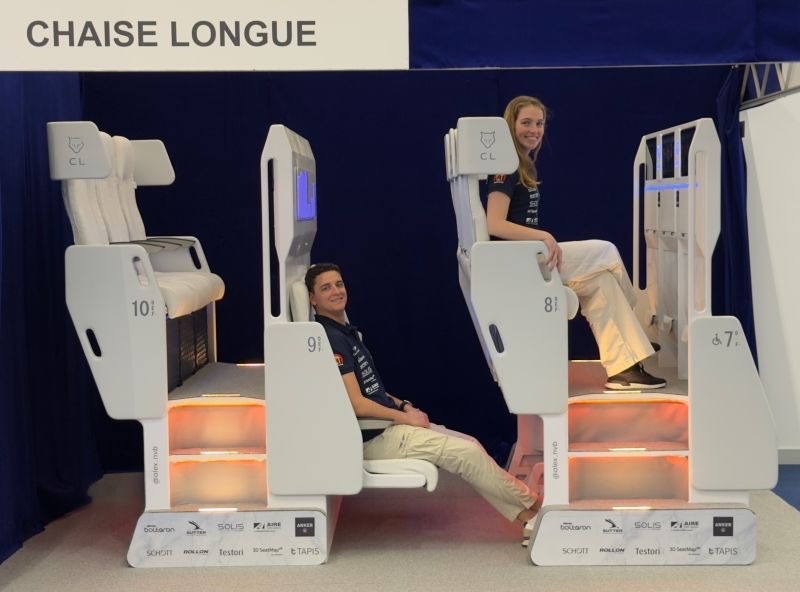
Alternating between elevated and floor-level seats, as the CL Comfort Class does, leaves more room for passengers on both levels. It also creates spaces where reclining chairs can meet under-seat legrests to create a nearly lie-flat surface for sleeping.
Even better, passengers reclining do not disturb the person behind them.
The pitch (the seat-to-seat spacing) remains the same, so airlines don’t lose capacity, but the same square footage is better distributed with elevated seats, leaving more room above and below.
A compelling cabin concept, with hurdles to overcome
In theory, the Chaise Longue has many advantages, but there are some important challenges for the design to overcome before it can fly.
HIC certification
Head injury criterion (HIC) certification exists to prevent passengers from being seriously injured if their heads hit a hard surface during a crash.
Manufacturers have to demonstrate that the surface would not be likely to injure passengers because it meets the HIC level requirement below 1000, equivalent to an 18% (or less) probability of a severe head injury.
To ensure compliance with all of these, the Chaise Longue will need to consider the impact risk of the hard-shell back shown in the prototype, as well as appropriate seat restraints to keep passengers from striking hard surfaces in a structure of this kind.
16G certification
While the Chaise Longue may pass HIC with few complications, the 16G sledge-test might prove far more difficult.
To pass this intense crash testing, aircraft seats must hold together during impact at a force 16 times the force of gravity and must not come apart when the floor warps during a crash.
Aircraft seats are secured to the cabin floor with locking mechanisms that keep them stable, but these mechanisms are not designed for multi-level seats. It is unclear how effectively they might hold these seats in place during impact.
Evacuation requirements
Seat designs must ensure that passengers can still egress the cabin safely and quickly during an emergency. Any design features that might hamper evacuation must be addressed. One disadvantage of vertical seating is that it may delay evacuation.
Repeated testing over decades has shown that passengers sometimes climb over the seats in front of them rather than use the aisle. While that might sound chaotic, it actually helps to clear the cabin sooner, which is the ultimate aim of an evacuation.
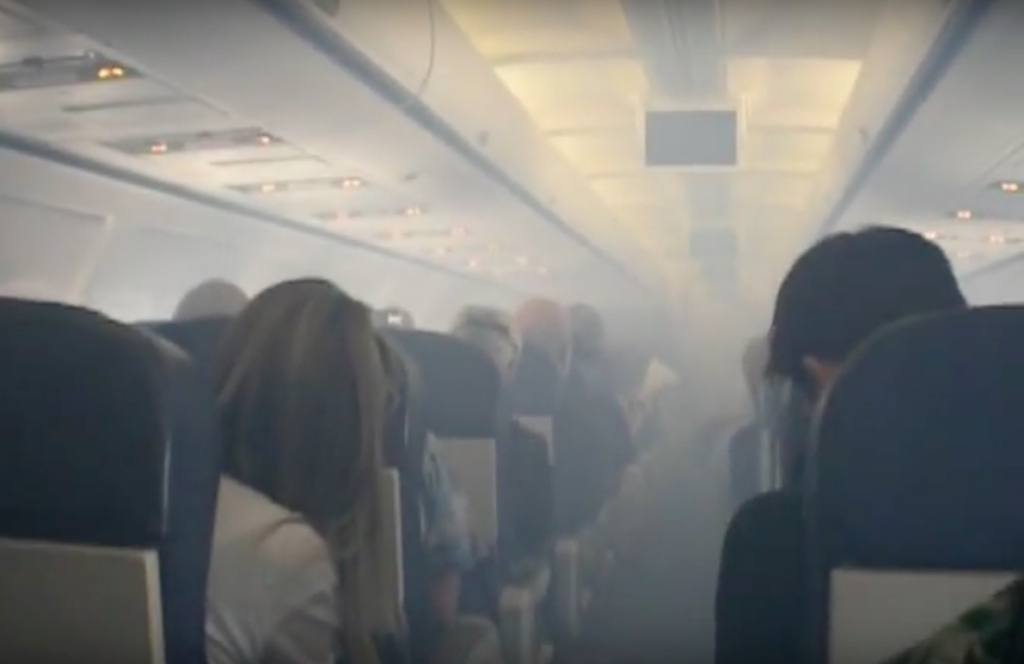
With the seats in front elevated, passengers would be forced to use the aisle exclusively to egress, which might cause crowding and slow the evacuation. Crowding could also result in more injuries during an emergency.
Service processes
Some innovative designs have passed testing but failed in persuading airlines that they were viable concepts for cabin service. Airline flight attendants must be able to reach passengers to provide assistance as needed and serve food and beverages.
Elevated seat designs would require new service processes that airlines would need to consider carefully.

Still, testing and certification challenges are no reason to discount a design outright; otherwise, nothing would fly. But they must be addressed to satisfy regulators and airlines before any cabin designs can take off.
Chaise Longue: Innovation and determination
The Chaise Longue is definitely innovative and addresses airlines’ need to fit more passengers on an aircraft while ensuring those passengers can sit comfortably and get quality rest on long flights.
The Spanish company isn’t just trying to fix economy class. It was also shortlisted for the Crystal Cabin Awards this year for its Elevated Class concept—an adaptation of the multi-level seat to meet the needs of premium business class passengers with quiet suites above, personal retreats below, and flexible areas for working, eating or socialising.
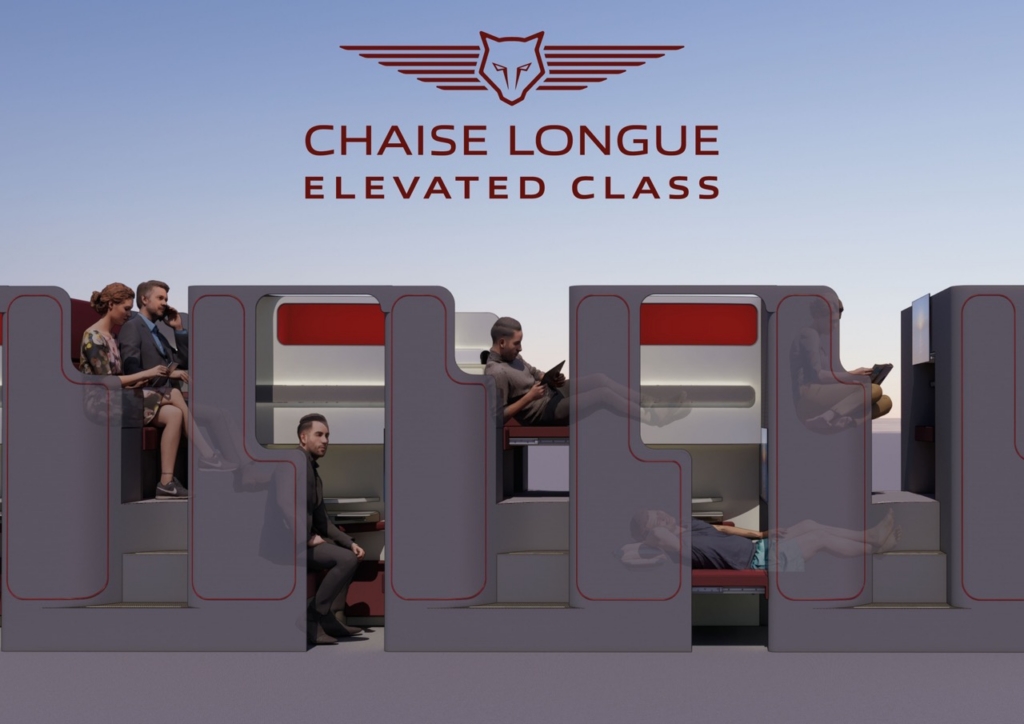
The prototype presented at AIX is impressive, and the company’s founder is determined to succeed.
Nunez Vicente addressed concerns over the viability of the design in a recent LinkedIn post about the seating concept, saying,
“I understand that people in the beginning thought this was just another crazy concept. After working on my start-up CHAISE LONGUE over the past 5 years, I can guarantee that we will not stop until it flies.”
Featured Image: Chaise Longue