


How oil price rises influence your airline ticket price

6 min read
Airfares have always been something of an enigma. You go to book a cheap deal you spotted a few days ago and suddenly the price has tripled. A big part of this is the cost of fuel.

In a typical year, jet fuel accounts for somewhere between a fifth and a third of an airline’s operating expenses. When markets are stable, that proportion sits closer to 20-25%. But as we’re seeing at the moment, when war or other shocks happen, sudden price swings can push it well beyond 30%.
As oil prices soar, there comes a point when airlines can’t just keep absorbing the impact. They start having to rethink pricing, capacity and strategy almost in real time.
How do rising oil prices translate into higher fares?
The current conflict has certainly shown just how exposed aviation is to geopolitical shocks. The region plays a crucial role in global oil supply, and even the threat of disruption – whether through sanctions, instability or closing the Strait of Hormuz – can send prices even higher.
Airlines do not buy crude oil directly, but jet fuel prices are closely tied to it and some airlines are faring better than others. When crude prices climb, refined fuel often rises faster, tightening margins almost immediately.
Even before any physical disruption to supply, the market reacts to risk – leaving airlines to deal with the financial fallout.
What happens next isn’t something passengers notice straight away. Airlines rarely rush to push up fares at the first sign of trouble, especially if they think the spike might pass. But with the situation around Iran dragging on, and oil markets staying jittery, those higher fuel bills start to show up in what you pay for a ticket.
Fuel surcharges making a comeback
With the situation in the Middle East adding fresh uncertainty to energy markets, adding surcharges gives airlines some breathing room. They can be tweaked up or down depending on fuel prices and presented as a temporary response to unusual conditions.
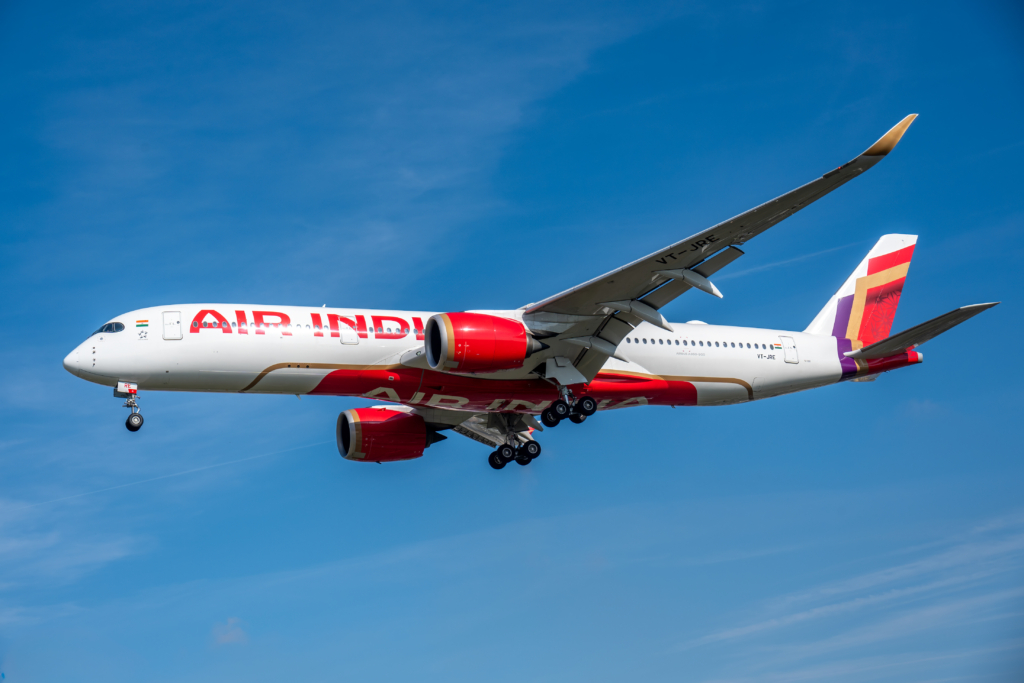
For example, Air India has rolled out new distance-based domestic fees and sharply increased international surcharges, with some long-haul routes to North America and Australia now seeing adds of up to around $280 per leg, and roughly $205 to Europe.
Air France-KLM has also brought back a long-haul fuel surcharge, adding about €50 to economy return tickets. Additionally, British Airways has nudged up charges on long-haul routes, with increases of around €150 on journeys like London to Singapore.
In Asia, Cathay Pacific has gone a step further, doubling its fuel levy across all long-haul flights.
Other carriers, including AirAsia X and a handful of smaller European airlines, are also tweaking fares or weighing further increases as fuel prices stay high.
War disruption and the hidden cost of longer routes
The impact of the Iran conflict goes well beyond fuel prices alone. As tensions rise and airspace restrictions come and go, airlines are increasingly having to reroute flights to stay clear of sensitive areas.
That often means longer paths between Europe and Asia, especially on routes that would normally pass through parts of Middle Eastern airspace.
Those detours might not sound dramatic on paper, but they soon add up. More distance means more fuel burned, so airlines are hit twice over.
Not only are fuel prices higher, but each individual flight becomes more expensive to operate. Over time, that chips away at efficiency gains the industry has spent years trying to build.
On top of that, there are knock-on effects in the fuel market itself. Refining capacity is already tight in some regions, and when geopolitical tensions flare up, supply chains become even more strained. That can increase jet fuel prices faster than crude oil, adding yet another layer of cost pressure that airlines have little control over.
Strong demand versus fuel costs
Despite everything that’s going on, demand for air travel is still strong. The problem is, capacity just isn’t keeping up. Aircraft shortages, delayed deliveries and ongoing operational limits all mean airlines can’t expand as quickly as they’d like.
That gap gives airlines more pricing power. Fuel costs are rising because of tensions around Iran, but demand is also strong enough that many passengers are still willing to pay higher fares.
Airlines, meanwhile, argue that it all comes down to a mix of pressures: higher fuel costs, longer reroutes because of airspace restrictions, tight capacity, and the need to rebuild finances after a tough few years. In reality, it’s probably a combination of all of these.
Why don’t airfares fall quickly when oil prices drop?
Even if tensions calm down and oil prices start to ease, don’t expect ticket prices to drop straight away. A big reason for that is fuel hedging, which is basically when airlines lock in fuel prices ahead of time.
Fuel hedging works a bit like insurance against sudden sharp oil price rises. But the downside is that when prices fall, they don’t get the benefit immediately either.
If an airline locked in fuel at higher rates during a volatile period, they can still be stuck paying those prices for months afterwards.

That delay is why fares often stay high even after oil markets settle. Airlines are still working through older, more expensive fuel deals, and that filters through into ticket prices long after the headlines have moved on.
“We are about 80% hedged, but that still leaves a significant portion exposed to rising fuel prices,” said Michael O’Leary, Chief Executive Officer of Ryanair. Likewise, Scott Kirby, Chief Executive Officer, United Airlines added: “If prices stayed at this level, it would mean an extra $11 billion in annual expense just for jet fuel.”
How else are airlines boosting revenue?
Raising fares is only one response available to airlines. Many are looking for ways to offset higher fuel costs without simply ratcheting up ticket prices.
Fleet modernisation is one way. Newer aircraft consume significantly less fuel, offering long-term protection against volatility. For example, British Airways recently announced it will be replacing its Boeing 777-200 fleet at London Gatwick with the Boeing 787-10 from 2029.
Airlines can also shift how they deploy capacity, focusing on routes where demand is strongest and scaling back where margins are thinner. At the same time, ancillary revenues from baggage fees to seat selection continue to provide an additional buffer.
Just one recent example is United Airlines increasing checked baggage fees by $10. Meanwhile American Airlines and Alaska Airlines are also bumping up baggage fees.
None of these measures eliminates the impact of rising oil prices, but they can soften it, at least in the short term.
Ticket pricing is a balancing act
Like the Covid-19 pandemic, the situation in the Middle East is just the latest reminder of how quickly global events can ripple through into what passengers pay.
When oil prices substantially increase, fares usually follow – but even this can be unpredictable. It all depends on timing, how airlines are positioned, and how they choose to pass costs on.
And even if things settle geopolitically, the impact doesn’t just disappear. Higher fuel costs, longer routings, and the lag in how airlines adjust pricing can all keep fares inflated for a while.
Airlines are trying to manage risk, costs, and demand all at once, while passengers feel the end result.
Featured image: ID_Anuphon | stock.adobe.com


