Airbus unveils cabin that lets wheelchair users stay in their own chairs during flights

5 min read
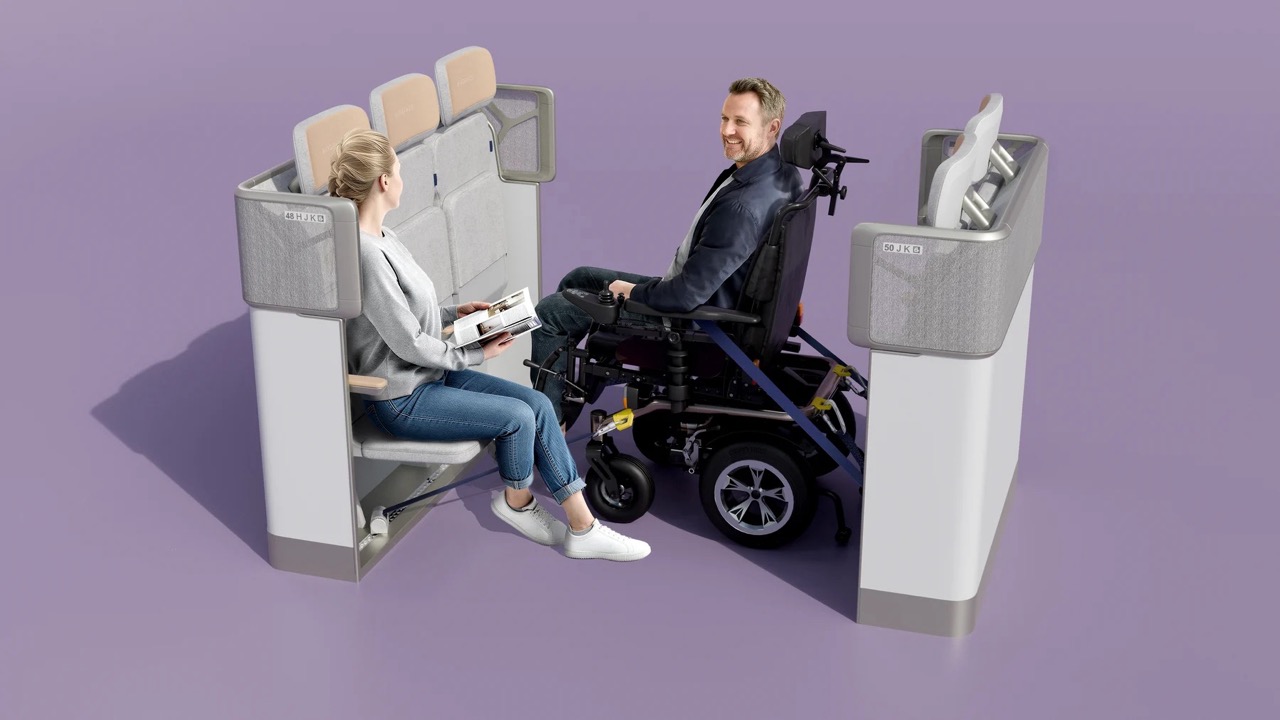
Airbus has introduced a new cabin seating concept that could fundamentally change how wheelchair users travel by air—allowing them to remain in their own personal wheelchair throughout the flight.
Unveiled as part of its Airspace cabin innovation portfolio, the Airspace U Suite introduces a flexible cabin module designed to improve accessibility for passengers with reduced mobility (PRMs), while also meeting the needs of a broad range of travellers.
Air travel accessibility remains a challenge for wheelchair users
Flying often requires wheelchair users to surrender a vital mobility aid at the aircraft door. Passengers are typically transferred into an aisle chair and then into a standard seat, while their own wheelchair travels in the hold, where it can suffer damage.
More than 10,000 wheelchairs are damaged annually in US airports alone, with repair or replacement costs reaching up to $80,000 per incident.

The risk of losing a critical personal transport while flying and the general discomfort of air travel for PRMs have been persistent barriers to accessible air travel.
“Because your own wheelchair is a vital extension of your body for everyday mobility, having to use an airport chair is genuinely a terrible experience,” said Dirk Thalheim, Airbus Design Office Engineer, who is a wheelchair user.
Airbus Airspace U Suite allows wheelchair users to stay in their own chairs
The Airspace U Suite eliminates the hurdles of air travel by allowing PRM passengers to remain in their own powered or manual wheelchair throughout the flight. A specialised restraint system secures the mobility aid to the aircraft floor.
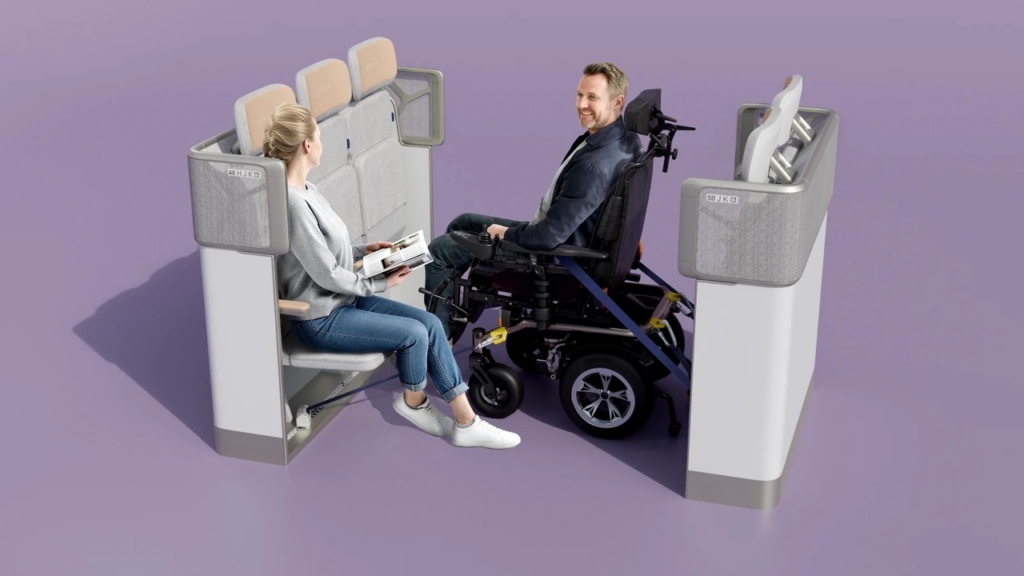
Allowing passengers to use their own mobility aids in the cabin avoids the wheelchair-to-aircraft seat transfer process, which can often be physically difficult and limits the traveller’s independence to move around the aircraft during the flight.
The Airspace U Suite restores autonomy for passengers with limited mobility, reduces the risk of damage, and enables a seamless door-to-seat experience.
Modular cabin design offers flexible seating for airlines and passengers
The U Suite is unique for its modular, multipurpose design. Airbus has created a reconfigurable cabin zone rather than dedicating space solely to accessibility.
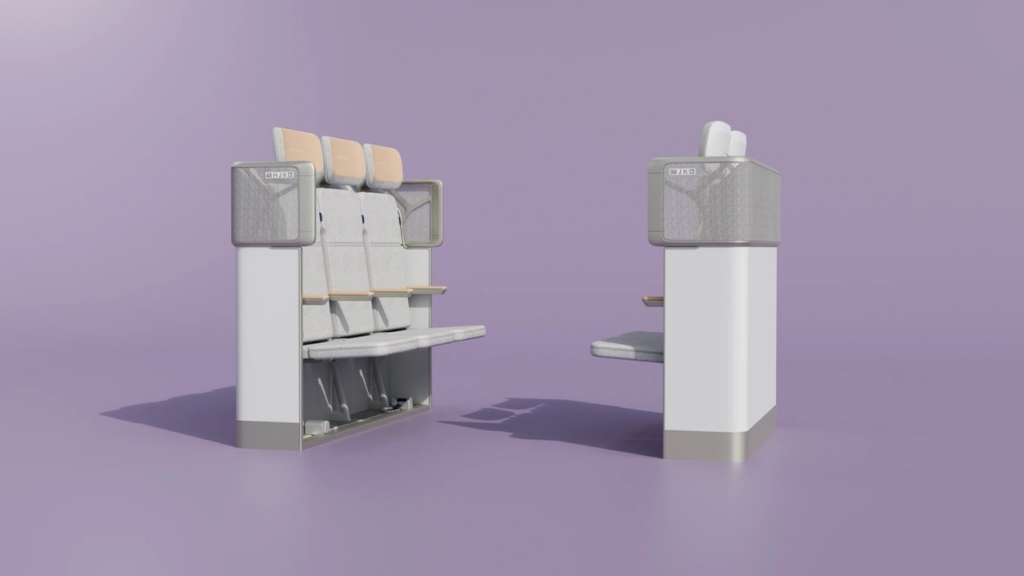
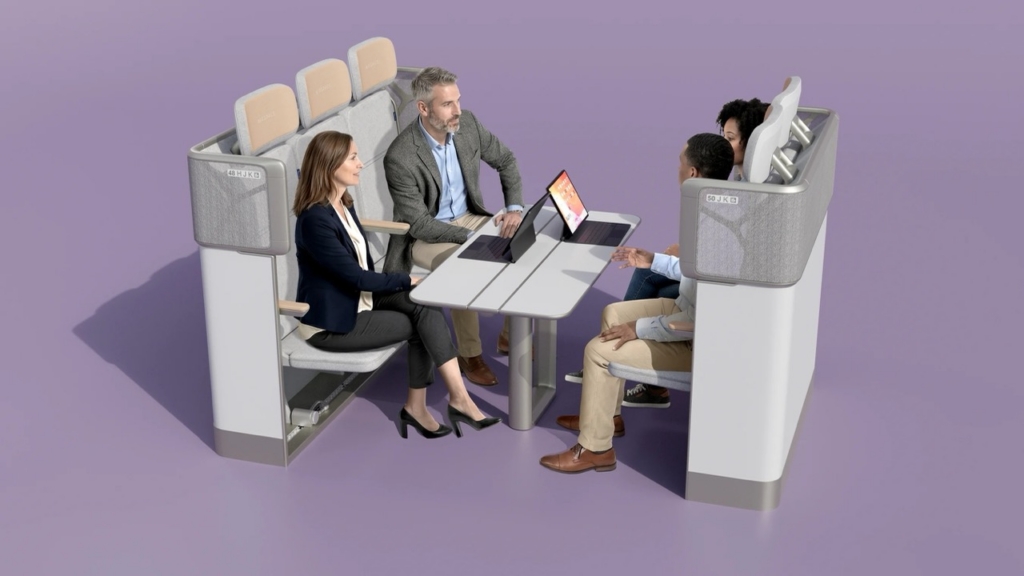
It provides a wheelchair-accessible space for PRMs, but can also transform into a lie-flat rest area for long-haul comfort, a shared space for families travelling together, and even a meeting and co-working booth for business travellers.
Foldable seating allows airlines to adjust the layout between flights dynamically.
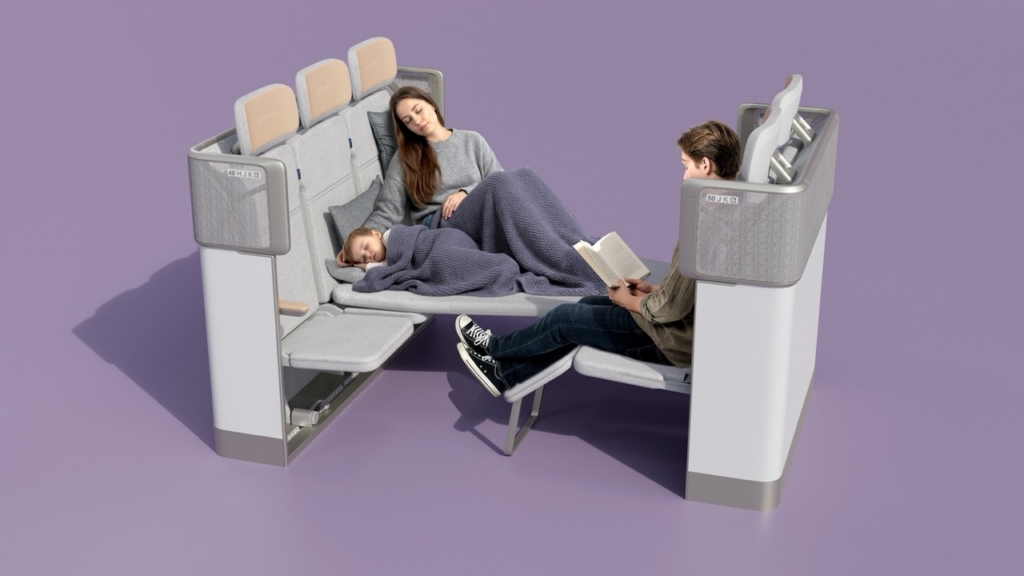
The Airspace U Suite concept is the brainchild of Airbus engineers Hans-Gerhard Giesa and Dirk Meiranke, who have worked together on the design over several years.
They have studied both the technical feasibility and the business viability of the concept, ensuring that the U Suite would benefit PRMs and airlines alike.
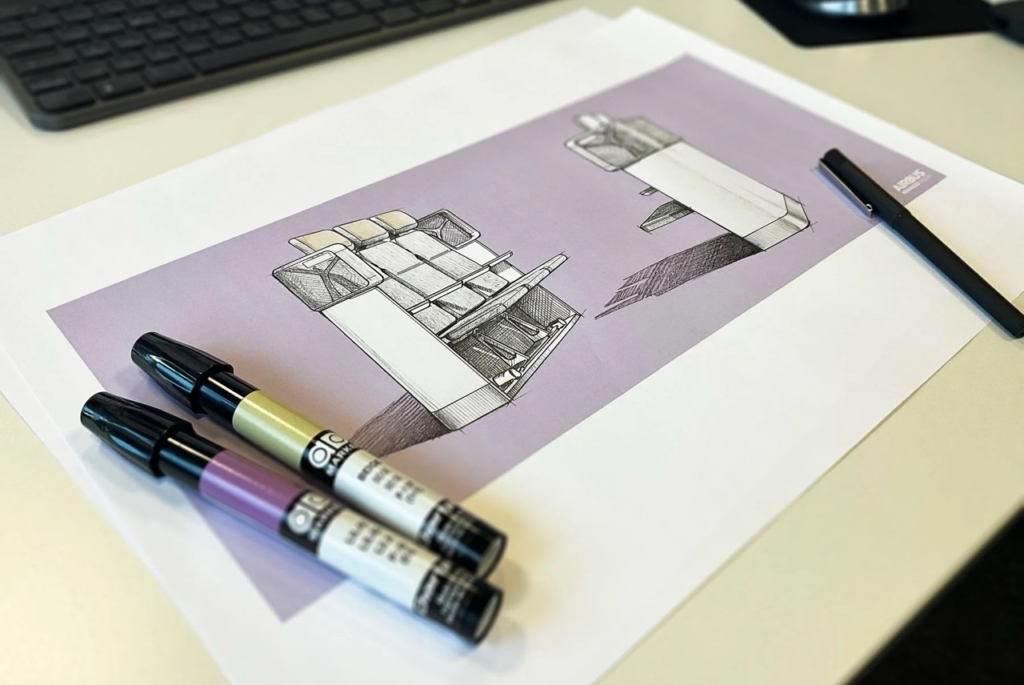
“Human Factors provides expertise in human needs, covering ergonomics, comfort, health, and usability. The key task is supporting design engineers to find the optimal balance among the diverse needs of all users, resulting in a truly optimised cabin product for everyone,” said Hans-Gerhard Giesa, Cabin and Cargo Senior Expert, Human Factors at Airbus.
Airbus tests wheelchair seating concept in real flight conditions
Airbus put the U Suite through a real-world test in March, with a passenger, Dirk Thalheim, remaining in his wheelchair throughout the flight. The test validated the U Suite’s wheelchair restraint system and its integration with cabin floor tracks, which are critical for certification.
Airbus presented a full mock-up of the U Suite at the Aircraft Interiors Expo in Hamburg, allowing the industry to evaluate the concept firsthand.
Airbus targets 2032 entry into service for U Suite cabin concept
To bring the U Suite to life, Airbus partnered with specialists including AMF-Bruns, Ipeco, and Sunrise Medical.
“Our two key missions with our partners were (not just) to analyse the technical and operational feasibility of all of the components during a flight…but also to develop a mock-up that could be presented at the AIX, to bring the concept to life and to gather customer feedback,” said Ekaterina Lieshout, Project Lead, Airspace U Suite
“By partnering with experts, we are able to progress the project further and can adapt their current solutions and expertise for the sky.”
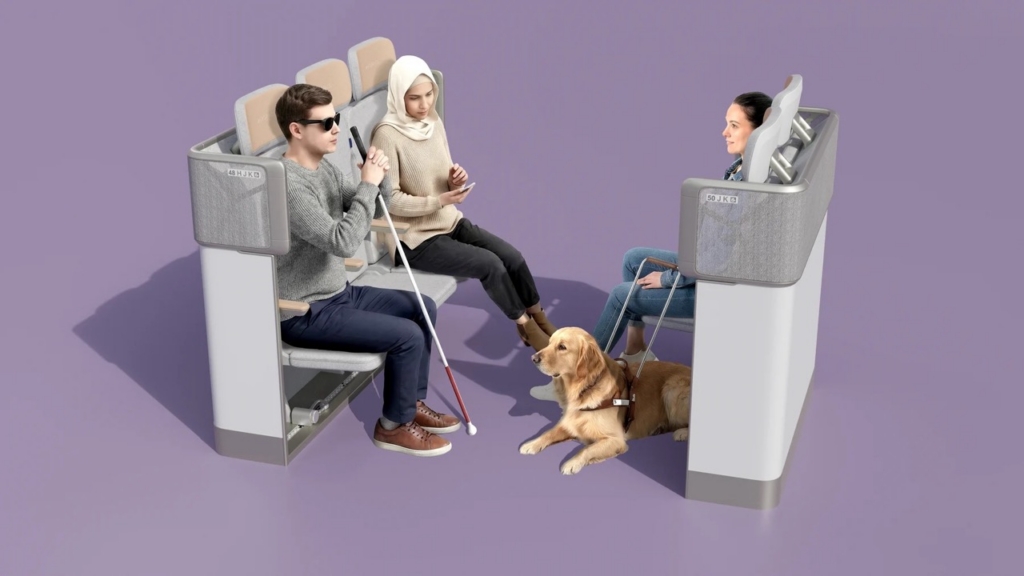
The project also incorporated input from wheelchair users, ensuring the design reflects real-world needs rather than theoretical assumptions. While promising, the Airspace U Suite is still in development.
Airbus is targeting entry into service around 2032, subject to regulatory approval for wheelchair restraint systems, cabin integration standards, and safety requirements during all phases of flight.
While cabin equipment certification is often a complex process with an extended timeline, the successful early testing is promising.
Airbus pushes for more accessible aircraft cabins for passengers with disabilities
More than one billion people worldwide live with a disability, yet air travel has historically lagged behind other transport modes in accessibility.
The U Suite forms part of Airbus’ long-term commitment to making aircraft accessible, which includes the development of more accessible lavatories and digital passenger assistance tools.
By designing a cabin that adapts to passengers—rather than forcing passengers to adapt to the cabin—Airbus is addressing one of aviation’s persistent accessibility gaps.
If certified and adopted at scale, the Airspace U Suite could significantly improve the passenger experience for wheelchair users, and for other passengers who might benefit from a more flexible, human-centred cabin.
Featured Image: Airbus