


Sceye completes 12-day flight as stratospheric telecom moves closer to real-world use


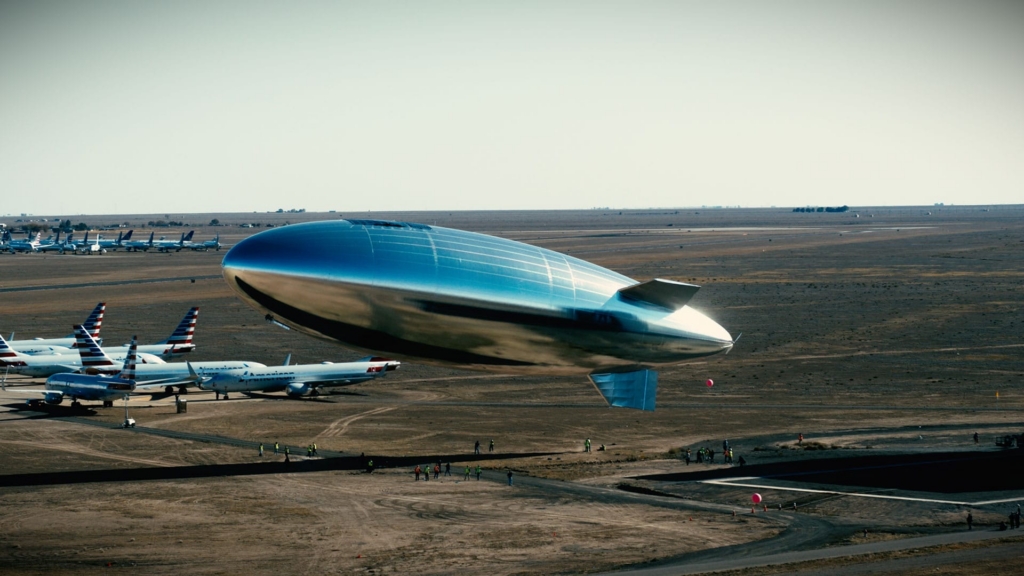
Sceye has completed its longest and most technically demanding high-altitude platform systems (HAPS) flight to date, keeping its stratospheric airship aloft for more than 12 days and travelling 6,400 miles from New Mexico to waters off Brazil.
The flight, completed by Sceye’s SE2 vehicle as part of the company’s Endurance Programme, is significant not simply because of its duration, but because it addresses one of the biggest hurdles that has long held back HAPS: the ability to stay in position and remain powered through repeated day-night cycles while operating reliably in the stratosphere.
“This is the defining step toward unlocking the stratosphere as a new layer of infrastructure,” said Mikkel Vestergaard Frandsen, Founder and CEO of Sceye. “Endurance is what makes this possible. The ability to remain over an area for extended periods enables persistent connectivity and real-time monitoring where traditional networks and existing technologies fall short.
“Through the stratosphere, we can extend the reach of existing networks globally to billions of people that are unconnected and provide real-time actionable insights that significantly improve how we prepare for and respond to wildfires or other natural disasters.”
That has been the central technical challenge for a sector that has promised for years to bridge the gap between satellites and terrestrial networks, but has often struggled to move beyond demonstrations.
For Sceye, this latest mission suggests that the HAPS market may finally be moving into a more credible phase.
Why endurance is the key challenge for HAPS
HAPS occupy a part of the atmosphere that has often been described as the missing middle in aerospace.
Defined by the International Telecommunication Union as platforms operating roughly 20km to 50km above Earth, they sit far above weather and conventional air traffic, but far below satellites.
That positioning gives them an unusual advantage: they can cover large areas persistently while offering lower latency and greater flexibility than orbiting systems.
In theory, that makes them attractive for everything from broadband backhaul and rural connectivity to disaster response, environmental monitoring and border surveillance. In practice, the problem has always been endurance.
Unlike satellites, HAPS must contend with thin air, thermal extremes, solar power management, wind drift and the need to maintain lift and control over long periods.
Many projects over the past two decades have shown promise but failed to demonstrate sustained operations at commercial scale. That is why Sceye’s latest mission is notable.
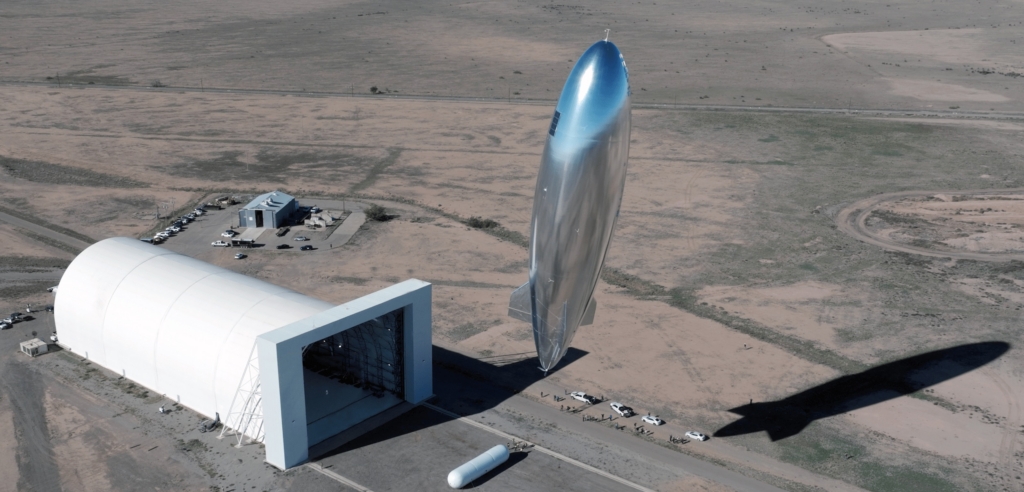
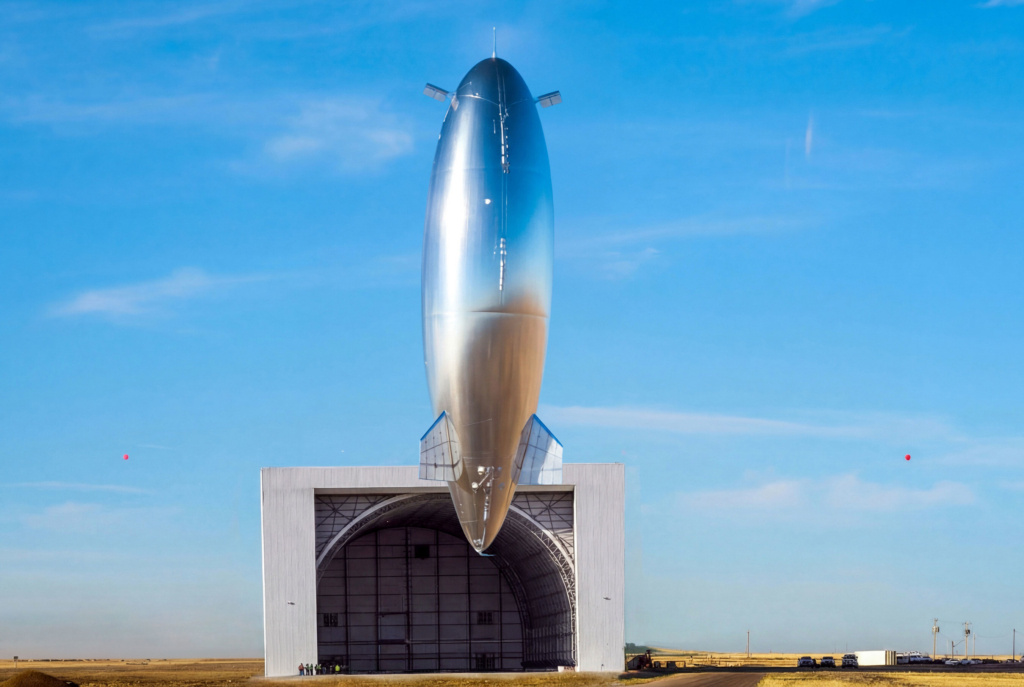
Launched from New Mexico on March 25, Sceye’s SE2 remained in the stratosphere for more than 12 days before completing a planned termination over international waters off Brazil.
Over the course of the mission, the vehicle spent more than 88 hours loitering over selected areas while maintaining altitude and position, at times holding within a station-seeking radius as tight as 1km.
For a platform designed to act as a persistent communications node or sensing platform, that kind of control matters as much as raw flight time.
It is the difference between simply staying airborne and actually delivering a useful service.
How HAPS could complement satellites and terrestrial telecom networks
One reason HAPS have regained momentum in recent years is that they are now being viewed more realistically.
The industry no longer tends to present them as replacements for satellites or mobile towers. Instead, they are increasingly being positioned as a complementary layer that can fill specific gaps in coverage and resilience.
That matters in places where terrestrial networks are difficult or expensive to build, such as remote deserts, mountains, islands and disaster-hit areas.
The ITU says HAPS can be used both to provide direct broadband access to end users and to act as transmission links between mobile and core networks, effectively extending or restoring connectivity with limited ground infrastructure.
This is particularly relevant for emergency communications after natural disasters, where damaged terrestrial systems can leave entire regions cut off.
Because they operate much lower than satellites, HAPS can also offer lower latency and potentially more targeted coverage.
That has made them increasingly attractive to telecom operators and governments looking for more resilient communications architectures. Sceye’s own next step reflects that.
The company says it is preparing for a pre-commercial telecom test flight in Japan this summer, where it plans to link its platform into SoftBank Corp.’s core network to demonstrate high-altitude backhaul connectivity and support disaster response scenarios.
That will be an important test because it moves HAPS out of engineering validation and into the harder world of network integration.
Airship vs solar aircraft: competing approaches in the HAPS market
Sceye is not alone in trying to unlock the stratosphere.
The wider HAPS market has seen renewed activity as advances in solar efficiency, battery density, lightweight materials and autonomous flight systems have made long-duration operations more feasible than they were even a decade ago.
The ITU notes that these technological gains have been central to making HAPS commercially viable after years of limited progress.
There are broadly two main approaches.
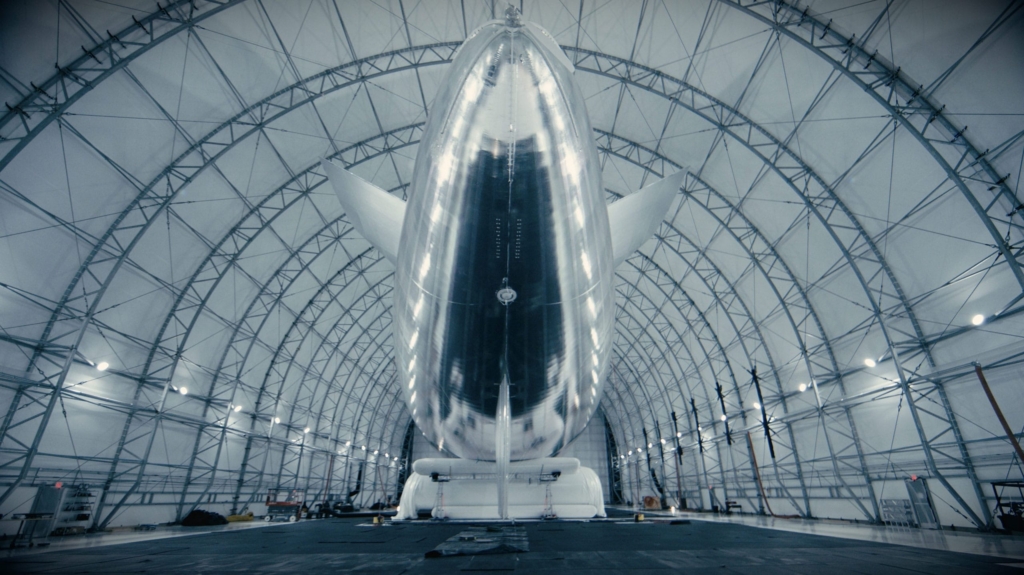
Sceye is developing a lighter-than-air platform, effectively a steerable high-altitude airship designed to loiter over fixed areas for long periods.
That architecture is particularly well-suited to persistent telecom coverage and environmental sensing because it prioritises station-keeping and payload endurance.
The other major approach is the solar-electric fixed-wing aircraft. Airbus subsidiary AALTO’s Zephyr is the best-known example.
Flying above 60,000ft, Zephyr is designed to remain in the stratosphere for months at a time, powered by solar energy during the day and batteries at night. Airbus says it remains the only fixed-wing HAPS to have demonstrated day-and-night endurance in the stratosphere.

Unlike Sceye’s airship, Zephyr behaves more like an ultra-light aircraft, covering large areas while carrying payloads for surveillance or communications.
Airbus says Zephyr can provide low-latency connectivity over areas of up to 7,500 sq km and support high-resolution earth observation through its Strat-Observer service, which can cover around 2,500 sq km per day at 18cm resolution.
Together, these platforms illustrate that HAPS is not a single technology but a broader category of near-space systems tailored for different missions.
Can HAPS deliver reliable and commercially viable services?
For years, HAPS suffered from the same problem as many emerging aerospace technologies: strong technical promise but unclear operational proof.
That is now beginning to change.
What Sceye appears to have demonstrated in this latest mission is progress on the two loops that matter most for long-duration flight: power and platform integrity.
The company said SE2 successfully maintained both power and internal pressure through repeated day-night cycles, validating not just its energy system but also the performance of its first fully in-house manufactured hull.
That matters because stratospheric platforms operate in punishing conditions.
At altitude, vehicles face low air density, wide temperature swings, UV exposure and winds that can push them far off station if energy reserves or control systems are inadequate.
Even small failures in thermal management or pressure stability can cut missions short.
Sceye said the Endurance Programme also helped improve flight control, thermal management, manufacturing and operations protocols, all areas that have historically limited long-duration HAPS performance.
Recently, Sceye unveiled SceyeCELL, its first-of-its-kind “cell tower in the sky” antenna designed to bring high-speed connectivity at scale from the stratosphere.
The bigger question now is commercial reliability.
The HAPS market has had false starts before, from Google’s Loon balloons to earlier telecom concepts that proved difficult to scale.
What operators and investors now need is evidence that platforms can fly not just for days, but for weeks or months, with predictable maintenance and economically useful payloads.
Sceye believes it now has the data needed to move towards months-long and eventually years-long missions. Whether that proves realistic will depend on what happens next in Japan and beyond.
Featured image: Sceye


