


Bringing the Stuka back to life: How a US museum is restoring a wartime Ju-87D-5 dive bomber

5 min read
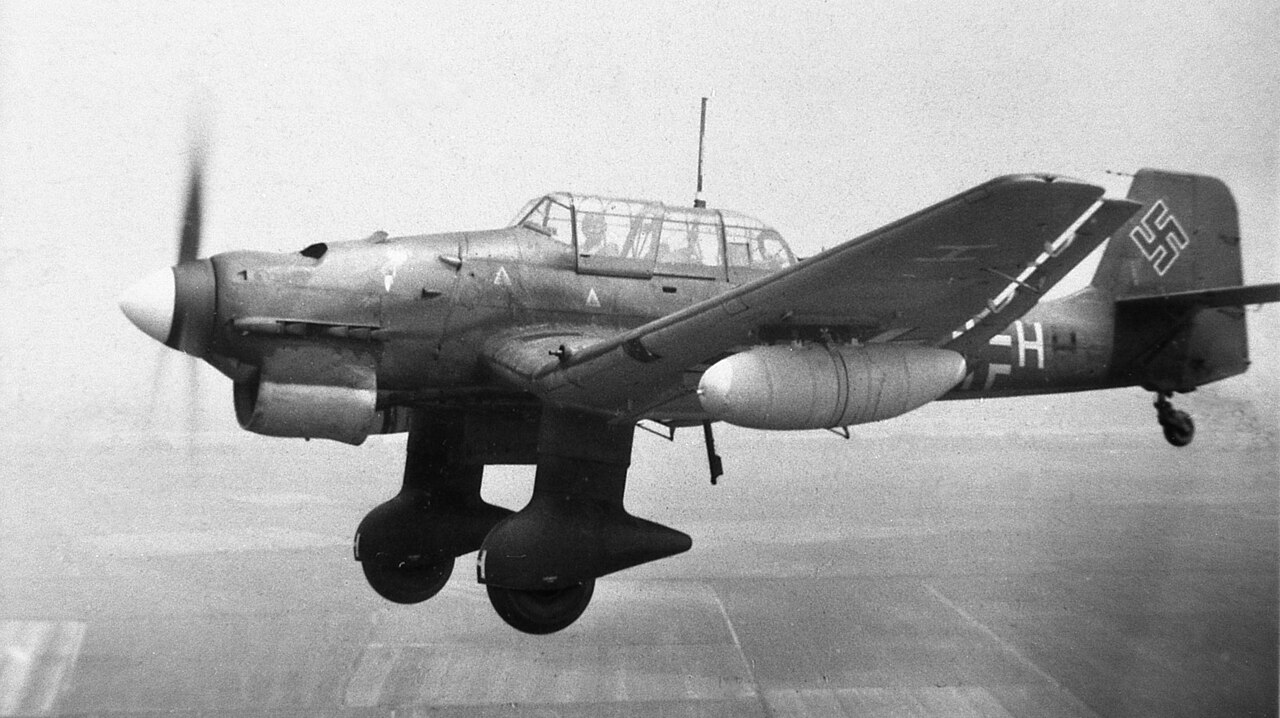
A Junkers Ju 87D-5 is slowly emerging from the remains of a wreck that spent more than seven decades beneath the waters of a frozen Finnish lake.
At the American Heritage Museum in Hudson, Massachusetts, an ambitious international restoration is transforming the aircraft from a remarkably preserved but severely damaged relic into a potentially flyable example of one of the most recognisable, and allegedly the most feared, aircraft of the Second World War.
The project to restore a Stuka dive bomber
The aircraft is a Ju 87D-5 (Werknummer 131587), a particularly rare survivor with a fascinating wartime history. The American Heritage Museum acquired the aircraft after its recovery from a northern European freshwater lake, and the restoration is being undertaken at specialist facilities in Europe rather than at the museum itself.
The ultimate objective is not a static reconstruction but an airworthy aircraft, to be displayed as part of the museum’s planned aviation expansion.
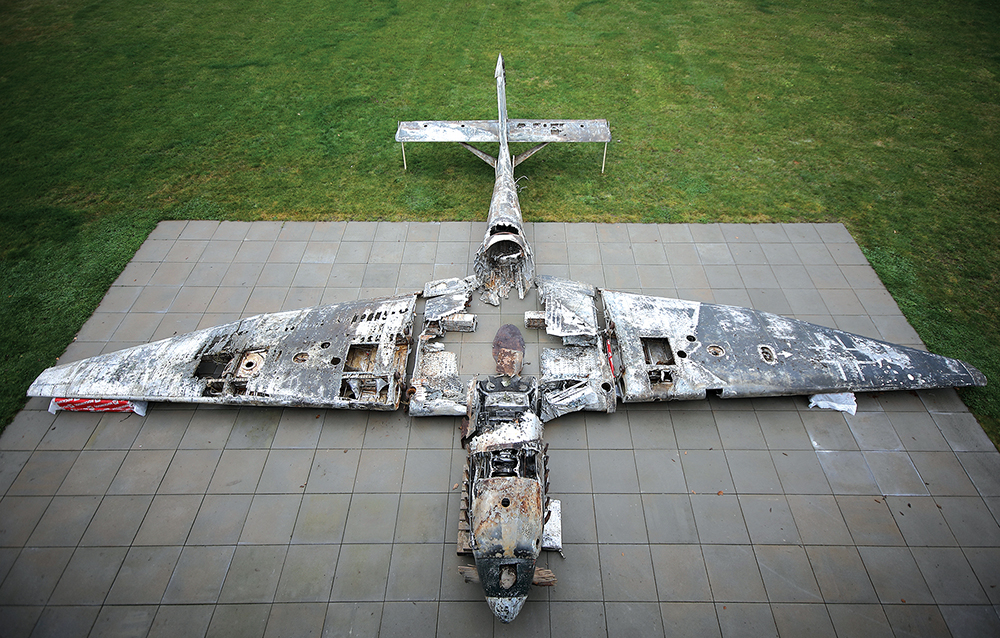
The latest progress, reported by the museum on 8 September, shows that the project has reached an important stage.
Both the vertical and horizontal stabilisers are now nearing completion, while the wings are approaching the end of their structural rebuild and are being carefully test-fitted before final assembly.
Once this work is complete, attention will turn to one of the most difficult parts of the entire project: the fuselage and centre section.
The restoration is an exercise in reconstruction as much as repair. Although the aircraft survived its landing on the lake remarkably well, its fuselage and centre section were severely damaged when its crew deliberately destroyed the aircraft before abandoning it.
The Stuka had run critically low on fuel and was forced to land on the frozen lake on 4 April 1944. Knowing that they could not recover the aircraft, the crew detonated an explosive charge in the cockpit. When the ice subsequently thawed, the Ju 87 disappeared beneath the water.
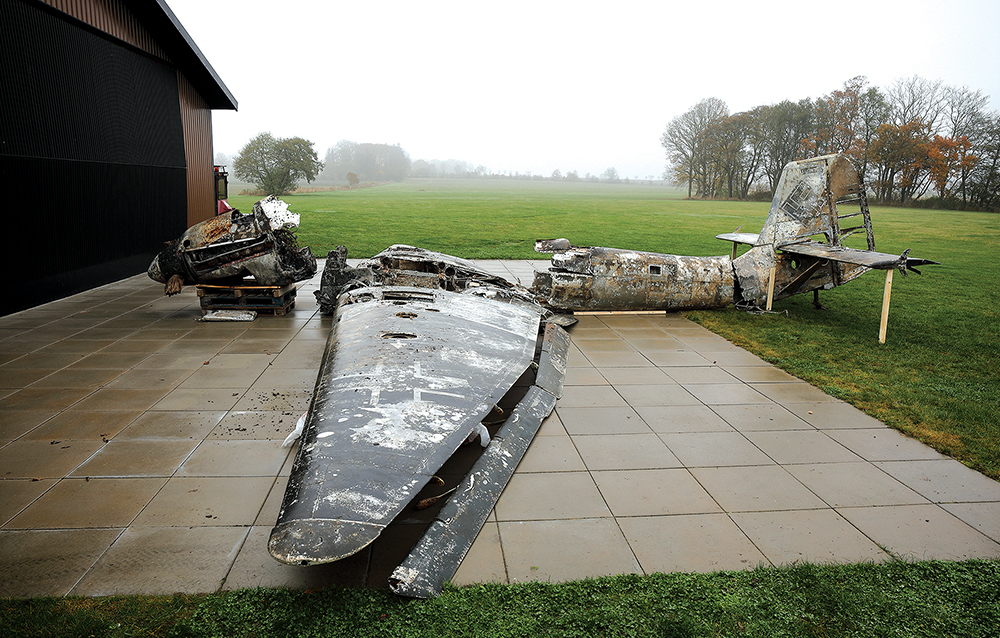
The cold freshwater environment proved unexpectedly beneficial. Because the aircraft had made a controlled forced landing rather than suffering a high-speed crash, substantial sections of the airframe remained intact.
After its recovery 77 years later, original material and even remnants of its wartime finish provided invaluable evidence for the restoration team.
A multinational restoration collaboration
One of the project’s greatest challenges is the lack of surviving original Junkers construction drawings. Instead, restorers have had to reverse-engineer the aircraft using surviving components, detailed measurements and three-dimensional scans of other Ju 87s preserved in European museums.
The RAF Museum in the UK, the Deutsches Technikmuseum in Berlin and the Východočeské Museum in the Czech Republic have all contributed to the research and reconstruction effort.
The wings illustrate the extraordinary level of work involved. Corroded spar components have been replaced, while new ribs, spars, fittings and skins are being manufactured and carefully test-fitted in purpose-built fixtures.
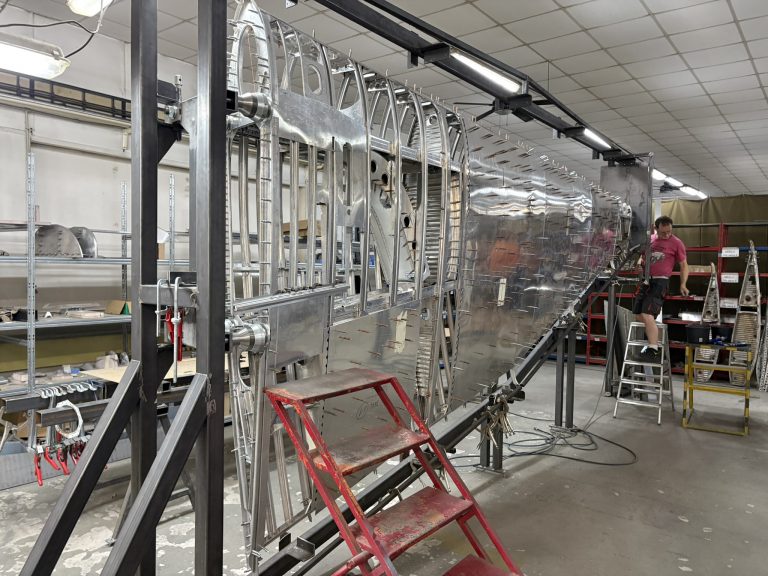
The Ju 87’s wing construction differs considerably from that of many American aircraft, using relatively few large, heavily constructed ribs and a substantial box-like internal structure. Before components are permanently riveted, their dimensions and alignment are checked, after which they undergo processes including heat treatment and anodising.
Even the smallest components are receiving the same attention. The restoration team is reproducing the German wartime rivets used by Junkers, rather than substituting modern standard fasteners.
These rivets differed from those commonly used in British and American aircraft, including their distinctive 120-degree head geometry and specialised alloy. The correct materials and manufacturing methods are considered important not only for authenticity but also for structural integrity.
Restoring every part of the vintage wartime aircraft
The project also extends into areas that will eventually be hidden from view. One particularly challenging component, according to the Museum, is the Stuka’s flap-and-aileron mixer, which caused the ailerons to droop as the flaps were lowered.
The original mechanism was destroyed, so the team has examined surviving examples, created digital scans, and is using modern manufacturing techniques, including 3D metal printing, to reproduce it accurately. The aircraft’s Jumo 211 engine is also undergoing overhaul.
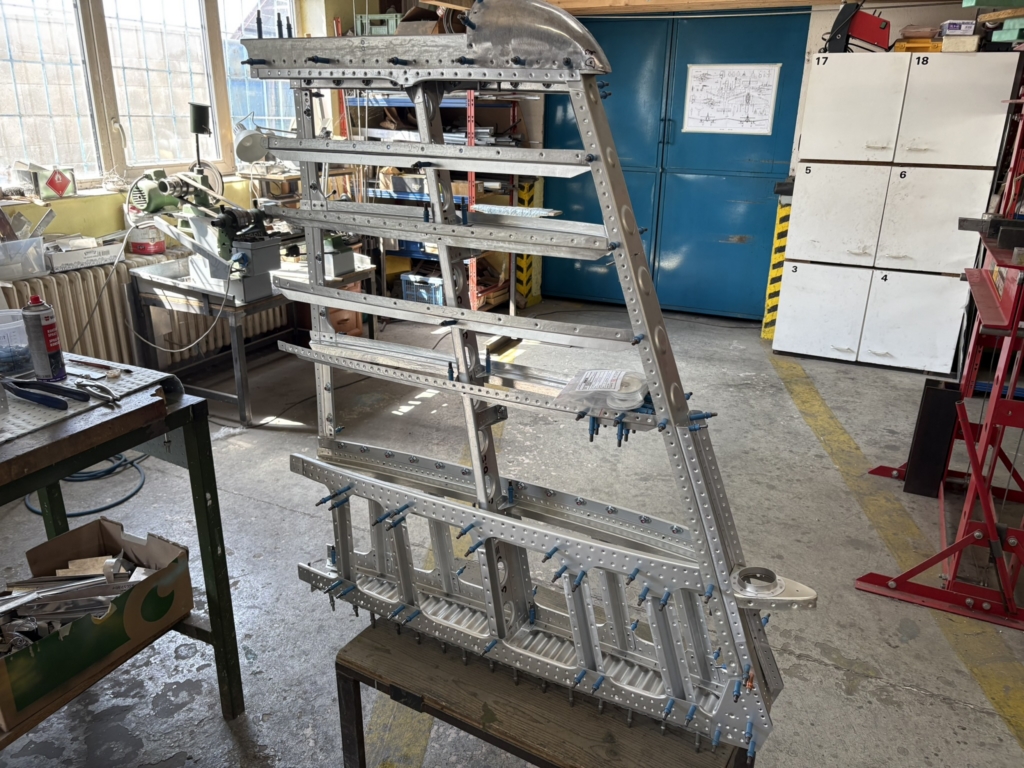
With the tail almost complete and the wings nearing final assembly, the next major phase is scheduled for 2027. The fuselage and centre section will then become the focus of the restoration.
This stage will be particularly demanding because the area suffered the greatest damage from the wartime explosive charge. The challenge will be to recreate the missing structure while retaining as much original material as possible.
The JU-87 Stuka at War
The Junkers Ju 87 Stuka was developed during the 1930s as a precision dive-bomber and became closely associated with Germany’s early Blitzkrieg campaigns.
It first saw combat with the German Condor Legion during the Spanish Civil War before supporting the invasions of Poland, Norway, the Low Countries and France in the opening years of the Second World War.
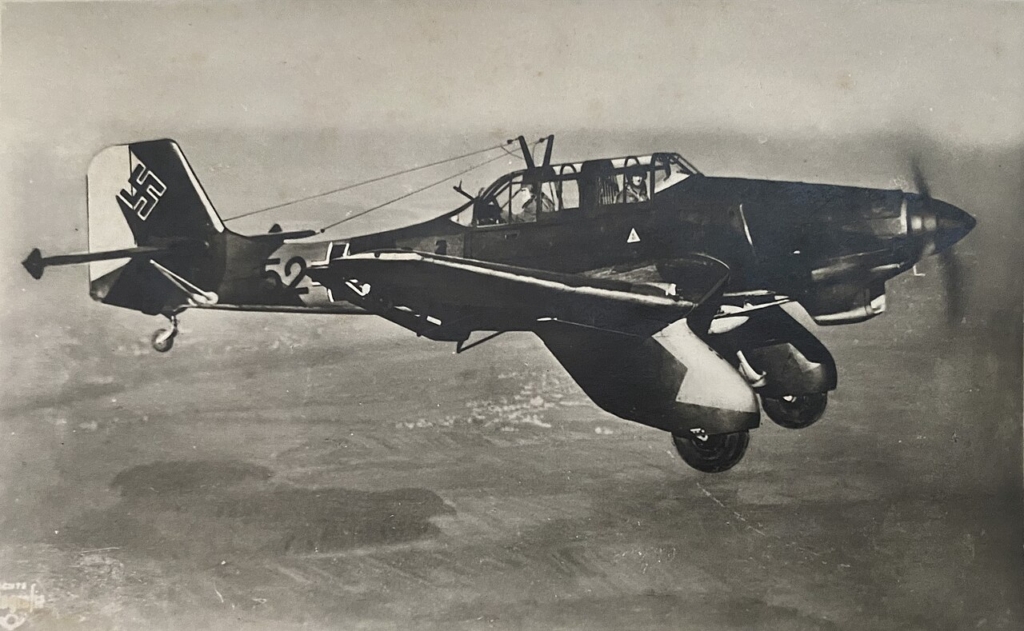
The Stuka’s principal strength was its ability to deliver bombs accurately from steep dives. Its distinctive inverted gull wings, fixed undercarriage and, on some aircraft, dive sirens made it one of the most recognisable and intimidating aircraft of the war.
However, its relatively slow speed and limited defensive capability left it highly vulnerable to modern fighters during the Battle of Britain in 1940.
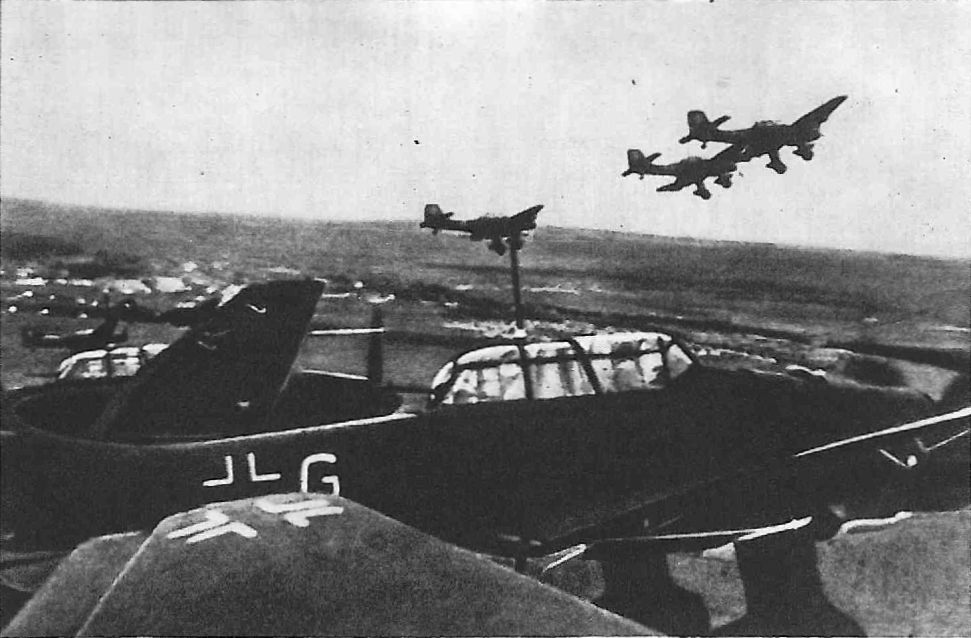
Despite these losses, the Ju 87 remained an effective ground-attack aircraft, particularly on the Eastern Front, where it was used against artillery, troops, fortifications and armoured vehicles. Later variants were also adapted for anti-tank and anti-shipping operations.
Aiming to fly again in the future
Ju 87D-5 Werknummer 131587 represented this later generation. Powered by a 1,300-hp Junkers Jumo 211J engine and carrying a crew of two, it was armed with forward-firing 7.92 mm machine guns and a rear MG 81 installation.
In 1944, the aircraft served with 1./Schlachtgeschwader 5 in Finland as Q9+CH. Its career ended when it was forced to land on the frozen lake in Finland after running short of fuel.
Today, its painstaking restoration by the American Heritage Museum aims to preserve both its historical authenticity and engineering, with the ultimate goal of returning this exceptionally rare Stuka to the air.


