


US Air Force returns historic wartime aviation artefacts to Japanese authorities

4 min read
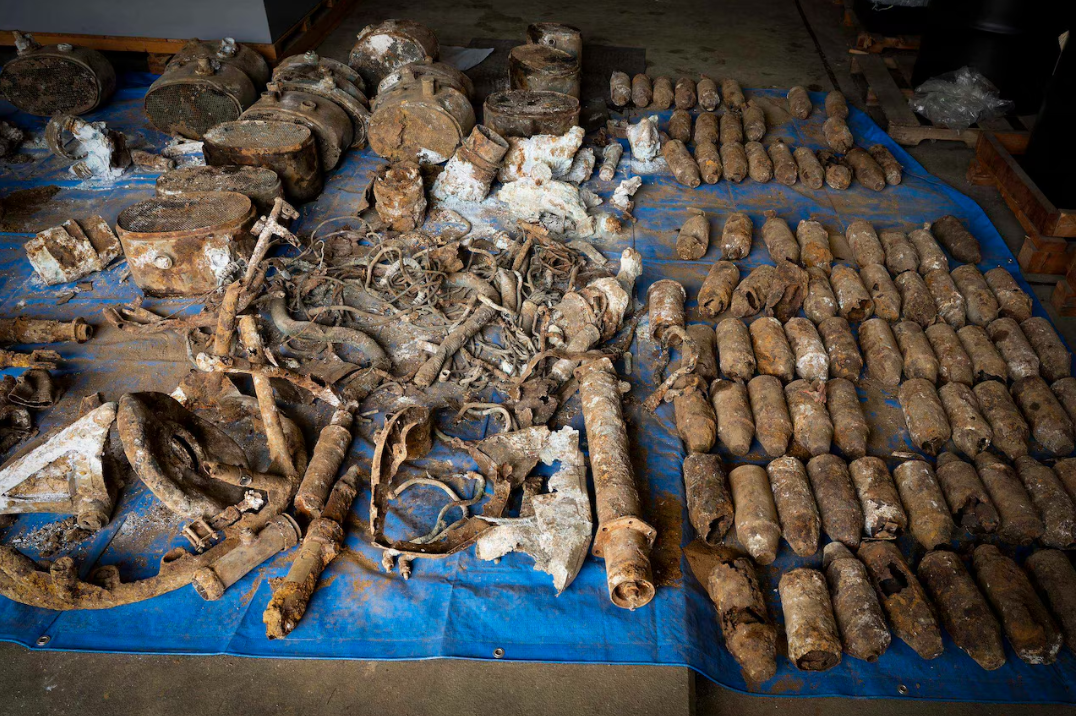
Historians at a US air base in Japan have uncovered a treasure trove of Japanese aviation artefacts buried deep below the surface at the base.
The items have since been meticulously catalogued and returned to the Japanese authorities as part of that country’s wartime history for display at a local air museum.
Japanese aviation artefacts discovered beneath historic air base
During January of this year, construction crews uncovered the artefacts approximately 2-3 metres (7-10 ft) below ground level during a construction project being carried out at the Tomoka Air Base (formerly the Tama Army Airfield when it was under the control of the Japanese during World War II.
Initially believed to be unidentified metal debris, the items found were recovered and subsequently referred for further evaluation after environmental personnel on site recognised the potential historical significance of the artefacts.

Speaking about the rare find, Callie Oldfield, environmental scientist assigned to the US Air Force 374th Civil Engineering Squadron, said, “When these materials were uncovered, I determined they should be assessed for historical significance. We were only able to recognise the true significance of these artefacts because of the knowledge and expertise of the historians and museum curators.”
Oldfield coordinated the initial assessment along with the assistance of the Fussa City Board of Education before assembling a multidisciplinary team led by the Gifu-Kakamigahara Air and Space Museum, located in Gifu Prefecture in Japan.

According to the US Department of War website, the multidisciplinary team included aviation historians, museum curators, cultural property specialists and aviation technology experts who conducted an on-site examination of the collection in May of this year.
Researchers assessed the recovered materials and concluded that most items were Imperial Japanese Army aviation artefacts. The items recovered included aircraft radiators, engine components, landing gear assemblies, airframe sections and deactivated munitions.
Their investigation concluded the collection represented components from multiple Imperial Japanese Army aircraft. This conclusion was drawn after the team reflected on the historical role of Yokota Air Base, then operating as Tama Army Airfield, where numerous Japanese military aircraft underwent testing during the War.
Details of the items discovered
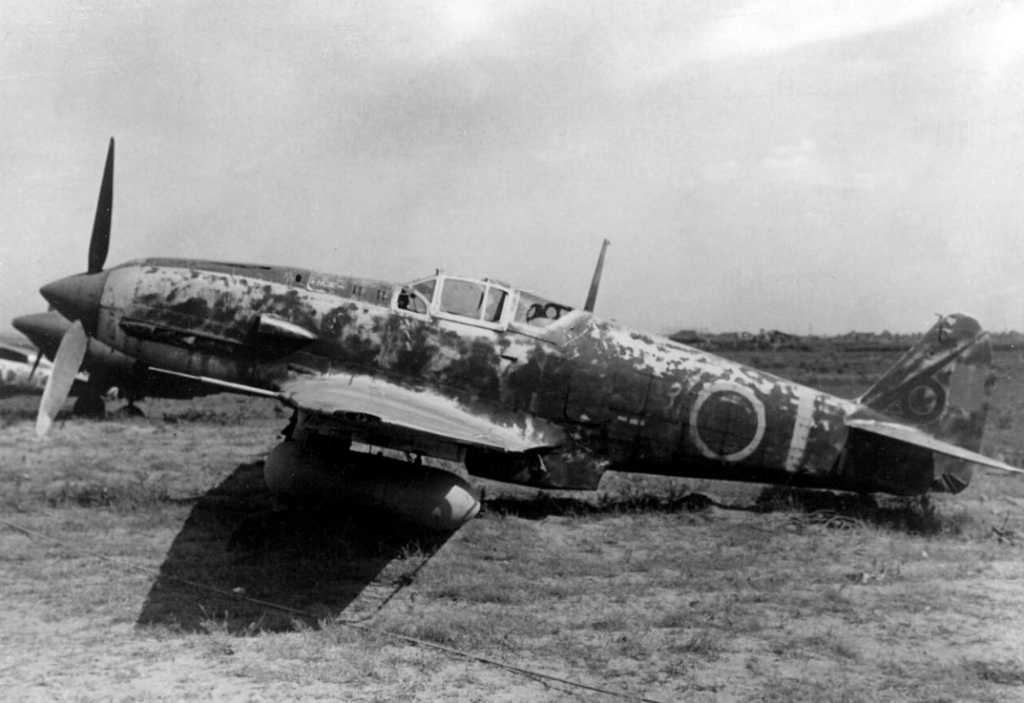
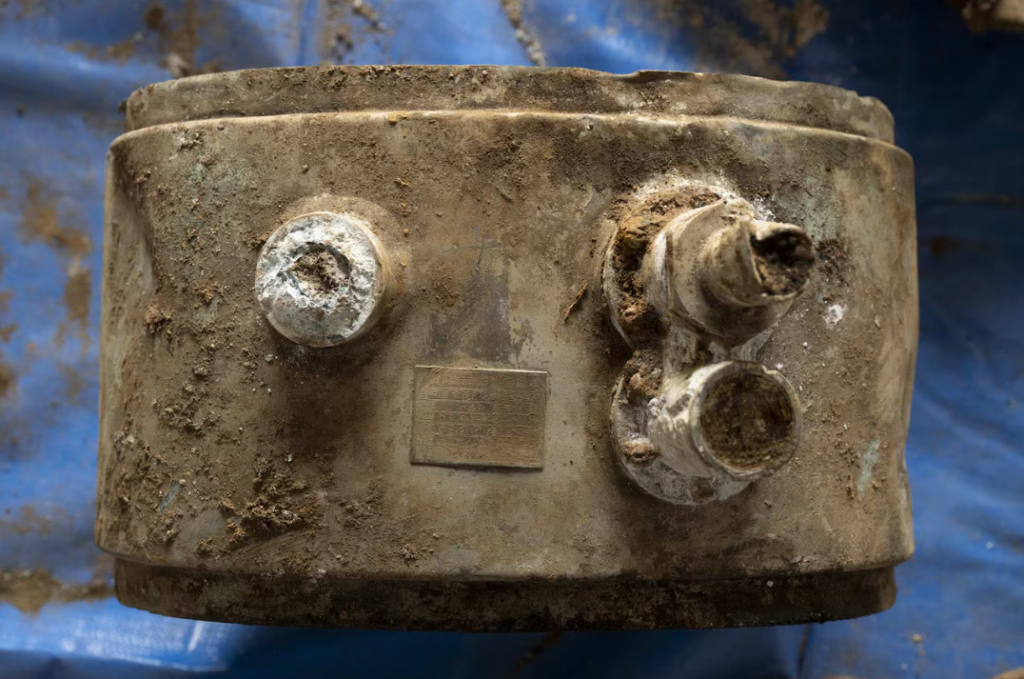
Among the artefacts identified by the team of aviation historians were several rare components, including a water cooler from a Kawasaki Ki-61 Hien fighter aircraft, the oil coolers from a Kawasaki Ki-45 twin-engine fighter aircraft and an oil cooler believed to be from a Kawasaki Ki-102 fighter aircraft.
According to the researchers, some components may be among the few surviving examples of their kind and retain original wartime paint, itself a valuable tool for future aviation conservation and research.
Artefacts transferred to the Japanese authorities
Following the carrying out of a full assessment on each artefact recovered, Oldfield coordinated the transfer of the artefacts to the appropriate Japanese authorities for continued research, preservation and potential public display.
The artefacts were temporarily stored on the base at Tomoka while the appropriate Japanese agencies coordinated their acceptance.
“I don’t want to lose a piece of history,” Oldfield said. “Although preserving and assessing artefacts takes time, the best outcome is seeing them used for education and research. I’m excited to see what new information these artefacts will reveal in the future.”
Japanese government representatives formally visited the base on 1 July to receive the collection, while members of the engineer squadron assisted with loading the artefacts for transport.
According to the US Department of War, the transfer reflects “the continued cooperation between the base and its Japanese partners to preserve historically significant materials discovered during ongoing installation construction and modernisation projects.”
The historical importance of Tama Army Airfield during World War II
Tama Army Airfield, located in western Tokyo near present-day Chofu, was an important military aviation base of the Imperial Japanese Army during World War II.
Constructed in the early 1940s, it served as a centre for pilot training, aircraft maintenance, and military operations. The airfield supported the Japanese Army Air Service by preparing personnel and maintaining aircraft used in the defence of the Japanese mainland as the war intensified.
During the later stages of the war, Tama Army Airfield gained strategic importance because of increasing Allied air raids over Japan. Fighter aircraft based there were occasionally deployed to intercept USAF B-29 bombers attacking Tokyo and nearby industrial areas.
The airfield also functioned as a logistical base, supplying aircraft, equipment, and trained personnel to other military installations.

In 1945, as Allied bombing campaigns expanded, the airfield became a target due to its military significance. Although it suffered damage, it remained operational until Japan’s surrender in August 1945.
After the war, United States occupation forces took control of the facility, renaming it Tomoka Air Base. It was later used by US military forces.
Today, much of the former airfield has been redeveloped. Portions of the site are occupied by residential areas, parks, and facilities such as the Ajinomoto Stadium, while its wartime history remains an important reminder of Japan’s military past and the impact of World War II.
Featured image: US Department of War
Sign up for our newsletter and get our latest content in your inbox.


More from


October 4, 20264 min read


