


The most stressful US domestic flight routes for nervous flyers – and the calmest

6 min read
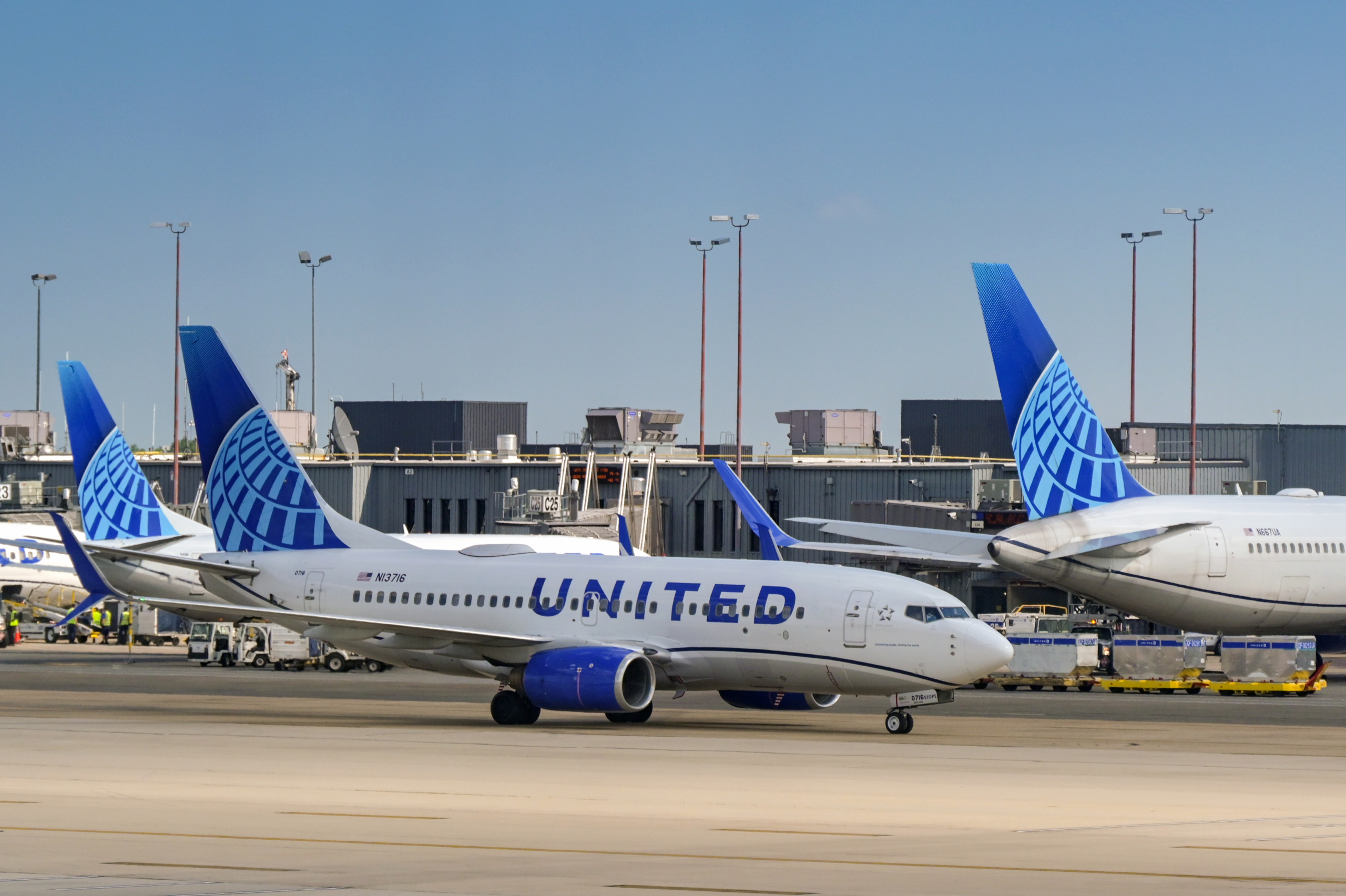
For nervous flyers, the stress of a journey can begin long before an aircraft leaves the runway. A delayed departure, a cancellation, or the prospect of spending several hours in the air can all add to the anxiety of getting from A to B.
Now, new research from air passenger rights company AirAdvisor has identified the US domestic flight routes most likely to present these stress-inducing challenges.
What does the Nervous Flyer Index actually measure?
AirAdvisor’s research is designed to measure factors that can contribute to a stressful flying experience rather than the safety of a particular route. The index combines six measures, each with a different weighting:
- Cancellations: 25%
- Flights delayed by 180 minutes or more: 20%
- Flights delayed by 60 minutes or more: 15%
- Departure airport weather vulnerability: 15%
- Arrival airport weather vulnerability: 15%
- Average flight time: 10%
The resulting scores range from 0 to 100, with higher scores indicating a greater combination of factors that may contribute to passenger stress.
AirAdvisor CEO Anton Radchenko emphasised the distinction between stress and safety, stating, “A high score does not mean a route is unsafe. It means passengers are more likely to encounter the things that make flying stressful, such as delays, cancellations, difficult weather, and spending longer time in the air.”
How the research was carried out
AirAdvisor conducted the analysis using 30 of the busiest US domestic routes, selected according to flight volume between 1 January and 31 August 2026.
Six routes were subsequently excluded because the necessary data were unavailable: Las Vegas to Los Angeles, Houston Intercontinental to Denver, Houston Intercontinental to Los Angeles, San Francisco to Seattle, San Francisco to Las Vegas and Newark to San Francisco. That left 24 routes for the final comparison.
The results therefore represent conditions during that specific period and could change as flight schedules, weather patterns, and operational performance change.
The index also does not assess airline safety, aircraft safety, or the risk or severity of turbulence.
New York LaGuardia to Chicago O’Hare ranks the most stressful US route
AirAdvisor’s analysis of 24 of the busiest US domestic routes found that New York LaGuardia (LGA) to Chicago O’Hare (ORD) was the most stressful route for nervous flyers, scoring 75.8 out of 100 on AirAdvisor’s Nervous Flyer Index.
One of the biggest factors behind its high score was its cancellation rate. Between the study period between September 2025 and August of this year, 10.49% of flights on the route were cancelled – roughly three times the 3.47% average across all routes included in the study.
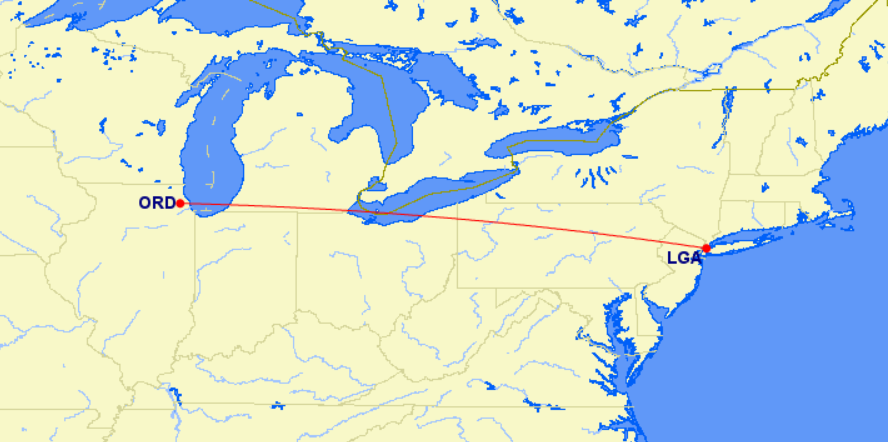
Its cancellation rate was particularly striking, with more than one in every 10 scheduled flights cancelled during the study period. Chicago O’Hare also has a high weather exposure score, adding another factor to the route’s overall result.
For nervous passengers, the combination of potential disruption and challenging weather conditions can make an already stressful journey feel even more uncertain.
Importantly, AirAdvisor stressed that the high score does not mean that the route is unsafe. Instead, the index focuses on operational and environmental factors that can make flying more stressful for anxious passengers.
The second-highest-scoring route was Orlando (MCO) to New York LaGuardia, which scored 71.0. Almost one in 10 flights (9.82%) were cancelled, while 12.84% were delayed by at least an hour. That was the second-highest one-hour-plus delay rate recorded in the study.
Boston (BOS) to Chicago O’Hare ranked third, scoring 65.8. Although its cancellation rate was not the highest, 2.71% of its flights were delayed by at least three hours, compared with an average of 1.8% across the routes studied.
At an average of 202 minutes, it was also the longest flight among the three highest-scoring routes.
The 10 most stressful US routes ranked
According to AirAdvisor’s Nervous Flyer Index, these are the 10 domestic routes most likely to be stressful for nervous passengers:
Chicago O’Hare Airport featured in half of the top 10 stressful routes
One of the clearest patterns in the results is the prominence of Chicago O’Hare Airport. The airport appears on five of the 10 highest-scoring routes, including the number-one route from LaGuardia. O’Hare also shares the study’s highest weather exposure score, at 9 out of 10, with Denver.
Orlando is another recurring feature. Orlando International appears on four of the top 10 routes, including three of the five highest-scoring journeys.
The Dallas/Fort Worth to Orlando route stands out for another reason – it recorded the highest proportion of flights delayed by at least one hour among all the routes analysed. Some 14.30% of flights experienced such a delay, significantly above the overall average of 9.34%.
For passengers already worried about flying, long waits and uncertainty at the airport can be just as stressful as the flight itself.
A longer flight does not necessarily mean more stress
It might seem logical that the longest flights would automatically rank as the most stressful. But the AirAdvisor data suggests that is not necessarily the case. New York JFK (JFK) to Los Angeles (LAX), the longest route in the study at an average of 357 minutes, ranked 11th with a score of 52.2.
While passengers on the route spend almost six hours in the air, its relatively lower cancellation rate and milder weather conditions in Los Angeles help offset the impact of the longer flight time. This is an important distinction in the index – flight duration is only one of six factors used to calculate the overall score.
Hawaii offers the calmest route
At the opposite end of the rankings, Honolulu (HNL) to Kahului, Maui (OGG), emerged as the calmest of the 24 routes analysed. The route scored just 12.0 out of 100, putting it well clear of the other low-scoring routes.
Only 0.42% of flights were delayed by an hour or more, while the average journey takes just 40 minutes. For passengers who find the time spent in the air particularly difficult, that short flight duration could be reassuring.

Two California and western US routes completed the three lowest-scoring journeys (Los Angeles to San Francisco), with a score of 28.1, and San Francisco to Denver, which scored 34.9.
Stress is not just caused by being airborne
For nervous flyers, the research provides a useful reminder that the experience of flying is about more than what happens once the aircraft is airborne. Cancellations, delays, weather, and the length of a journey can all play a role in how stressful a trip feels.
And while some routes may be more challenging than others, the rankings suggest that choosing a shorter journey with fewer disruptions could make a meaningful difference to passengers who already find flying an anxious experience.


