


Fatal T-34 crash pushes Taiwan Air Force to accelerate search for next-generation trainer aircraft
7 min read
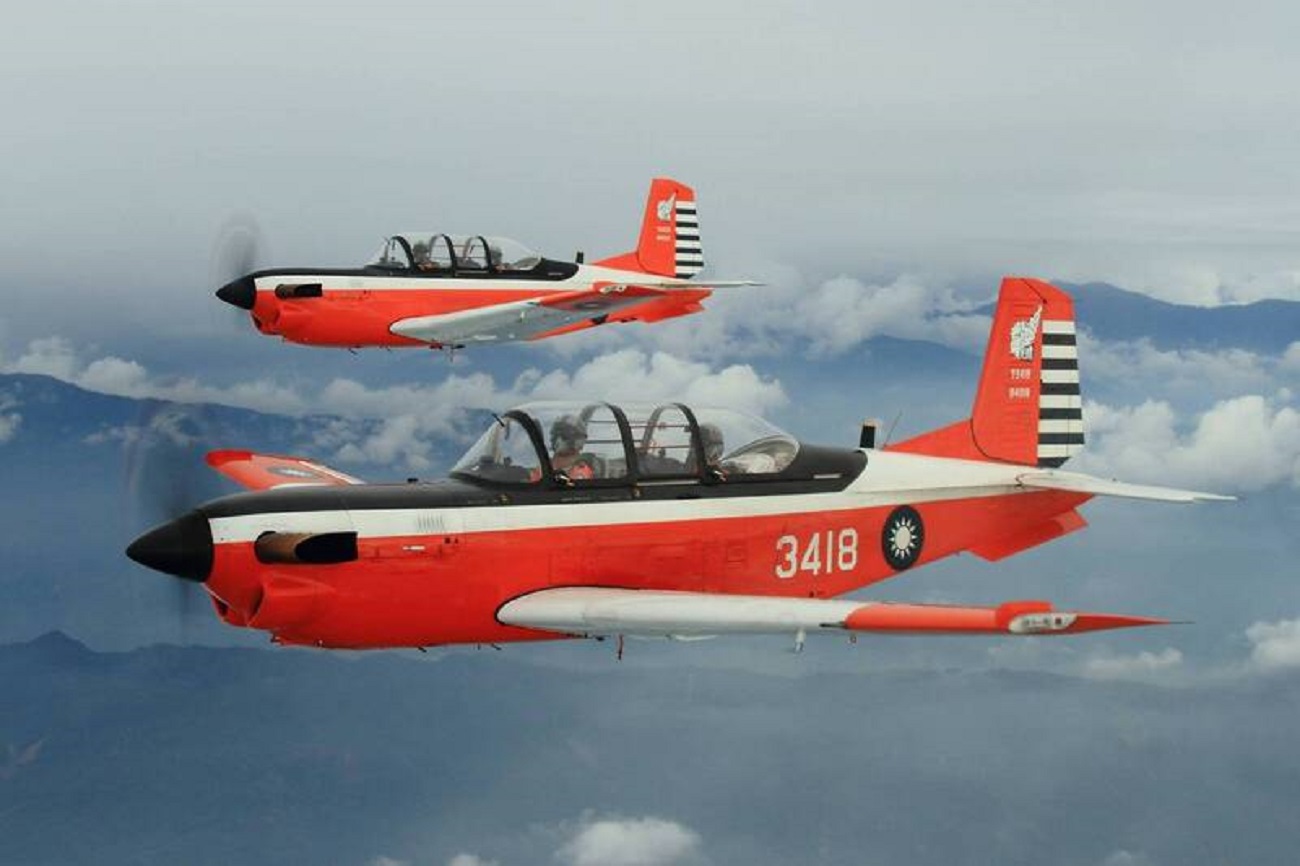
A Taiwanese Air Force T-34C Turbo Mentor training aircraft has crashed during a simulated engine-failure exercise, killing two experienced instructor pilots.
Following the accident on 2 June, Taiwan’s Air Force suspended all T-34C flight training operations and confirmed it is actively examining replacement options for the ageing turboprop fleet.
The grounding comes despite the aircraft not yet reaching its planned retirement date, renewing attention on Taiwan’s pilot training pipeline as the island modernises its combat aviation fleet and invests heavily in domestic aerospace programmes.
Taiwan T-34 crash kills two instructor pilots at Gangshan Air Base
The fatal accident, first reported by Focus Taiwan, occurred at Gangshan Air Base in Kaohsiung, home to the Republic of China Air Force Academy, where cadets begin flight training.
The two-seat T-34C Turbo Mentor crashed during a simulated engine-failure exercise, killing Lt. Col. Lu Chi-yu and Lt. Col. Kuo Chun-nan, both highly experienced instructor pilots with more than 2,100 flying hours on the aircraft.
🇹🇼 Plane crash in Taiwan
— News.Az (@news_az) June 2, 2026
At the Ganshan airbase at on June 2, during a training flight with engine failure simulation, a T-34 training aircraft (tail number 3414) of the Taiwan Air Force crashed.
Both pilots in the rank of lieutenant colonel died. A special operational group… pic.twitter.com/b8BU4wx9O0
According to Air Force officials, the aircraft took off at 7:47 a.m. local time and crashed near the northern end of the runway at approximately 8:08 a.m. Neither pilot reported anomalies or technical malfunctions before the accident, and weather conditions were considered suitable for flight operations.
At a press conference following the accident, Air Force Chief Inspector Maj. Gen. Chiang Yi-cheng said the service had grounded the entire T-34 fleet pending comprehensive safety inspections and established a special task force to investigate the cause of the crash. Flight training has temporarily shifted to simulator-based instruction.
The crash has once again raised questions about the future of one of Taiwan’s oldest military aircraft fleets and accelerated discussion about what will eventually replace it.
Beechcraft T-34 remains Taiwan’s first step in pilot training
The Beechcraft T-34 has served as the foundation of Taiwan’s military flight training system for more than 40 years.
Originally acquired during the mid-1980s, the turboprop trainer remains the first aircraft flown by Air Force cadets before they progress to more advanced training platforms and eventually frontline combat aircraft.
The aircraft entered the Republic of China Air Force service in 1984 and continues to serve with the Flight Training Command at Gangshan.
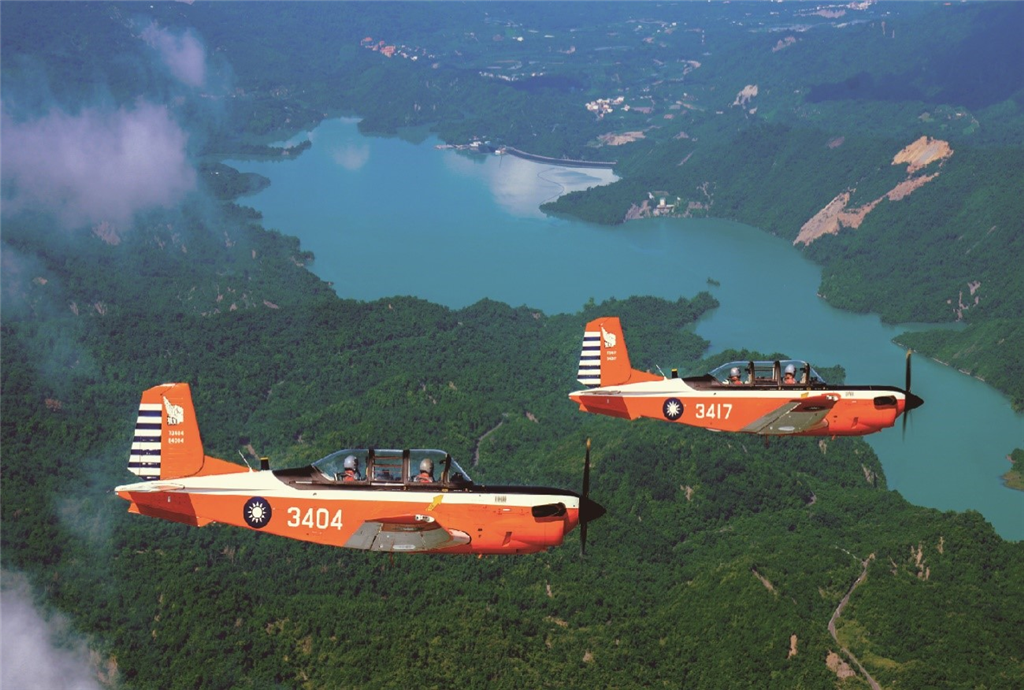
Powered by a Pratt & Whitney PT6A-25 turboprop engine, the aircraft was designed specifically for basic flight instruction. It has a maximum speed of around 250 knots, a range of approximately 530 nautical miles and a service ceiling of 25,000 feet.
Taiwan originally purchased roughly 50 T-34C aircraft. Today, around 30 to 36 remain operational, depending on fleet availability and maintenance status.
Although the aircraft continue to meet operational requirements, concerns have grown in recent years about ageing airframes, increasing maintenance demands and the limitations of a platform designed decades ago.
The Air Force has repeatedly stated that the fleet is expected to remain in service until around 2033, but officials have also acknowledged that planning for a replacement must begin well before retirement becomes necessary.
Taiwan weighs domestic or overseas options for T-34 replacement
The day after the crash, the Air Force sought to reassure the public that the age of the fleet alone should not be viewed as evidence of a technical problem.
In a statement, the service said contractor Aerospace Industrial Development Corporation (AIDC) had continued to perform regular maintenance and that spare parts remained available in sufficient numbers to support operations. Officials stressed that the fleet had not yet reached its retirement threshold.
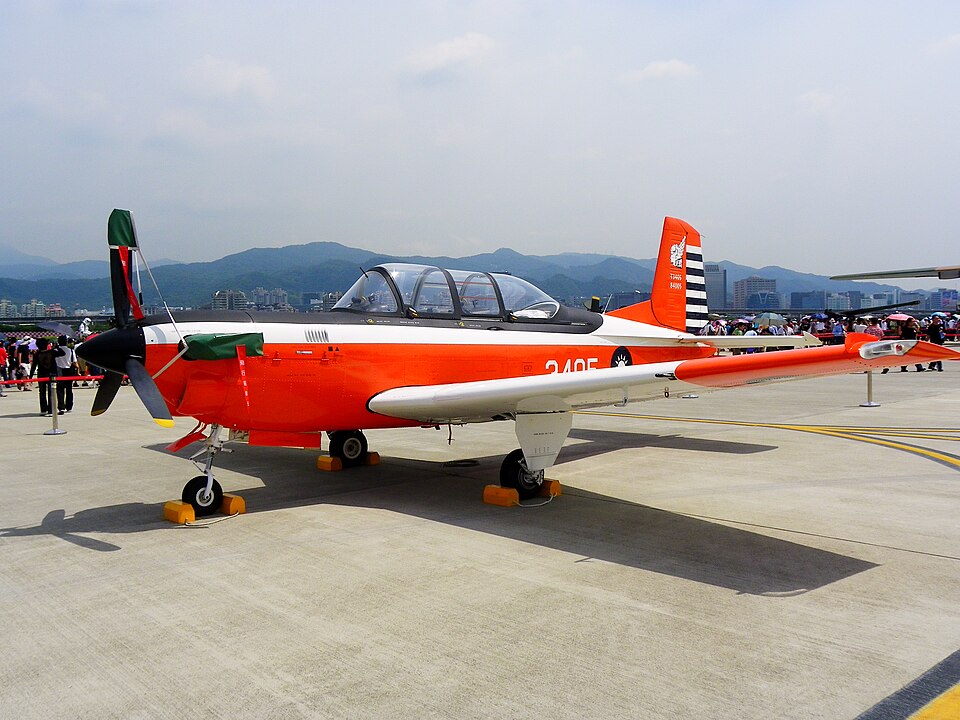
At the same time, the Air Force confirmed it was “proactively” examining replacement options and gathering information from both domestic and international suppliers. Officials said future procurement planning already includes provisions for modern safety systems such as flight recorders and ejection seats.
The key question now facing Taiwan is whether it should develop a new trainer domestically or acquire a proven aircraft already available on the international market.
Potential overseas options could include aircraft such as the Pilatus PC-21, Beechcraft T-6 Texan II or Turkish Aerospace Hurkuş, all of which have established support networks and operational histories.
AIDC basic trainer proposal could replace Taiwan’s T-34 fleet
Taiwan’s Aerospace Industrial Development Corporation has already laid the groundwork for a possible indigenous replacement.
In 2024, AIDC announced to the local press that it had completed the first-stage design of a new basic trainer aircraft intended to replace the T-34 fleet by 2033.
The company has proposed a turboprop-powered aircraft equipped with a Pratt & Whitney PT6A-68B engine and designed to offer higher performance than many existing trainers in its class.
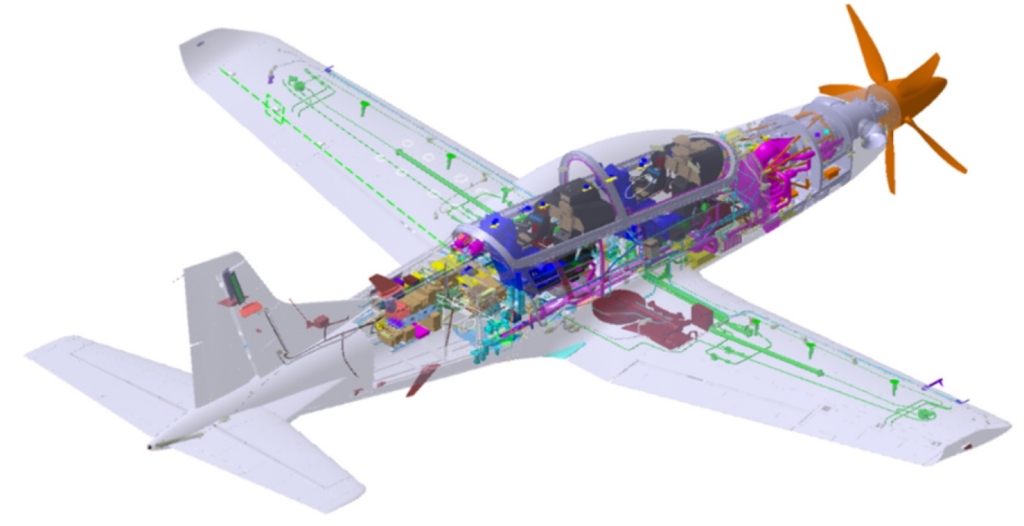
According to AIDC, government approval would allow the programme to enter detailed design, achieve a first flight within three years and begin production within six years.
The company has estimated that approximately 45 aircraft could be produced to meet Air Force requirements.
AIDC argues that a domestic trainer would do more than replace an ageing fleet. It would also preserve engineering expertise, sustain Taiwan’s aerospace supply chain and maintain momentum generated by recent military aircraft programmes.
Those arguments have gained traction as Taiwan seeks to reduce dependence on foreign suppliers in strategically sensitive sectors.
T-5 Brave Eagle strengthens Taiwan’s case for domestic trainer development
Any discussion about Taiwan’s future trainer aircraft inevitably leads to the T-5 Brave Eagle advanced jet trainer.
Developed by AIDC and derived from the indigenous F-CK-1 Ching-kuo fighter, the Brave Eagle represents Taiwan’s most ambitious military aircraft programme in decades. The aircraft was developed to replace the ageing AT-3 trainer and the F-5 aircraft previously used for advanced training duties.
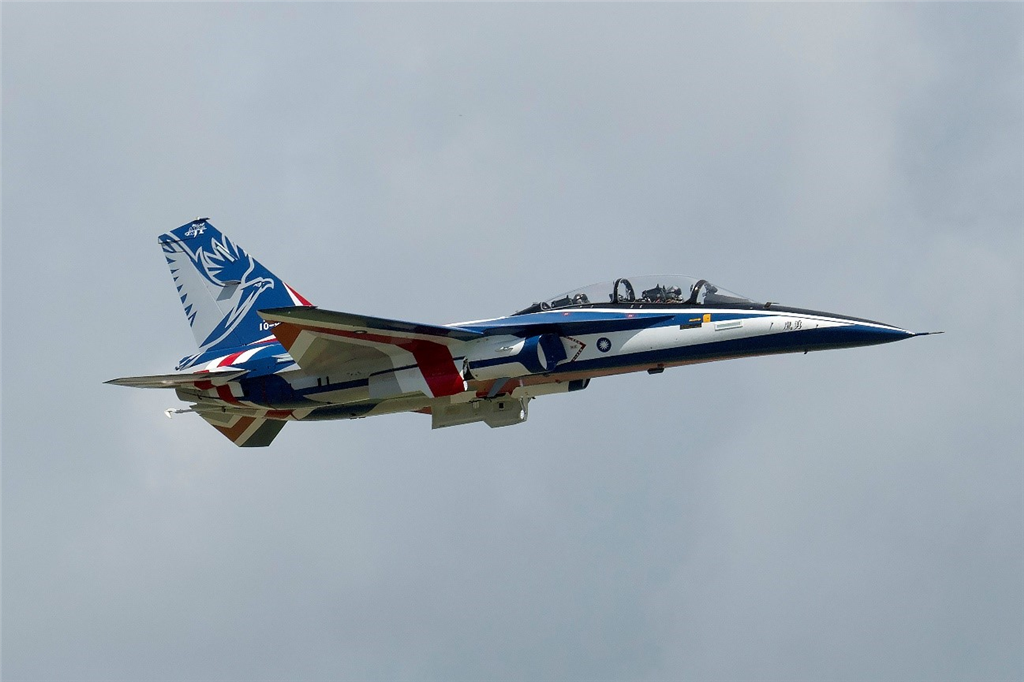
The programme has become a centrepiece of Taiwan’s effort to rebuild domestic aerospace capabilities.
According to the Ministry of National Defense, 56 of the planned 66 aircraft have already been delivered, with the remaining aircraft expected to enter service before the end of this year.
The Brave Eagle features a digital cockpit, advanced avionics and mission simulation capabilities designed to better prepare pilots for transition to modern fighter aircraft. Although primarily intended as a trainer, it can also carry light weapons if required.
For Taiwan’s aerospace sector, the programme has significance beyond pilot training. It has expanded local manufacturing capability, strengthened the domestic supply chain and provided experience in aircraft development that many officials hope will eventually support future combat aircraft programmes.
That experience is one reason supporters of a locally developed basic trainer believe the project should move forward.
Taiwan’s military aviation accidents place flight safety under scrutiny
The latest accident also comes against the backdrop of several fatal military aviation incidents in recent years.
According to official records, Taiwan has lost 20 military personnel in fatal aviation accidents since 2020. Those incidents have involved helicopters, trainers and frontline fighter aircraft, including F-5, F-16 and AT-3 platforms.
The loss of the two T-34 instructors adds another chapter to that record and has intensified scrutiny of training procedures, maintenance practices and fleet modernisation plans.
Eight people, including senior military officer Shen Yi-ming, the island of Taiwan's "Chief of the General Staff," died on Thursday in the crash of a Black Hawk helicopter of the island of #Taiwan: reports https://t.co/nngksC30c8 pic.twitter.com/ZqPN8xLUw9
— Global Times (@globaltimesnews) January 2, 2020
Investigators have not yet determined the cause of the latest crash. Air Force officials have emphasised that no mechanical anomalies were reported before the accident and that the aircraft had passed safety inspections earlier this year.
For now, the focus remains on understanding what happened during the final minutes of the flight.
Beyond the investigation, however, the accident has brought renewed urgency to a decision Taiwan already knew it would eventually have to make.
The T-34 has trained generations of military pilots and remains a vital part of the Air Force’s training system. Yet after more than four decades of service, attention is increasingly shifting from how long the aircraft can continue flying to what aircraft will replace it.
Whether Taiwan ultimately chooses a domestically developed design, a foreign aircraft or a combination of the two, the decision will shape the first stage of military pilot training on the island for decades to come.
Featured image: Republic of China Air Force
Sign up for our newsletter and get our latest content in your inbox.


More from


October 25, 20266 min read

October 25, 20265 min read


