


Spitfire RK858 takes to the skies again after eight decades and a full restoration

5 min read
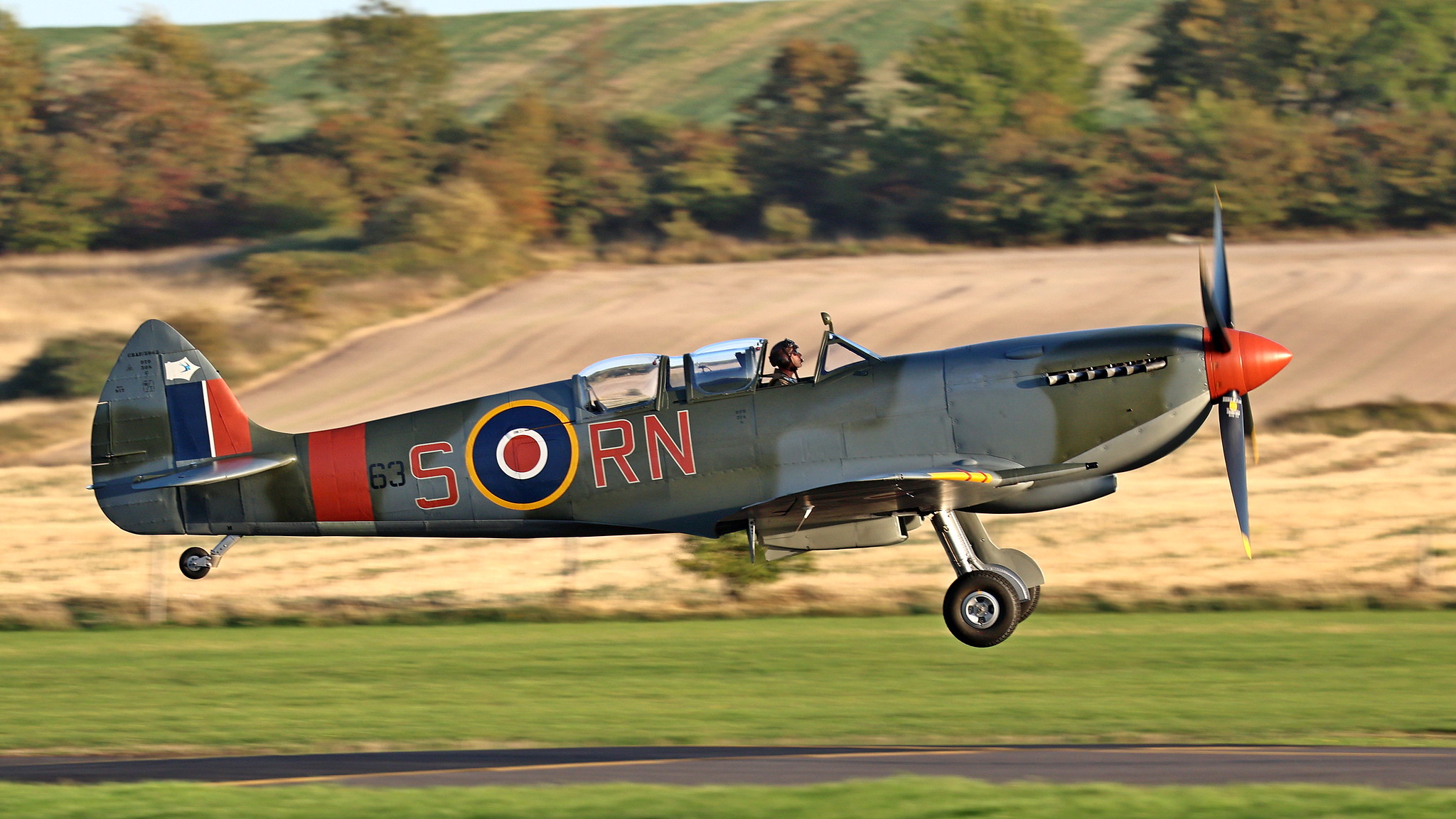
More than 80 years after it last flew, Spitfire RK858 has returned to the skies over Britain following an extensive restoration by the Aircraft Restoration Company (ARCo).
The historic aircraft made its first post-restoration flight at IWM Duxford on September 30, 2026, marking the end of an extraordinary journey that began at a wartime factory in Britain, continued on the Eastern Front with the Soviet Air Force, and eventually led to the aircraft’s recovery from a Russian forest.
From Castle Bromwich to the Soviet Union
RK858 was built at Castle Bromwich in 1944 as a Spitfire Mk IXe. By then, the Spitfire had evolved considerably from the aircraft RJ Mitchell designed and that became famous during the Battle of Britain.
The Mk IX was developed to counter increasingly capable German fighters and was powered by the Rolls-Royce Merlin engine.
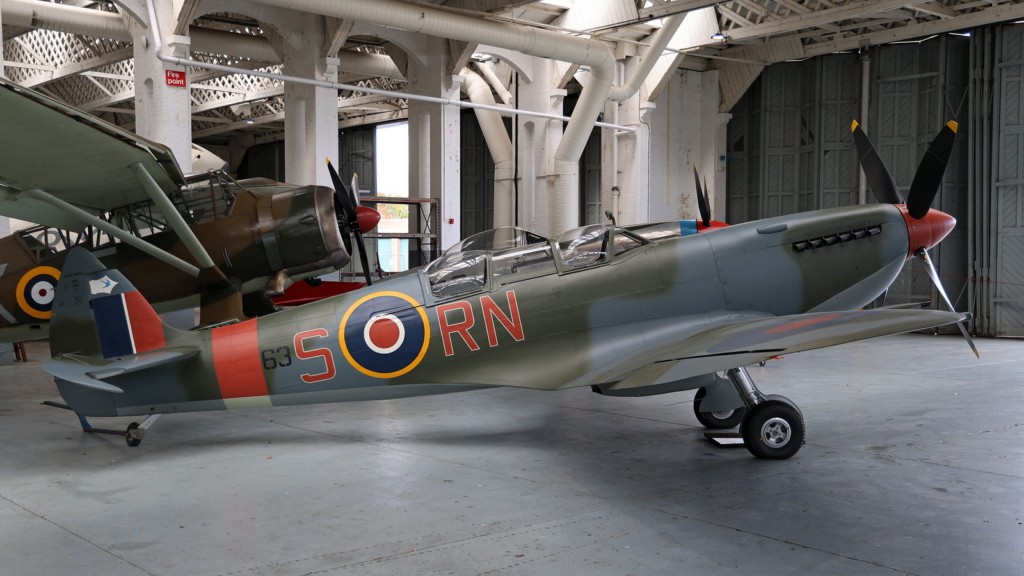
Unlike many Spitfires, RK858 did not serve with the RAF in Western Europe. Instead, it was supplied to the Soviet Union under the British Lend-Lease programme.
The aircraft was shipped aboard SS Empire Stalwart in November 1944 and reached Soviet service the following month. Its operational career was relatively short, however.
In 1945, RK858 was shot down and crashed in a forest, where its remains would remain hidden for almost half a century.
The extraordinary recovery of RK858
The wreck was discovered in 1992, decades after the war had ended. Remarkably, enough of the aircraft survived for it to be considered suitable for restoration.
Recovering the remains from the remote crash site was itself a considerable undertaking. A Mil Mi-26 heavy-lift helicopter was used to transport the wreckage out of the forest before the aircraft was brought back to Britain.
The UK-based Fighter Collection acquired RK858 and moved it to Duxford later that year. It was subsequently registered in Britain as G-CGJE, with ownership eventually passing to Historic Flying Ltd.
Restoring an aircraft that had spent decades exposed to the elements was a huge engineering challenge. Components had to be inspected, repaired or recreated, while the surviving original structure had to be preserved wherever practical.
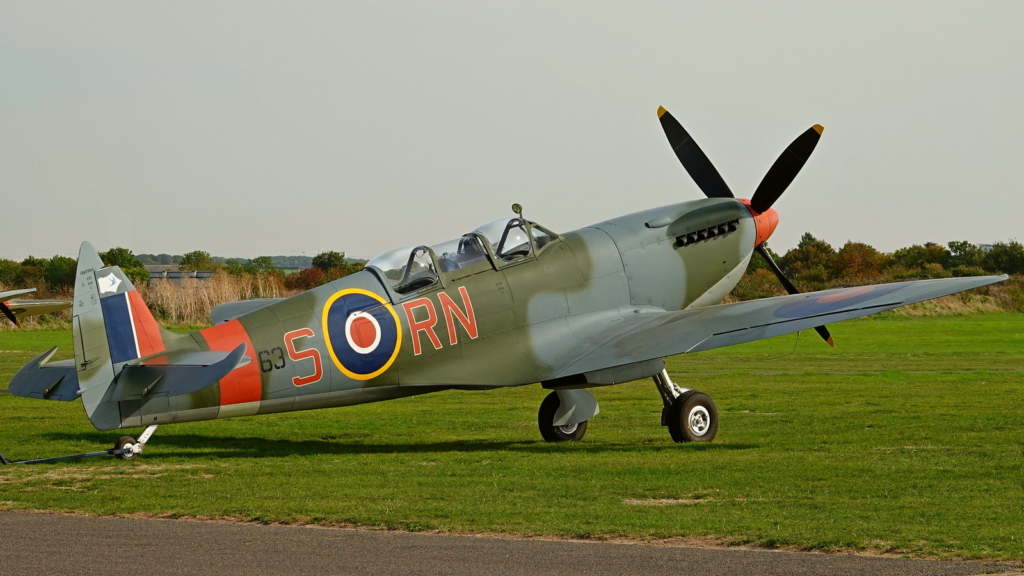
ARCo ultimately took on the task of returning RK858 to the air. The project also involved converting the aircraft to a two-seat configuration, allowing it to be used for passenger experiences as well as display flying.
The restoration reached its most important milestone on 30 September when ARCo founder and managing director John Romain MBE took RK858 into the air from Duxford for the first time.
The approximately 20-minute first flight formed part of the aircraft’s flight-test programme. Romain assessed its handling at different speeds and configurations, including stalls and inverted flight.
Chief engineer Martin Overall subsequently flew the aircraft during a second sortie that afternoon. For an aeroplane that had spent more than eight decades grounded, completing two flights in a single day was a remarkable achievement, according to Romaine.
RK858 gets a ‘new’ wartime identity
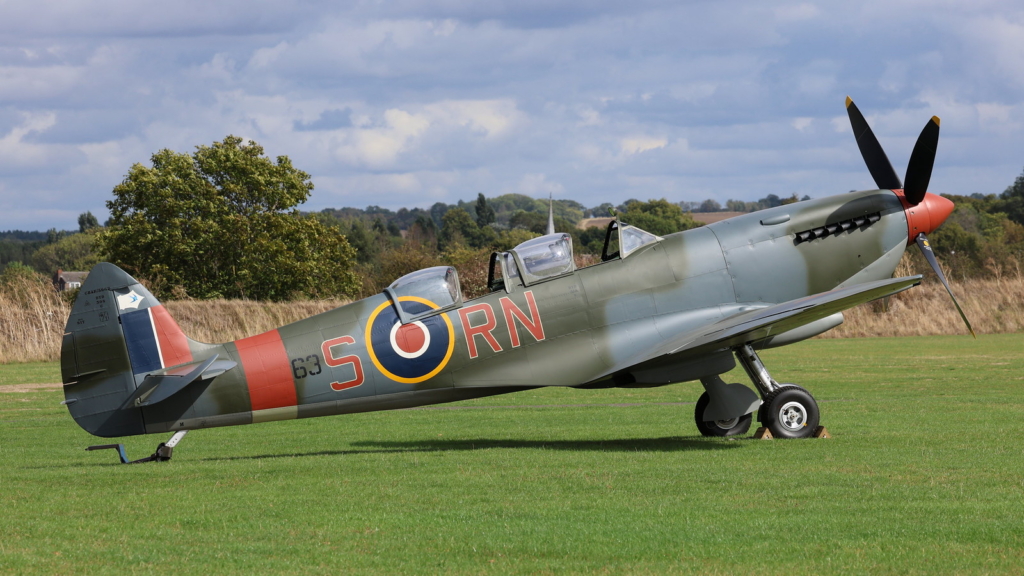
Although RK858 served with the Soviet Air Force, its restored appearance does not depict its actual Soviet markings. Instead, it has been finished to represent Spitfire MH763 of No. 72 Squadron RAF. That aircraft was flown by Prince Emanuel Galitzine, a Russian aristocrat whose family had left Russia following the Revolution.
Galitzine served as an RAF pilot and flew MH763 during the Allied invasion of southern France in 1944, including the aircraft’s deployment from Corsica to Ramatuelle during Operation Dragoon.
The new paint scheme therefore gives RK858 an indirect connection to Russia while reflecting a different chapter of the Spitfire’s wartime history.
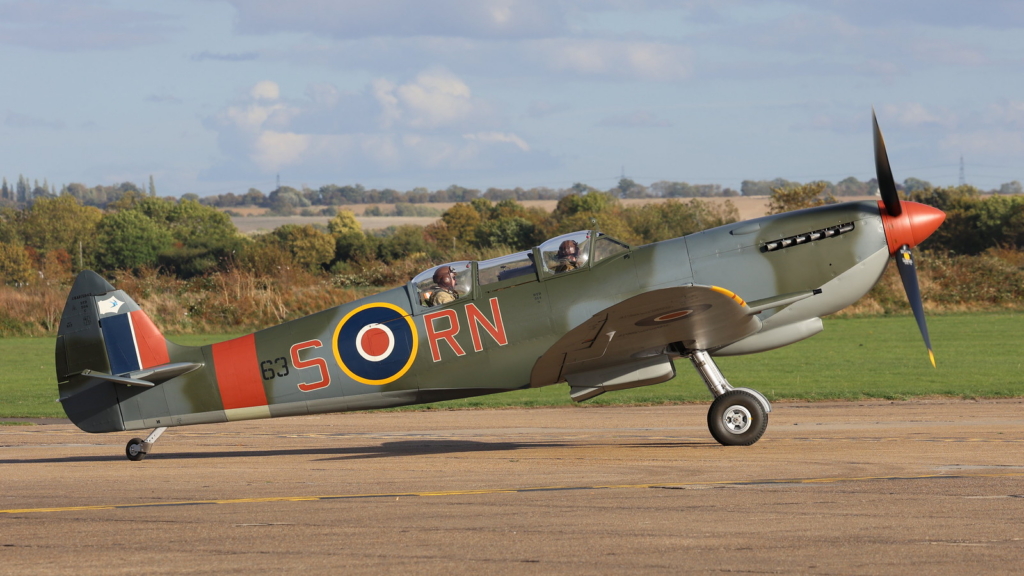
The scheme features a prominent red band around the rear fuselage and red RN-S base codes. On the vertical stabiliser, No. 72 Squadron’s blue swift appears within a spearhead, a marking associated with the pre-war identification system for fighter units.
Spitfires in Russia during the Second World War
Britain supplied Spitfires to the Soviet Union under the Lend-Lease programme after Stalin requested additional fighter aircraft from Winston Churchill in 1942. The first Spitfire Mk Vbs arrived in the Soviet Union in 1943, followed by larger numbers of the improved Mk IX. The final Spitfires were delivered in June 1945.
The early Mk Vs saw combat on the Eastern Front, including during fighting around the Kuban region. However, Soviet pilots faced problems unfamiliar to RAF units.
The Spitfire’s silhouette could resemble German fighters from a distance, contributing to instances of friendly fire. Soviet pilots also tended to favour aircraft such as the Bell P-39 Airacobra for the low-level combat that dominated much of the Eastern Front.
The later Mk IX proved particularly useful for air-defence duties, including interception of German bombers and reconnaissance aircraft.
Rather than becoming the Soviet Union’s principal frontline fighter, the Spitfire increasingly served in the defence of important cities and installations.
Several examples remained in Soviet service after the war, including for training. RK858 was less fortunate, being lost in 1945 before its eventual recovery nearly 50 years later.
A rare flying survivor
RK858 is now one of a relatively small number of airworthy Spitfires with a Soviet wartime connection. Another notable example is Spitfire Mk IX PT879, which returned to flight in 2020 and displays a scheme reflecting its Soviet service.
Together, these aircraft provide a physical reminder that the Spitfire’s wartime story extended far beyond Britain and Western Europe. Its Soviet career also illustrates the complex international nature of the Allied war effort.
RK858’s journey from wartime production line to Soviet fighter, crash wreck and restored warbird is remarkable. Once flight testing is complete, the aircraft is expected to join Aerial Collective’s passenger-flight operation at Duxford alongside other two-seat Spitfires, as well as taking part in flying displays. According to Vintage Aviation News, there are now 16 airworthy two-seat Spitfires globally, with 12 of them being flown by several operators in the UK.


