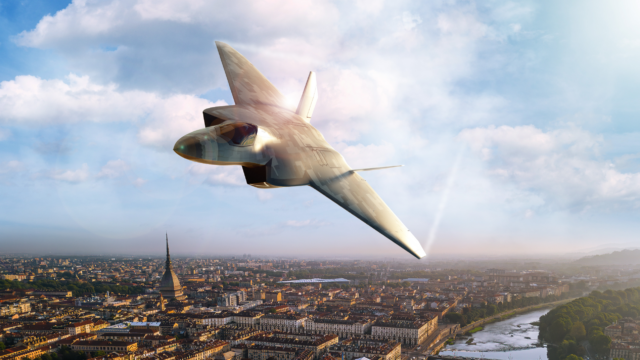
First Spanish Eurofighter Halcon rolls out as EF-18 Hornet replacement begins

5 min read
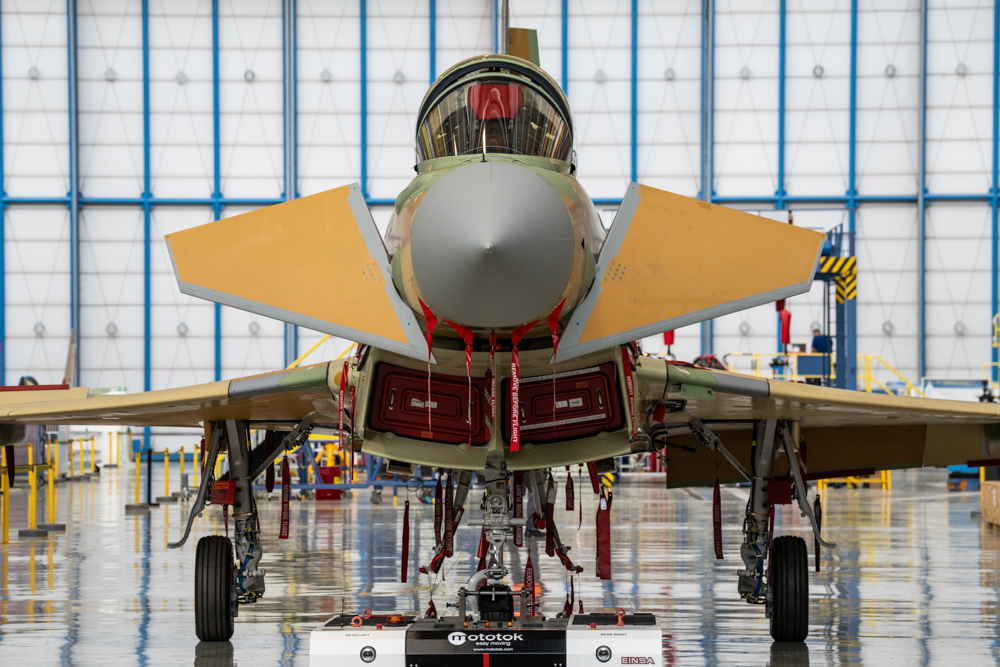
Airbus Defence and Space has rolled out the first Eurofighter Typhoon built under Spain’s Halcon I programme, marking the beginning of a major fleet renewal effort that will see the Spanish Air and Space Force replace its remaining EF-18 Hornets with the latest generation of the European fighter.
The aircraft emerged from Airbus’ final assembly line at Getafe near Madrid on 1 June and is now preparing for engine runs and its maiden flight before delivery later this year.
It is the first of 20 Eurofighter Tranche 4 aircraft ordered under the Halcon I programme and represents the most advanced version of the fighter yet acquired by Spain.
The rollout is more than a production milestone. It signals the start of a long-term transition that will reshape Spain’s combat aviation fleet and ensure the Eurofighter remains the country’s principal air superiority platform well into the coming decades.
Eurofighter Halcon programme is designed to replace Spain’s ageing EF-18 Hornet fleet
Spain launched the Halcon programme to replace EF-18 Hornets that have served with the Air and Space Force since the 1980s. While the aircraft have undergone multiple upgrades over the years, they are approaching the limits of their service life and face increasing sustainment challenges.
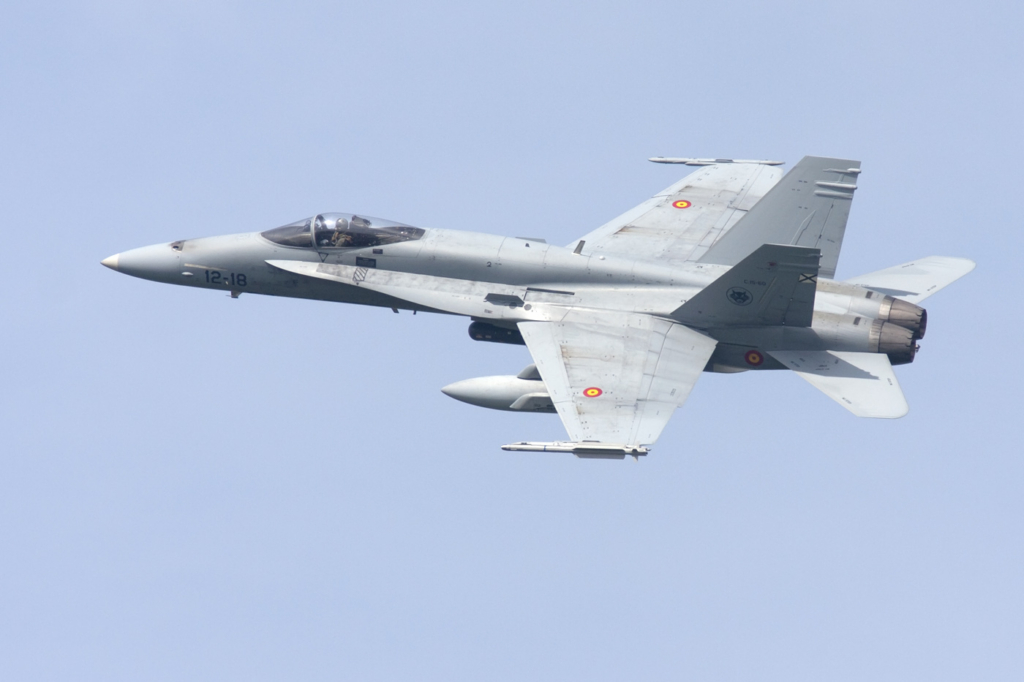
The first phase of the programme was formalised in 2022 through the acquisition of 20 Eurofighter aircraft comprising 16 single-seat and four twin-seat variants. The fighters are intended primarily to replace Hornets assigned to Ala 46 at Gando Air Base in the Canary Islands.
The Canary Islands occupy a strategically important position in the eastern Atlantic and serve as Spain’s southernmost air defence outpost. Maintaining a modern fighter presence there has become increasingly important as military activity and geopolitical competition continue to grow across the wider Atlantic, Mediterranean and North African regions.
The arrival of the new Eurofighters will allow Spain to retire some of its oldest Hornets while significantly improving the air defence capabilities available to commanders in the archipelago.
Spain’s Halcon II order takes Eurofighter fleet renewal to 45 aircraft
The programme expanded substantially in December 2024 when Spain signed a second agreement with the NATO Eurofighter and Tornado Management Agency (NETMA) for 25 additional Eurofighters under the Halcon II programme.
The order covers 21 single-seat aircraft and four twin-seat variants and is intended to replace additional F-18s operated elsewhere in the country.
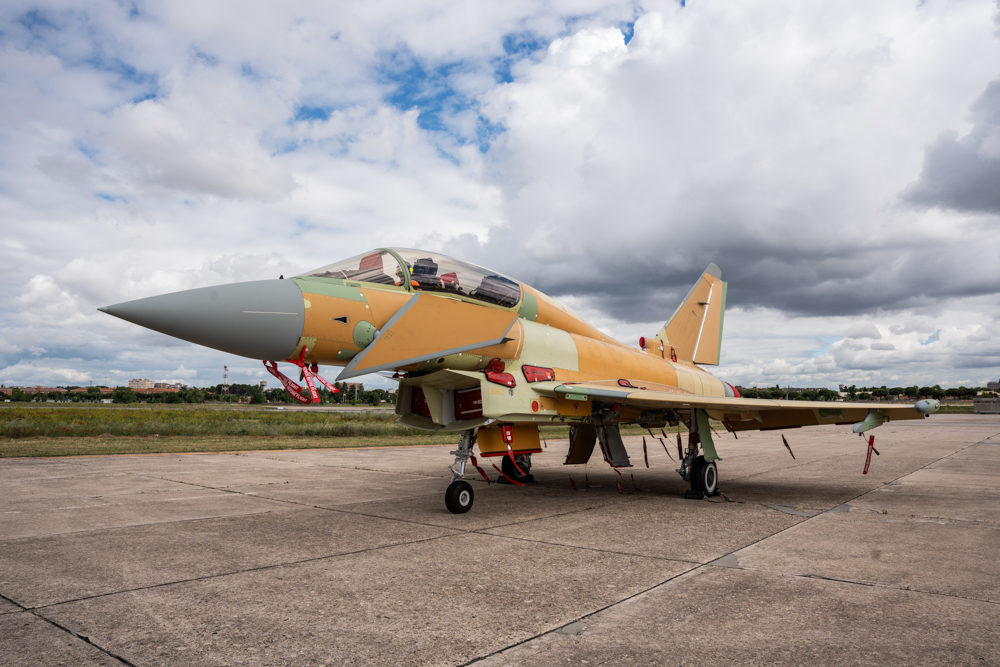
The acquisition was approved by Spain’s Council of Ministers and includes aircraft, engines, training systems, logistics support and associated services.
Together, the Halcon I and Halcon II programmes will deliver 45 newly built Eurofighters to the Spanish Air and Space Force. Once all aircraft have entered service, Spain’s Eurofighter fleet will increase to approximately 115 aircraft, making it one of the largest operators of the type in Europe.
The first deliveries under Halcon I are scheduled to begin this year, while the initial aircraft from the Halcon II batch are expected to arrive from 2030 onward.
Spanish Eurofighters gain E-Scan radar, Meteor and Brimstone capability
The Halcon aircraft represent a significant capability leap over earlier Spanish Eurofighters.
Most notably, they are the first Spanish Typhoons to be delivered with the E-Scan active electronically scanned array radar installed from the factory.
The radar replaces the mechanically scanned systems carried by earlier aircraft and is designed to provide improved detection range, faster target tracking, greater resistance to jamming and enhanced situational awareness.
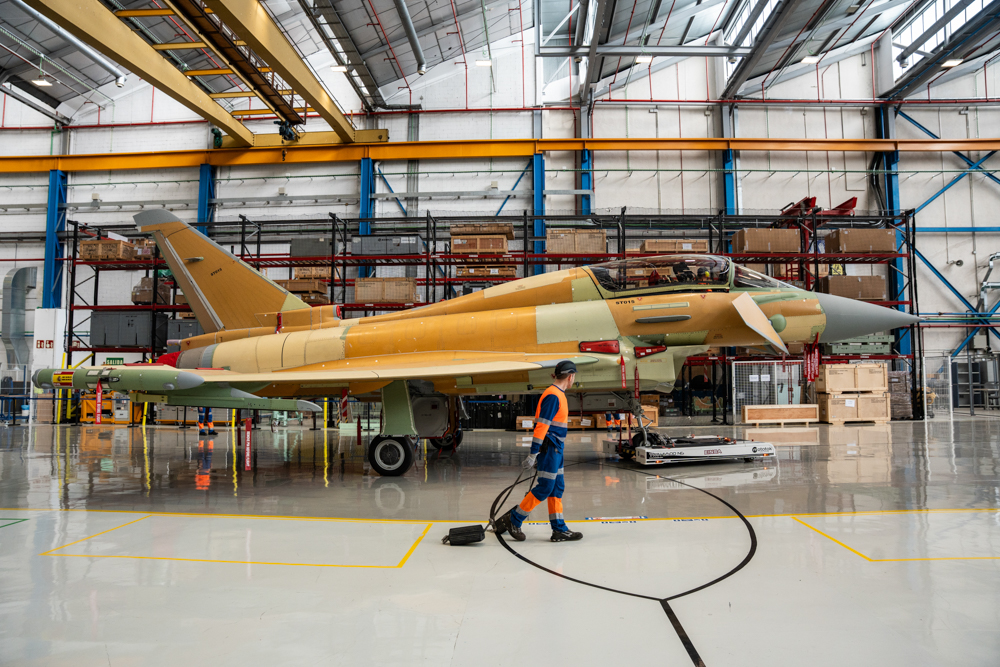
The fighters will also feature updated avionics, improved mission systems, enhanced connectivity and modernised sensor suites.
According to Airbus, the aircraft will be capable of employing advanced weapons, including the MBDA Meteor beyond-visual-range air-to-air missile and the Brimstone precision-guided weapon.
These additions will expand both air superiority and precision-strike capabilities while improving interoperability with NATO partners.
The Eurofighter itself remains one of the most capable fourth-generation-plus combat aircraft currently in production.
Powered by two EJ200 turbofan engines, the aircraft combines high thrust-to-weight performance with advanced sensor fusion, digital flight controls and multi-role mission capability.
Airbus describes the fighter as capable of rapidly switching between air-to-air and air-to-surface tasks within the same mission, reflecting the platform’s swing-role design philosophy.
Eurofighter to bridge Spain’s fighter fleet into the FCAS era
Spain first introduced the Eurofighter into operational service in 2003 and currently operates the aircraft from Moron Air Base near Seville and Los Llanos Air Base at Albacete.
The new Halcon aircraft will gradually join those existing fleets while eventually extending Eurofighter operations to Gando as EF-18s leave service.
For the Air and Space Force, the programme provides continuity at a time when Europe is also pursuing sixth-generation combat aircraft through the Future Combat Air System (FCAS).
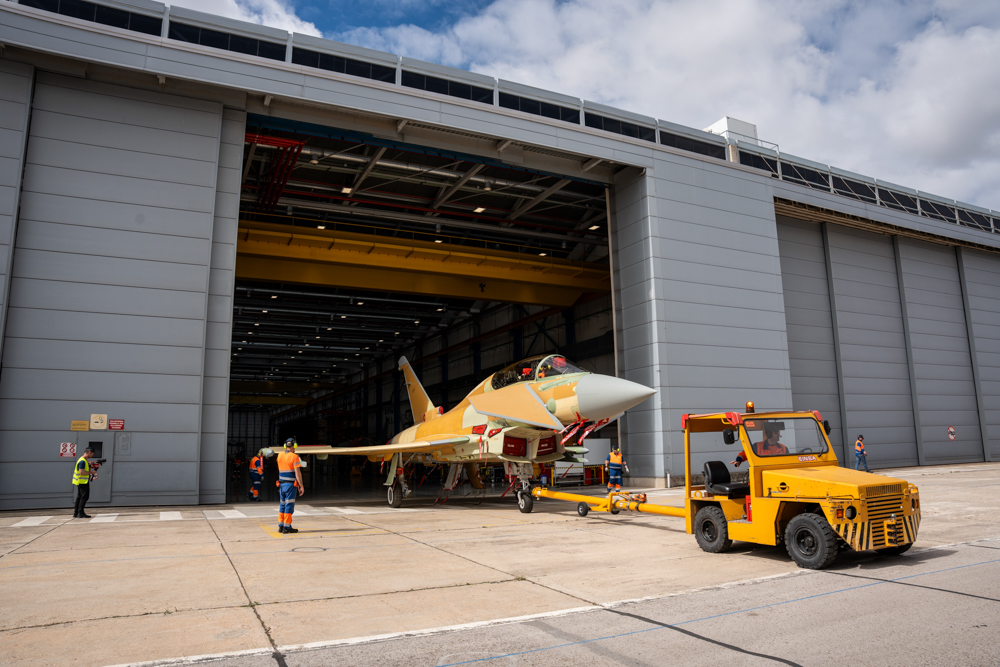
The new Eurofighters are expected to remain operational well beyond the middle of the century and serve alongside future FCAS capabilities.
The programme also reinforces Spain’s role within one of Europe’s largest defence-industrial collaborations.
The Eurofighter is produced through a multinational partnership involving Spain, Germany, Italy and the United Kingdom. More than 700 aircraft have been ordered worldwide, and the programme supports tens of thousands of jobs across Europe.
Getafe assembly line anchors Spain’s Eurofighter industrial role
Beyond the operational benefits, the Halcon programme carries considerable industrial significance.
All Spanish Eurofighters are assembled, tested and delivered from Airbus’ Getafe facility near Madrid, which serves as Spain’s centre for Eurofighter production.
The site also supports other major aerospace programmes, including the A330 MRTT tanker conversion programme and military transport aircraft activities.
The continuation of Eurofighter production through the Halcon orders provides long-term workload for Spanish industry. It preserves engineering, manufacturing, and systems integration expertise associated with one of Europe’s most important military aviation programmes.
Featured image: Airbus
Sign up for our newsletter and get our latest content in your inbox.


More from


October 17, 20264 min read